In the complex world of international trade, the term “shadow fleet” has emerged to describe a clandestine network of oil tankers that operate outside the purview of regulatory frameworks and sanctions. These vessels, often unregistered or operating under false pretenses, have become a significant concern for governments and regulatory bodies worldwide. The shadow fleet exploits loopholes in maritime law and international sanctions, allowing them to transport oil from sanctioned nations to markets that would otherwise be inaccessible.
This phenomenon not only undermines the effectiveness of sanctions but also poses serious risks to global security and economic stability. The rise of the shadow fleet is a direct response to the increasing use of sanctions as a tool of foreign policy. As nations impose restrictions on oil exports from countries like Iran and Venezuela, the demand for alternative routes and methods of transportation has surged.
This has led to the emergence of sophisticated tactics employed by these shadow fleets, which are often difficult to trace and regulate. Understanding these tactics is crucial for policymakers and enforcement agencies aiming to combat the illicit oil trade and uphold international law.
Key Takeaways
- Shadow fleet tactics involve covert methods used by oil tankers to bypass international sanctions.
- Sanctions significantly impact oil tanker operations, prompting the use of evasion strategies.
- Shell companies, flags of convenience, and false documentation are common tools to disguise tanker activities.
- Technology and middlemen play crucial roles in facilitating communication and transactions to avoid detection.
- International efforts continue to evolve in combating these tactics, highlighting an ongoing enforcement challenge.
Understanding Sanctions and Their Impact on Oil Tankers
Sanctions are political tools used by countries or international organizations to influence the behavior of nations or entities that violate international norms. In the context of oil trade, sanctions often target specific countries, restricting their ability to export oil and thereby crippling their economies. The impact of these sanctions on oil tankers is profound, as they create a high-stakes environment where compliance is paramount for legitimate operators.
However, the very nature of sanctions also creates opportunities for illicit actors who seek to profit from the gaps left by these restrictions. Oil tankers play a pivotal role in the global energy market, serving as the primary means of transporting crude oil from production sites to refineries and consumers. When sanctions are imposed, legitimate tankers may find themselves unable to dock at certain ports or engage in trade with specific nations.
This creates a vacuum that shadow fleets are eager to fill. By circumventing sanctions, these vessels can transport oil from sanctioned countries to willing buyers, often at discounted prices. This not only undermines the intended effects of sanctions but also complicates efforts to monitor and regulate global oil flows.
Evading Sanctions: Tactics and Strategies
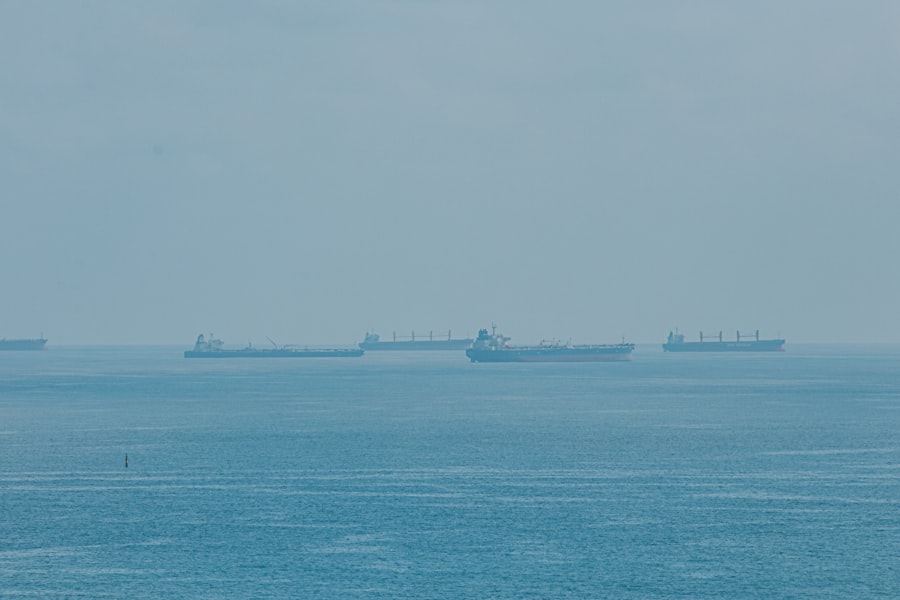
The tactics employed by shadow fleets to evade sanctions are as varied as they are sophisticated. One common strategy involves the use of ship-to-ship transfers, where oil is transferred from one tanker to another in international waters. This method allows shadow fleets to obscure the origin of the oil, making it difficult for authorities to trace its source.
Additionally, these transfers often occur under the cover of darkness or in remote locations, further complicating detection efforts. Another prevalent tactic is the manipulation of shipping routes. By altering their paths and using less-traveled waterways, shadow fleets can avoid detection by maritime authorities.
They may also employ deceptive practices such as changing their vessel names or altering their Automatic Identification System (AIS) signals, which are used to track ships’ movements. These strategies not only enhance their operational security but also create significant challenges for enforcement agencies attempting to monitor compliance with international sanctions.
Utilizing Shell Companies and Flags of Convenience
Shell companies play a crucial role in the operations of shadow fleets, providing a façade of legitimacy while facilitating illicit activities. These companies are often registered in jurisdictions with lax regulatory oversight, allowing them to operate with minimal scrutiny. By using shell companies, shadow fleets can obscure their true ownership and operational intentions, making it challenging for authorities to hold them accountable.
Flags of convenience further complicate the landscape of maritime regulation.
This practice allows shipowners to evade stringent regulations imposed by their home countries while benefiting from lower operational costs.
The combination of shell companies and flags of convenience creates a complex web that makes it increasingly difficult for authorities to trace ownership and enforce sanctions effectively.
The Role of Middlemen and Brokers in Evading Sanctions
| Metric | Value | Description |
|---|---|---|
| Number of Shadow Fleet Tankers | 50+ | Estimated count of oil tankers involved in sanctions evasion |
| Average Age of Vessels | 15 years | Typical age of tankers in the shadow fleet |
| Flag States Used | 20+ | Number of different countries’ flags used to disguise tanker identities |
| Common Evasion Techniques | Ship-to-ship transfers, AIS manipulation | Methods used to avoid detection and sanctions |
| Estimated Daily Oil Transported | 500,000 barrels | Volume of oil moved daily by shadow fleet tankers |
| Sanctions Impacted Regions | Middle East, Russia, Venezuela | Regions most affected by shadow fleet sanctions evasion |
| Detection Rate by Authorities | 30% | Estimated percentage of shadow fleet activities detected by enforcement agencies |
Middlemen and brokers serve as critical facilitators in the shadow fleet’s operations, connecting sellers from sanctioned nations with buyers willing to purchase their oil. These intermediaries often possess extensive networks and knowledge of the global oil market, allowing them to navigate the complexities of illicit trade with relative ease. By acting as a buffer between buyers and sellers, middlemen can obscure the origins of the oil being traded, further complicating enforcement efforts.
The role of brokers extends beyond mere facilitation; they often engage in sophisticated negotiation tactics to secure favorable terms for their clients while minimizing risk. This can include arranging for shipments through multiple intermediaries or utilizing complex financial arrangements that make tracing transactions difficult. As a result, middlemen play an essential role in sustaining the operations of shadow fleets, enabling them to thrive despite international sanctions.
Technology and Communication: Evading Detection
In an age where technology permeates every aspect of life, shadow fleets have adapted by leveraging advanced communication tools and technologies to evade detection. Encrypted messaging apps allow operators to communicate securely without fear of interception by authorities. This level of secrecy enables them to coordinate complex operations while minimizing the risk of exposure.
Moreover, advancements in satellite technology have made it possible for shadow fleets to monitor maritime traffic patterns and identify potential enforcement actions in real-time. By utilizing this information, they can adjust their routes or alter their operational tactics to avoid detection. The integration of technology into their operations has made it increasingly challenging for regulatory bodies to keep pace with these illicit activities, highlighting the need for enhanced monitoring capabilities.
The Use of False Documentation and Deceptive Practices
False documentation is another critical element in the arsenal of tactics employed by shadow fleets. By creating counterfeit bills of lading or falsifying cargo manifests, these vessels can misrepresent the nature and origin of their shipments. This practice not only facilitates the evasion of sanctions but also poses significant risks to legitimate shipping operations that rely on accurate documentation for compliance.
Deceptive practices extend beyond documentation; they also encompass various methods used to mislead authorities about a vessel’s true intentions. For instance, some shadow fleet operators may falsely declare their cargo as non-sanctioned goods or misrepresent their destination ports. Such tactics create an environment where enforcement agencies struggle to differentiate between legitimate trade and illicit activities, further complicating efforts to combat sanction evasion.
The Consequences of Evading Sanctions with Oil Tankers
The consequences of evading sanctions through shadow fleet tactics are far-reaching and multifaceted. Economically, the ability of sanctioned nations to continue exporting oil undermines the effectiveness of international sanctions designed to compel behavioral change. This not only prolongs conflicts but also allows regimes that violate human rights or engage in aggressive actions to maintain financial stability.
Moreover, the proliferation of shadow fleets poses significant risks to global security. The unregulated movement of oil can lead to environmental disasters, as these vessels may not adhere to safety standards or environmental regulations. Additionally, the funding generated through illicit oil trade can be funneled into criminal enterprises or terrorist organizations, further destabilizing regions already fraught with conflict.
International Efforts to Combat Shadow Fleet Tactics
In response to the growing threat posed by shadow fleets, international efforts have intensified to combat sanction evasion tactics. Governments and organizations such as the United Nations have implemented stricter monitoring mechanisms and enhanced cooperation among nations to share intelligence on illicit activities. These collaborative efforts aim to close loopholes that allow shadow fleets to operate undetected.
Furthermore, advancements in technology have enabled authorities to develop more sophisticated tracking systems that can identify suspicious shipping patterns or detect anomalies in vessel documentation. By leveraging data analytics and machine learning algorithms, enforcement agencies can enhance their ability to monitor compliance with sanctions and take proactive measures against violators.
The Future of Sanctions and Shadow Fleet Tactics
As geopolitical tensions continue to shape international relations, the future of sanctions and shadow fleet tactics remains uncertain. While sanctions will likely remain a key tool for influencing state behavior, the adaptability of shadow fleets suggests that evasion tactics will evolve in tandem with regulatory measures. This ongoing cat-and-mouse game between enforcement agencies and illicit actors underscores the need for continuous innovation in monitoring and enforcement strategies.
Moreover, as technology advances, so too will the methods employed by shadow fleets. The potential for increased automation and artificial intelligence could lead to even more sophisticated evasion tactics that challenge existing regulatory frameworks. Policymakers must remain vigilant and proactive in addressing these emerging threats while balancing the need for effective sanctions with considerations for legitimate trade.
The Ongoing Battle Against Evading Sanctions with Oil Tankers
The battle against sanction evasion through shadow fleet tactics is an ongoing struggle that requires concerted efforts from governments, regulatory bodies, and international organizations alike. As long as there are economic incentives for illicit actors to exploit loopholes in maritime law, shadow fleets will continue to thrive. The complexity of this issue demands a multifaceted approach that combines enhanced monitoring capabilities with international cooperation and innovative regulatory frameworks.
Ultimately, addressing the challenges posed by shadow fleets will require a commitment to adapting strategies in response to evolving tactics.
The fight against these clandestine networks is not just about enforcing laws; it is about upholding international norms and ensuring a stable global economy for future generations.
Recent investigations into shadow fleet sanctions evasion have revealed a complex network of oil tankers circumventing international regulations. This issue has garnered significant attention, particularly in light of the ongoing geopolitical tensions. For a deeper understanding of the implications and strategies involved in these evasive maneuvers, you can read more in this related article: here.
WATCH THIS! 🌊 The Invisible Army That Controls Global Shipping
FAQs
What is a shadow fleet in the context of oil tankers?
A shadow fleet refers to a group of oil tankers that operate covertly or under disguised identities to evade sanctions or regulatory oversight. These vessels often change names, flags, or ownership details to avoid detection.
How do shadow fleets evade sanctions?
Shadow fleets evade sanctions by employing tactics such as ship-to-ship transfers, falsifying documentation, turning off tracking systems like AIS (Automatic Identification System), and frequently changing vessel names and flags. These methods help them conceal their activities and destinations.
Why are shadow fleets a concern for global oil markets?
Shadow fleets undermine the effectiveness of international sanctions, distort oil supply data, and can contribute to market instability. Their covert operations make it difficult for regulators and market participants to track oil flows accurately.
What role do sanctions play in targeting oil tankers?
Sanctions are imposed to restrict certain countries or entities from trading oil, often for political or security reasons. Targeting oil tankers through sanctions aims to limit the transportation and sale of oil from sanctioned sources.
How do authorities detect and monitor shadow fleets?
Authorities use satellite imagery, AIS data analysis, maritime intelligence, and cooperation with international partners to detect suspicious vessel behavior. Advanced technologies and data analytics help identify patterns consistent with sanctions evasion.
What are the risks associated with shadow fleet operations?
Risks include legal penalties for involved parties, environmental hazards due to unregulated operations, increased geopolitical tensions, and challenges to maritime security and transparency.
Can shadow fleets impact global energy security?
Yes, by circumventing sanctions and operating outside regulatory frameworks, shadow fleets can affect the stability and predictability of global oil supplies, potentially impacting energy security.
What measures are being taken to combat shadow fleet sanctions evasion?
Measures include enhanced international cooperation, stricter enforcement of maritime regulations, improved tracking technologies, and the development of comprehensive sanctions compliance frameworks.
Are all oil tankers involved in shadow fleet activities?
No, only a subset of oil tankers engage in shadow fleet activities. The majority operate transparently and comply with international laws and sanctions.
How does the use of flags of convenience relate to shadow fleets?
Flags of convenience allow ship owners to register vessels in countries with lenient regulations, which can facilitate anonymity and complicate enforcement efforts. Shadow fleets often exploit this practice to evade sanctions.