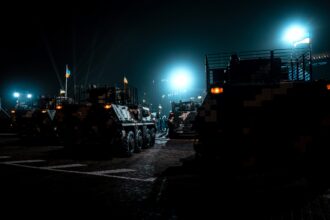
In the complex landscape of modern conflict, unregulated shadow warfare has emerged as a significant and often overlooked phenomenon. This form of warfare operates in the shadows, away from the scrutiny of traditional military engagements and international law. It encompasses a range of activities, including covert operations, cyber warfare, and the use of mercenaries, all of which challenge the established norms of warfare.
As nations grapple with the implications of this clandestine approach to conflict, it becomes increasingly important to understand its characteristics, historical context, and the actors involved. The rise of unregulated shadow warfare reflects broader changes in global power dynamics, where state and non-state actors alike engage in activities that blur the lines between war and peace. The proliferation of technology and the increasing complexity of geopolitical relationships have created an environment ripe for such operations.
As these clandestine tactics become more prevalent, they raise critical questions about accountability, ethics, and the future of international relations.
Key Takeaways
- Unregulated shadow warfare involves covert, often illegal, conflicts conducted by state and non-state actors outside traditional warfare rules.
- Non-state actors have increasingly become key players, complicating accountability and escalating global security risks.
- Advances in technology have amplified the reach and impact of shadow warfare, making detection and regulation more challenging.
- The lack of transparency and oversight in shadow warfare raises significant ethical and moral concerns.
- International cooperation and robust strategies are essential to combat and regulate the hidden threats posed by unregulated shadow warfare.
Definition and Characteristics of Shadow Warfare
Shadow warfare can be defined as a form of conflict that occurs outside the conventional frameworks of warfare, often involving covert operations that are not officially acknowledged by states. This type of warfare is characterized by its reliance on secrecy, deniability, and the use of unconventional tactics. Unlike traditional military engagements that are governed by international law and norms, shadow warfare operates in a legal gray area, making it difficult to regulate or control.
One of the defining characteristics of shadow warfare is its fluidity. It can involve a wide range of actors, including state-sponsored groups, private military contractors, and even individuals acting independently. This diversity complicates efforts to establish accountability and oversight.
Additionally, shadow warfare often employs advanced technologies such as cyber capabilities and drones, allowing for precision strikes without the need for direct military engagement. This technological edge further obscures the lines between combatants and non-combatants, raising ethical concerns about collateral damage and civilian casualties.
Historical Examples of Unregulated Shadow Warfare

Throughout history, unregulated shadow warfare has manifested in various forms, often reflecting the political and social contexts of the times. One notable example is the use of mercenaries during the Cold War. Both superpowers engaged in covert operations that involved hiring private soldiers to carry out missions that would be politically sensitive if conducted openly.
These mercenaries operated in various regions, from Africa to Latin America, often with little regard for local laws or international norms. Another significant instance of shadow warfare can be seen in the rise of cyber warfare in the 21st century. The Stuxnet virus, which targeted Iran’s nuclear facilities in 2010, exemplifies how states can engage in covert operations without direct military confrontation.
This incident not only highlighted the potential for cyber attacks to disrupt critical infrastructure but also raised questions about attribution and accountability in cyberspace. As nations increasingly turn to digital means to achieve their strategic objectives, the historical precedents set by earlier forms of shadow warfare become even more relevant.
The Rise of Non-State Actors in Shadow Warfare
| Metric | Description | Data/Value | Year/Period |
|---|---|---|---|
| Number of Non-State Actors Involved in Shadow Warfare | Estimated count of non-state groups engaged in covert operations | Over 50 | 2010-2023 |
| Percentage Increase in Non-State Actor Operations | Growth rate of operations attributed to non-state actors in shadow conflicts | 75% | 2010-2023 |
| Types of Activities Conducted | Common tactics used by non-state actors in shadow warfare | Cyberattacks, Proxy Warfare, Disinformation Campaigns, Assassinations | Ongoing |
| Estimated Casualties Attributed to Non-State Actors | Number of deaths linked to shadow warfare involving non-state actors | 10,000+ | 2010-2023 |
| Countries Most Affected | Top nations experiencing shadow warfare involving non-state actors | Ukraine, Syria, Yemen, Afghanistan | 2010-2023 |
| Funding Sources | Primary sources of financial support for non-state actors | State Sponsors, Illicit Trade, Private Donors | Ongoing |
| Use of Technology | Technological tools leveraged by non-state actors | Drones, Encrypted Communications, AI-driven Cyber Tools | 2015-2023 |
In recent years, non-state actors have played an increasingly prominent role in shadow warfare. These groups often operate outside the control of traditional state mechanisms and can engage in activities that challenge established norms. From terrorist organizations to private military companies, non-state actors have demonstrated a capacity for conducting sophisticated operations that can destabilize regions and challenge state authority.
The rise of non-state actors is partly a response to globalization and the changing nature of conflict. As states grapple with internal divisions and external pressures, these groups have found opportunities to exploit vulnerabilities. For instance, organizations like ISIS have utilized social media to recruit fighters and spread their ideology, effectively conducting a form of shadow warfare that transcends national borders.
This shift complicates traditional notions of sovereignty and raises questions about how states can respond to threats that do not conform to conventional definitions of warfare.
The Dangers and Consequences of Unregulated Shadow Warfare
The dangers associated with unregulated shadow warfare are manifold and far-reaching. One significant concern is the potential for escalation into larger conflicts. Covert operations often lack transparency and oversight, which can lead to miscalculations or unintended consequences.
For example, a cyber attack intended to disrupt an adversary’s capabilities could inadvertently cause widespread damage to civilian infrastructure, leading to a humanitarian crisis. Moreover, unregulated shadow warfare can undermine international stability by eroding trust between nations. When states engage in covert operations without accountability, it fosters an environment of suspicion and paranoia.
This atmosphere can lead to an arms race as nations seek to develop their own shadow capabilities in response to perceived threats. The resulting cycle of retaliation and counter-retaliation can create a volatile geopolitical landscape where diplomacy becomes increasingly difficult.
The Role of Technology in Unregulated Shadow Warfare

Technology plays a pivotal role in shaping the dynamics of unregulated shadow warfare. Advances in communication, surveillance, and weaponry have transformed how conflicts are conducted in the shadows. Cyber capabilities allow for remote attacks that can be executed with minimal risk to personnel while providing plausible deniability for state actors.
Drones have similarly changed the landscape by enabling precision strikes without the need for ground troops.
Non-state actors can now leverage sophisticated technologies to conduct their operations, blurring the lines between traditional military power and asymmetric tactics.
This shift raises critical questions about regulation and oversight, as existing frameworks struggle to keep pace with rapid technological advancements.
International Efforts to Regulate Shadow Warfare
In response to the challenges posed by unregulated shadow warfare, various international efforts have emerged aimed at establishing norms and regulations. Organizations such as the United Nations have sought to address issues related to mercenaries and private military contractors through legal frameworks that promote accountability. However, these efforts often face significant obstacles due to differing national interests and interpretations of sovereignty.
Additionally, discussions surrounding cyber warfare have gained traction in international forums as states recognize the need for collective action against emerging threats. Initiatives aimed at establishing norms for responsible state behavior in cyberspace are underway, but achieving consensus remains a daunting task. The lack of binding agreements complicates efforts to regulate activities that occur in the shadows, leaving many aspects of shadow warfare unaddressed.
The Ethical and Moral Implications of Unregulated Shadow Warfare
The ethical and moral implications of unregulated shadow warfare are profound and complex. Covert operations often operate outside established legal frameworks, raising questions about the legitimacy of actions taken in the name of national security. The use of drones for targeted killings, for instance, has sparked intense debate over issues such as due process and civilian casualties.
Moreover, the involvement of non-state actors complicates ethical considerations further. When private military contractors engage in operations without oversight or accountability, it raises concerns about human rights violations and the potential for abuse. The lack of transparency inherent in shadow warfare makes it difficult for societies to hold actors accountable for their actions, leading to a moral vacuum where ethical considerations are sidelined in favor of strategic objectives.
The Need for Transparency and Accountability in Shadow Warfare
As unregulated shadow warfare continues to evolve, there is an urgent need for greater transparency and accountability among all actors involved. Establishing clear guidelines for covert operations can help mitigate risks associated with miscalculations and unintended consequences. Transparency fosters trust between nations and can serve as a deterrent against reckless behavior.
Accountability mechanisms must also be strengthened to ensure that those who engage in shadow warfare are held responsible for their actions. This includes not only state actors but also private military contractors and non-state groups that operate outside traditional frameworks. By promoting accountability, the international community can work towards creating a more stable environment where conflicts are addressed through dialogue rather than clandestine operations.
Strategies for Combating Unregulated Shadow Warfare
Combating unregulated shadow warfare requires a multifaceted approach that encompasses diplomatic, legal, and technological strategies. Diplomatic efforts should focus on fostering dialogue between nations to establish norms governing covert operations and cyber activities. Building coalitions among like-minded states can enhance collective security while promoting responsible behavior in international relations.
Legal frameworks must be adapted to address the unique challenges posed by shadow warfare. This includes updating existing treaties to encompass new technologies and tactics employed by both state and non-state actors. Additionally, enhancing international cooperation on intelligence sharing can help identify threats before they escalate into larger conflicts.
Technological solutions also play a crucial role in combating shadow warfare. Investing in cybersecurity measures can help protect critical infrastructure from cyber attacks while developing countermeasures against emerging technologies used by adversaries can enhance national security.
Addressing the Hidden Threat of Unregulated Shadow Warfare
Unregulated shadow warfare represents a hidden threat that poses significant challenges to global security and stability. As nations navigate this complex landscape, it is essential to recognize the implications of engaging in covert operations without oversight or accountability. By understanding its characteristics, historical context, and the role of technology, policymakers can develop strategies to address this evolving threat.
The need for transparency and accountability cannot be overstated; without these principles guiding actions taken in the shadows, the potential for escalation into larger conflicts remains high. As international efforts continue to evolve in response to these challenges, fostering dialogue among nations will be crucial in establishing norms that govern behavior in this uncharted territory. Ultimately, addressing unregulated shadow warfare requires a concerted effort from all stakeholders involved—states, non-state actors, and civil society alike—to create a more secure world where conflicts are resolved through dialogue rather than clandestine operations.
Unregulated shadow warfare has become a pressing concern in modern conflicts, as various state and non-state actors engage in covert operations that often evade international scrutiny. A related article that delves into the implications of such clandestine activities can be found on In The War Room, which explores the complexities and consequences of these unregulated tactics. For more insights, you can read the article [here](https://www.
com/).
WATCH THIS! The Shadow Spies: How Private Intel Agencies Took Over Global Conflict
FAQs
What is unregulated shadow warfare?
Unregulated shadow warfare refers to covert or clandestine military and intelligence operations conducted by states or non-state actors without formal oversight, clear legal frameworks, or adherence to international laws and norms.
Who typically engages in unregulated shadow warfare?
Both state actors, such as intelligence agencies and special forces, and non-state actors, including insurgent groups and private military companies, may engage in unregulated shadow warfare to achieve strategic objectives covertly.
What are common tactics used in unregulated shadow warfare?
Common tactics include cyber attacks, covert sabotage, disinformation campaigns, targeted assassinations, proxy warfare, and clandestine support to armed groups.
Why is unregulated shadow warfare considered problematic?
It is problematic because it often operates outside legal and ethical boundaries, lacks accountability, can escalate conflicts unintentionally, and undermines international stability and trust.
How does unregulated shadow warfare differ from conventional warfare?
Unlike conventional warfare, which involves open, declared conflicts between recognized military forces, unregulated shadow warfare is secretive, deniable, and often involves non-traditional methods and actors.
Are there international laws governing shadow warfare?
While international laws like the Geneva Conventions regulate armed conflict, many aspects of shadow warfare fall into legal gray areas due to their covert nature, making enforcement and regulation challenging.
Can unregulated shadow warfare impact civilian populations?
Yes, shadow warfare can have significant impacts on civilians, including collateral damage, disruption of services, psychological effects, and increased insecurity due to the covert nature of operations.
What measures exist to control or prevent unregulated shadow warfare?
Measures include international diplomatic efforts, intelligence-sharing agreements, sanctions, and efforts to strengthen international law, though enforcement remains difficult due to the covert and deniable nature of such activities.
How has technology influenced unregulated shadow warfare?
Advancements in cyber capabilities, surveillance, drones, and communication technologies have expanded the scope and effectiveness of shadow warfare, enabling more precise and deniable operations.
Is unregulated shadow warfare a recent phenomenon?
No, covert operations and shadow warfare have existed throughout history, but modern technology and geopolitical complexities have increased their prevalence and impact in recent decades.