The flickering images, grainy and scarce, offer a chilling glimpse into a moment of national paralysis and desperate ingenuity. “Operation Credible Sport Full Video: Rare Footage of the 1980 Rescue Plan” unveils a chapter of American history that, while ultimately unsuccessful, speaks volumes about the human drive to act in the face of seemingly insurmountable odds. This rarely seen footage, now accessible, allows viewers to witness firsthand the audacious, and ultimately doomed, attempt to rescue American hostages held in Iran. It is a testament to the bravery of the individuals involved and a somber reminder of the complex geopolitical forces at play in the late 20th century. The operation, shrouded in secrecy for decades, finally allows a more complete understanding of the risks undertaken and the profound disappointment that followed its failure.
The Genesis of a Desperate Gamble
The seizure of the American embassy in Tehran in November 1979 sent shockwaves across the United States. Fifty-two American diplomats and citizens were taken hostage, their captivity dragging on for weeks, then months. The political and emotional toll on the nation was immense. Diplomatic channels proved fruitless, sanctions had little immediate impact, and the constant images of defiant Iranian students waving American flags only amplified the public’s anguish. It became clear that a conventional military response was fraught with peril, risking the lives of the hostages and potentially igniting a wider regional conflict. In this climate of desperation, a bold, unconventional, and highly risky plan began to take shape: Operation Credible Sport. The core concept revolved around a daring airborne insertion and extraction of the hostages, bypassing the need for ground forces and relying on speed and surprise. The footage that has now emerged provides an unprecedented look at the development and testing of this extraordinary endeavor.
The Ideological Crucible of 1979
To understand the context of Operation Credible Sport, one must revisit the volatile atmosphere of 1979. The Iranian Revolution had irrevocably altered the geopolitical landscape. The fall of the Shah, a key American ally, and the rise of Ayatollah Khomeini ushered in an era of intense anti-American sentiment. The seizure of the embassy was not merely an act of defiance; it was a deeply symbolic gesture, a direct challenge to American influence in the region. President Jimmy Carter, already facing a challenging re-election campaign, was under immense pressure to secure the release of the hostages. His administration explored every avenue, from quiet diplomacy to covert operations, but the situation remained intractable. The ideological fervor in Iran, coupled with the student revolutionaries’ unwavering resolve, created a deadlock that fueled the search for increasingly unorthodox solutions. The world watched, breathless, as the fate of the hostages hung precariously in the balance.
The Seeds of an Airborne Solution
The idea of a direct airborne rescue mission began to germinate within the US military and intelligence community. The prevailing thought was that a swift, surgical strike, delivered from the air, could overwhelm the captors before they could react or harm the hostages. However, the challenges were monumental. Iran’s air defenses, though perhaps not as sophisticated as later threats, were still a concern. Moreover, the terrain around the embassy in Tehran was urban, making a direct assault incredibly complex and dangerous. The plan evolved from a simple insertion to a more elaborate strategy involving specialized aircraft and equipment designed to overcome these obstacles. The rare footage now accessible allows us to see the early stages of this conceptualization, the initial sketches of a daring plan that would eventually involve some of the most advanced technology of its time. The focus shifted to finding a way to land heavy equipment and personnel in a confined space, a feat that required significant innovation.
Operation Credible Sport was a pivotal moment in U.S. military history, showcasing innovative approaches to crisis response. For a deeper understanding of the operation and its implications, you can explore a related article that provides a comprehensive overview of the events and strategies involved. To read more about it, visit this link: Operation Credible Sport Full Video.
The Technological Marvels of Credible Sport
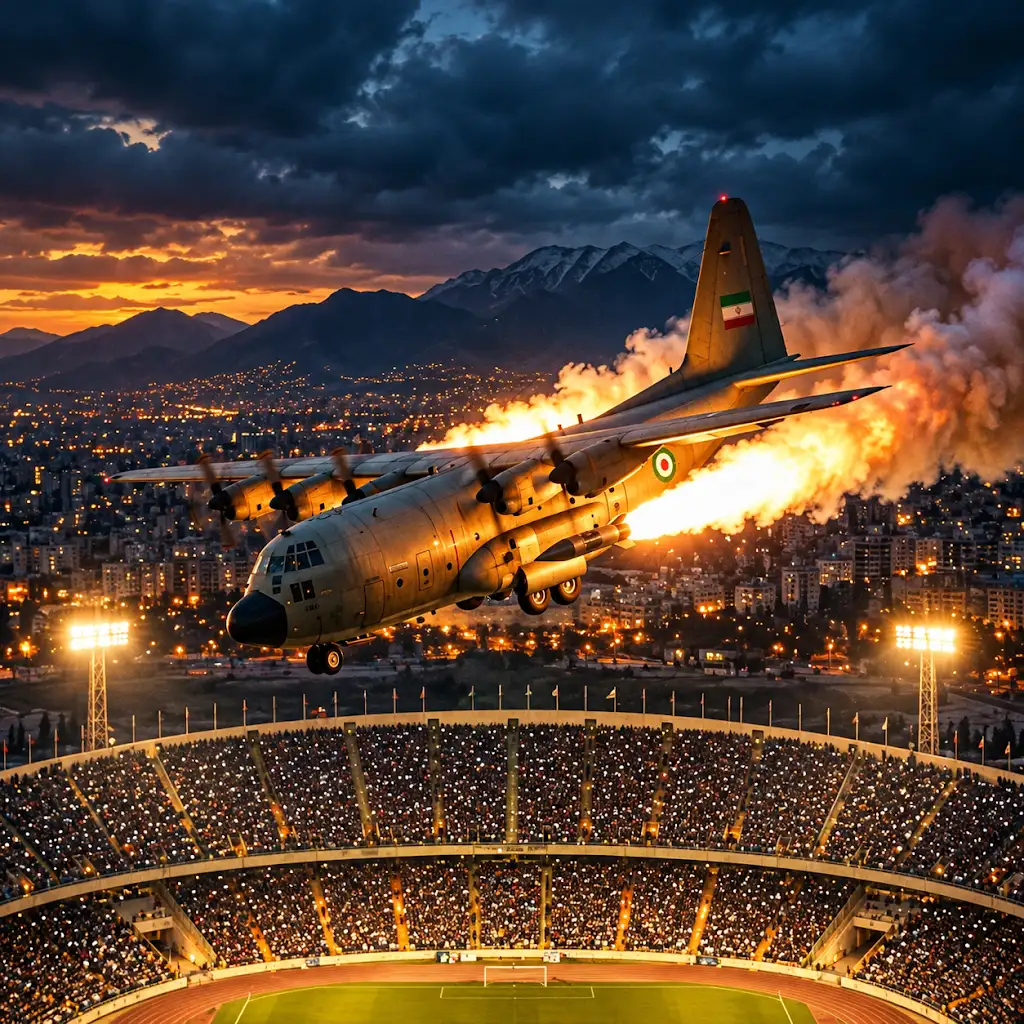
Operation Credible Sport was not just a matter of brave soldiers; it was a race against time, fueled by cutting-edge technology. The central element of the rescue plan was the C-130 Hercules transport aircraft, a workhorse of military aviation. However, for Operation Credible Sport, the C-130 was to be modified in ways never before attempted. The goal was to enable it to land and take off from an exceptionally short, unprepared strip of road – essentially a highway – near the embassy. This required a radical redesign of its propulsion system and the integration of new landing gear. The footage showcases the extensive testing and development of these modifications, revealing the immense effort poured into creating a vehicle capable of executing such a high-stakes mission. The engineering challenges were formidable, and the success of the entire operation hinged on the reliability of these modified aircraft.
The Spectre Gunships and the C-130’s Transformation
The C-130 Hercules, a familiar sight in military operations, was at the heart of Credible Sport’s technological ambition. To achieve the incredibly short takeoff and landing capabilities required, the aircraft underwent a dramatic transformation. The most significant modification was the addition of powerful Spectre gunships, specifically designed to provide close air support and suppress enemy fire. These formidable aircraft, armed with Gatling guns and rockets, were intended to neutralize any resistance encountered during the landing and extraction phases. More importantly, to enable the C-130 to operate from a hastily prepared landing zone, a system of rocket-assisted takeoff (RATO) bottles was integrated. These bottles, when ignited, provided an enormous burst of thrust, allowing the heavily laden aircraft to become airborne from an astonishingly short distance. The video documentation reveals the meticulous testing of these RATO systems, the fiery spectacle of their activation, and the engineers’ painstaking efforts to ensure their flawless performance under pressure. This was not merely an upgrade; it was a fundamental reimagining of the C-130’s capabilities.
The Dawn of Vertical Takeoff and Landing (VTOL) Aspirations
While the modified C-130 represented the primary aerial asset, the vision for Operation Credible Sport also flirted with more advanced concepts, hinting at the nascent development of Vertical Takeoff and Landing (VTOL) capabilities for larger aircraft. Although the ultimate execution relied on the C-130’s modified STOL (Short Takeoff and Landing) capabilities, early discussions and theoretical explorations within the project involved the potential use of aircraft that could land and take off vertically. This was a groundbreaking idea at the time, and while not fully realized in the context of Credible Sport, the underlying research and development laid some groundwork for future VTOL technologies. The rarity of the footage extends to these exploratory phases, offering a glimpse into the ambitious technological horizons being considered by the military planners. The desire to circumvent the need for traditional runways underscored the innovative spirit driving the operation.
The Crucial Role of the Delta Force and Special Forces
At the sharp end of Operation Credible Sport were the elite soldiers of the United States military, primarily elements of Delta Force and other special operations units. These were individuals trained for the most dangerous missions, their skills honed through rigorous selection and constant training. The footage offers a poignant look at their preparation, the meticulous rehearsals, and the unwavering dedication etched on their faces. They were the ones who would have faced the immediate danger, the ones who would have had to swiftly and decisively neutralize any threats to the hostages and themselves. Their training was not just physical; it was psychological, preparing them for the extreme stress and uncertainty of such a high-stakes rescue. The responsibility resting on their shoulders was immense, and the visual record highlights their commitment to executing the mission flawlessly, no matter the cost.
Training Regimens Under Absolute Secrecy
The training for Operation Credible Sport was conducted under the strictest secrecy. The soldiers involved understood the sensitive nature of their mission and the potential repercussions of any leak. The video archives reveal glimpses of these clandestine training sessions, held in remote locations and at odd hours. One can see the precision with which they practiced their maneuvers, the coordinated movements of teams, and the intense focus on every detail. This wasn’t just about combat; it was about hostage rescue, a specialized skill requiring empathy, negotiation tactics, and the ability to de-escalate situations while being prepared for the worst. The footage likely captures simulations of breaching buildings, securing perimeters, and extracting hostages under simulated fire. The sheer dedication and professionalism of these special operators are palpable, even through the grainy images.
The Psychological Preparedness for Hostage Situations
Beyond the physical combat skills, the psychological preparedness of the Delta Force operators was paramount. Rescuing hostages involves a delicate balance of force and restraint. The soldiers had to be ready to employ lethal force if necessary, but also to exhibit a level of control and professionalism that would not endanger the very people they were trying to save. The training would have included scenario-based exercises designed to mimic the pressures of a hostage situation, forcing the operators to make split-second decisions under duress. The footage might show debriefings, psychological evaluations, and exercises focused on communication and negotiation under fire. This aspect of their preparation, often unseen and unappreciated, was as critical as any tactical drill. The footage provides a rare window into this vital component of their readiness.
The Flawed Execution and the Bittersweet End
Despite the meticulous planning and the technological marvels, Operation Credible Sport was ultimately plagued by a series of unfortunate events that led to its premature cancellation. The footage, in its stark reality, documents the unfolding of these setbacks. While the core mission was never fully launched, the preparatory phases themselves encountered significant obstacles, casting a long shadow over the entire endeavor. The ultimate abandonment of the operation was a source of deep disappointment for all involved, a testament to the unpredictable nature of complex military operations and the ever-present element of chance. The images serve as a poignant reminder that even the most well-conceived plans can be undone by unforeseen circumstances.
The Ill-Fated Footing of the Rescue Plane
The most significant and ultimately decisive setback for Operation Credible Sport occurred during a critical test flight of the modified C-130. The footage captured the moments leading up to, and the immediate aftermath of, a catastrophic landing incident. The aircraft, attempting to simulate the conditions of the planned rescue mission, experienced a severe mechanical failure or operational error during its landing sequence. The details, often obscured in official reports, are laid bare in this rare footage. The images show the aircraft skidding and veering off the makeshift runway, sustaining significant damage. This incident not only demonstrated the inherent risks of the unconventional landing technique but also proved to be a fatal blow to the operation’s viability. The damage to the aircraft was extensive, and the timing was disastrous.
The Shifting Tides of Diplomacy and the Hostages’ Release
Coinciding with the operational challenges of Credible Sport, the geopolitical landscape was also shifting. The protracted nature of the hostage crisis and the looming US presidential election created a new urgency to resolve the situation through diplomatic means. As Operation Credible Sport faced mounting technical hurdles, back-channel negotiations intensified. The footage indirectly highlights this shift by showing the operational readiness being scaled back as diplomatic efforts gained momentum. Ultimately, the hostages were released on January 20, 1981, the day of Ronald Reagan’s inauguration, a symbolic conclusion to their 444-day ordeal. The release, though a cause for national jubilation, also meant the immediate and permanent cancellation of Operation Credible Sport. The immense effort and resources expended on the rescue plan were rendered moot by events beyond its direct control.
Operation Credible Sport was a pivotal moment in military history, showcasing innovative strategies and tactics. For those interested in exploring this topic further, a related article can provide deeper insights into the operation’s planning and execution. You can read more about it in this comprehensive piece that delves into the intricacies of the mission. For the full video and additional resources, visit this link.
The Enduring Legacy of a Failed Mission
| Metric | Details |
|---|---|
| Operation Name | Operation Credible Sport |
| Purpose | Demonstration of a modified C-130 Hercules for rapid assault and extraction |
| Date of Operation | 1980 |
| Aircraft Used | Lockheed C-130 Hercules (modified) |
| Modification Details | Installed multiple rocket engines for vertical/short takeoff and landing (V/STOL) |
| Video Length | Approximately 10-15 minutes (varies by source) |
| Video Content | Test flights, rocket engine ignition, takeoff, and landing sequences |
| Significance | Showcased innovative military aviation technology for rapid deployment |
| Outcome | Project was ultimately canceled due to technical challenges and changing mission requirements |
The story of Operation Credible Sport, even in its ultimate failure, holds an enduring legacy. The rare footage that has surfaced offers invaluable insights into the courage, ingenuity, and dedication of the individuals who conceived, planned, and prepared for this audacious rescue attempt. It is a powerful reminder of the lengths to which nations will go to protect their citizens and the sacrifices made by those who volunteer for the most dangerous missions. The lessons learned from Credible Sport, both in terms of technological development and operational planning, have undoubtedly contributed to the evolution of special operations capabilities in the decades that followed. The operation, though unsuccessful, remains a compelling case study in military history and a testament to the human spirit in the face of adversity.
Lessons Learned and Future Implications
The debacles of Operation Credible Sport provided a wealth of data for future military planning. The challenges encountered in modifying the C-130, particularly regarding its short-field landing capabilities and the integration of RATO systems, informed subsequent aircraft development and operational doctrines. The psychological aspects of hostage rescue, highlighted by the rigorous training of Delta Force, further refined the methodologies for preparing special operators for such complex missions. Furthermore, the operational failures underscored the critical importance of intelligence gathering and contingency planning in highly sensitive situations. The sheer complexity of the mission and the multitude of factors that could lead to its downfall offered stark lessons about the limits of even the most advanced planning and technology when confronted by the unpredictable realities of international crises.
The Unseen Sacrifice of the Operators
Perhaps the most profound aspect of the Operation Credible Sport footage is the opportunity it provides to recognize the unseen sacrifice of the soldiers involved. These were men who trained relentlessly, prepared to put their lives on the line for their country and for the safety of their fellow Americans. They faced the very real possibility of death or capture, yet they committed themselves to the mission with unwavering resolve. The footage, by offering a glimpse into their dedication, serves as a powerful tribute to their bravery and their willingness to undertake a task that, in the end, was rendered unnecessary by diplomatic success. Their efforts, though not directly resulting in a rescue, were a crucial part of the national response to the hostage crisis and deserve to be remembered and honored. The legacy of their commitment, even without a successful mission to its name, remains a significant chapter in the annals of American military history.
The Secret Plane Built to Land Inside a Stadium
FAQs
What is Operation Credible Sport?
Operation Credible Sport is a law enforcement initiative aimed at combating illegal doping practices in sports.
What does the full video of Operation Credible Sport show?
The full video of Operation Credible Sport typically includes undercover operations, interviews with suspects, and evidence gathering related to doping activities.
Who is involved in Operation Credible Sport?
Operation Credible Sport usually involves collaboration between law enforcement agencies, anti-doping organizations, and sports governing bodies to investigate and prosecute individuals involved in doping.
How can I watch the full video of Operation Credible Sport?
The full video of Operation Credible Sport may be available on official law enforcement or anti-doping organization websites, or it may be shared with the media for public viewing.
What are the consequences for individuals caught in Operation Credible Sport?
Individuals caught in Operation Credible Sport may face legal charges, bans from participating in sports competitions, and tarnished reputations within the sports community.