The year 1980 crackled with geopolitical tension. The Soviet invasion of Afghanistan loomed large, a stark reminder of the Cold War’s ever-present threat. Within this charged atmosphere, a different kind of crisis brewed, one that would test the ingenuity and bravery of the United States military to its very limits. This was the backdrop for Operation Credible Sport, a remarkably audacious and ultimately unrealized rescue mission that aimed to extricate a group of American hostages held in Iran, a nation still reeling from the seismic events of its 1979 revolution. The story of Operation Credible Sport is not just about a military plan; it is a testament to the relentless pursuit of protecting American lives, even in the face of overwhelming odds and technological challenges.
The Seeds of a Crisis: The Iran Hostage Situation
The Iranian Revolution, which began in 1978 and culminated in the Shah’s departure in January 1979, dramatically altered the political landscape of the Middle East. The ensuing power vacuum was filled by Ayatollah Ruhollah Khomeini and his Islamist followers, ushering in a period of profound societal and political upheaval. The United States, having long supported the Shah’s regime, found itself in an increasingly precarious position. This unease exploded into outright crisis on November 4, 1979, when a mob of militant Iranian students, largely supporting the new revolutionary government, stormed the U.S. Embassy in Tehran and took its occupants hostage.
The Immediate Aftermath and Growing Desperation
The seizure of the embassy and its personnel sent shockwaves across the globe. Sixty-six American diplomats, marines, and other staff were held captive, their fates uncertain. The initial hope that the situation would be resolved quickly evaporated as the days turned into weeks, and weeks into months. The Iranian government, under Khomeini, refused to release the hostages, using their detention as a powerful bargaining chip and a symbol of their defiance against what they perceived as American interference in Iranian affairs. The daily news cycles were dominated by images of anti-American protests in Tehran and the agonizing uncertainty surrounding the hostages’ well-being.
The International Stage and Diplomatic Stalemate
Diplomatic efforts, both overt and covert, were initiated by the U.S. government. Channels were explored through intermediaries, international organizations, and even direct, albeit often strained, communications with Iranian officials. However, these efforts proved largely fruitless. The Iranian leadership, galvanized by revolutionary fervor and a deep-seated resentment towards the United States, remained resolute in their stance. The hostage crisis became a major foreign policy challenge for the Carter administration, eroding public confidence and creating immense pressure for decisive action. The world watched, captivated and horrified, as a standoff deepened, leaving the hostages in a state of perpetual vulnerability.
Operation Credible Sport was a significant U.S. military operation in 1980 aimed at rescuing American hostages in Iran. For a deeper understanding of the complexities surrounding this operation, you can read a related article that explores the strategic implications and outcomes of the mission. This article provides valuable insights into the challenges faced by the U.S. military during this critical period. For more information, visit this link.
The Genesis of a Bold Plan: Operation Credible Sport Emerges
As diplomatic avenues narrowed and the humanitarian crisis deepened, the U.S. military began to explore more aggressive solutions. The possibility of a rescue mission, long considered too risky, started to gain traction. The inherent dangers were immense: the hostages were held in a heavily guarded facility in a hostile city, deep within enemy territory. Any rescue attempt would require unparalleled precision, speed, and the element of surprise. This is where the concept of Operation Credible Sport began to take shape, driven by a desperate need to bring the hostages home.
The Strategic Imperative: Recapturing the Narrative
Beyond the immediate humanitarian concern, the hostage crisis had significant geopolitical implications. The continued detention of American citizens was perceived as a major humiliation for the United States, emboldening its adversaries and undermining its global standing. A successful rescue operation, however improbable, offered the potential to restore American prestige, demonstrate resolve, and potentially deter future aggressions. The strategic imperative was clear: regain control of the narrative and demonstrate that the United States would not abandon its citizens.
The Brainstorming and the Technological Hurdle
The planning for Operation Credible Sport was a testament to the ingenuity and resourcefulness of the U.S. military and intelligence agencies. Various scenarios were considered, each with its own set of daunting challenges. The primary obstacle was transportation. Traditional helicopters, while capable of insertion, were vulnerable to Iranian air defenses and would require extensive refueling, making them a less-than-ideal solution for a swift and decisive extraction. This led to a crucial realization: a revolutionary approach to vertical lift was needed. The focus began to shift towards a unique and highly experimental aircraft.
The Star Player: The RH-53D Sea Stallion’s Role

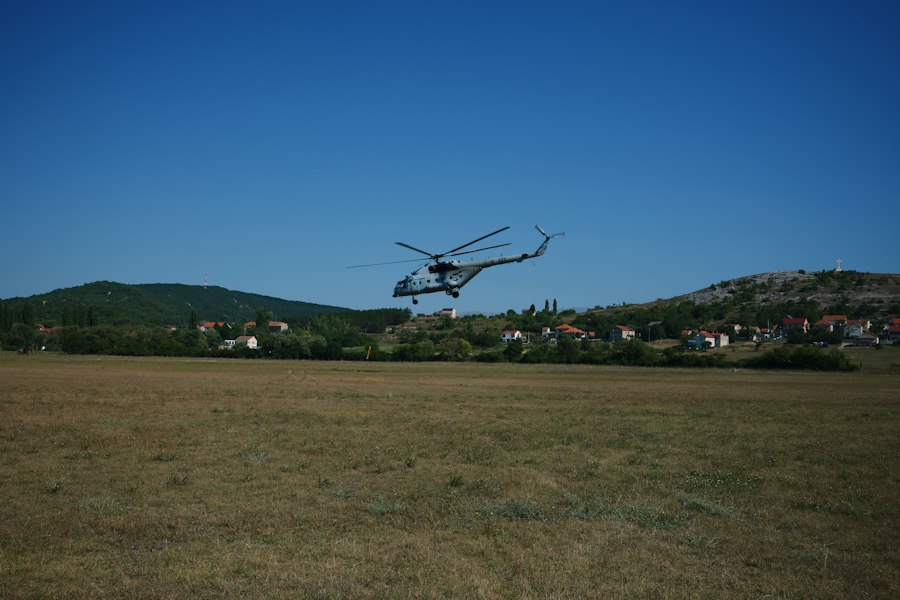
At the heart of Operation Credible Sport’s innovative approach lay the Sikorsky RH-53D Sea Stallion helicopter. This was no ordinary helicopter; it was a massive, twin-engine machine designed for mine-sweeping operations, capable of carrying heavy payloads and operating in challenging environments. For Operation Credible Sport, its potential was reimagined as a direct insertion and extraction platform for a commando unit. The idea was to fly the helicopters directly into Tehran, land them in a suitable location near the embassy, deploy the rescue force, and then, crucially, extract the hostages and the team under heavy fire.
The Unconventional Deployment Strategy
The plan involved a complex deployment of multiple RH-53D helicopters, flown by pilots from Helicopter Mine Countermeasures Squadron 14 (HM-14) and Helicopter Mine Countermeasures Squadron 15 (HM-15). These helicopters would be refueled mid-flight by C-130 aircraft, a delicate operation in itself. The idea was to overwhelm Iranian defenses through sheer numbers and surprise. The helicopters would land in a designated area, likely a sports stadium or a large open space, allowing commandos to disembark and proceed to the embassy. The extraction would follow a similar, albeit more perilous, pattern.
The Technical Challenges and the Ghost Fleet
The Sea Stallion, while powerful, was not without its drawbacks. Its operational range, even with mid-air refueling, was a concern. The desert environment of Iran posed further challenges, including sandstorms and extreme temperatures that could affect engine performance. Moreover, the chosen helicopters were part of a “ghost fleet,” meaning they were not readily available and had to be pulled from various units and refitted for the mission. This added another layer of logistical complexity to an already ambitious undertaking. The inherent limitations of the aircraft, coupled with the unknown variables of operating in hostile airspace, represented significant risks that the planners had to meticulously address.
The Elaborate Blueprint: Mission Phases and Contingencies
Operation Credible Sport was not a hastily conceived notion; it was a meticulously detailed plan, broken down into distinct phases, with numerous contingencies built in to address potential failures. The success of such a daring mission hinged on flawless execution and the ability to adapt to unforeseen circumstances.
Phase One: Infiltration and Insertion
The initial phase involved the covert movement of U.S. military personnel and assets into proximity of Iran. This included the staging of C-130 transport aircraft for mid-air refueling operations and the positioning of the RH-53D helicopters. The plan stipulated that the helicopters would approach Iran under the cover of darkness, avoiding detection by Iranian radar systems. Upon reaching their designated insertion point near Tehran, the helicopters would land, and the specialized rescue force, comprised of Army Delta Force commandos and Air Force Special Operations personnel, would disembark.
Phase Two: Assault and Extraction
Once on the ground, the commando team would move swiftly towards the U.S. Embassy. The element of surprise was paramount. The plan involved breaching the embassy, neutralizing any guards, and securing the hostages. The commandos were equipped with specialized breaching tools and weaponry designed for close-quarters combat. Following the successful liberation of the hostages, they would be escorted back to the waiting helicopters. The extraction phase was anticipated to be the most dangerous, as Iranian forces would undoubtedly be alerted by then. The helicopters would lift off, ideally with the hostages secured, and begin their egress from Tehran, again utilizing mid-air refueling to ensure their return to a safe location.
Contingency Planning: The Unforeseen and the “What Ifs”
The planners of Operation Credible Sport understood that even the most detailed plan could go awry. Consequently, extensive contingency plans were developed. These included protocols for helicopter malfunctions, Iranian countermeasures, and even scenarios where the rescue team might be compromised. The possibility of the mission failing, and the potential repercussions, were also a critical part of the planning process, though the primary focus remained on achieving success. The intelligence gathering was continuous, aiming to identify Iranian defensive capabilities and potential safe houses or extraction points should the primary plan falter.
Operation Credible Sport, which aimed to rescue American hostages in Iran in 1980, was a bold and innovative military initiative that faced numerous challenges. For those interested in exploring the complexities and implications of this operation further, a related article can provide valuable insights into the strategic decisions made during this critical period. You can read more about the intricacies of military operations and their historical context by visiting this detailed analysis.
The Crucial Moment: The Mission’s Aborted Attempt
| Metric | Details |
|---|---|
| Operation Name | Operation Credible Sport |
| Year | 1980 |
| Purpose | Rescue of American hostages in Iran |
| Aircraft Used | Modified Lockheed C-130 Hercules |
| Modifications | Rocket-assisted takeoff and landing system |
| Number of Rockets Installed | 30 (including forward, aft, and downward-facing rockets) |
| Test Flights Conducted | Several, including one crash during testing |
| Outcome | Operation cancelled after failed rescue attempt (Operation Eagle Claw) |
| Significance | Innovative use of rocket-assisted aircraft for short-field operations |
Despite months of meticulous planning, intense training, and the gathering of specialized equipment, Operation Credible Sport never reached its intended climax. The mission, intended to be a swift and decisive rescue, was ultimately called off before its operational phase could truly begin, a decision born from a confluence of technical failures and growing concerns about operational feasibility.
The Desert Trial and the First Setback
The path to the actual mission was paved with rigorous rehearsals and simulations. A critical test flight, designed to replicate the conditions and challenges of the mission, took place in the deserts of Oman in May 1980. During this exercise, codenamed “Operation Eagle Claw” (the broader effort that included Credible Sport), several of the RH-53D helicopters experienced mechanical problems. One helicopter suffered engine failure, and another suffered a catastrophic crash, resulting in the deaths of eight U.S. servicemen and the injury of several others. This incident, a stark and tragic reminder of the inherent risks involved, sent shockwaves through the planning command.
The Cascading Failures and the Decision to Halt
The failures during the Oman exercise, coupled with ongoing concerns about the reliability of the helicopters and the intricate mid-air refueling operations, raised serious doubts about the viability of the mission. The commander of the Joint Special Operations Command, Lieutenant General James Vaught, was faced with a devastating reality: the mission as planned was too risky, and the potential for further loss of life was too high. After much deliberation and consultation with senior military and political leaders, the agonizing decision was made to abort Operation Credible Sport. The helicopters were recalled, and the commando teams dispersed. The hostages remained in captivity, and the world continued to wait. The failure of Operation Eagle Claw and its component, Credible Sport, would lead to a thorough review of U.S. special operations capabilities and ultimately contribute to the establishment of Task Force 160, later known as the 160th Special Operations Aviation Regiment (SOAR), renowned for its expertise in night-time helicopter operations. While Operation Credible Sport itself did not achieve its objective, its legacy lies in the lessons learned and the subsequent advancements in special operations aviation that would pave the way for future successful missions.
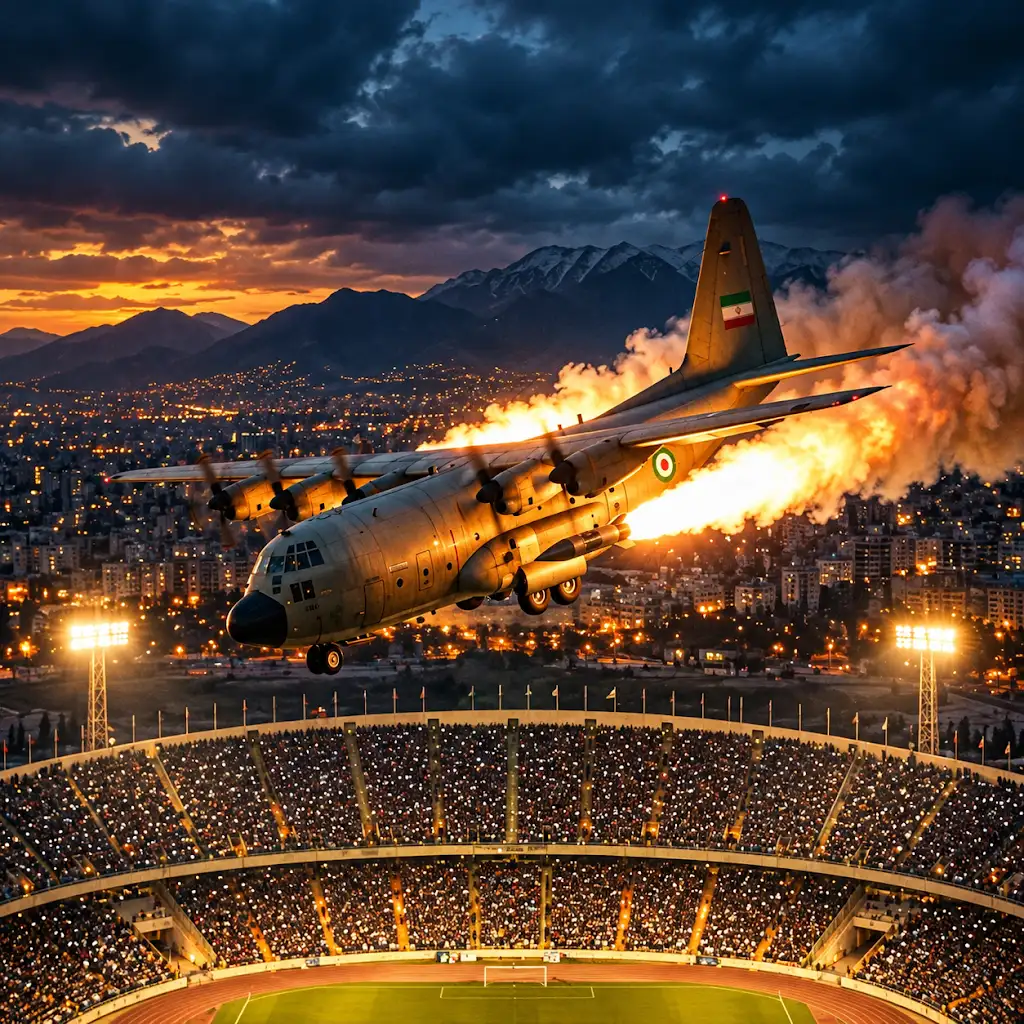
The Secret Plane Built to Land Inside a Stadium
FAQs
What was Operation Credible Sport 1980?
Operation Credible Sport 1980 was a military operation conducted by the United States to rescue American hostages held in Iran.
How was Operation Credible Sport 1980 different from previous rescue attempts?
Operation Credible Sport 1980 involved a unique plan to use modified C-130 aircraft to rescue the hostages by landing in a soccer stadium near the U.S. Embassy in Tehran.
Why was Operation Credible Sport 1980 ultimately aborted?
Operation Credible Sport 1980 was aborted due to a mechanical failure during a test flight of the modified C-130 aircraft, which caused one of the aircraft to crash.
What impact did the failure of Operation Credible Sport 1980 have on U.S.-Iran relations?
The failure of Operation Credible Sport 1980 further strained relations between the United States and Iran, leading to increased tensions between the two countries.
Are there any lasting legacies or lessons learned from Operation Credible Sport 1980?
Operation Credible Sport 1980 highlighted the risks and challenges of conducting complex military operations in hostile environments, leading to a reevaluation of rescue strategies and tactics for future missions.