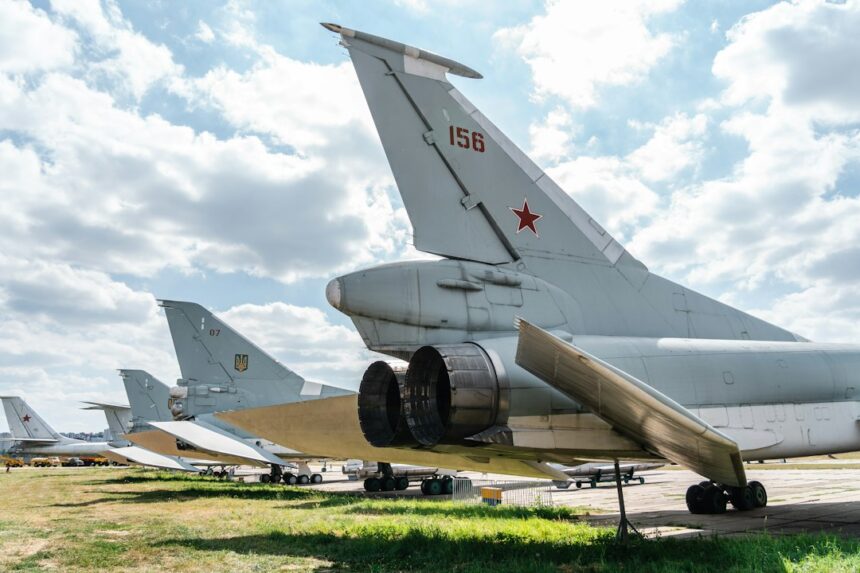
The shadow of the Cold War cast a long and indelible mark on the trajectory of aviation. While the world held its breath, a clandestine arms race fueled innovation at an unprecedented pace, particularly within the hushed confines of top-secret aircraft projects. These were not merely incremental improvements; these were radical departures, designed to achieve strategic superiority, gather intelligence, and project power in ways previously unimaginable. The resulting technological leaps, often born from the crucible of intense national security needs, not only redefined the art of flight but also laid the groundwork for many of the aircraft we see in the skies today, both military and civilian. The pursuit of speed, altitude, stealth, and endurance pushed engineers and designers to their absolute limits, often resulting in machines that bordered on science fiction. These programs, while shrouded in secrecy for decades, are now increasingly understood for their profound and lasting impact on aviation history, demonstrating the potent catalyst that intense competition and unwavering governmental commitment can be for technological advancement.
The Dawn of the Jet Age and the Quest for Supremacy
The immediate post-World War II era saw a dramatic shift in aerial warfare capabilities with the advent of the jet engine. The Cold War intensified this evolution, transforming aircraft from piston-driven machines into sophisticated flying platforms capable of unprecedented speeds and altitudes. The Soviet Union’s early success with jet technology, exemplified by the MiG-15’s impressive performance in the Korean War, spurred the United States to accelerate its own jet bomber and interceptor programs. This period was characterized by a desperate need to maintain a technological edge, leading to ambitious and often risky designs.
The Bombers of the Nuclear Deterrent
The bedrock of Cold War strategy, particularly for the United States, was the nuclear triad, which heavily relied on strategic bombers capable of delivering nuclear payloads. These aircraft were designed to penetrate enemy airspace, withstand intense defensive measures, and survive in hostile environments. The development of these bombers was a monumental undertaking, requiring advancements in aerodynamics, propulsion, materials science, and electronic warfare.
The B-47 Stratojet: A Lean and Fast Predator
The Boeing B-47 Stratojet represented a significant leap forward in bomber design. Its sleek, swept-wing configuration, initially considered radical, allowed for much higher subsonic speeds than its predecessors. This design, influenced by captured German aerodynamic research, was initially met with skepticism due to its unusual appearance and the perceived complexity of its four engines mounted in pods under the wings. However, its speed and range made it a crucial component of the early Strategic Air Command (SAC) arsenal. The B-47 was not a direct successor to the B-29 but rather a different kind of bomber, emphasizing speed and maneuverability over payload capacity in some configurations. Its development involved extensive wind tunnel testing and simulations, pushing the boundaries of aerodynamic understanding for high-speed flight. The introduction of its braking parachute system was also a noteworthy innovation, essential for bringing the heavy aircraft to a halt on relatively short runways.
The B-52 Stratofortress: The Enduring Giant
Perhaps the most iconic of all Cold War bombers, the Boeing B-52 Stratofortress, remains in service today, a testament to its robust design and continuous upgrades. Conceived as a successor to the B-47, the B-52 was designed for high-altitude, long-range penetration. Its eight powerful jet engines and massive wingspan allowed it to carry a substantial nuclear payload across intercontinental distances. The development of the B-52 was fraught with challenges, including the need to integrate new engine technologies and ensure crew survivability at extreme altitudes and in potential combat scenarios. The aircraft’s subsonic speed was a deliberate design choice, prioritizing payload and range over the high speeds that would later characterize supersonic bombers. Its longevity is a remarkable feat of engineering and strategic foresight, as it has been continually adapted to carry a wide array of conventional and nuclear weapons, maintaining its relevance through numerous technological shifts.
The Interceptors: Guardians of the Skies
As bomber technology advanced, so did the need for equally capable interceptors. These aircraft were tasked with defending friendly airspace from incoming enemy bombers. Their design focused on rapid ascent, high speed, and powerful armament to engage and destroy airborne threats.
The F-102 Delta Dagger and F-106 Delta Dart: Mach 2 Guardians
The Convair F-102 Delta Dagger and its successor, the F-106 Delta Dart, were prime examples of the “century series” of American fighter aircraft designed for air superiority. The F-102, with its distinctive delta wing, was the first operational interceptor to achieve supersonic speeds. Its development was driven by the perceived threat of Soviet bombers capable of flying at high altitudes. The F-106 represented a significant improvement, featuring more powerful engines, advanced radar, and a more integrated weapons system, including the AIM-4 Falcon missile. These aircraft were designed to be flown by a single pilot, guided by ground control radar for much of their mission, a concept that reflected the evolving nature of air combat. Their delta wing design, while visually striking, was a compromise to achieve the necessary speed and internal weapons carriage while maintaining reasonable stability.
During the Cold War, numerous top-secret aircraft projects were developed, pushing the boundaries of aviation technology and espionage. One fascinating aspect of these projects is the development of stealth technology, which aimed to create aircraft that could evade radar detection. For a deeper dive into the intricacies of these covert operations and the aircraft that emerged from them, you can read a related article at this link.
The Unseen Eyes: Reconnaissance and Intelligence Gathering

Beyond the direct confrontation of bombers and interceptors, a crucial front in the Cold War was fought in the realm of intelligence. The ability to observe and gather information about the enemy’s military capabilities, troop movements, and technological advancements was paramount. This led to the development of highly specialized reconnaissance aircraft, often pushing the boundaries of speed, altitude, and endurance.
The High-Altitude Sentinels
The need to fly over heavily defended airspace undetected led to the development of aircraft capable of reaching extreme altitudes, far beyond the reach of most contemporary anti-aircraft systems. These were aircraft designed to be almost untouchable, gathering vital photographic and electronic intelligence.
The U-2 Dragon Lady: The Spy Plane That Soared Above
The Lockheed U-2 “Dragon Lady” is perhaps the most famous reconnaissance aircraft of the Cold War. Developed under extreme secrecy by Kelly Johnson’s Skunk Works, the U-2 was designed to fly at altitudes exceeding 70,000 feet, making it virtually invisible to Soviet radar and interceptors of the era. Its long, slender wings and glider-like airframe were optimized for high-altitude, low-speed flight, a stark contrast to the high-performance fighters of the time. The U-2’s missions were incredibly perilous, pushing the limits of human endurance and aircraft capability. Its role in gathering critical intelligence, including photographic evidence of Soviet missile sites, was invaluable to US policymakers. The downing of Francis Gary Powers’ U-2 over Soviet territory in 1960 was a major international incident, highlighting both the success and the inherent risks of these clandestine operations. The U-2’s design was so specialized that it required a unique approach to takeoff and landing, often using a two-wheeled landing gear configuration with “pogo sticks” to support the wings.
The SR-71 Blackbird: The Pinnacle of Speed and Altitude
The Lockheed SR-71 “Blackbird” represented the ultimate evolution of high-speed, high-altitude reconnaissance. Designed to fly at Mach 3+ and altitudes above 80,000 feet, the Blackbird was a marvel of engineering. Its distinctive shape, advanced titanium construction, and Pratt & Whitney J58 engines that operated as ramjets at high speeds were all groundbreaking. The SR-71 was designed to outrun any missile and outmaneuver any threat. Its missions provided unparalleled intelligence on Soviet military activities, contributing significantly to the de-escalation of tensions by providing accurate assessments of Soviet capabilities. The SR-71’s operational history is a testament to its extraordinary performance and the dedication of the crews who flew it. The challenges of maintaining such an aircraft, from its specialized fuel to its complex maintenance schedule, were immense, underscoring the extraordinary resources and expertise dedicated to this program.
The Covert Explorers: Electronic Intelligence and Stealth
While high altitude offered a degree of safety, the evolving nature of threats also demanded new approaches to intelligence gathering, including the development of aircraft capable of operating closer to enemy territory or employing stealthy characteristics to avoid detection.
The Advanced Technology Aircraft Program (ATAP) and Early Stealth Concepts
Long before the F-117 Nighthawk became a household name, the concept of “stealth” was being explored in classified research programs. The Advanced Technology Aircraft Program (ATAP) at Lockheed, for instance, investigated the potential for radar-absorbent materials and shaped airframes to reduce an aircraft’s radar cross-section. These early efforts, though not resulting in operational aircraft, laid the theoretical and experimental groundwork for future stealth designs. The challenges were immense, involving not only material science but also understanding the physics of radar reflection and developing computational tools to predict and mitigate these reflections.
The Quest for Speed: Supersonic and Hypersonic Frontiers

The allure of breaking the sound barrier and venturing into the realm of hypersonic flight was a driving force behind many Cold War aircraft projects. Speed was not just a technological achievement; it was a strategic advantage, promising the ability to evade defenses, deliver payloads faster, and gain tactical superiority.
Breaking the Sound Barrier and Beyond
The initial success of breaking the sound barrier was quickly followed by efforts to achieve sustained supersonic flight and to explore the even more extreme speeds of the hypersonic regime. These endeavors required radical new engine designs and aerodynamic configurations.
The X-1 and its Successors: Pushing the Envelope
The Bell X-1 is famously credited with being the first aircraft to break the sound barrier in level flight, piloted by Chuck Yeager in 1947. This rocket-powered experimental aircraft was a crucial step in understanding the aerodynamic challenges of supersonic flight. Following the X-1, a series of experimental aircraft, including the X-2, X-3, and X-4, were developed to explore different aspects of high-speed flight, including stability, control, and propulsion. These programs were instrumental in gathering the data necessary to design operational supersonic aircraft. The X-1’s direct propulsion system, while providing immense thrust, also presented challenges in terms of fuel consumption and flight duration, highlighting the trade-offs inherent in early jet and rocket propulsion.
The XB-70 Valkyrie: The Supersonic Bomber That Never Was
The North American XB-70 Valkyrie was a monumental undertaking to create a Mach 3 capable strategic bomber. Designed to fly high and fast above Soviet air defenses, its six powerful General Electric J58 engines were a marvel of engineering. The XB-70’s delta wing configuration and its advanced design were intended to minimize drag at supersonic speeds. However, the program faced significant challenges. The development of effective countermeasures against Soviet surface-to-air missiles proved difficult, and the program’s high cost, coupled with the rise of reconnaissance aircraft like the U-2 and SR-71, ultimately led to its cancellation. Despite not entering operational service, the XB-70 provided invaluable data on supersonic aerodynamics and engine performance that influenced later aircraft designs. The aircraft’s size and complexity, along with the extreme speeds it achieved, also presented unprecedented challenges in terms of flight control and pilot safety.
The Silent Revolution: The Dawn of Stealth Technology
The inherent vulnerability of aircraft to radar detection became a paramount concern during the Cold War. This led to a dedicated, and for a long time, highly secret, effort to develop technologies that would render aircraft virtually invisible to radar and other detection systems. This was the genesis of stealth technology.
Deception and Deflection: The Principles of Stealth
Stealth, or low observability, is achieved through a combination of design features that minimize an aircraft’s radar cross-section, infrared signature, and acoustic emissions. This involves shaping the aircraft’s airframe to deflect radar waves away from the source, using radar-absorbent materials, and carefully managing engine exhaust and noise. The development of these technologies required breakthroughs in computer modeling, material science, and aerodynamic design.
The F-117 Nighthawk: The Black Triangle Emerges
The Lockheed F-117 Nighthawk, often referred to as the “stealth fighter,” was the world’s first operational aircraft designed from the ground up for stealth. Its faceted, angular design, which looked more like a piece of abstract art than an aircraft, was specifically engineered to scatter radar waves. The F-117’s development was shrouded in such secrecy that its existence was not publicly acknowledged until the late 1980s. Its operational success in the Gulf War proved the effectiveness of stealth technology, revolutionizing modern warfare. The F-117’s reliance on external hardpoints for weapons, which detracted from its stealth profile, was a significant compromise that later designs would seek to overcome with internal weapons bays. The pilot experience in the F-117 was also unique, with its fly-by-wire system and lack of traditional cockpit visibility, requiring extensive reliance on its sophisticated avionics.
The B-2 Spirit: The Stealth Bomber Reaches New Heights
The Northrop Grumman B-2 Spirit is a revolutionary flying wing stealth bomber that represents the pinnacle of stealth bomber technology. Designed to penetrate deeply into enemy airspace, the B-2 is virtually undetectable by conventional radar. Its distinctive flying wing design, coupled with advanced stealth materials and technologies, allows it to evade detection and deliver both conventional and nuclear payloads. The B-2’s development was even more classified than the F-117’s, with its first public appearance occurring only after its operational deployment. The B-2’s cost per unit made it a subject of considerable debate, but its strategic capabilities are undeniable. The challenges in maintaining the B-2’s stealth coating and its sophisticated avionics are immense, requiring highly specialized maintenance procedures.
During the Cold War, numerous top secret aircraft projects were developed, pushing the boundaries of aviation technology and espionage. One fascinating aspect of these projects is the development of stealth technology, which aimed to create aircraft that could evade radar detection. For those interested in exploring more about these groundbreaking advancements, a related article can be found at In The War Room, where the intricate details of these covert operations are discussed in depth. The legacy of these aircraft continues to influence modern military aviation today.
The Legacy of Secrecy: Enduring Impacts on Aviation
| Project Name | Country | Years Active | Purpose | Key Features | Status |
|---|---|---|---|---|---|
| Lockheed A-12 | USA | 1959-1968 | Reconnaissance | Mach 3+, high altitude, stealth features | Declassified |
| MiG-25 Foxbat | USSR | 1964-1984 | Interceptor and reconnaissance | Mach 3.2, high speed, high altitude | Operational |
| Northrop Tacit Blue | USA | 1982-1985 | Stealth reconnaissance technology demonstrator | Low radar cross-section, curved surfaces | Tested and retired |
| Avro Canada CF-105 Arrow | Canada | 1953-1959 | Interceptor | Mach 2+, advanced avionics | Cancelled |
| SR-71 Blackbird | USA | 1964-1998 | Strategic reconnaissance | Mach 3.3+, stealth features, high altitude | Retired |
The top-secret Cold War aircraft projects, born out of necessity and a relentless pursuit of technological dominance, have left an indelible mark on the history of aviation. While many of these aircraft were designed for war, their innovations have found their way into civilian aviation, and the very principles explored have reshaped the way we design and build aircraft today.
Technological Spillover and Future Directions
The advanced materials, aerodynamic principles, propulsion systems, and avionics developed for these secret programs have had profound spillover effects. The quest for speed led to advances in engine efficiency and aerodynamic control. The need for reconnaissance pushed the boundaries of sensor technology and data processing. The development of stealth, in particular, has fundamentally changed the design philosophy for military aircraft and continues to influence commercial aviation in areas like noise reduction and fuel efficiency.
Advancements in Materials and Aerodynamics
The intense pressure to achieve greater speeds and altitudes led to the exploration and widespread adoption of new materials. Titanium, for instance, became crucial for aircraft operating at high temperatures and speeds, as exemplified by the SR-71. Composites, while not as prevalent in the early days, also saw significant research and development for their strength-to-weight ratios. The sophisticated aerodynamic understanding gained from projects like the XB-70 and the U-2 directly informed the design of countless subsequent aircraft, both military and civilian, leading to more efficient and stable flight characteristics. The complex computations required to design for supersonic and hypersonic regimes also spurred advancements in computational fluid dynamics (CFD), a tool now indispensable in aircraft design.
The Evolution of Avionics and Flight Control
The complex mission requirements of these secret aircraft necessitated significant advancements in avionics and flight control systems. The development of fly-by-wire systems, initially explored for their potential to reduce pilot workload and improve maneuverability in extreme conditions, eventually became standard in modern aircraft. The sophisticated sensor suites and data processing capabilities developed for reconnaissance aircraft laid the groundwork for the advanced navigation, communication, and electronic warfare systems we rely on today. The integration of artificial intelligence and advanced automation, concepts first explored in rudimentary forms during the Cold War, continues to shape the future of aviation, promising even more autonomous and efficient flight. The legacy of these secret projects is a testament to human ingenuity and the powerful, albeit sometimes dangerous, catalyst that the pursuit of strategic advantage can be for technological progress, shaping the skies we traverse today and will continue to do so in the future.
The Secret Plane Built to Land Inside a Stadium
FAQs
What were some of the top secret cold war aircraft projects?
Some of the top secret cold war aircraft projects included the Lockheed A-12, the Northrop YB-49, the Avro Canada VZ-9 Avrocar, the Boeing X-20 Dyna-Soar, and the Lockheed Have Blue.
Why were these aircraft projects considered top secret during the cold war?
These aircraft projects were considered top secret during the cold war due to their advanced technology, stealth capabilities, and the sensitive nature of their missions, which often involved reconnaissance or strategic military operations.
Did any of these top secret aircraft projects ever become publicly known?
Yes, some of these top secret aircraft projects eventually became publicly known after being declassified by the government or through leaks and disclosures. However, many details and capabilities of these projects remain classified to this day.
What impact did these top secret cold war aircraft projects have on aviation technology?
These top secret cold war aircraft projects had a significant impact on aviation technology by pushing the boundaries of design, materials, propulsion, and stealth capabilities. Many of the technologies developed for these projects later influenced the design of modern military and civilian aircraft.
Are there any remaining top secret cold war aircraft projects that have not been declassified?
Yes, there are likely still remaining top secret cold war aircraft projects that have not been declassified. The exact details and capabilities of these projects remain unknown to the public, and they may continue to be shrouded in secrecy for national security reasons.