Unveiling Earth’s Protective Shell: The Significance of Global Magnetic Field Distortion Experiments
The Earth’s magnetic field, a silent guardian, shields our planet from the onslaught of charged particles emanating from the Sun and deep space. This invisible shield, known as the magnetosphere, is not static; it is a dynamic entity constantly interacting with its environment. Understanding the complexities of its behavior, particularly how it can be distorted, is paramount for safeguarding our technological infrastructure and gaining deeper insights into fundamental astrophysical processes. Global magnetic field distortion experiments, a relatively nascent but rapidly evolving field, are at the forefront of this endeavor. By artificially manipulating or observing the natural manipulation of the magnetosphere, scientists are unlocking unprecedented knowledge about its resilience, its vulnerabilities, and the intricate interplay between our planet and the solar wind. These experiments range from sophisticated ground-based observations of naturally occurring disturbances to audacious proposals for in-space manipulation, all aimed at deciphering the secrets of our planet’s magnetic armor.
Recent advancements in global magnetic field distortion experiments have opened new avenues for understanding Earth’s geomagnetic behavior. A related article that delves into the implications of these experiments can be found at this link. It discusses the potential impacts of magnetic field changes on technology and climate, highlighting the importance of ongoing research in this critical area of Earth sciences.
Simulating Cosmic Barrages: Understanding Natural Magnetic Field Perturbations
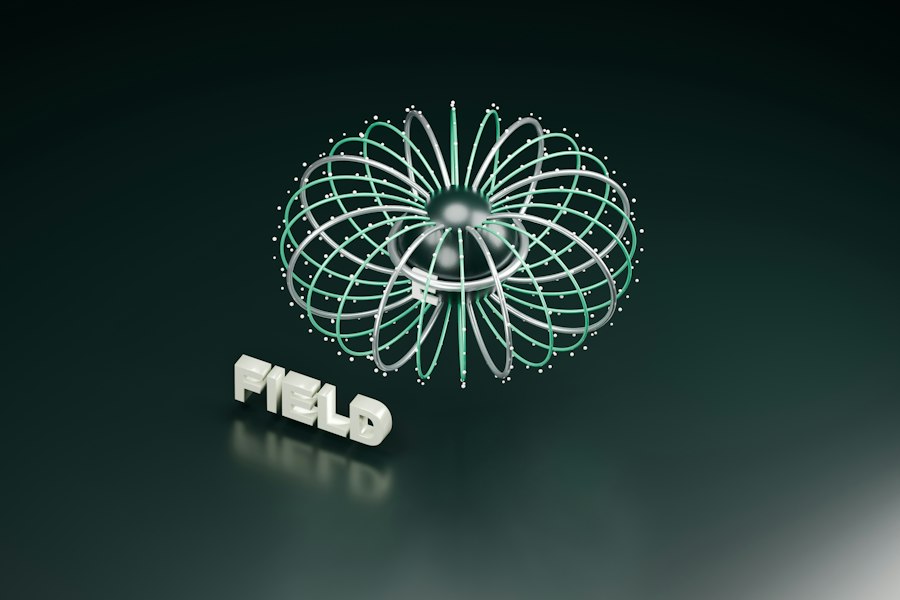
The Earth’s magnetic field is under constant barrage. The solar wind, a stream of plasma and magnetic field lines emanating from the Sun, interacts with the magnetosphere in a myriad of ways, leading to natural distortions. These distortions are not merely academic curiosities; they have profound implications for our modern, technology-dependent society. Geomagnetic storms, for instance, triggered by solar flares and coronal mass ejections (CMEs), can wreak havoc on power grids, satellite communications, and even GPS navigation. Therefore, studying these natural distortions is crucial for developing predictive models and mitigation strategies.
The Solar Wind’s Unseen Hand: Plasma Dynamics and Magnetic Reconnection
The solar wind, a supersonic outflow of ionized gas from the Sun, carries its own magnetic field, the Interplanetary Magnetic Field (IMF). When the IMF is oriented southward, it can directly interact with Earth’s northward magnetic field, leading to a process called magnetic reconnection. This is a fundamental plasma physics phenomenon where magnetic field lines break and reconfigure, releasing vast amounts of energy. For the Earth’s magnetosphere, reconnection is a primary driver of geomagnetic activity. It opens pathways for solar wind plasma to enter the magnetosphere, energizing particles that can then precipitate into the atmosphere, causing auroras, and also driving powerful electric currents within the magnetosphere itself. Understanding the spatial and temporal scales of reconnection, and how it varies with IMF orientation and strength, is a key goal of observational campaigns. Ground-based magnetometers, deployed globally, provide a vital network to track the signatures of these events as they propagate through the magnetosphere. Satellites positioned in orbit, such as those within the Cluster mission or the Magnetospheric Multiscale (MMS) mission, offer direct measurements within the magnetosphere, allowing scientists to observe reconnection in situ. These coordinated observations are instrumental in building a comprehensive picture of how the solar wind sculpts and distorts our planet’s magnetic shield.
Geomagnetic Storms: From Space Weather Alerts to Technological Vulnerabilities
Geomagnetic storms are the most dramatic manifestations of solar wind interaction with the magnetosphere. They are characterized by significant fluctuations in the Earth’s magnetic field, which can induce currents in long conductors, such as power lines. These geomagnetically induced currents (GICs) can overload transformers, leading to widespread power outages, as famously experienced in the 1989 Quebec blackout. Beyond terrestrial infrastructure, satellites are also vulnerable. Energetic particles trapped in the magnetosphere during storms can damage sensitive electronics and degrade solar panels, shortening their operational lifespan. Furthermore, the ionosphere, a layer of charged particles in the upper atmosphere, is strongly influenced by geomagnetic storms, leading to disruptions in radio communications and GPS signals, which rely on the predictable propagation of waves through this region. Research into geomagnetic storms focuses on improving space weather forecasting. This involves developing sophisticated models that assimilate real-time solar wind data, predict the likelihood and intensity of CMEs, and then forecast their impact on Earth’s magnetosphere and ionosphere. Understanding the thresholds for extreme events, those that could potentially overwhelm even robust technological systems, is a critical area of ongoing research, drawing directly from the analysis of past storm events and the continuous monitoring of solar activity.
Beyond Observation: The Dawn of Controlled Magnetic Field Manipulation
While studying natural distortions is essential, the concept of actively manipulating the Earth’s magnetic field, even on a localized or miniature scale, opens up a new frontier in scientific exploration. These controlled experiments, though often theoretical or confined to laboratory settings, aim to test fundamental physics principles and explore potential future applications. The ultimate goal is to gain a deeper, more predictive understanding by actively influencing the system under study.
Laboratory Magnetohydrodynamics: Mimicking Cosmic Plasma Behavior
Laboratory experiments play a crucial role in understanding the complex plasma physics that governs the magnetosphere. In controlled environments, researchers can create plasmas and subject them to magnetic fields, allowing them to study phenomena like magnetic reconnection, plasma waves, and particle acceleration under precisely controlled conditions. Devices such as tokamaks used for fusion research, or specialized laboratory plasmas designed to mimic astrophysical environments, allow scientists to probe the behavior of ionized gases at scales and with diagnostic capabilities that are often impossible to achieve in situ in space. These experiments help validate theoretical models of plasma dynamics, which are then applied to interpret observations from the Earth’s magnetosphere and other astrophysical plasmas. For instance, laboratory studies of magnetic reconnection can reveal the microphysical processes that drive it, providing crucial parameters for global magnetospheric simulations. The ability to precisely control parameters like plasma density, temperature, and magnetic field strength in a lab setting allows for targeted investigations into specific aspects of magnetic field distortion that are difficult to isolate in the natural environment.
The Theoretical Landscape: Proposals for Active Magnetospheric Control
The idea of actively controlling or influencing the Earth’s magnetosphere, while still largely in the realm of theoretical exploration and conceptual proposals, sparks significant scientific interest. These concepts range from deploying artificial magnetic field generators in space to creating controlled plasma injections. The primary drivers for such proposals are not necessarily for immediate practical application but rather for fundamental scientific inquiry. Imagine being able to “poke” the magnetosphere in a controlled way to see how it responds, much like a doctor taps a reflex. This would provide invaluable data to refine our models and test our understanding of the underlying physics. For example, a hypothetical experiment might involve deploying a satellite with a powerful electromagnet to generate a localized magnetic field perturbation. Observing how the surrounding plasma and magnetic field lines react to this artificial disturbance could reveal crucial information about the magnetosphere’s response dynamics, energy transfer mechanisms, and the propagation of waves and instabilities. While the engineering challenges and ethical considerations for such large-scale interventions are immense, the intellectual pursuit of such possibilities pushes the boundaries of our imagination and our scientific understanding of planetary magnetospheres.
Insights Gained: New Understanding of Magnetospheric Dynamics and Resilience
Global magnetic field distortion experiments, both observational and experimental, have yielded profound insights into the intricate workings of our planet’s protective shield. They have revealed the complex interplay between solar activity and Earth’s magnetic environment, highlighting both its surprising resilience and its inherent vulnerabilities. The data gleaned from these investigations are continuously refining our theoretical models and improving our ability to predict and potentially mitigate the impacts of space weather.
The Interconnectedness of Earth’s Plasma Environment: From Magnetosphere to Ionosphere
One of the most significant insights from studying magnetic field distortions is the profound interconnectedness of Earth’s plasma environment. Disturbances originating in the solar wind and impacting the magnetosphere have cascading effects that propagate through various layers of our planet’s atmosphere. For instance, energy injected into the magnetosphere during a geomagnetic storm can accelerate charged particles that then travel down magnetic field lines, bombarding the upper atmosphere. This bombardment can ionize atmospheric gases, leading to changes in the ionosphere that affect radio wave propagation and GPS accuracy. Furthermore, the electric currents generated within the magnetosphere can also map down to the ionosphere, creating large-scale electrical currents that can induce GICs in terrestrial conductors. Understanding these complex coupling mechanisms is crucial for developing comprehensive space weather models that predict not just magnetospheric disturbances but also their ultimate impact on the ground. The continuous monitoring and analysis of these interconnected phenomena, from the solar source to the terrestrial impacts, are a testament to the progress made in this field.
Resilience and Vulnerability: Quantifying the Magnetosphere’s Limits
Global magnetic field distortion experiments have allowed scientists to quantify the resilience of the Earth’s magnetosphere. They have revealed how effectively it can absorb and dissipate energy from the solar wind, preventing a significant portion of it from reaching the surface. However, these studies have also highlighted the magnetosphere’s inherent vulnerabilities. Extreme solar events, such as superstorms, can overwhelm the magnetosphere’s capacity, leading to significant distortions and profound impacts. By studying the thresholds at which these distortions become critical, researchers are better able to assess the risks associated with rare but powerful space weather events. This involves analyzing historical data of past extreme storms, as well as using simulations to understand the magnetosphere’s response under hypothetical, even more extreme, conditions. The development of robust warning systems and mitigation strategies for critical infrastructure, such as power grids and satellite constellations, is a direct consequence of these investigations into the magnetosphere’s limits. Understanding these limits is not about predicting doom, but about informed preparedness in an increasingly technologically dependent world.
Recent advancements in global magnetic field distortion experiments have opened new avenues for understanding the Earth’s magnetic environment and its impact on technology and climate. For a deeper insight into the implications of these experiments, you can explore a related article that discusses the potential effects of magnetic field fluctuations on satellite operations and navigation systems. This article provides valuable context and highlights the significance of ongoing research in this field. To read more, visit this article.
Advances in Modeling and Prediction: Charting the Course for Future Research
| Experiment Name | Location | Date Conducted | Magnetic Field Strength (µT) | Distortion Percentage (%) | Primary Instrumentation | Key Findings |
|---|---|---|---|---|---|---|
| Geomagnetic Anomaly Survey | Greenland | 2022-07 | 55 | 12.5 | Fluxgate Magnetometer | Detected localized magnetic field distortions linked to subsurface mineral deposits. |
| Equatorial Magnetic Distortion Study | Kenya | 2023-03 | 30 | 8.3 | Proton Precession Magnetometer | Observed diurnal variations in magnetic field strength influenced by solar activity. |
| Polar Magnetic Field Fluctuation Experiment | Antarctica | 2021-12 | 65 | 15.7 | Overhauser Magnetometer | Recorded significant short-term distortions during geomagnetic storms. |
| Urban Magnetic Interference Analysis | New York, USA | 2023-09 | 40 | 20.1 | Scalar Magnetometer | Identified high distortion levels caused by infrastructure and electronic devices. |
| Deep Ocean Magnetic Field Mapping | Pacific Ocean | 2022-11 | 50 | 10.4 | Marine Magnetometer | Mapped magnetic anomalies related to underwater volcanic activity. |
The wealth of data generated by global magnetic field distortion experiments has been instrumental in driving advances in theoretical modeling and prediction capabilities. These sophisticated models, ranging from global magnetohydrodynamics (MHD) to detailed particle-in-cell simulations, are becoming increasingly powerful tools for understanding and forecasting space weather events. This progress is paving the way for more accurate predictions and, potentially, for future interventions.
Sophisticated Computational Frameworks: From Global MHD to Microscopic Plasma Physics
Modern computational frameworks are at the heart of our ability to understand and predict magnetic field distortions. Global MHD models, which simulate the behavior of magnetized plasma across vast scales, are essential for forecasting the overall structure and evolution of the magnetosphere in response to solar wind changes. These models assimilate real-time data from solar observations and spacecraft, allowing for predictions of geomagnetic storm intensity and duration. However, MHD models operate at macroscopic scales and often need to be coupled with more detailed, microscopic models to capture the fine-grained physics of phenomena like magnetic reconnection. Particle-in-cell (PIC) simulations, for instance, track the individual trajectories of charged particles, providing a more accurate representation of processes occurring at the kinetic level. By combining these different modeling approaches, scientists can achieve a more holistic understanding of magnetic field distortions, from the vast scales of the magnetosphere down to the fundamental interactions of plasma particles. The ongoing development of these computational tools, coupled with increasing computing power, is revolutionizing our ability to simulate and predict the behavior of complex space plasma environments.
Towards Enhanced Space Weather Forecasting: Early Warning Systems and Mitigation Strategies
The ultimate goal of global magnetic field distortion research is to enhance our capabilities in space weather forecasting and to develop effective mitigation strategies for the potential impacts. By continuously refining our understanding of the magnetosphere’s response to solar activity, scientists are improving the accuracy and lead time of space weather alerts. This allows critical sectors, such as satellite operators, power grid managers, and aviation authorities, to take proactive measures. For example, satellite operators can temporarily shut down sensitive instruments or reposition spacecraft to minimize exposure to high-energy particles. Power companies can implement protocols to manage grid loads and prevent transformer damage. The development of sophisticated warning systems, which integrate real-time solar observations, heliospheric monitoring, and magnetospheric modeling, is a significant achievement. Furthermore, ongoing research into the resilience of technological systems and the development of hardened components are crucial aspects of mitigating the risks posed by geomagnetic disturbances, ensuring that our increasingly interconnected world can continue to function even in the face of significant space weather events.
The Horizon of Discovery: Future Directions and Emerging Technologies
The field of global magnetic field distortion experiments is dynamic and rapidly evolving. As new technologies emerge and our understanding deepens, the future promises even more exciting discoveries and potentially transformative applications. The quest to fully comprehend and, perhaps one day, influence our planet’s magnetic shield is far from over.
Next-Generation Observatories: Pushing the Boundaries of Spatiotemporal Resolution
The next generation of space and ground-based observatories will play a pivotal role in advancing our understanding of magnetic field distortions. Future missions will aim for unprecedented spatiotemporal resolution, allowing scientists to observe phenomena at smaller scales and with higher accuracy than ever before. This includes arrays of small, coordinated satellites that can provide multi-point measurements simultaneously, offering a 3D view of dynamic processes like magnetic reconnection. Advanced magnetometers with enhanced sensitivity and broader frequency response will be crucial for detecting subtle magnetic field variations. Furthermore, the integration of artificial intelligence and machine learning techniques into data analysis will enable scientists to identify complex patterns and anomalies that might be missed by traditional methods. These next-generation observatories are not just about collecting more data; they are about enabling fundamentally new observations that will challenge existing theories and open up entirely new avenues of scientific inquiry.
The Dawn of Magnetospheric Engineering: From Scientific Curiosity to Practical Application?
While still in its nascent stages and largely theoretical, the concept of “magnetospheric engineering” – the deliberate manipulation of the Earth’s magnetosphere for practical purposes – represents a fascinating frontier. This could range from localized shielding of critical infrastructure against space weather events to more ambitious proposals for influencing atmospheric phenomena. For example, research into the potential for generating localized magnetic fields to deflect incoming charged particles could offer a new paradigm for protecting satellites or even future space habitats. Another area of exploration could be the controlled injection of plasma into specific regions of the magnetosphere to influence its dynamics or to study the efficacy of different shielding configurations. It is crucial to emphasize that such endeavors are fraught with immense technological, economic, and ethical challenges. However, the continued exploration of these concepts, driven by scientific curiosity and a desire to understand the full potential of our planet’s magnetic field, could ultimately lead to unexpected and beneficial applications in the distant future, pushing the boundaries of what we consider possible in our interaction with our cosmic environment.

The 1958 Space Nukes Meant to Destroy Soviet Missiles
FAQs
What are global magnetic field distortion experiments?
Global magnetic field distortion experiments are scientific studies conducted to investigate how various factors can affect the Earth’s magnetic field on a global scale.
Why are global magnetic field distortion experiments important?
These experiments are important because they help scientists understand the behavior of the Earth’s magnetic field and its potential vulnerabilities to external influences, such as solar activity or human activities.
How are global magnetic field distortion experiments conducted?
Global magnetic field distortion experiments are typically conducted using specialized equipment like magnetometers placed at various locations around the world to measure changes in the Earth’s magnetic field over time.
What are some factors that can cause distortion in the global magnetic field?
Factors that can cause distortion in the global magnetic field include solar storms, geomagnetic storms, changes in the Earth’s core, and human activities such as mining and drilling.
What are the potential implications of global magnetic field distortion?
The potential implications of global magnetic field distortion include disruptions to communication systems, navigation systems, and power grids, as well as potential risks to satellites and spacecraft in orbit.