The Soviet Union, a nation perpetually seeking to outmaneuver its geopolitical rivals, invested heavily in unconventional military technologies. Among these, the ekranoplan program, a classified and ambitious endeavor, aimed to redefine maritime warfare by leveraging the principles of ground effect. These colossal machines, often referred to as “caspian sea monsters,” were not quite aircraft, nor were they traditional ships. They occupied a unique technological niche, promising unprecedented speed, stealth, and carrying capacity over water. The story of the Soviet ekranoplan program is one of audacious engineering, strategic vision, and ultimately, the bittersweet realization of a revolutionary concept that never quite achieved its full potential.
The Genesis of Ground Effect Warfare
The concept of ground effect, the aerodynamic phenomenon where an aircraft flying close to a surface experiences reduced drag and increased lift, had been explored by various nations for decades. However, it was in the Soviet Union that this principle was systematically and aggressively pursued for military applications. The perceived need for a vessel capable of rapid troop and equipment deployment across vast water bodies, unhindered by the limitations of conventional warships and aircraft, provided the impetus for the ekranoplan program. The Cold War arms race, with its constant drive for technological superiority, served as a fertile ground for such radical innovations.
Early Theoretical Explorations and Practical Prototypes
The theoretical foundations for understanding and harnessing ground effect were laid by Soviet engineers and aerodynamicists in the mid-20th century. These early studies focused on the intricate interplay between wing design, altitude, and airflow when operating in close proximity to a water surface. The goal was to create vehicles that could skim the waves at high speeds, offering a significant advantage in terms of transit time and survivability. Initial experiments involved smaller, unmanned prototypes to validate aerodynamic theories and test various wing configurations. These early successes, though modest, generated enough confidence to warrant the development of larger, crewed machines. The transition from theoretical models to tangible hardware marked a critical juncture, requiring innovative solutions to complex engineering challenges, from structural integrity to propulsion systems capable of operating in a marine environment.
Strategic Imperatives Driving Innovation
The strategic landscape of the Cold War heavily influenced the direction and scale of the ekranoplan program. The Soviet Union faced a vast maritime frontier and a persistent need to project power across its extended coastlines and into strategically important waterways like the Black Sea and the Baltic Sea. Conventional naval forces were often vulnerable and slow to deploy. Similarly, relying solely on air transport for amphibious operations had its own set of limitations, including reliance on airfields and susceptibility to air defenses. The ekranoplan offered a tantalizing solution: a vehicle that combined the speed of an aircraft with the payload capacity and relative stealth of a ship. Its ability to fly at low altitudes, hugging the water’s surface, also presented a significant tactical advantage, making it difficult to detect by radar and less vulnerable to anti-ship missiles that were primarily designed to target high-flying aircraft or conventional ships. The sheer audacity of the program reflected a Soviet willingness to invest in breakthrough technologies that could offer a decisive edge.
The Soviet Navy’s ekranoplan program, a fascinating chapter in military aviation history, aimed to develop ground-effect vehicles that could skim over water at high speeds while evading radar detection. For those interested in exploring this unique aspect of Cold War technology, a related article can be found at In the War Room, which delves into the strategic implications and engineering marvels of these unconventional aircraft.
The Engineering Marvels of the Caspian Sea Monsters

The ekranoplan program yielded some of the most astonishing and ambitious aerospace and marine engineering achievements of the Soviet era. These gargantuan vehicles, built in clandestine shipyards and tested on the seemingly endless expanse of the Caspian Sea, pushed the boundaries of what was thought possible. Their development involved overcoming immense technical hurdles, from the design of specialized wings to the integration of powerful, marine-adapted engines. The sheer scale of these machines was a spectacle in itself, dwarfing many contemporary aircraft and ships.
The Lun-Class “Project 904”
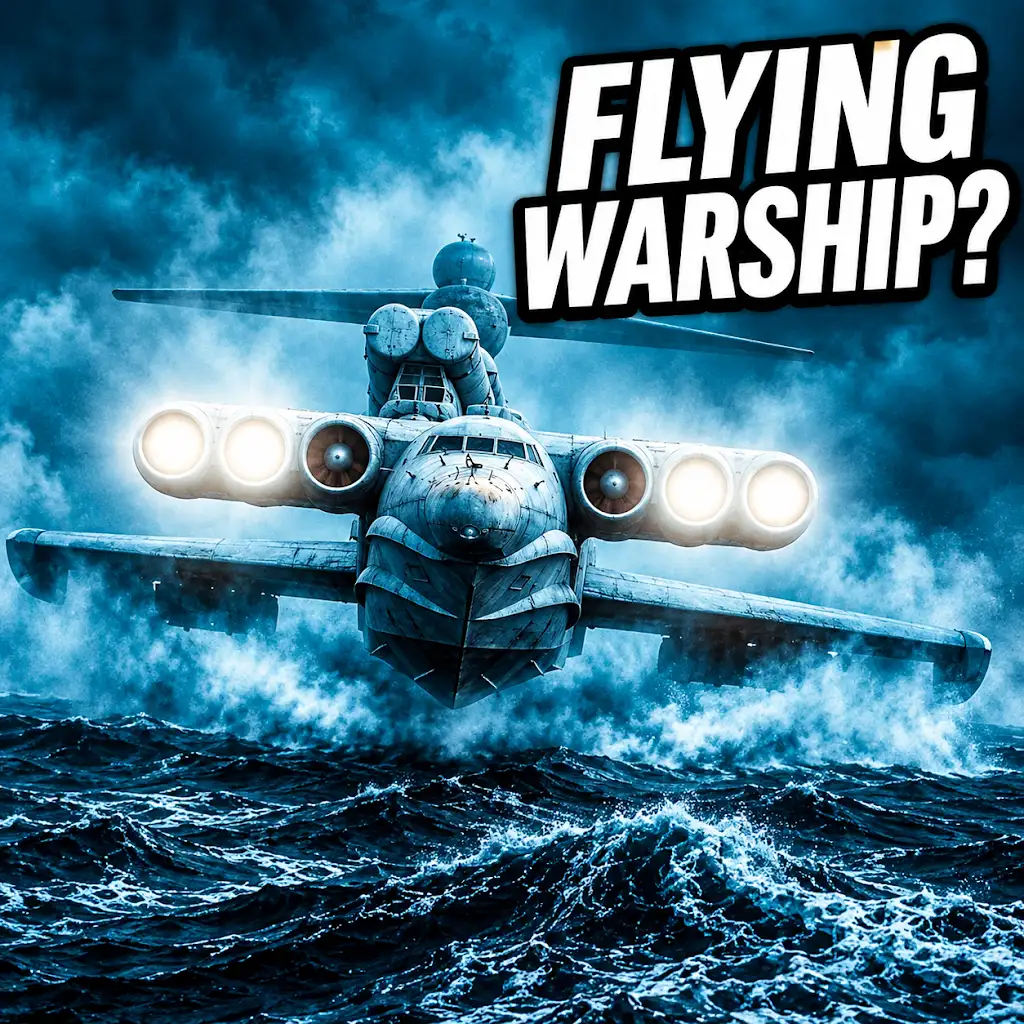
Perhaps the most famous and visually striking ekranoplan was the Lun-class, designated “Project 904.” This formidable vessel was designed as an anti-submarine warfare (ASW) platform, a role that showcased its unique capabilities. Equipped with powerful radar systems and an array of anti-submarine weapons, including torpedoes and depth charges, the Lun was intended to patrol vast oceanic areas with unprecedented speed and coverage. Its ability to skim the water at over 300 miles per hour meant it could cover immense distances quickly, providing a rapid response capability against submerged threats. The design featured a distinctive forward-swept wing and a powerful set of turbofan engines mounted above the fuselage, contributing to its imposing appearance. The Lun was more than just a prototype; it was a fully functional warship that entered service, demonstrating the practical application of ekranoplan technology. Its operational deployment, albeit limited, offered a glimpse into a future of maritime warfare transformed by these colossal craft. The success of the Lun program spurred further development and consideration for other roles.
The A-90 Orlyonok: A Multipurpose Workhorse
Complementing the specialized Lun was the A-90 Orlyonok (meaning “Eaglet”), designed as a versatile transport and assault ekranoplan. This machine was envisioned to rapidly deploy troops, tanks, and other heavy equipment directly onto shorelines, bypassing traditional landing craft and their vulnerabilities. The Orlyonok’s design emphasized its amphibious capabilities, with a reinforced hull and a ramp at the rear for efficient loading and unloading. Its large cargo bay could accommodate significant military payloads, making it a potent asset for amphibious assault operations. The Orlyonok was capable of carrying up to 150 fully equipped troops or two main battle tanks. Its operational speed and ability to operate from relatively calm waters meant it could bypass coastal defenses and deliver forces directly into contested areas. The Orlyonok program saw several examples built and operated by the Soviet Navy, further validating the military utility of the ekranoplan concept for rapid force projection and logistical support. Its adaptability suggested a wide range of potential applications beyond direct assault, including medical evacuation, search and rescue, and even as a mobile command center.
The Soviet Navy’s ekranoplan program was an ambitious project that aimed to develop ground-effect vehicles capable of flying just above the water’s surface, significantly enhancing naval capabilities. For those interested in exploring the intricacies of this fascinating program, a related article provides a comprehensive overview of its history and technological advancements. You can read more about it in this insightful piece here, which delves into the strategic implications and challenges faced by the Soviet Union during its development.
Engineering Challenges and Innovative Solutions
The development of these behemoths presented a unique set of engineering challenges that required novel solutions. The critical issue of stability at low altitudes, especially in rough seas, necessitated sophisticated control systems and wing designs. The integration of powerful marine-grade engines, capable of withstanding salt spray and harsh conditions, was another significant hurdle. Furthermore, the sheer size and weight of the ekranoplans demanded the construction of specialized slipways and manufacturing facilities, which were developed in secrecy along the Caspian Sea coast. The materials science involved in creating lightweight yet robust structures that could withstand the stresses of high-speed flight over water was also groundbreaking. The Soviet engineers displayed remarkable ingenuity in tackling these problems, often resorting to innovative approaches that diverged from conventional aerospace and naval engineering practices. The development process was iterative, with lessons learned from one prototype informing the design of the next, progressively refining the technology.
Operational Concepts and Tactical Advantages
The ekranoplan program was not merely an exercise in technological curiosity; it was driven by a clear set of strategic objectives and envisioned tactical advantages that could significantly alter the balance of power in maritime theaters. The ability to operate at high speeds, close to the water, and with substantial payload capacity offered a revolutionary approach to warfare.
Rapid Deployment and Force Projection
One of the primary strategic goals of the ekranoplan program was to enable the rapid deployment of forces over water. Traditional amphibious assaults, relying on landing craft and naval escorts, were often slow and vulnerable to enemy interdiction. Ekranoplans, with their high speeds, could close distances in a fraction of the time, delivering troops and equipment directly to enemy shores before significant defenses could be mobilized. This capability would have been invaluable for surprise attacks and lightning offensives, allowing Soviet forces to seize key strategic objectives with minimal warning. The Orlyonok, in particular, was designed with this very purpose in mind, capable of beaching itself and disgorging its cargo swiftly. This speed and surprise element could overwhelm enemy defenses and establish beachheads before a robust response could be mounted, fundamentally changing the dynamics of amphibious operations.
Stealth and Survivability
The low-altitude flight profile of ekranoplans offered a significant stealth advantage. Flying just a few meters above the water, they were largely invisible to conventional radar systems, which were designed to detect targets at higher altitudes. This made them incredibly difficult to track and target by enemy air defenses and naval vessels. Their speed further compounded this advantage, leaving little time for a reaction even if detected. Furthermore, the ekranoplan’s ability to “ride” waves meant it could absorb some of the impact of small to medium waves, making it more survivable in certain sea states than conventional aircraft. This combination of low observability and high speed presented a formidable challenge to any defending force. The absence of a large radar signature and the ability to hug the terrain meant they could infiltrate defended areas with a much higher degree of success than traditional airborne or naval assets.
Anti-Submarine Warfare and Patrol Capabilities
The Lun-class ekranoplan was specifically designed for anti-submarine warfare (ASW). Its large size allowed it to carry advanced radar and sonar equipment, while its high speed enabled it to cover vast patrol areas quickly. The ability to fly low over the water also allowed for the deployment of specialized acoustic sensors and torpedoes with greater precision. The Lun could effectively sweep large areas of ocean for submarines, providing a mobile and responsive ASW platform that could quickly engage detected threats. This capability was particularly relevant during the Cold War, when the constant threat of submarine warfare loomed large. The ekranoplan offered a way to counter this threat with unprecedented speed and coverage, making enemy submarines more vulnerable than ever before.
The Decline and Legacy of the Program
Despite the impressive technological achievements and the clear strategic potential, the Soviet ekranoplan program ultimately faltered. A confluence of factors, including shifting geopolitical priorities, economic constraints, and inherent limitations of the technology, contributed to its decline. However, the legacy of these revolutionary machines continues to inspire and inform aerospace and naval design to this day.
Shifting Military Doctrines and Economic Realities
As the Cold War drew to a close and the Soviet Union faced mounting economic pressures, ambitious and expensive military programs like the ekranoplan project began to face increased scrutiny. Military doctrines also evolved, with a greater emphasis placed on network-centric warfare and precision-guided munitions. The perceived need for the unique capabilities offered by ekranoplans diminished in the eyes of some planners. Furthermore, the operational costs of maintaining and deploying these complex machines, alongside the substantial investment required for their construction, became a significant burden. The economic collapse of the Soviet Union in 1991 effectively sealed the fate of further development and large-scale deployment. Resources were diverted to more pressing domestic needs, and military spending was drastically curtailed.
Inherent Limitations and Operational Challenges
While revolutionary, ekranoplans were not without their inherent limitations. Their reliance on relatively calm waters for optimal operation meant they were susceptible to rough seas, which could ground them or significantly impede their performance. Their large size and unique operational profile also presented logistical challenges, requiring specialized infrastructure for maintenance, repair, and refueling. The complexity of their systems and the need for highly skilled crews added to operational costs and reduced flexibility. Despite their stealth capabilities, they were still vulnerable to advanced air defenses and naval artillery if detected. The cost-effectiveness of ekranoplans compared to other emerging military technologies also came into question. For instance, the development of advanced anti-ship missiles and stealthier aircraft offered alternative solutions for maritime power projection and defense.
Enduring Influence on Aerospace and Naval Design
Despite the program’s eventual discontinuation, the Soviet ekranoplan initiative left an indelible mark on aerospace and naval design. The innovative solutions developed for stability, propulsion, and aerodynamic efficiency over water have informed subsequent research and development in various fields, including high-speed ferry design and advanced maritime patrol aircraft. The concept of leveraging ground effect for enhanced performance continues to be explored, albeit in more specialized and less militarized applications. The sheer ambition and engineering prowess displayed by the Soviet ekranoplan program serve as a testament to human ingenuity and the pursuit of pushing technological boundaries. The “Caspian Sea monsters” remain a fascinating chapter in the history of military technology, a bold experiment that hinted at a radically different future for maritime warfare, a future that, for a time, seemed within grasp. Their legacy lies not just in the machines themselves but in the innovative spirit that brought them into existence.
The Soviet Warship That Learned to Fly
FAQs
What is an ekranoplan?
An ekranoplan is a type of aircraft that is designed to fly just above the surface of the water, using ground effect to achieve lift. It is also known as a ground effect vehicle (GEV) or a wing-in-ground-effect (WIG) craft.
What was the Soviet Navy ekranoplan program?
The Soviet Navy ekranoplan program was a series of experimental and operational projects conducted by the Soviet Union to develop large ekranoplans for military purposes, such as maritime patrol, anti-submarine warfare, and troop transport.
How big were the Soviet Navy ekranoplans?
The Soviet Navy ekranoplans were massive vehicles, with some of the largest ones reaching lengths of over 100 meters and wingspans of over 40 meters. They were capable of carrying heavy payloads and large crews.
What advantages did the Soviet Navy see in using ekranoplans?
The Soviet Navy believed that ekranoplans offered several advantages over traditional aircraft and ships, including high speed over water, fuel efficiency, the ability to operate in rough seas, and the element of surprise due to their low altitude flying capabilities.
Why did the Soviet Navy ekranoplan program eventually decline?
The Soviet Navy ekranoplan program eventually declined due to a combination of factors, including changing military priorities, budget constraints, the collapse of the Soviet Union, and the development of more advanced and versatile aircraft and naval technologies.