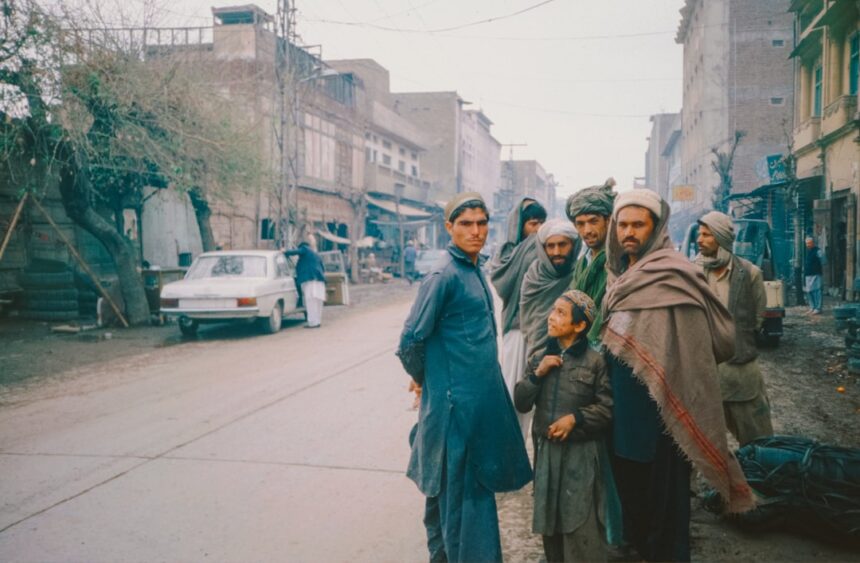
The origins of CIA funding for the Afghan Mujahideen can be traced back to the late 1970s, a period marked by significant geopolitical shifts. Following the Soviet invasion of Afghanistan in December 1979, the United States found itself in a precarious position. The invasion was perceived not only as a direct threat to Afghan sovereignty but also as a potential expansion of Soviet influence in the region.
In response, the U.S. government, particularly the Central Intelligence Agency (CIA), began to explore ways to counteract Soviet advances. This led to the establishment of a covert operation aimed at supporting the Mujahideen, a collection of various resistance groups fighting against the Soviet-backed Afghan government.
Initially, the CIA’s involvement was modest, focusing on gathering intelligence and providing limited support. However, as the conflict escalated, so did the urgency to bolster the Mujahideen’s capabilities. The U.S.
recognized that a well-funded and well-armed resistance could significantly hinder Soviet operations in Afghanistan.
This funding was not merely a financial transaction; it represented a strategic maneuver in the broader context of Cold War politics.
Key Takeaways
- CIA funded Afghan Mujahideen to fight against the Soviet Union in the 1980s
- The Cold War context and the desire to weaken the Soviet Union motivated CIA’s support for Afghan Mujahideen
- Pakistan played a crucial role in facilitating CIA’s covert operation by providing training camps and logistical support
- CIA provided financial and military support to Afghan Mujahideen, including weapons and training
- CIA funding had a significant impact on the Soviet-Afghan War, contributing to the eventual withdrawal of Soviet forces
The Cold War Context: CIA’s Motivation for Supporting Afghan Mujahideen
The Cold War context played a pivotal role in shaping the CIA’s motivations for supporting the Afghan Mujahideen. The ideological battle between capitalism and communism defined international relations during this period, and Afghanistan became a critical battleground for these competing ideologies. The Soviet Union’s military intervention was viewed by U.S.
policymakers as an aggressive act that could destabilize not only Afghanistan but also neighboring countries and potentially threaten U.S. interests in South Asia and the Middle East. In this charged atmosphere, the CIA saw an opportunity to undermine Soviet power by supporting insurgent groups that were willing to fight against the Red Army.
The Mujahideen were seen as a natural ally in this struggle, as they were motivated by their desire for independence and resistance against foreign occupation. By providing financial and military assistance to these fighters, the U.S. aimed to create a quagmire for the Soviets, drawing them into a protracted conflict that would drain their resources and morale.
This strategy was consistent with the broader U.S. policy of containment, which sought to limit Soviet expansion wherever possible.
The Role of Pakistan in CIA’s Covert Operation
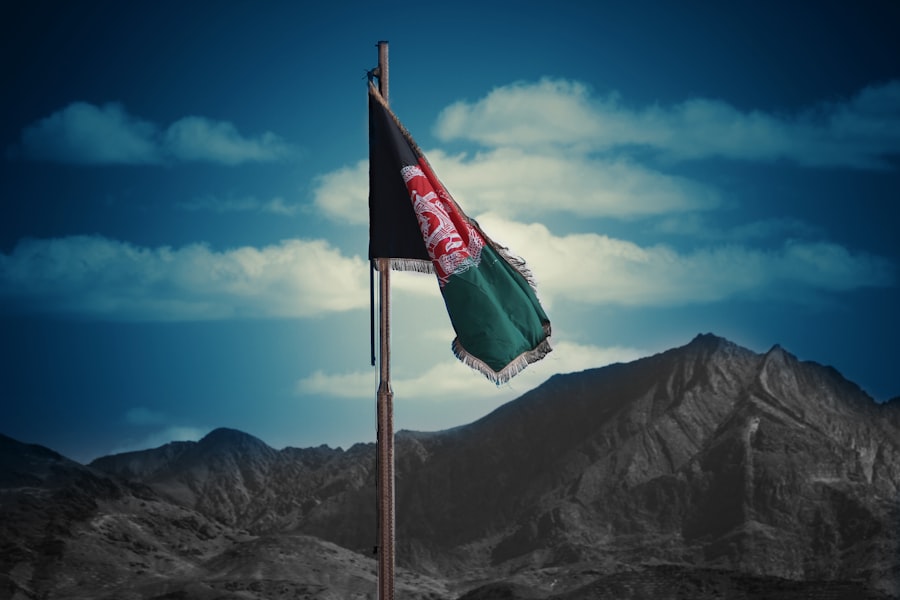
Pakistan played an instrumental role in facilitating CIA operations in Afghanistan during the Soviet-Afghan War. As a neighboring country with shared borders and cultural ties to Afghanistan, Pakistan became a crucial ally for the United States in its efforts to support the Mujahideen. The Pakistani government, led by General Muhammad Zia-ul-Haq, was eager to counter Soviet influence in the region and saw an opportunity to strengthen its own strategic position by collaborating with the U.S.
The CIA established a network of cooperation with Pakistan’s Inter-Services Intelligence (ISI), which became the primary conduit for American aid to the Mujahideen. This partnership allowed for the efficient transfer of weapons, training, and financial resources to various resistance groups operating within Afghanistan. The ISI not only helped identify key Mujahideen leaders but also played a significant role in coordinating operations and ensuring that aid reached those most capable of effectively resisting Soviet forces.
This collaboration marked a significant turning point in the conflict, as it enabled a more organized and sustained effort against Soviet troops.
CIA’s Financial and Military Support for Afghan Mujahideen
| Year | Financial Support (in millions) | Military Support (in weapons) |
|---|---|---|
| 1980 | 30 | 5000 |
| 1981 | 250 | 10000 |
| 1982 | 500 | 15000 |
| 1983 | 600 | 20000 |
| 1984 | 700 | 25000 |
The financial and military support provided by the CIA to the Afghan Mujahideen was extensive and multifaceted. Over the course of the war, it is estimated that billions of dollars were funneled into this covert operation, making it one of the largest covert actions in U.S. history. This funding was used to procure weapons, ammunition, and other military supplies essential for sustaining a prolonged insurgency against Soviet forces. In addition to financial assistance, the CIA also facilitated training programs for Mujahideen fighters. These programs were designed to enhance their combat skills and improve their effectiveness on the battlefield. Training included guerrilla warfare tactics, marksmanship, and the use of advanced weaponry such as Stinger missiles, which proved to be game-changers in aerial combat against Soviet helicopters. This combination of financial backing and military training significantly bolstered the Mujahideen’s capabilities, allowing them to mount increasingly effective operations against Soviet troops.
The Impact of CIA Funding on the Soviet-Afghan War
The impact of CIA funding on the Soviet-Afghan War was profound and far-reaching. As financial resources flowed into Afghanistan, they enabled the Mujahideen to sustain their resistance against one of the world’s most formidable military powers. The influx of advanced weaponry, particularly portable anti-aircraft missiles like Stingers, shifted the balance of power on the battlefield.
These weapons allowed Mujahideen fighters to target Soviet helicopters and aircraft with unprecedented effectiveness, leading to significant losses for Soviet forces. Moreover, CIA support helped unify various factions within the Mujahideen, fostering a sense of solidarity among disparate groups that had previously operated independently. This newfound cohesion allowed for more coordinated attacks against Soviet positions and contributed to a protracted conflict that drained Soviet resources and morale over time.
The Legacy of CIA’s Covert Operation in Afghanistan

The legacy of CIA’s covert operation in Afghanistan is complex and multifaceted, leaving an indelible mark on both U.S.-Afghan relations and global geopolitics. On one hand, the successful resistance against Soviet forces is often viewed as a triumph for U.S. foreign policy during the Cold War.
The eventual withdrawal of Soviet troops in 1989 marked a significant victory for both the Mujahideen and their American backers, reinforcing the notion that determined insurgencies could prevail against superpower intervention. However, this legacy is also fraught with challenges and consequences that continue to resonate today. The power vacuum left by the Soviet withdrawal led to years of civil war among various Mujahideen factions, ultimately paving the way for the rise of extremist groups such as the Taliban.
The very weapons supplied by the CIA found their way into the hands of these factions, contributing to ongoing instability in Afghanistan and surrounding regions. Thus, while the operation achieved its immediate objectives during the Cold War, it also set in motion a series of events that would have lasting implications for Afghanistan and beyond.
Criticisms and Controversies Surrounding CIA’s Support for Afghan Mujahideen
Criticism of CIA’s support for Afghan Mujahideen has emerged from various quarters over the years, raising questions about the ethical implications of such covert operations. Detractors argue that by providing assistance to groups without fully understanding their ideologies or long-term goals, the U.S. inadvertently fostered extremism that would later manifest in violent forms.
Some critics contend that this support laid the groundwork for future terrorist organizations that would exploit grievances stemming from foreign intervention. Moreover, there are concerns about accountability regarding how funds were allocated and which factions received support. Reports have indicated that some of the aid may have ended up in the hands of radical elements within the Mujahideen who had little interest in democratic governance or human rights.
This has led to debates about whether U.S. policymakers adequately considered potential long-term consequences when engaging with such groups during a time of crisis.
The Unintended Consequences of CIA Funding for Afghan Mujahideen
The unintended consequences of CIA funding for Afghan Mujahideen are numerous and complex, illustrating how well-intentioned actions can lead to unforeseen outcomes. One significant consequence was the empowerment of militant factions that would later evolve into extremist groups with global ambitions. As various Mujahideen factions received training and resources from the CIA, some members became radicalized and adopted ideologies that extended beyond national liberation struggles.
Additionally, after the withdrawal of Soviet forces and subsequent collapse of central authority in Afghanistan, many former fighters found themselves without purpose or direction. This disillusionment contributed to widespread instability within Afghanistan as rival factions vied for power. The rise of groups like al-Qaeda can be traced back to this environment where former Mujahideen fighters sought new avenues for their grievances against perceived enemies, including Western powers.
The Relationship between CIA and Afghan Mujahideen Leaders
The relationship between CIA operatives and Afghan Mujahideen leaders was often characterized by pragmatism rather than ideological alignment. While both parties shared a common goal—defeating Soviet forces—their motivations diverged significantly. For many Mujahideen leaders, their struggle was rooted in nationalism and religious conviction; for CIA operatives, it was primarily about countering Soviet influence.
This dynamic sometimes led to tensions between U.S. officials and Afghan leaders regarding strategy and objectives. While some leaders were willing to cooperate with American interests, others were more focused on local power struggles or sectarian divisions within Afghanistan itself.
Despite these complexities, key figures such as Gulbuddin Hekmatyar received substantial support from the CIA due to their effectiveness on the battlefield, illustrating how military success often took precedence over ideological compatibility.
CIA’s Involvement in Afghanistan Post-Soviet-Afghan War
Following the end of active hostilities in Afghanistan after 1989, CIA involvement did not cease entirely; rather, it evolved into new forms as Afghanistan descended into civil war. With no clear strategy or commitment from Washington regarding post-war reconstruction or stabilization efforts, many former Mujahideen fighters found themselves without support or direction once again. The lack of sustained engagement from international actors allowed extremist groups like the Taliban to gain traction amid ongoing chaos.
As these factions consolidated power throughout much of Afghanistan during the 1990s, they often employed tactics reminiscent of those used during their fight against Soviet forces—exploiting grievances while leveraging external support when available.
Lessons Learned from CIA’s Covert Operation in Afghanistan
The lessons learned from CIA’s covert operation in Afghanistan are critical for understanding contemporary foreign policy challenges related to interventionism and support for insurgent movements. One key takeaway is that short-term military successes do not guarantee long-term stability or favorable outcomes; without comprehensive strategies addressing governance issues post-conflict, nations can easily descend into chaos. Additionally, policymakers must recognize that alliances formed out of necessity may not align with democratic values or human rights principles; thus careful consideration should be given when engaging with non-state actors who may have divergent agendas from those espoused by their supporters abroad.
Ultimately, while CIA’s involvement in Afghanistan during its war against Soviet forces achieved immediate objectives within Cold War dynamics, it also serves as a cautionary tale about unintended consequences stemming from foreign intervention—reminding future leaders that actions taken today can reverberate through history long after conflicts have ended.
The CIA’s funding of the Afghan Mujahideen during the Soviet-Afghan War has been a topic of significant historical interest, highlighting the complexities of foreign intervention. For a deeper understanding of this subject, you can read more in the article available at In the War Room, which explores the implications and outcomes of U.S. involvement in Afghanistan during that era.
WATCH THIS! The War That Secretly Bankrupted An Empire: How Afghanistan Destroyed the USSR