The vast, unforgiving expanse of the Pacific Ocean served as a silent graveyard for countless vessels during World War II. Among the most clandestine and deadly combatants were the submarines, and Japan, in its desperate bid for naval supremacy, deployed a formidable fleet. Yet, as the tide of war turned, this silent service became increasingly vulnerable, a fact starkly illustrated by the catastrophic losses suffered, culminating in what could be termed “Point Deep Six.” This designation, while not a formal historical term, encapsulates the dire state of the Imperial Japanese Navy’s submarine force by the war’s later stages, a point where their operational effectiveness was effectively sunk.
The Dawn of the Silent Service: Early Japanese Submarine Operations
The Imperial Japanese Navy (IJN) recognized the strategic importance of submarines early in its development. Unlike some Western powers who initially viewed them as defensive tools, Japan envisioned submarines as offensive weapons, capable of projecting power across vast distances and disrupting enemy supply lines. This forward-thinking approach, coupled with a national penchant for meticulous engineering and innovation, led to the development of some of the most advanced submarines of their era.
Designing for Dominance: Technological Advancements in Japanese Submarines
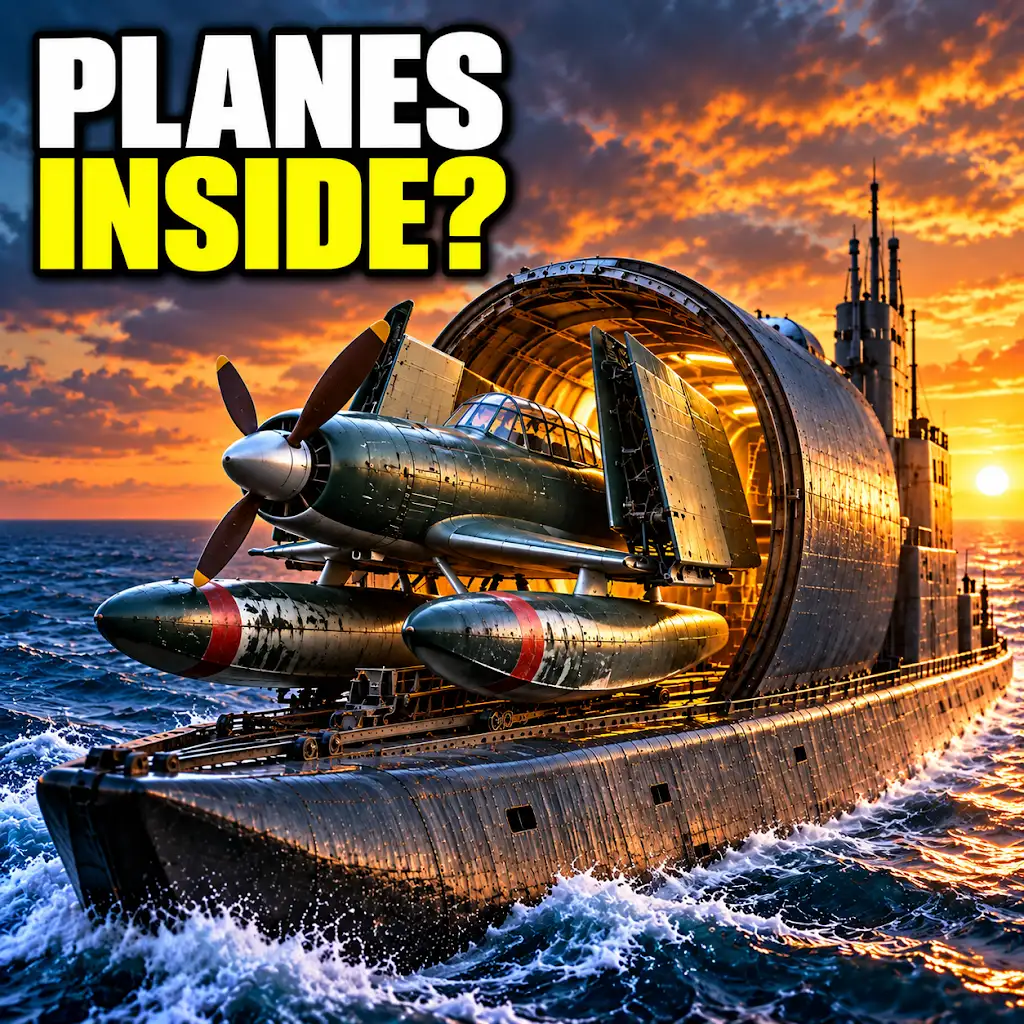
From the outset, Japanese submarine design prioritized speed, range, and firepower. Early classes, such as the Kōtsūshiki (Type K) and Kōchūshiki (Type S), were already impressive for their time. However, the true marvels emerged in the interwar years and the early stages of the Pacific War. The Sen-Toku (Special Type) submarines, particularly the I-400 class, were revolutionary. These colossal vessels, larger than many contemporary destroyers, were designed to carry and launch three aircraft. The intended use was to attack the United States mainland, a chilling demonstration of Japan’s ambition. Their sheer size and multi-role capability were unprecedented. Furthermore, the IJN was not afraid to experiment. They developed submarines capable of carrying midget submarines (Kō-hyōteki), suicide attack submarines (Kaiten), and even human torpedoes. This diversity in design reflected a willingness to explore unconventional warfare, often born out of desperation or a belief in technological superiority. The focus on high-performance engines, advanced torpedoes, and robust hull construction meant that Japanese submarines were formidable opponents in the early years of the conflict. Their ability to operate independently for extended periods made them ideal for reconnaissance, interdiction, and surprise attacks.
Early War Successes: A Shadow over the Pacific
In the initial months of the Pacific War, Japanese submarines proved devastatingly effective. They played a crucial role in the surprise attack on Pearl Harbor, with midget submarines participating in the assault. Their patrols along Allied shipping lanes, particularly in the South China Sea and the Indian Ocean, inflicted heavy losses on Allied merchant shipping. The psychological impact of these unseen attackers was significant, contributing to the sense of vulnerability that pervaded Allied naval thinking. One notable early success was the sinking of the Australian cruiser HMAS Canberra and the American cruiser USS Houston in the Battle of the Java Sea by torpedoes from Japanese submarines, a testament to their accuracy and the daring of their crews. The submarines were often the first to engage enemy fleets, acting as scouts and harassing warships before the main battle line could engage. Their stealth and surprise capabilities allowed them to penetrate defended harbors and strike at seemingly secure bases. This early period of success fostered a sense of invincibility within the IJN and instilled a healthy respect, bordering on fear, among Allied naval commanders.
In exploring the historical significance of naval warfare, particularly during World War II, one cannot overlook the strategic impact of Japanese submarines that were sunk during the conflict. A related article that delves deeper into this topic can be found at In the War Room, where it discusses the tactics employed by both the Allies and the Japanese forces, as well as the technological advancements that influenced submarine warfare. This resource provides valuable insights into the operational challenges faced by submarines and their ultimate fate in the tumultuous waters of the Pacific.
The Tide Begins to Turn: Allied Countermeasures and Japanese Vulnerabilities

The initial successes of the Japanese submarine fleet could not last indefinitely. As the war progressed, the Allies, initially caught off guard, began to develop and implement effective countermeasures. Simultaneously, inherent vulnerabilities within the Japanese submarine force started to be exposed, exacerbated by strategic miscalculations and a diminishing industrial capacity.
The Hunt Begins: Allied Anti-Submarine Warfare Evolves
The Allied response to the submarine menace was a multifaceted and evolving effort. Initially, Allied anti-submarine warfare (ASW) was hampered by a lack of coordinated tactics, inadequate equipment, and a flawed understanding of Japanese submarine capabilities. However, as the war progressed, a more systematic approach emerged. The development of radar, sonar (known as ASDIC in British service), and improved depth charges proved crucial. Allied naval forces began to employ hunter-killer groups, comprising destroyers, destroyer escorts, and aircraft carriers specifically tasked with hunting down submarines. Patrol aircraft, equipped with airborne radar and depth charges, played an increasingly vital role in detecting submerged submarines. The concept of escorting convoys became standard practice, providing merchant ships with protection. Moreover, the Allies made significant strides in code-breaking, notably through the breaking of the Japanese JN-25 code. This intelligence coup allowed the Allies to anticipate Japanese submarine movements, providing vital information for ambushes and defensive preparations. The meticulous analysis of intercepted communications often revealed patrol areas, intended targets, and even the identities of submarines, transforming ASW from a reactive chase into a proactive hunt. The sheer volume of Allied naval and air assets dedicated to ASW meant that Japanese submarines were increasingly operating in heavily patrolled waters.
Strategic Missteps and Industrial Realities: The Seeds of Decline
While Allied advancements were critical, the decline of the Japanese submarine force was also a consequence of its own strategic limitations and the crushing reality of Japan’s industrial weakness. The IJN, despite its technological prowess, often prioritized offensive roles for its submarines, sending them on long-range patrols to attack distant Allied shipping or to support amphibious operations. This strategic decision stretched their limited resources thin and often meant submarines operated far from their support bases, with limited opportunities for repair or resupply. Furthermore, the IJN’s emphasis on submarine aircraft carriers, while innovative, proved to be a strategic dead end. These large, expensive submarines were slow and vulnerable, and their aircraft were often ineffective against the heavily armed Allied fleets they were intended to attack. The failure to develop effective radar for their own submarines, or to counter Allied radar effectively, was another significant handicap. As the war wore on, Japan’s industrial capacity struggled to keep pace with the losses. The production of new submarines and their essential components, such as advanced torpedoes and engines, lagged behind the demands of the war. This meant that many of the submarines deployed in the later stages of the war were older, less capable models, or were rushed into service with inadequate training for their crews. The cumulative effect of these strategic missteps and industrial shortcomings created a situation where the Japanese submarine force, once a feared predator, was becoming increasingly outmatched.
The Grim Reality: Losses Mount and Effectiveness Dwindles

As the Pacific War raged on, the statistics began to tell a grim story for the Imperial Japanese Navy’s submarine arm. The numbers of operational submarines dwindled, and the effectiveness of those that remained was severely compromised. “Point Deep Six” truly began to manifest as a catastrophic depletion of resources and personnel.
The Statistical Abyss: Charting the Decline
By the later years of the war, the casualty rate for Japanese submarines was staggering. Of the approximately 187 submarines commissioned by the IJN during the war, it is estimated that around 130 were lost. This equates to a loss rate of roughly 70%, one of the highest for any naval service in history. The vast majority of these losses occurred in 1944 and 1945. The strategic offensive patrols that had once characterized their operations became increasingly suicidal missions. Submarines were often sunk within days or weeks of departing port. The psychological impact of these losses on the remaining crews was immense. Knowing that your chances of survival were so slim, and that the enemy possessed superior technology and overwhelming numbers, would have been a constant source of dread. The loss of experienced officers and crewmen meant that the IJN struggled to man new submarines adequately, further compromising their operational effectiveness. The naval bases themselves became targets, and the infrastructure required to build, repair, and refuel submarines was systematically destroyed by Allied air and naval power. This created a vicious cycle of decline: fewer operational submarines meant less ability to defend sea lanes, which in turn led to more Allied shipping reaching their destinations and more resources available for Allied attacks on Japan itself.
The Silent Service Muted: From Threat to Target
The once-feared “silent service” became a hunting ground for Allied forces. Japanese submarines, increasingly hampered by a lack of effective radar, outdated operational tactics, and the sheer omnipresence of Allied ASW patrols, found themselves on the defensive. The element of surprise, once their greatest weapon, was largely lost. Allied patrols were so pervasive that many Japanese submarines were detected and attacked within hours of surfacing to recharge their batteries or navigate. The introduction of advanced torpedoes by the Allies, such as the Mark 14, and their improved targeting systems, further leveled the playing field. The IJN’s inability to develop and deploy comparable technology meant their torpedoes, while still potent, were often outmatched. The mission profiles also changed dramatically. Instead of engaging in long-range offensive patrols, Japanese submarines were increasingly tasked with desperate missions: attempting to deliver supplies to isolated garrisons, scouting heavily defended Allied fleet movements, or even attempting to land kamikaze pilots or special forces troops. These were missions that played to their weaknesses and exposed them to overwhelming enemy fire. The romanticized image of the daring submarine captain and his crew hunting in enemy waters had long faded, replaced by the grim reality of a service fighting a losing battle against impossible odds.
Notable Losses and the End of an Era
The final years of the war saw a cascade of losses that underscored the futility of the Japanese submarine effort. While specific engagements may vary in their historical prominence, the cumulative effect of these sinkings marked the definitive end of the IJN’s submarine as a significant threat.
The I-400 Class: A Symbol of Wasted Potential
The I-400 class submarines, designed for audacious attacks on the United States mainland, represent a poignant symbol of Japan’s declining fortunes. These technological marvels, launched in the final year of the war, never achieved their intended strategic objective. By the time they were operational, the war was effectively lost. Their primary mission was to launch kamikaze aircraft attacks on the Panama Canal. However, the Allied advance across the Pacific had made such a mission impossible. Instead, the three I-400 submarines were tasked with attacking the American fleet off Ulithi Atoll in August 1945. This was a mission of sheer desperation, with little chance of success. Shortly after the Japanese surrender, the I-400 class submarines were scuttled by their crews to prevent them from falling into American hands, and later intentionally sunk by the U.S. Navy for target practice. Their short operational life and ultimately unrealized potential highlight the strategic miscalculations and the overwhelming Allied advantage that rendered even their most advanced weapons obsolete. The I-400s, intended to be instruments of terror, became relics of a failed strategy.
The Fleet Submarines: A Constant Drain on Resources
Beyond the specialized designs, the bulk of Japan’s submarine losses came from its fleet submarine classes, such as the I-16, I-17, and I-19 series. These submarines, while capable, were increasingly outmatched by Allied technology and tactics. They were sunk in every imaginable scenario: ambushed by destroyers while on patrol, caught on the surface by aircraft, detected by sonar and depth-charged into oblivion, or crippled by torpedoes from Allied submarines. The sheer volume of these losses meant that the IJN struggled to replace them. The industrial base that supported their construction was systematically targeted by Allied bombing campaigns. Furthermore, the attrition of experienced crews meant that new submarines were often manned by less trained personnel, increasing the likelihood of catastrophic failures. The ongoing need to replace these submarines diverted precious resources and manpower away from other critical areas of the war effort, further weakening Japan’s overall strategic position. Each sinking represented not just the loss of a vessel, but the loss of valuable operational experience, skilled personnel, and a piece of Japan’s naval power.
The history of naval warfare is filled with intriguing stories, including the fate of Japanese submarines during World War II. Many of these vessels were sunk in significant battles, leading to a deeper understanding of their strategic importance. For those interested in exploring this topic further, a related article discusses the various factors that contributed to the sinking of these submarines and their impact on the war effort. You can read more about it in this insightful piece on naval history here.
The Legacy of the Deep Six: Lessons Learned
| Submarine Name | Type | Date Sunk | Location | Method of Sinking | Casualties | Notes |
|---|---|---|---|---|---|---|
| I-58 | Type B3 | July 30, 1945 | Near Okinawa | Depth charges by USS Finback (SS-230) | All hands lost | Famous for sinking USS Indianapolis |
| I-26 | Type B1 | July 17, 1944 | Near Mariana Islands | Depth charges by USS McCoy Reynolds (DE-440) | All hands lost | Engaged in supply and attack missions |
| I-176 | Type KD6A | May 16, 1944 | Near New Guinea | Depth charges by USS Wahoo (SS-238) | All hands lost | Known for multiple war patrols |
| I-185 | Type KD7 | August 6, 1943 | Near Solomon Islands | Depth charges by US destroyers | All hands lost | Participated in Guadalcanal campaign |
| I-25 | Type B1 | September 3, 1943 | Near New Hebrides | Depth charges by US Navy aircraft and ships | All hands lost | Conducted reconnaissance and bombing missions |
The story of the Japanese submarine force’s decline is a stark reminder of the complexities of naval warfare and the devastating consequences of strategic miscalculation. “Point Deep Six” represents not just a numerical tally of lost vessels, but a profound shift in naval dominance.
The Importance of Technological Parity and Adaptability
The fate of the Japanese submarine force underscores the critical importance of maintaining technological parity and the ability to adapt to evolving threats. While Japan initially possessed some of the world’s most advanced submarines, their inability to keep pace with Allied advancements in radar, sonar, and anti-submarine weaponry proved fatal. The Allies, with their vast industrial capacity and collaborative research efforts, were able to field increasingly sophisticated ASW tools and tactics. Japan’s failure to effectively counter these innovations, particularly in the realm of electronic warfare and detection, left their submarines blind and vulnerable. Furthermore, while Japan experimented with innovative designs, their strategic focus often remained fixed on offensive roles, neglecting the equally critical aspect of defense and survivability in an increasingly hostile environment. The inability to develop effective countermeasures against Allied ASW tactics meant that their submarines were increasingly being hunted rather than hunting.
Strategic Foresight and Resource Allocation in Modern Warfare
The narrative of “Point Deep Six” also serves as a cautionary tale regarding strategic foresight and the judicious allocation of resources in modern warfare. Japan’s ambitious submarine programs, particularly the development of large submarine aircraft carriers, were ultimately a drain on their limited resources and did not deliver the strategic impact they were intended to achieve. The emphasis on offensive power at the expense of robust defensive capabilities and the ability to sustain prolonged campaigns proved to be a critical flaw. The Allies, conversely, demonstrated a superior understanding of the importance of coordinated efforts, investing heavily in ASW research, development, and deployment, alongside their offensive operations. The eventual dominance of Allied forces in the Pacific was not solely due to overwhelming material superiority, but also to a more pragmatic and adaptable strategic approach that prioritized survivability and the ability to project sustained power. The lessons learned from the decline of the IJN’s submarine force continue to resonate in naval strategy today, emphasizing the perpetual need for technological innovation, strategic flexibility, and the careful balance of offensive and defensive capabilities.
Japan Built a Submarine That Could Launch Three Planes
FAQs
1. How many Japanese submarines were sunk at Point Deep Six?
Five Japanese submarines were sunk at Point Deep Six during World War II.
2. When did the sinking of the Japanese submarines at Point Deep Six occur?
The sinking of the Japanese submarines at Point Deep Six occurred during World War II in the Pacific theater.
3. Who was responsible for sinking the Japanese submarines at Point Deep Six?
The Japanese submarines at Point Deep Six were sunk by Allied forces during World War II.
4. What was the significance of the sinking of the Japanese submarines at Point Deep Six?
The sinking of the Japanese submarines at Point Deep Six was a strategic victory for the Allies in the Pacific theater during World War II.
5. Are there any known survivors from the Japanese submarines sunk at Point Deep Six?
There were no known survivors from the Japanese submarines that were sunk at Point Deep Six during World War II.