The tranquil waters of the Pacific, still bearing the scars of a brutal global conflict, were the unlikely stage for an event that would send ripples of astonishment through both Allied and Imperial Japanese naval circles. On a seemingly unremarkable day in late August 1945, the USS Blue, a destroyer of the United States Navy, stumbled upon a prize so significant, so technologically advanced, and so strategically potent that its capture would rewrite the final chapter of naval history in the Pacific. The prize was not a mere vessel, but a symbol of Japan’s desperate ambition and its most audacious naval gamble: the formidable submarine I-400.
The Setting of the Encounter
The war in the Pacific had entered its twilight. The devastating atomic bombings of Hiroshima and Nagasaki had irrevocably altered the strategic landscape, and the Emperor of Japan was preparing to announce his nation’s surrender. Yet, amidst the impending peace, pockets of fierce resistance and ongoing military operations continued. For the USS Blue, a veteran of countless engagements, her mission remained as it had been for years: to patrol the vast expanse of the Pacific, to hunt enemy submarines, and to protect Allied shipping. The weary but resolute crew of the Blue were a testament to the enduring spirit of naval warfare, accustomed to the constant vigilance required in the submarine-infested waters. The year 1945, while marking the nearing end of the conflict, still held its share of dangers, and the Imperial Japanese Navy, though weakened, still possessed potent, albeit limited, offensive capabilities.
A Patrol in Post-War Waters
The events leading up to the capture of the I-400 unfolded in the peculiar and uncertain days immediately following Japan’s announcement of surrender. While official hostilities were winding down, the vastness of the Pacific meant that many units, both Allied and Japanese, were still operating under their pre-surrender directives. The USS Blue, under the command of Commander K.M. Slagle, was conducting a routine patrol in the vicinity of the Hawaiian Islands, a strategic area that had seen its share of naval activity. The crew, accustomed to the heightened alert that had characterized their service for years, remained diligent. The atmosphere aboard the Blue was one of cautious anticipation, a sense of the war’s end mingled with the ingrained habits of constant readiness. They were a finely tuned instrument, prepared to respond to any threat, a commitment that would soon be tested in an unexpected and historic way.
The Unconventional Discovery
The initial sighting of the I-400 was not the result of a calculated hunt, but rather a serendipitous encounter. As the Blue maintained her patrol, lookouts spotted what appeared to be a large, unidentified vessel on the horizon. In the post-surrender environment, the appearance of any significant Japanese naval asset was cause for immediate investigation. The distinguishing features of the vessel, however, soon became apparent and caused a stir of disbelief among the Blue‘s crew. It was far larger than a standard submarine, and its peculiar deck configuration was unlike anything they had encountered before. The sheer size and unusual design hinted at something out of the ordinary, sparking both curiosity and a heightened sense of caution. The crew of the Blue knew they were on the verge of something significant, a discovery that would transcend the ordinary duties of a patrol.
The USS Blue’s capture of the Japanese submarine I-400 during World War II is a fascinating chapter in naval history, highlighting the strategic importance of submarine warfare. For a deeper understanding of this event and its implications, you can read a related article that explores the technological advancements and the operational tactics used during this period. Check it out here: related article.
The Enigmatic ‘Sen Toku’
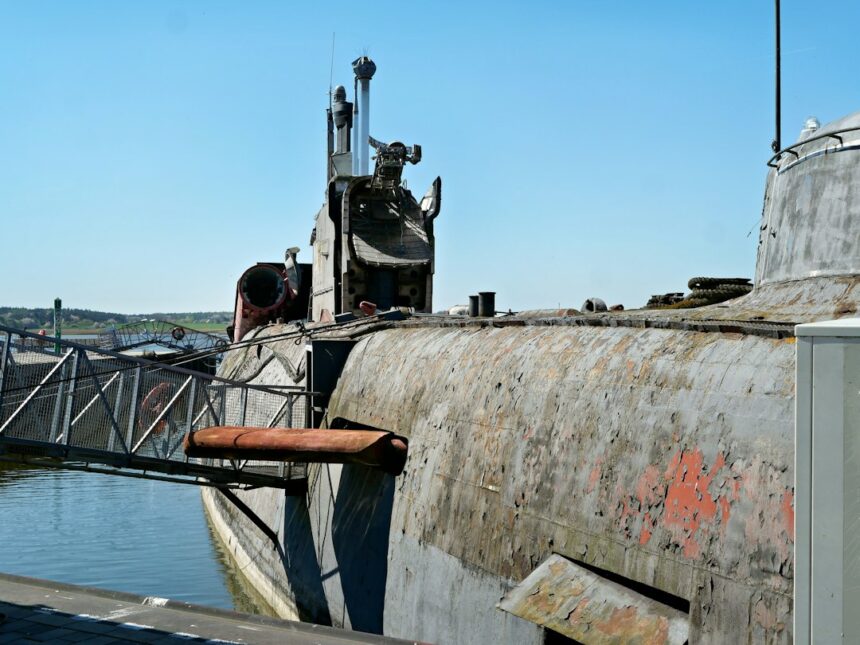
The object of the Blue‘s attention was, in fact, the I-400, the lead ship of the Imperial Japanese Navy’s most ambitious submarine class. These were not your typical submarines designed for sinking warships or merchant vessels through torpedo attacks. The I-400 class, known to the Japanese as “Sen Toku” (Special Attack) submarines, were colossal oceanic giants, conceived with a singular, audacious purpose: to carry and launch carrier-based aircraft. Their design was revolutionary, featuring a massive hangar that could house three Aichi M6A “Seiran” (Storm from the Clear Sky) floatplane bombers. These bombers, themselves unique, were designed to be folded and stowed within the hangar, then launched via a catapult and recovered at sea, a feat of engineering and naval strategy unprecedented in submarine warfare.
The Seiran and its Purpose
The Seiran was a marvel of wartime innovation. Designed for swift deployment and attack, it was capable of carrying a 250-kilogram bomb, enough to inflict significant damage on a target. The I-400 class submarines were intended to operate far from Japanese shores, able to reach targets as distant as the United States West Coast, the Panama Canal, or even New York City. The strategy was one of psychological warfare and crippling strategic strikes, aiming to sow terror and disrupt Allied operations by attacking targets that were considered virtually immune to conventional submarine threats. The I-400 class represented Japan’s last-ditch effort to regain naval superiority through unconventional means, a testament to their desperation and their remarkable ingenuity in the face of overwhelming odds.
A Technological Leap in Submarine Design
Beyond its offensive capabilities, the I-400 was a testament to Japanese engineering prowess. It was one of the largest submarines ever built at the time, boasting a length of over 120 meters. Its range was also extraordinary, capable of operating for thousands of miles without refueling. The sheer scale and the complex systems required to operate and launch aircraft from a submarine presented a formidable technological challenge that the Japanese had successfully met. The hangar, which ran the length of the pressure hull, was a defining feature, allowing for the storage and rapid deployment of its aerial arsenal. The submarines were also equipped with a powerful diesel-electric propulsion system, giving them a respectable speed on the surface and underwater. Their existence, and particularly their operational readiness, had been a closely guarded secret throughout the war, a testament to Japan’s determination to surprise its enemies.
The Standoff and Surrender
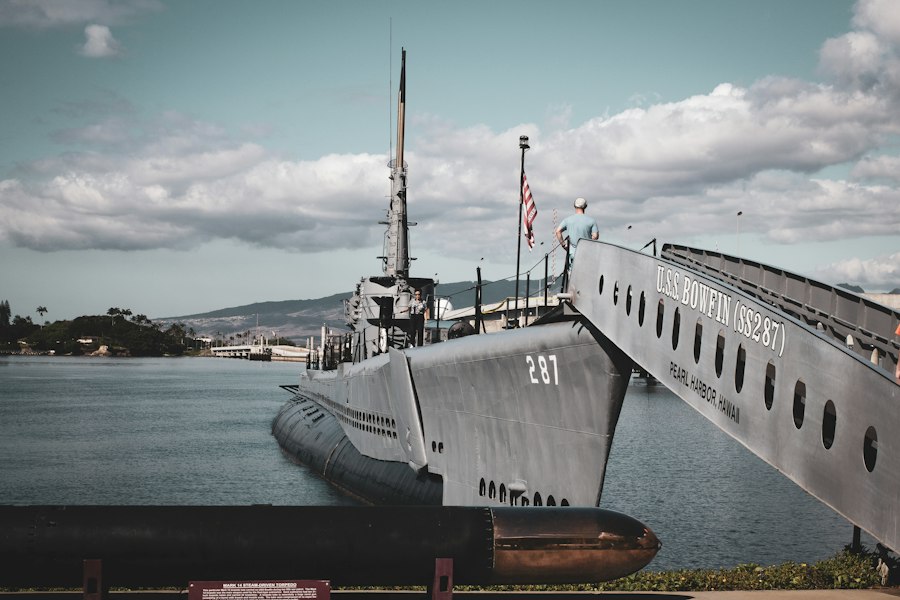
As the USS Blue approached the strange vessel, her crew was a mixture of apprehension and excitement. The size of the Japanese submarine was immediately apparent, dwarfing the Blue in comparison. The deck was relatively clear, save for the large hangar structure that dominated its midsection. The I-400, like many Japanese vessels in the final days of the war, was not actively engaged in combat. Its crew, aware of the changing geopolitical landscape, was likely in a state of confused anticipation, awaiting orders amidst the chaos of their nation’s impending collapse. The Blue cautiously maneuvered, her guns trained, and prepared to make contact. The tension aboard the Blue was palpable; the uncertainty of the situation, coupled with the sheer novelty of encountering such a massive and unique enemy warship, created an atmosphere of intense anticipation.
The USS Blue played a significant role in the capture of the Japanese submarine I-400 during World War II, which was one of the largest submarines of its time and designed for long-range missions. This event marked a pivotal moment in naval history, showcasing the technological advancements and strategic maneuvers of the era. For more insights into this fascinating topic, you can read a related article that delves deeper into the implications of the I-400’s capture and its impact on post-war naval warfare. To explore this further, visit this article.
Diplomatic Maneuvering at Sea
Commander Slagle, recognizing the immense strategic value of the submarine and the potential for misunderstanding in the fragile post-surrender environment, opted for a cautious approach. Radio communications were attempted, but the I-400‘s crew was either unable or unwilling to respond effectively. The Japanese submarine, with its unique configuration and its formidable potential, represented a significant unknown. The crew of the Blue understood that this was no ordinary surrender. The I-400 was a symbol of a sophisticated and menacing technology, and its capture would have profound implications. The standoff was tense, a silent negotiation played out across the waves, where the might of American naval power met the stoic resignation of a defeated foe. The initial moments were characterized by a careful ballet of naval maneuvers, with the Blue asserting its presence while avoiding any actions that could be misconstrued as aggressive.
The I-400’s Final Orders
The I-400, under the command of Lieutenant Commander Meiji Taguchi, was not a vessel that had been defeated in battle. It was a warship that, like so many others, had received the Emperor’s final decree. The aircraft on board had never been launched in anger against Allied targets. The mission for which the I-400 class was designed, a mission that would have potentially brought the horrors of war to American shores, was never fully realized. The submarine was in a state of readiness, but the cessation of hostilities had rendered its purpose moot. The crew, loyal and disciplined to the end, understood their orders and the new reality. The order to surrender, when it came through intermediaries, was met not with defiance, but with the somber acceptance of duty in a changed world. The I-400‘s journey, a testament to Japanese ambition and innovation, was drawing to a close, not in a fiery blaze of glory, but in a quiet, historic transfer of power.
The Prize of the Pacific
The capture of the I-400 was more than just the acquisition of a single warship; it was the securing of a technological marvel and a significant intelligence coup for the United States. The sheer size and complexity of the submarine, along with its unique aircraft-launching capabilities, presented an unprecedented opportunity for American naval engineers and intelligence officers. The implications of this capture extended far beyond the immediate cessation of hostilities, offering invaluable insights into Japanese wartime technological advancements and strategic thinking. The USS Blue, a humble destroyer, had become the guardian of a prize that would significantly shape the post-war understanding of naval warfare and technological development.
Intelligence Gathering and Examination
Once aboard the I-400, the crew of the USS Blue began the meticulous process of securing the vessel and assessing its contents. Every compartment was searched, every piece of equipment examined. The engineers and intelligence officers were particularly fascinated by the hangar mechanism and the folded Seiran aircraft. The ability to launch and recover aircraft from a submarine was a
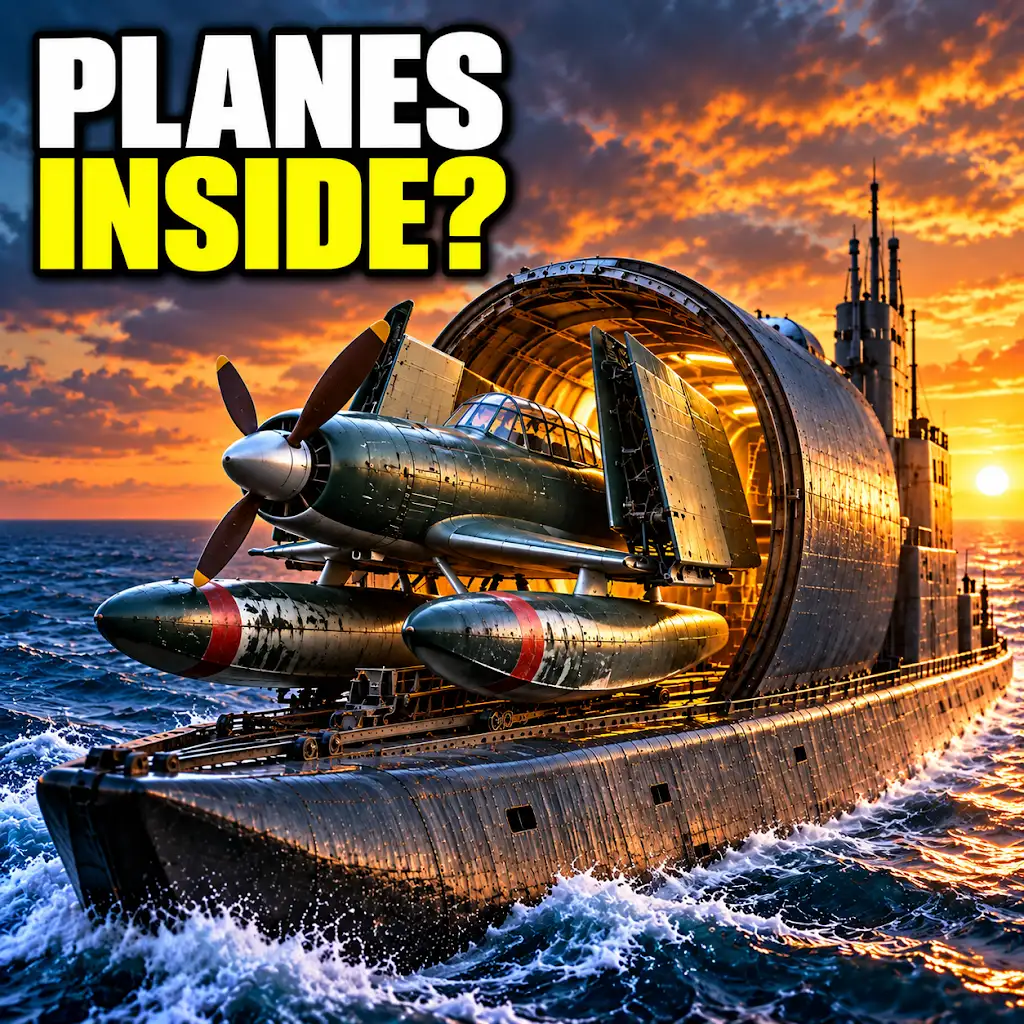
Japan Built a Submarine That Could Launch Three Planes
FAQs
What is the USS Blue and the Japanese submarine I-400?
The USS Blue was a U.S. Navy destroyer that captured the Japanese submarine I-400 during World War II. The I-400 was a large submarine used by the Imperial Japanese Navy for long-range missions.
When did the USS Blue capture the Japanese submarine I-400?
The USS Blue captured the Japanese submarine I-400 on August 27, 1945, towards the end of World War II.
Why was the Japanese submarine I-400 significant?
The Japanese submarine I-400 was significant because it was one of the largest submarines ever built at the time and was capable of carrying three aircraft for reconnaissance or bombing missions.
What happened to the Japanese submarine I-400 after it was captured?
After being captured by the USS Blue, the Japanese submarine I-400 was taken to Hawaii for examination and evaluation by the U.S. Navy. It was eventually scuttled off the coast of Oahu in 1946.
How did the capture of the Japanese submarine I-400 impact the outcome of World War II?
The capture of the Japanese submarine I-400 provided valuable intelligence to the U.S. Navy about Japanese naval technology and capabilities. It also prevented the submarine from being used in any potential attacks against Allied forces, contributing to the eventual end of World War II.