
The Shadow Commander: George Patton’s Pivotal Deception in Operation Fortitude
George S. Patton Jr., the larger-than-life general known for his fiery speeches, his ivory-handled revolvers, and his aggressive battlefield tactics, played a role in Operation Fortitude that was as crucial as it was unconventional. Far from leading troops in direct combat against the enemy, Patton’s contribution to the Allied deception plan for the D-Day landings was one of strategic misdirection and psychological warfare, a masterful performance designed to sow confusion and draw German reserves away from Normandy. Operation Fortitude, the umbrella term for the elaborate deceptions orchestrated to mask the true invasion site of Normandy, relied on creating believable threats in multiple locations, and Patton, with his formidable reputation, was the linchpin of the most significant of these feints: Fortitude North.
The stakes for Operation Overlord, the Allied invasion of Normandy, were astronomically high. A successful landing and subsequent breakout were essential to liberating Western Europe from Nazi Germany’s grip. However, the Allies knew that their success would hinge on deceiving the German high command about the precise location and timing of the invasion. If the Germans committed their formidable reserves to the wrong sector, the Normandy landings could be overwhelmed. Conversely, if they correctly identified Normandy as the primary target, the beaches could become a killing ground. This is where Operation Fortitude, and specifically Patton’s involvement, became indispensable.
Patton’s reputation preceded him. He was a soldier’s general, a man of action, and a feared opponent by the enemy. His presence, even in a simulated capacity, carried immense weight. The Germans knew Patton, and they respected – and feared – his military prowess. This fear was precisely what the Allied deception planners intended to exploit.
Operation Fortitude, the elaborate deception plan that misled the Germans about the location of the D-Day invasion, was a crucial part of the Allied strategy during World War II. For a deeper understanding of the tactics employed and the impact of this operation on the war, you can explore a related article that discusses the broader implications of military deception in warfare. To read more about this fascinating topic, visit this article.
Crafting the Phantom Army: The Strategic Illusion
The core of Patton’s role in Operation Fortitude was the creation and maintenance of the First United States Army Group (FUSAG). This fictitious army was designed to convince the Germans that the primary Allied invasion of France would occur at the Pas-de-Calais, the closest point between Britain and mainland Europe, and a geographically logical invasion site. FUSAG was presented as a massive Allied force poised to cross the English Channel at this location. Patton, a celebrated commander, was publicly assigned to lead this formidable, albeit entirely fictional, army.
The Menace of Pas-de-Calais
The Pas-de-Calais offered several advantages from a German perspective. Its proximity to occupied France meant a shorter sea crossing and a more direct route to the German-held coast. The terrain was also considered more favorable for an invasion compared to the bocage country of Normandy. German intelligence, analyzing available information, naturally gravitated towards this area as a probable landing site. Operation Fortitude’s objective was to amplify this belief, making it seem irrefutable.
FUSAG was not a mere ghost; it was a meticulously constructed illusion. The deception involved a vast array of tactics, from inflatable tanks and dummy aircraft to fabricated radio traffic and carefully leaked intelligence. Patton’s presence was the ultimate seal of authenticity. He was a known quantity, a formidable commander, and his supposed command of such a massive force in this specific location lent immense credibility to the entire ruse. The Germans, desperate to guard against any potential invasion, would be forced to divert significant resources and attention to the Pas-de-Calais, believing Patton’s FUSAG was the main threat.
The Commander’s Signature: Patton’s Public Persona
Patton’s personality and his public image were instrumental in the success of Fortitude. He was an outspoken, charismatic figure, prone to grand pronouncements and visible displays of military might. The Allied propaganda machine carefully cultivated this image, ensuring that any mention of Patton in connection with the south of England would be met with significant German attention. He allowed himself to be seen in areas where FUSAG was supposedly concentrated, reviewed non-existent troops, and engaged in public pronouncements that hinted at an impending offensive. Every action, every word, was a calculated move designed to feed the German appetite for information and, crucially, misinformation.
The sheer scale of the deception was breathtaking. Inflatable tanks, meticulously crafted to resemble real armor, were positioned in fields. Dummy landing craft were moored along the coast. Airfields were populated with wooden aircraft and decoy hangars. The goal was to create a visual and electronic footprint that would be undeniable to German reconnaissance. Patton’s command of FUSAG was the psychological keystone, the element that tied all these disparate elements together into a believable threat. The Germans, observing these preparations and hearing of Patton’s involvement, could hardly dismiss them as mere training exercises.
The Art of Misdirection: Psychological Warfare in Action
Patton’s role was not about commanding troops, but about commanding attention. He was the maestro of a grand illusion, orchestrating the psychological impact of FUSAG on the German military. His reputation was the ammunition, and the German high command’s fear was the target.
The Enemy’s Perception: Fear and Uncertainty
The German high command, particularly Field Marshal Gerd von Rundstedt and Army Group B commander Erwin Rommel, were well aware of Patton’s capabilities. His aggressive tactics in North Africa and Sicily had earned him a fearsome reputation. When German intelligence began to pick up signs of a massive build-up in the south of England, with Patton at its head, their anxieties were naturally amplified. The sheer size of the supposed FUSAG, coupled with Patton’s known tactical acumen, made the Pas-de-Calais a target they could not afford to ignore.
The Germans maintained significant forces, including vital armored divisions, in the Pas-de-Calais region, convinced that this was the primary invasion threat. This deployment was a direct result of Fortitude’s success, and by extension, Patton’s calculated performance. These were troops and equipment that could have been used to reinforce the Normandy front, where the real invasion was unfolding. The psychological impact of FUSAG, driven by Patton’s perceived leadership, was a critical factor in preventing the Germans from reacting effectively to the true Allied landings.
The Ghostly Presence: Radio Waves and Rumors
Beyond the physical manifestations of FUSAG, the deception also relied heavily on electronic warfare and the dissemination of carefully crafted rumors. Patches of radio silence and bursts of coded transmissions, designed to mimic troop movements and communications, were broadcast from areas where FUSAG was supposedly located. These radio signals, picked up by German intercept stations, further solidified the illusion of a large army preparing for imminent action.
Patton himself, through his public pronouncements and even his famously gruff demeanor, contributed to the atmosphere of anticipation and fear. He was a master of psychological warfare, and his alleged command of FUSAG was the ultimate manifestation of this skill. The Germans were being played by a master, and their fears were being expertly manipulated to serve the Allied cause. The more they worried about Patton and FUSAG, the less likely they were to shift resources away from the Pas-de-Calais and reinforce Normandy.
The Normandy Crucible: Impact on the Invasion
The success of Operation Fortitude, heavily influenced by Patton’s pivotal role, had a profound and direct impact on the unfolding events on D-Day and in the subsequent weeks. By drawing German attention and resources away from Normandy, FUSAG, and therefore Patton, played a critical part in ensuring the survival of the beachheads.
Holding the Reserves: German Dilemma
Crucially, the presence of FUSAG and the intelligence suggesting an imminent invasion at the Pas-de-Calais kept significant German armored reserves tied down in that area. Even as reports of the Normandy landings began to filter in, the German high command, still swayed by the deception, hesitated to commit these vital reserves to the true invasion front. They feared that the Normandy landings were a diversion, and that the main attack would still come at the Pas-de-Calais. This hesitation was a critical advantage for the Allies, allowing them to establish and expand their beachheads before the full might of the German counterattack could be brought to bear.
The German Seventh Army, positioned in Normandy, was significantly weakened by the absence of these reinforcements. While the fighting was fierce and the casualties were high, the Allied forces were not immediately faced with the overwhelming armored onslaught that could have potentially driven them back into the sea. Patton’s “invisible” army, by creating a tangible threat in the wrong place, had effectively neutralized a much larger portion of the German defensive capability.
The Breakout and Beyond: Long-Term Consequences
The success of the Normandy landings, facilitated by the diversionary power of Fortitude, paved the way for the subsequent Allied breakout and the eventual liberation of France. Had the Germans correctly identified Normandy as the primary invasion site from the outset, the outcome of D-Day and the entire campaign could have been drastically different. Patton, by masterfully playing the role of the phantom commander, had created a strategic advantage that resonated throughout the remainder of the war in Europe. His contribution, though indirect, was as vital as any frontal assault. The shadow he cast was long and strategically potent.
George Patton played a crucial role in the success of Operation Fortitude, which was a vital part of the Allied deception strategy during World War II. This operation aimed to mislead the Germans about the location of the D-Day invasion, ultimately contributing to the success of the Normandy landings. For a deeper understanding of the strategies employed during this pivotal moment in history, you can explore a related article that delves into the intricacies of military deception and its impact on the war. Check out this insightful piece on military strategy to learn more about the fascinating tactics used by the Allies.
The Legacy of the Phantom Army
| Metric | Details |
|---|---|
| Operation Name | Operation Fortitude |
| Commander | General George S. Patton (as the fictitious First U.S. Army Group commander) |
| Purpose | Deception to mislead German forces about the location of the D-Day invasion |
| Duration | January 1944 – June 1944 |
| Key Tactics | Fake radio traffic, inflatable tanks, dummy landing craft, false intelligence leaks |
| Targeted German Army Group | German High Command and Field Marshal Erwin Rommel |
| Fictitious Army Group | First U.S. Army Group (FUSAG) |
| Primary Deception Location | Pas de Calais, France |
| Impact | Delayed German reinforcements to Normandy, contributing to the success of D-Day |
Operation Fortitude, and George S. Patton’s integral part in it, stands as a testament to the power of deception in warfare. It highlights how a well-crafted illusion, leveraging the reputation of a key figure, can be as effective as brute force.
A Masterclass in Deception
Patton’s role in Operation Fortitude transcended his usual battlefield exploits. It was a display of strategic acumen, a willingness to engage in a grand performance for the ultimate benefit of the Allied cause. His public persona, so often seen as a symbol of aggressive warfare, was here repurposed as a tool of deception, a beacon to draw the enemy’s attention away from the true objective. The success of Fortitude demonstrated that the “fog of war” could be deliberately manipulated and exploited to achieve decisive strategic gains.
The meticulous planning and execution of Operation Fortitude, with Patton at its symbolic helm, served as a critical component of the Allied victory in World War II. It underscores the fact that war is not solely fought on the battlefield; it is also a contest of wills, intelligence, and psychological manipulation. Patton, the warrior, became the architect of a phantom army, a testament to his versatile leadership and the innovative strategies employed by the Allies.
Beyond the Battlefield: The Psychological Impact
The psychological impact of Fortitude on the German military cannot be overstated. The constant fear of an invasion at the Pas-de-Calais, fueled by the perceived threat of Patton’s FUSAG, meant that a significant portion of their military strength remained committed to the wrong front. This strategic misdirection was instrumental in allowing the Allies to gain a foothold in Normandy and ultimately to achieve victory in Europe. George S. Patton’s legacy is inextricably linked to this brilliant deception, solidifying his place not only as a brilliant battlefield commander but also as a master of strategic misdirection.
The General’s Unseen Triumph
George S. Patton Jr.’s involvement in Operation Fortitude was a masterstroke of strategic deception, a testament to his understanding of the psychological aspects of warfare. While he did not directly command troops in the feigned invasion sites, his very presence, amplified by his fearsome reputation, was the linchpin of the entire operation. The First United States Army Group (FUSAG), which he was publicly designated to lead, was a carefully constructed phantom army designed to convince the German high command that the main Allied invasion would occur at the Pas-de-Calais.
The Weight of Reputation
Patton’s aggressive battlefield tactics and his charismatic, albeit controversial, personality had instilled a healthy respect, bordering on fear, in the German military. This reputation was precisely what Allied deception planners sought to exploit. By assigning Patton to command FUSAG, they created a credible threat that the Germans could not afford to ignore. The German intelligence apparatus, constantly scanning for signs of Allied intentions, interpreted the elaborate preparations of FUSAG – the dummy tanks, the inflatable landing craft, the fabricated radio traffic – as definitive proof of an imminent invasion in the Pas-de-Calais, spearheaded by Patton himself.
The deception was multifaceted. It involved not only physical props but also a carefully orchestrated campaign of misinformation. Patton, a willing participant, engaged in public pronouncements and allowed himself to be seen in areas designated as FUSAG staging grounds. This visual and symbolic presence, combined with the electronic deceptions, created an irrefutable illusion. The German military, particularly their intelligence services and their field commanders, became convinced that the Pas-de-Calais was the primary invasion target.
The Strategic Sacrifice: Holding German Reserves
The crucial impact of Patton’s role in Fortitude lay in its ability to tie down significant German reserves. The German high command, convinced that Patton’s FUSAG posed the greatest threat, kept substantial armored divisions and other critical forces positioned in the Pas-de-Calais. This was a critical diversion. Even as the D-Day landings commenced in Normandy, the German response was delayed and hesitant. Commanders, such as Field Marshal Gerd von Rundstedt and Army Group B commander Erwin Rommel, were reluctant to commit their reserves to Normandy, fearing that it was merely a diversionary tactic and that the true invasion would still occur at the Pas-de-Calais, led by Patton.
This hesitation proved invaluable to the Allies. It allowed the initial waves of Allied troops to establish and consolidate their beachheads in Normandy without facing the full, immediate might of the German counterattack. The fighting in Normandy was brutal, but without the overwhelming armored reinforcements that could have been deployed, the Allied forces were able to hold their ground and begin their arduous advance inland. Patton, through his perceived leadership of a non-existent army, had effectively neutralized a significant portion of the enemy’s offensive capabilities.
A Shadowy Commander’s Legacy
George S. Patton Jr.’s contribution to Operation Fortitude was a profound illustration of the power of psychological warfare and strategic deception. He was a commander who understood that victory could be achieved not only through direct confrontation but also through cunning manipulation. His willingness to embrace this unconventional role, to become the figurehead of a phantom army, solidified his legacy as a military leader who grasped the full spectrum of warfare. The success of the D-Day landings and the subsequent liberation of Europe owe a significant, albeit often unseen, debt to General George S. Patton and his pivotal role in Operation Fortitude. His unseen triumph was a crucial element in the Allied victory, proving that sometimes, the most potent weapon is the illusion of one.
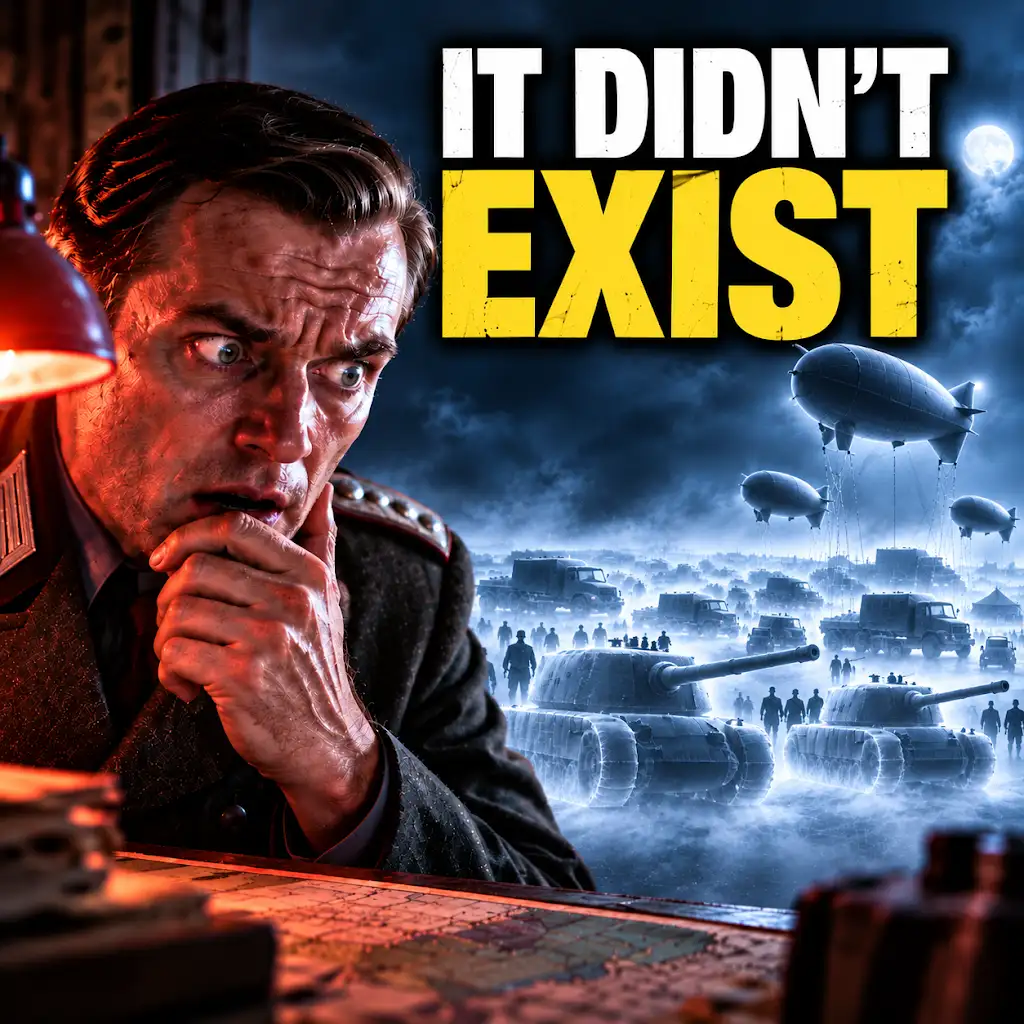
How the Allies Built an Army for Germany to Discover
FAQs
What was Operation Fortitude?
Operation Fortitude was a World War II military deception plan employed by the Allied forces to mislead the German military about the location and timing of the D-Day invasion.
Who was George Patton and what was his role in Operation Fortitude?
George Patton was a prominent American general during World War II. He played a key role in Operation Fortitude by leading a fictional army group in southeast England to deceive the Germans into believing that the invasion would take place at Pas de Calais instead of Normandy.
How did Operation Fortitude contribute to the success of the D-Day invasion?
Operation Fortitude successfully misled the German High Command into believing that the main Allied invasion would occur at Pas de Calais, leading them to keep their forces concentrated in that area. This diversion of German resources helped to weaken their defenses in Normandy, where the actual D-Day invasion took place.
When was Operation Fortitude executed?
Operation Fortitude was executed in the months leading up to the D-Day invasion on June 6, 1944. The deception plan involved a series of elaborate ruses and false information to mislead the German military.
What impact did Operation Fortitude have on the outcome of World War II?
Operation Fortitude played a crucial role in the success of the D-Day invasion and the eventual Allied victory in World War II. By deceiving the Germans and diverting their attention away from Normandy, the operation helped to secure a foothold in Western Europe and turn the tide of the war in favor of the Allies.