
The hushed whispers had always swirled around Elias Thorne. Not out of malice, but out of a quiet, persistent curiosity that clung to him like the scent of old paper from his grandmother’s attic. His mother, Eleanor, a woman of quiet grace and guarded emotions, had never spoken of his father. The topic, when it inadvertently arose, was met with a gentle but firm deflection, a subtle shift in conversation that left Elias feeling more like an accidental sprout than a deliberate planting. He was aware of his lineage, his maternal grandmother was a formidable figure in the local historical society, her lineage traced back through generations of respectable, if unremarkable, landowners and scholars. But the paternal side remained a vast, uncharted territory, a silent void in the otherwise well-documented tapestry of his family.
As Elias moved into adulthood, the void began to feel less like a natural omission and more like a deliberate erasure. He found himself drawn to stories, both fictional and real, where mysteries were unraveled, and hidden truths brought to light. His own life, so outwardly stable and predictable, felt incomplete without this fundamental piece of his identity. The question of his father wasn’t an obsession, but a persistent hum beneath the surface of his daily existence, a gentle tug on the threads of his personal narrative. He yearned for understanding, for context, for the simple knowledge of where he came from, beyond the maternal line that had nurtured and guided him.
His grandmother, Beatrice Thorne, was a treasure trove of family history, her memory a meticulously cataloged archive. Elias spent countless hours poring over dusty ledgers, brittle photographs, and handwritten diaries, absorbing the stories of his ancestors. He learned of their triumphs and tribulations, their passions and their quiet domestic lives. Yet, every trace of his father’s family was conspicuously absent. There were no portraits, no letters mentioning a paternal grandfather or uncles, no anecdotes passed down through the generations. It was as if this entire branch of his tree had been pruned before its leaves could even unfurl.
The Genesis of the Search
The initial impetus for Elias’s deep dive into his paternal lineage wasn’t a sudden revelation, but a slow, accumulating weight of unanswered questions. He loved his mother dearly, and he understood her reluctance to delve into a past that might hold pain or regret. However, as he navigated his own milestones – graduations, career achievements, even the simple act of looking in the mirror and seeing features that felt both familiar and foreign – the absence of a paternal anchor became more pronounced. He felt a profound need to understand the influences, the genetic predispositions, the very essence that might have been passed down from his father.
Subtle Clues and Lingering Doubts
Even in his mother’s careful omissions, Elias began to detect subtle patterns. He noticed the way she’s voice would soften, almost imperceptibly, when certain topics arose. A fleeting mention of a particular town, a specific decade, or a profession that seemed to hold a distant echo of something unsaid. These were not direct clues, but rather the faint scent of a trail, the kind that might be missed by someone not actively searching. He began to meticulously note these instances, creating a private journal of observations that, to an outsider, might seem like trivial anecdotes, but to Elias, they were potential breadcrumbs.
He recalled childhood memories, fragments of conversations overheard, and the occasional, almost involuntary, sigh his mother would release when looking at old photographs of herself as a young woman. There was a certain wistfulness in her gaze, a hint of a story left untold, a chapter unwritten. These were the whispers that fueled his resolve, the intangible threads that pulled him towards the unknown. He wasn’t seeking to disrupt his mother’s peace, but rather to understand the completeness of his own story, a story that felt intrinsically linked to the man who had played a role in his creation, however distant or absent.
The Unveiling of a Cryptic Memento
One rainy afternoon, while helping his mother clear out a rarely used storage closet, Elias stumbled upon a small, tarnished silver locket. It lay hidden at the bottom of an old jewelry box, nestled amongst faded ribbons and costume jewelry. The locket was plain, unadorned, and surprisingly heavy. Upon opening it, Elias’s breath hitched. Inside, on one side, was a miniature, sepia-toned photograph of a young woman, her eyes bright and full of life. He recognized her instantly; it was his mother, Eleanor, in her early twenties, radiant and full of youthful promise. But it was the other side of the locket that truly arrested his attention. Tucked neatly into the opposite compartment was a folded, brittle piece of paper. With trembling fingers, Elias unfolded it. It was a small, handwritten note, the ink faded but still legible. The message was brief, almost cryptic: “For my dearest Eleanor. Always, R.”
The Significance of “R”
The single initial, “R,” was a revelation. It was the first tangible clue, a concrete piece of evidence that hinted at a specific individual. Elias’s mind raced. Who was “R”? This wasn’t a name he recognized from any of his mother’s family or friends. The tenderness in the inscription, “my dearest Eleanor,” suggested a significant relationship, one that had clearly left a lasting impression. The locket itself, so carefully preserved, spoke of a cherished memory, a bond that had endured the passage of time, even if it had been carefully concealed. This small, unassuming object had just opened a door to a realm of possibilities that Elias had only dared to imagine.
If you’re interested in exploring the complexities of family trees and the challenges of tracing unknown parentage, you might find the article on family lineage and ancestry research particularly insightful. It delves into various methods and resources that can help individuals uncover their family histories, even when faced with the mystery of an unknown father. For more information, you can read the article here: Family Tree Research: Uncovering Your Unknown Father.
Navigating the Whispers of the Past

With the discovery of the locket and the enigmatic initial “R,” Elias’s quiet curiosity transformed into a determined quest. He understood that his mother’s silence was likely born from a desire to protect him, or perhaps from a painful chapter she preferred to leave undisturbed. However, the locket represented a tangible link to this hidden past, a thread he could now begin to follow. His approach remained respectful, mindful of his mother’s feelings, but his resolve had hardened. He was no longer content with the absence of information; he felt compelled to uncover the truth, for his own sake and perhaps, in a subtle way, for his mother’s as well.
The Delicate Art of Maternal Inquiry
Elias knew that a direct confrontation would likely result in his mother withdrawing further. Instead, he employed a strategy of gentle inquiry, weaving his questions into everyday conversations. He would casually mention old photographs, asking about people he didn’t recognize in family albums, hoping to elicit a reaction or a story. He would express an interest in the town where his mother had grown up, asking about its history and notable residents during her youth. These were not fishing expeditions, but rather subtle attempts to gauge her comfort level and to glean any accidental slips of information that might align with his nascent theories. He learned to read the subtle shifts in her tone, the momentary pauses, the way her gaze might drift to a distant point, as if recalling a memory she wasn’t quite ready to share.
Unearthing Records and Oral Histories
Beyond his mother, Elias began to tap into other sources of information. He revisited his grandmother Beatrice’s extensive archives, this time with a specific focus. He scoured old yearbooks from his mother’s high school, searching for male students with names that might begin with “R.” He delved into local census records, cross-referencing names and addresses from the era his mother would have been in her early twenties. He also reached out to distant cousins, carefully framing his questions as a general interest in family history, hoping they might recall any older relatives or acquaintances who might fit the profile. The process was painstaking, a mosaic of fragmented pieces that slowly began to form a picture, albeit a blurry one.
Piecing Together the Puzzle

The initial stages of Elias’s investigation yielded a wealth of information, though much of it was fragmented and circumstantial. He learned that his mother had spent her early adulthood in a bustling coastal town, a place quite different from the quiet, inland community where Elias had grown up. This town, with its vibrant social scene and transient population, presented a broader canvas for his search. The name “Robert” emerged frequently in his research, a common given name, but one that aligned with the initial “R.” He found mentions of a few Roberts who had been in his mother’s social circle during that period, but without further context, they remained elusive figures.
The Resonance of a Familiar Name
One particular name began to resonate with Elias: Robert Sterling. He found him mentioned in a few local newspaper articles from the late 1970s, always in connection with amateur theatre productions or community events. Robert Sterling was described as charismatic, passionate about the arts, and known for his infectious enthusiasm. There was a particular article detailing a community play where Eleanor Thorne had a supporting role, and Robert Sterling had been the lead. The review even mentioned their “obvious chemistry” on stage, a phrase that sent a shiver down Elias’s spine. Could this be him? The description of Robert Sterling’s personality seemed to hint at the kind of person who might have captured his mother’s heart, even if their paths had ultimately diverged.
The Fading Echoes of a Lost Connection
Elias dug deeper into Robert Sterling. He managed to track down a former castmate of Robert’s from the theatre group. The woman, now in her late seventies, recalled Robert with a warm smile. “Oh, Robbie,” she’d said, her voice tinged with nostalgia, “he was a whirlwind. Full of life, always making us laugh. And Eleanor,” she paused, her brow furrowing slightly, “they were quite inseparable for a while. Everyone thought they were going to end up together.” The confirmation, delivered so casually, was both exhilarating and heartbreaking. The castmate, however, couldn’t recall Robert Sterling’s surname or any definitive details about his life after that period. He had seemingly vanished from the local scene as quickly as he had appeared.
The Confrontation and the Revelation
Armed with this growing body of evidence, Elias knew it was time for a more direct conversation with his mother. The locket, the name Robert Sterling, and the recollections of a former acquaintance all pointed to a singular truth. He chose a quiet afternoon, when they were sitting in the garden, the air warm and the scent of roses heavy. He approached the topic with the same gentleness he had employed throughout his search, but this time, he held the locket in his hand, its tarnished surface catching the sunlight.
A Mother’s Hesitation and a Son’s Plea
Elias began by showing his mother the locket. He asked about “R,” and for the first time, he saw a flicker of something akin to pain cross her face. Her usual composure wavered. She explained that “R” stood for Robert, and that he had been a significant part of her life for a brief but intense period. She spoke of his passion, his artistic spirit, and the whirlwind romance they had shared. However, she remained reticent about the details of their separation, citing only that “circumstances” had led them to go their separate ways. Elias, sensing her struggle, gently explained that his quest wasn’t to reopen old wounds, but to understand his own identity, to fill the void in his personal history. He assured her of his love and acceptance, emphasizing that he just needed to know.
The Unfolding of a Difficult Truth
After a long, pregnant silence, Eleanor finally began to speak. She recounted the story of her relationship with Robert Sterling. They had been deeply in love, planning a future together. However, Robert, she revealed, had a complex family situation and was facing significant personal struggles at the time. He had been offered an opportunity to pursue his artistic dreams abroad, an opportunity he felt he couldn’t refuse. The circumstances of his departure were abrupt and painful. Eleanor was already pregnant with Elias when Robert left. He had promised to return, to support her and their child, but he never did. She had tried to contact him, but his addresses were no longer valid, and he had seemingly disappeared from her life. The weight of his absence, coupled with the fear and uncertainty of single motherhood in a less forgiving era, had led her to a difficult decision. She had chosen to move back to her family home, to create a stable environment for Elias, and to shield him from the complexities and potential pain of his father’s unresolved past. The silence, she explained, had been her way of protecting them both, of trying to build a life free from the shadows of what might have been.
Exploring the complexities of family trees can often lead to unexpected revelations, especially when it comes to unknown fathers. For those interested in delving deeper into this topic, a related article offers valuable insights into the emotional and genealogical challenges faced by individuals searching for their paternal lineage. You can read more about these experiences and the resources available to assist in such journeys by visiting this informative article. Understanding the impact of an unknown father can be a significant step in uncovering one’s identity and family history.
The Path Forward: Integration and Acceptance
| Metric | Description | Typical Value / Range | Notes |
|---|---|---|---|
| Percentage of Unknown Fathers in Family Trees | Proportion of individuals with unknown paternal information in genealogical records | 5% – 15% | Varies by region and historical period |
| Average Generations with Unknown Father | Number of generations back where paternal identity is unknown | 1 – 3 generations | Depends on record availability and family history |
| Impact on Genetic Testing Accuracy | Effect of unknown father on interpreting DNA test results | Moderate to High | Can complicate paternal lineage tracing |
| Frequency of Unknown Fathers in Adoption Cases | Rate at which biological fathers are unknown in adoption records | Up to 30% | Higher than general population due to record limitations |
| Use of Alternative Records | Percentage of cases where non-traditional sources help identify unknown fathers | 20% – 40% | Includes DNA matches, oral histories, and legal documents |
The revelation, while emotionally charged, brought a profound sense of closure to Elias. The mystery of his father, once a gaping void, was now filled with a story, however bittersweet. He understood his mother’s choices, her courage, and her unwavering love. The journey of uncovering his paternal lineage had not only provided him with information but had also deepened his appreciation for the woman who had raised him, and for the strength and resilience she had demonstrated throughout her life.
Embracing the Completeness of Self
With the truth laid bare, Elias felt a shift within himself. The persistent hum of unanswered questions had subsided, replaced by a quiet sense of completeness. He no longer felt like a puzzle with a missing piece. He was the product of both his mother’s love and his father’s brief, yet significant, presence. He recognized that his identity was not solely defined by his maternal lineage but was a richer, more complex tapestry woven from both sides of his heritage. He began to explore the artistic inclinations he had always possessed, realizing that perhaps the spark of creativity he inherited from his father had found its outlet through his mother’s nurturing environment.
Rebuilding Bridges and Forging New Connections
The conversation with his mother had opened a new chapter in their relationship. They could now speak openly about his father, sharing memories and exploring the implications of his absence. Elias also felt a renewed desire to connect with his paternal roots, not out of obligation, but out of a desire to understand himself more fully. He began to search for information about Robert Sterling’s life after he left Eleanor. While direct contact remained elusive, he managed to find a distant relative of Robert’s, a cousin who recalled him as a talented but troubled artist who had lived a nomadic life. This contact, though limited, provided Elias with a broader understanding of the man his father had been. The journey of discovering his family tree had been a challenging one, marked by silences and unspoken truths, but ultimately, it had led him to a place of profound self-discovery and acceptance. The mystery was no longer a source of anxiety but a testament to the enduring power of love, resilience, and the universal human need to understand where we come from.
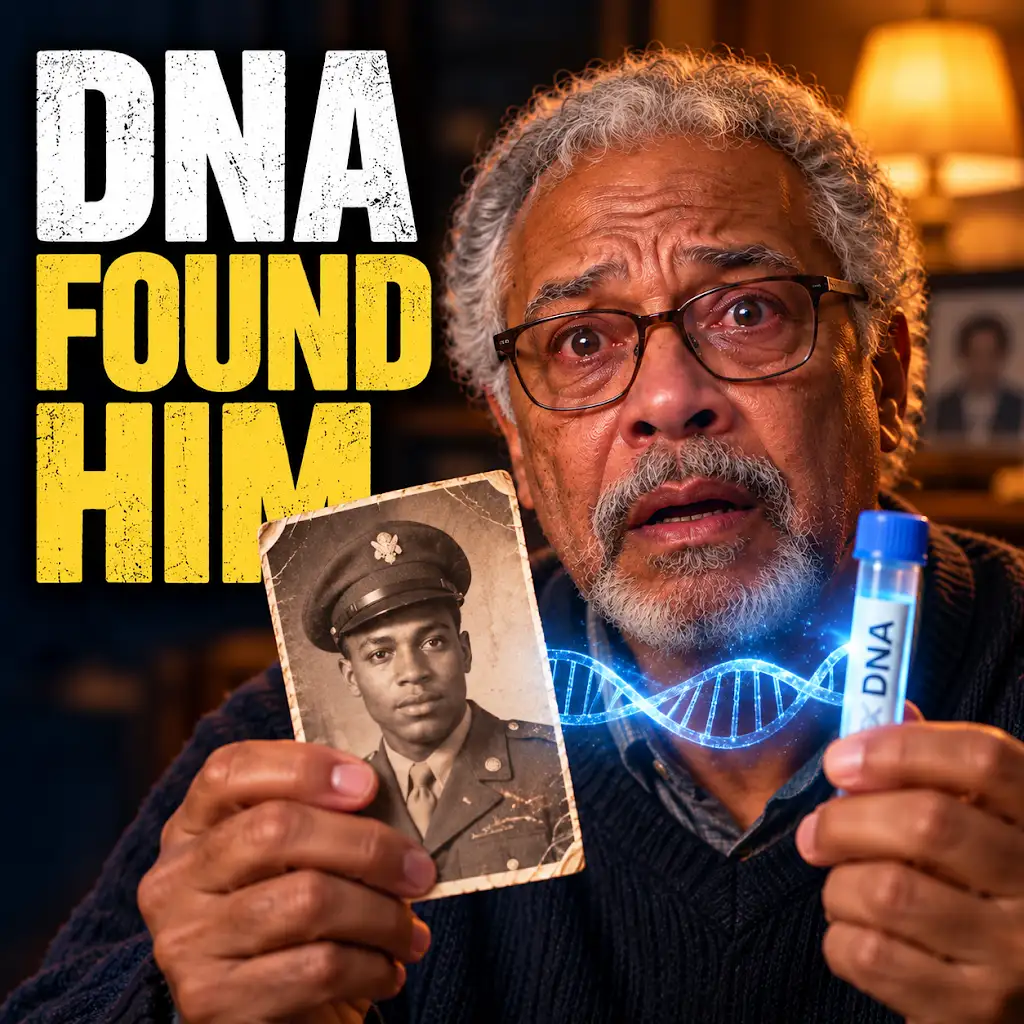
His WWII GI Father Was a Mystery for Nearly 80 Years
FAQs
What is a family tree?
A family tree is a diagram that shows the relationships between individuals in a family, typically going back several generations.
How can I find information about an unknown father in my family tree?
To find information about an unknown father in your family tree, you can start by gathering any existing information or documents that may provide clues, such as birth certificates, marriage records, or family stories. You can also consider using DNA testing services to help identify potential relatives and uncover more information.
Why is it important to research and document family history, including unknown fathers?
Researching and documenting family history, including unknown fathers, can provide valuable insights into your heritage, identity, and connections to others. It can also help future generations understand their roots and preserve important family stories and traditions.
What are some common challenges when trying to trace an unknown father in a family tree?
Some common challenges when trying to trace an unknown father in a family tree include limited or conflicting information, lack of documentation, and the stigma or secrecy surrounding the circumstances of the unknown father’s identity. Additionally, changes in surnames, adoptions, and unknown paternity can complicate the research process.
Are there resources or organizations that can help individuals trace their family tree and find information about unknown fathers?
Yes, there are various resources and organizations that can help individuals trace their family tree and find information about unknown fathers. These include genealogy websites, DNA testing services, local historical societies, and professional genealogists who specialize in uncovering family histories.