The shadows are where they operate, unseen and unheard until the critical moment. DEVGRU, more commonly known as SEAL Team Six, is the pinnacle of U.S. special operations forces. This elite unit, cloaked in secrecy, is tasked with America’s most sensitive, dangerous, and classified missions. Understanding DEVGRU is to delve into a world of rigorous selection, unparalleled training, and operations that shape global security.
DEVGRU’s story is one of adaptation and refinement, born from a specific, high-stakes need and continuously molded by the evolving landscape of global threats. Its genesis is directly linked to a catastrophic failure, a turning point that demanded a more specialized and potent instrument of national power.
The Genesis: Operation Eagle Claw and the Need for Specialization
The failed rescue attempt of American hostages in Iran in 1980, codenamed Operation Eagle Claw, stands as the undeniable catalyst for DEVGRU’s creation. This complex and ultimately disastrous mission exposed critical deficiencies in the U.S. military’s ability to conduct hostage rescue and counter-terrorism operations, particularly those requiring precision, speed, and the ability to operate in denied environments. The mission’s collapse, marked by equipment failure, poor coordination, and loss of life, sent shockwaves through the Pentagon and the White House. It became glaringly apparent that a dedicated, highly trained force capable of executing such specialized missions was not merely desirable, but essential.
The Birth of SEAL Team Six
In response to the lessons learned from Operation Eagle Claw, the U.S. Navy conceived of a new unit. Drawing upon the highly skilled and proven operators of its existing SEAL (Sea, Air, and Land) Teams, a specialized unit was formed. This nascent organization, initially designated SEAL Team Six, was designed to be the tip of the spear for direct action, counter-terrorism, and hostage rescue operations. The very designation “Team Six” was a deliberate piece of misdirection, created to imply the existence of other SEAL teams that did not, at that time, exist. This was a strategic move to mislead potential adversaries about the unit’s true size and capabilities.
The Transition to DEVGRU
Over time, the unit evolved and its role expanded. While still retaining its core counter-terrorism and direct action capabilities, its mission set grew to encompass a wider array of highly classified operations, including intelligence gathering, direct action against high-value targets, and unconventional warfare. Recognizing this expanded scope and its critical national security role, the unit was reorganized and ultimately became known as the Naval Special Warfare Development Group, or DEVGRU. This transition reflected a maturation of the unit, moving beyond a singular focus on hostage rescue to encompass a broader spectrum of special operations requirements. The DEVGRU designation further solidified its position as a premier intelligence and special operations asset, distinct from the more publicly understood SEAL Teams.
Continuous Adaptation and Mission Expansion
DEVGRU has never been a static organization. The nature of warfare and the threats facing the United States are constantly in flux, and DEVGRU has continuously adapted to meet these challenges. From the jungles of Southeast Asia to the deserts of the Middle East and the urban landscapes of counter-terrorism operations, DEVGRU operators have honed their skills in diverse environments. The unit’s mission set has expanded to include maritime counter-terrorism, special reconnaissance, foreign internal defense, and even direct action operations against sophisticated global terrorist networks. This adaptability, coupled with a relentless pursuit of tactical and technological superiority, has ensured DEVGRU remains at the forefront of special operations capabilities.
For those interested in learning more about the elite operations of SEAL Team Six, also known as DEVGRU, a comprehensive article can be found at this link. The article delves into the history, training, and notable missions of this highly specialized unit, providing readers with an in-depth understanding of their critical role in national security and counter-terrorism efforts.
The Selection Process: Forging the Elite
The path to becoming a DEVGRU operator is not for the faint of heart, nor the average. It is a crucible designed to weed out all but the most exceptional individuals, those possessing an extraordinary combination of physical prowess, mental fortitude, and unwavering dedication. The selection process is famously rigorous, often described as the most demanding in the U.S. military, and it begins long before an individual even applies to DEVGRU.
The SEAL Foundation: Prerequisites for Entry
Before an individual can even consider DEVGRU, they must first become a U.S. Navy SEAL. This in itself is a monumental undertaking. The Basic Underwater Demolition/SEAL (BUD/S) training program, a six-month ordeal notorious for its brutal physical and mental challenges, is the gateway to becoming a SEAL. BUD/S involves extreme physical exertion, cold-water immersion, sleep deprivation, and constant psychological pressure. Only a small fraction of those who start BUD/S successfully complete it. Upon graduation from BUD/S and subsequent advanced SEAL training, a SEAL can then, under specific circumstances and with significant experience, be considered for DEVGRU.
The Application and Initial Screening
Once a SEAL has gained substantial operational experience and meets the stringent prerequisites, they may express interest in joining DEVGRU. This is not an open application process; it is largely based on recommendations from senior leadership and demonstrated exceptional performance. The initial screening process is intense, involving in-depth interviews, extensive background checks, and psychological evaluations. Potential candidates are scrutinized for their leadership potential, problem-solving abilities under extreme duress, and their capacity for independent thought and decisive action.
The “Green Team” and Beyond: The Real Test
The actual selection and training pipeline for DEVGRU, often referred to as the “Green Team” phase, is where the true testing begins. This period is highly classified, but it is understood to involve progressively more difficult scenarios designed to assess a candidate’s ability to operate effectively in a team environment, under immense pressure, and with a high degree of autonomy.
Advanced Skills Assessment
Candidates are tested on an array of advanced skills far beyond those taught in standard SEAL training. This includes, but is not limited to:
- Advanced Combat Medicine: Operators must be proficient in battlefield trauma care, performing complex medical procedures in austere environments with limited resources.
- Advanced Weapons Proficiency: This goes beyond basic marksmanship to encompass specialized weapons systems, tactical firearms manipulation, and proficiency with a wide range of firearms in dynamic scenarios.
- Demolitions and Explosives: A deep understanding of various explosives, their application, and safe handling is crucial for mission success.
- Maritime and Amphibious Operations: DEVGRU’s roots are in maritime warfare, and operators must be expert swimmers, divers, and adept at deploying from and operating in a variety of watercraft.
- Close Quarters Battle (CQB): Mastery of room clearing, urban combat, and operating in confined spaces is paramount for hostage rescue and direct action missions.
- Intelligence Gathering and Analysis: Operators are expected to contribute to intelligence collection and analysis, often operating in sensitive reconnaissance roles.
- Communications and Electronic Warfare: Proficiency with specialized communication systems and an understanding of electronic warfare tactics are essential.
Psychological and Team Cohesion Evaluation
Beyond technical skills, DEVGRU places immense emphasis on psychological resilience and team cohesion. Candidates are placed in simulated operational environments designed to push their mental limits.
- Stress Inoculation: Prolonged periods of sleep deprivation, isolation, and simulated combat scenarios are used to build stress tolerance and prevent mental fatigue from impacting decision-making.
- Team Dynamics Under Pressure: Candidates are observed for their ability to communicate effectively, trust their teammates, and seamlessly integrate into a cohesive unit, even when facing simulated life-or-death situations.
- Leadership and Followership: The ability to lead when necessary and to follow orders implicitly is equally important. Operators must be able to make critical decisions but also defer to leadership when appropriate.
- Adaptability and Resourcefulness: The ability to think on their feet, improvise solutions, and adapt to unforeseen circumstances is a hallmark of a successful DEVGRU operator.
The Final Hurdle: Operational Readiness
Only those who successfully navigate the “Green Team” phase and demonstrate an exceptional level of proficiency and suitability are formally inducted into DEVGRU. Even after selection, training is continuous, ensuring operators remain at the cutting edge of special operations capabilities. The constant evaluation and refinement mean that the bar for entry, and for continued service, is perpetually high.
The Mission Spectrum: Operations Beyond the Headlines
While DEVGRU is famously associated with high-profile counter-terrorism operations, its operational mandate extends far beyond what the public typically sees or understands. Their mission portfolio is vast, encompassing a range of highly sensitive and critical tasks that are vital to national security.
Counter-Terrorism and Hostage Rescue: The Defining Role
The most publicized aspect of DEVGRU’s work revolves around counter-terrorism and hostage rescue. These are missions where time is of the essence, and the stakes are astronomically high.
Direct Action Against Terrorist Threats
DEVGRU operators are deployed to neutralize terrorist threats before they can materialize or to dismantle active terrorist cells. This often involves swift, precise raids on enemy strongholds, eliminating key leaders, and disrupting their operational capabilities. The successful raid that killed Osama bin Laden is a prime example of this capability.
Hostage Liberation Operations
When American citizens or personnel are taken hostage, particularly in hostile territories, DEVGRU is often the primary force tasked with their liberation. These operations require meticulous planning, unparalleled speed, and the ability to overcome overwhelming odds to bring hostages home safely.
Special Reconnaissance and Intelligence Gathering
Beyond kinetic operations, DEVGRU plays a crucial role in gathering critical intelligence in denied areas, often in the very heart of enemy territory.
Deep Penetration Reconnaissance
Operators are inserted into hostile environments for extended periods to conduct surveillance, gather intelligence on enemy movements, capabilities, and intentions. This reconnaissance is vital for informing broader military and diplomatic strategies.
Sensitive Site Exploitation
Following successful operations, DEVGRU teams are often tasked with rapidly exploiting enemy sites to collect intelligence, sensitive equipment, and documents that can provide invaluable insights into enemy networks and future threats.
Direct Action Against High-Value Targets
DEVGRU is instrumental in identifying and neutralizing individuals or groups deemed a significant threat to U.S. interests or global stability.
Eliminating or Capturing Enemy Leaders
When diplomatic or legal avenues are insufficient, DEVGRU may be tasked with eliminating or capturing high-value targets, including terrorist leaders, WMD proliferators, or enemy commanders who pose an immediate threat.
Disrupting Weapon of Mass Destruction (WMD) Programs
In scenarios involving the proliferation of WMDs, DEVGRU may be involved in covert operations to secure or neutralize WMD materials or facilities, preventing them from falling into the wrong hands.
Unconventional Warfare and Foreign Internal Defense
DEVGRU operators also possess the skills and experience to operate alongside and train indigenous forces in support of U.S. foreign policy objectives.
Training and Advising Partner Forces
DEVGRU personnel can be deployed to train and advise foreign military or paramilitary units in counter-terrorism tactics, special operations techniques, and other specialized skills, enhancing their ability to combat threats within their own borders.
Supporting Irregular Warfare
In certain situations, DEVGRU operators may engage in unconventional warfare, working behind enemy lines to support insurgent or resistance movements aligned with U.S. interests.
Training and Equipment: The Pillars of Superiority
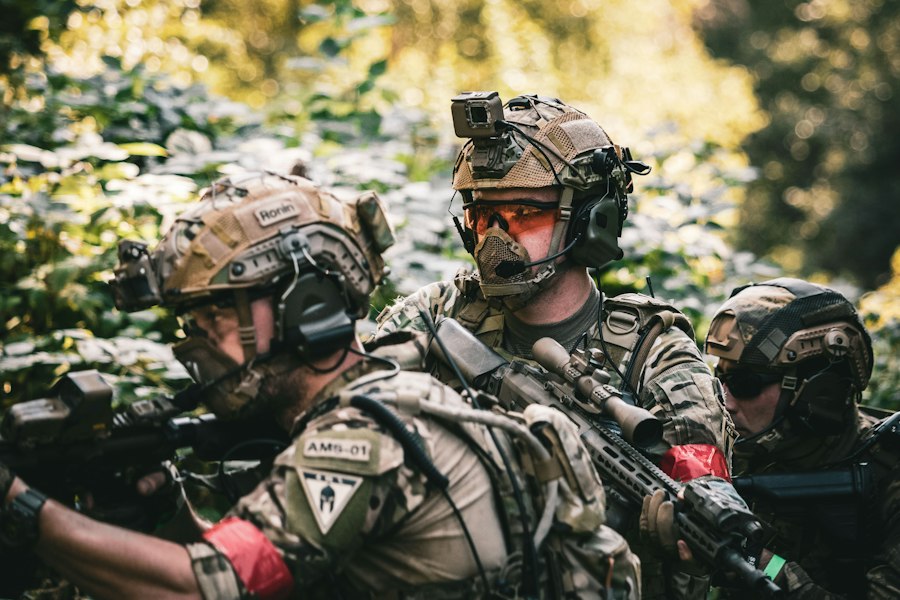
DEVGRU’s effectiveness is built upon a foundation of continuous, cutting-edge training and access to the most advanced technology and equipment available. The unit’s operators are not only physically and mentally superior but are also equipped with the tools necessary to execute their complex missions successfully in any environment.
Continuous and Advanced Training Regimens
The training for DEVGRU operators is not a one-time event; it is a perpetual cycle of refinement and advancement. Their skills are constantly honed through rigorous exercises and simulations that push the boundaries of human capability and technological integration.
Realistic Simulations and Exercises
DEVGRU regularly conducts realistic training exercises that mirror the conditions and challenges of real-world operations. These exercises often involve:
- Joint Combined Exchange Training (JCET): Collaborative training with foreign special operations forces to enhance interoperability and cultural understanding.
- Large-Scale Force-on-Force Exercises: Simulated combat scenarios involving multiple units and complex tactical objectives.
- Scenario-Based Training: Missions designed to replicate specific threat environments, from urban combat to clandestine insertions in hostile territory.
Specialized Skill Development
Beyond the core skills, DEVGRU operators undergo continuous training in highly specialized areas:
- Advanced Maritime Operations: Including submarine operations, advanced diving techniques, and the use of specialized underwater vehicles.
- Aviation Integration: Training with various aircraft, including helicopters and fixed-wing planes, for insertion, extraction, and close air support.
- Cyber Warfare and Intelligence: Developing capabilities in cyber operations, electronic warfare, and advanced intelligence analysis.
- Language and Cultural Training: Essential for operating effectively in diverse international environments and interacting with local populations.
Cutting-Edge Technology and Equipment
DEVGRU operators are equipped with a sophisticated arsenal of gear, often developed specifically for their unique operational needs.
Personal Protective Equipment (PPE)
This includes state-of-the-art body armor, helmets, and specialized gear designed for protection in high-threat environments, often incorporating advanced materials for reduced weight and enhanced ballistic resistance.
Weaponry and Firearm Systems
Operators are proficient with a wide array of firearms, including customized M4 carbines, SCAR rifles, SIG Sauer pistols, and specialized weapons for specific mission requirements, such as suppressed firearms for silent operations.
Communications and Surveillance Gear
DEVGRU utilizes advanced encrypted communication systems, satellite phones, and sophisticated surveillance equipment, including night vision devices, thermal imagers, and unmanned aerial vehicles (UAVs) for reconnaissance and intelligence gathering.
Mobility and Infiltration Systems
The unit employs a range of specialized vehicles and equipment for insertion and extraction, including rigid-hull inflatable boats (RHIBs), advanced diving gear, and often custom-modified aircraft. They may also utilize specialized vehicles for ground movement in denied areas.
Custom-Developed Tools and Technology
DEVGRU often works with defense contractors and military research facilities to develop bespoke tools and technologies that address specific operational challenges. This can range from specialized breaching tools to advanced medical equipment and unique navigational aids.
SEAL Team Six, officially known as DEVGRU, is one of the most elite special operations forces in the world, renowned for its high-stakes missions and rigorous training. For those interested in learning more about the history and operations of this formidable unit, a related article can provide deeper insights into their strategic importance and operational tactics. You can explore this further in the article found at In the War Room, which delves into the complexities of modern warfare and the role of special forces like SEAL Team Six.
The DEVGRU Ethos: Secrecy, Sacrifice, and Service
| Metric | Details |
|---|---|
| Full Name | United States Naval Special Warfare Development Group (DEVGRU) |
| Common Name | SEAL Team Six |
| Branch | United States Navy |
| Primary Role | Counter-terrorism, hostage rescue, special reconnaissance, direct action |
| Established | 1980 |
| Selection Process | Highly selective; candidates usually come from existing Navy SEAL teams |
| Training Duration | Several months of advanced specialized training beyond SEAL qualification |
| Size | Classified; estimated to be a few hundred operators |
| Notable Operations | Operation Neptune Spear (Osama bin Laden raid), Operation Gothic Serpent (Black Hawk Down) |
| Command Structure | Part of Joint Special Operations Command (JSOC) |
| Equipment | Advanced weaponry, specialized gear tailored to mission requirements |
| Mission Secrecy | Highly classified; many operations remain undisclosed |
The operational success and enduring mystique of DEVGRU are inextricably linked to its unique organizational culture and the unwavering ethos that guides its operators. This ethos is forged in the crucible of extreme training and sustained through a profound commitment to the mission and to each other.
The Culture of Secrecy
One of DEVGRU’s most defining characteristics is its pervasive culture of secrecy. The unit’s operations are classified at the highest levels, and the identities of its operators are closely guarded secrets. This secrecy serves multiple strategic purposes.
Operational Security
Maintaining the confidentiality of DEVGRU’s capabilities, tactics, and personnel is paramount for operational security. Knowing their mission parameters and methods are unknown to adversaries provides a significant tactical advantage.
Protecting Operators and Families
The extreme nature of DEVGRU missions means that operators often face significant personal risk. Secrecy helps to protect them and their families from potential retaliation or unwanted attention.
Maintaining Strategic Ambiguity
The lack of detailed public information about DEVGRU’s exact capabilities and operational history creates a degree of strategic ambiguity, making it difficult for adversaries to anticipate their actions or develop effective countermeasures.
The Unwritten Rules of Brotherhood
Within the highly compartmentalized world of DEVGRU, an unbreakable bond of brotherhood exists among its operators. This bond is not merely a camaraderie forged in shared hardship; it is a profound commitment to mutual support and survival.
Trust and Reliability
In high-stakes missions where lives depend on split-second decisions and seamless execution, absolute trust in one’s teammates is non-negotiable. Every operator knows that their brothers will have their back, no matter the odds.
Shared Sacrifice and Dedication
DEVGRU operators dedicate their lives to their mission, often at great personal cost. They are willing to endure extreme hardship, separation from family, and the constant threat of danger in service to their country. This shared sacrifice deepens their bond.
The Mentorship Tradition
Experienced operators play a crucial role in mentoring new members, passing down not only technical skills but also the vital tenets of the DEVGRU ethos. This ensures the continuity of the unit’s unique culture and standards.
The Ultimate Sacrifice: A Constant Reality
The demanding nature of DEVGRU missions means that the ultimate sacrifice is a constant, albeit unspoken, reality. Operators are acutely aware of the risks they undertake, and this awareness shapes their dedication and reinforces the value they place on each mission and each moment.
Honoring the Fallen
While details are rarely publicized, DEVGRU maintains traditions of honoring its fallen operators, ensuring their service and sacrifice are never forgotten within the unit.
The Weight of Responsibility
The knowledge that they are entrusted with the nation’s most critical and dangerous missions carries an immense weight of responsibility. This burden, shared by every DEVGRU operator, fuels their unwavering commitment to excellence and their relentless pursuit of mission success.
DEVGRU, or SEAL Team Six, represents the apex of America’s special operations capabilities. It is a unit forged in necessity, refined through relentless training, and defined by an ethos of unwavering dedication, profound secrecy, and extraordinary sacrifice. While the shadows they operate in may obscure their deeds from public view, their impact on global security is undeniable, a testament to the elite individuals who comprise this remarkable force.
Why SEAL Team Six Got the Bin Laden Raid — Not Delta Force
FAQs
What is SEAL Team Six DEVGRU?
SEAL Team Six, officially known as the United States Naval Special Warfare Development Group (DEVGRU), is a special operations force within the U.S. Navy.
How is SEAL Team Six different from other SEAL teams?
SEAL Team Six is a highly specialized unit within the Navy SEALs that focuses on counter-terrorism, hostage rescue, and other high-risk missions. They are known for their exceptional training and operational capabilities.
How are members of SEAL Team Six selected?
Members of SEAL Team Six are recruited from existing Navy SEAL teams and must undergo a rigorous selection process that includes physical fitness tests, psychological evaluations, and specialized training.
What are some of the most famous missions carried out by SEAL Team Six?
SEAL Team Six is known for its successful missions, including the operation to capture Osama bin Laden in 2011 and the rescue of Captain Richard Phillips from Somali pirates in 2009.
What is the role of SEAL Team Six in the U.S. military’s special operations forces?
SEAL Team Six plays a crucial role in the U.S. military’s special operations forces by conducting highly sensitive and classified missions to protect national security interests and combat terrorism around the world.