
The Eisenhower-Montgomery Disagreement: A Clash of Military Strategy
The North African campaign, a crucial theater in the early stages of World War II, was a crucible where Allied strategies were forged and tested. Among the most significant and, at times, contentious episodes of this period was the evolving relationship and differing strategic visions between the American General Dwight D. Eisenhower, Supreme Allied Commander of the North African Theater of Operations (TO), and the British Field Marshal Bernard Law Montgomery, commander of the British Eighth Army. This disagreement was not merely a clash of personalities, though personality certainly played a role, but fundamentally a divergence in military doctrine, operational philosophy, and the perceived imperatives of the war in Europe. It was a complex interplay of American industrial might and innovation clashing with British experience and a more cautious, methodical approach, shaped by years of fighting the Axis in Europe and Africa.
The seeds of the Eisenhower-Montgomery disagreement were sown long before their paths crossed in North Africa. Eisenhower, a staff officer with limited direct combat command experience prior to TO, was a product of the American military system, which emphasized planning, coordination, and the utilization of vast material resources. His early career had been shaped by thinkers like General George C. Marshall, who advocated for a decisive, offensive spirit, leveraging America’s burgeoning industrial capacity. Eisenhower was a natural organizer, a skilled diplomat among disparate Allied forces, and a proponent of bold, decisive action when the conditions were right. He was tasked with orchestrating a massive, multi-national invasion, a logistical and command challenge of unprecedented scale. His vision was inherently grand, encompassing the liberation of North Africa, the establishment of a base for future operations in Southern Europe, and the ultimate defeat of Germany.
Montgomery, conversely, was a seasoned warrior with decades of experience on the battlefield. He had seen the carnage of the Western Front in World War I and had commanded British forces in the grueling campaigns in the Middle East and Egypt. His philosophy was deeply rooted in the lessons learned from those experiences. Montgomery was a meticulous planner, a believer in overwhelming firepower, and a commander who prioritized the safety and effectiveness of his troops. He was known for his deliberate, methodical advances, his insistence on thorough preparation, and his preference for engaging the enemy on his own terms, after having achieved a decisive tactical advantage. His success at El Alamein, a victory achieved through careful planning and overwhelming artillery, cemented his reputation and instilled in him a profound belief in his own strategic judgment. He was acutely aware of the human cost of war and sought to minimize it through careful, calculated operations.
The Shadow of El Alamein
The Battle of El Alamein in late 1942 was a watershed moment for both men and their strategic outlooks. For Montgomery, it was a resounding personal triumph. His meticulous planning, his deployment of overwhelming artillery, and his patient, grinding offensive broke the back of Rommel’s Afrika Korps. The victory was a much-needed morale boost for the Allied cause and solidified Montgomery’s image as a brilliant tactician and a decisive leader. This success, however, also reinforced his belief in his own methods. He came to view his approach as the optimal path to victory, a testament to his understanding of how to defeat experienced German forces.
For Eisenhower, El Alamein was a crucial step in a much larger strategic picture. While he celebrated Montgomery’s victory, his focus was on the broader objectives of Operation Torch, the Allied invasion of Northwest Africa, which he had conceived and was overseeing. Torch was designed to cut off Axis forces in North Africa from behind, forcing their surrender and opening a new front against the Axis in Europe. Eisenhower’s strategic vision was one of coordinated, multi-pronged offensives, designed to stretch and overwhelm enemy resources. He saw Montgomery’s success as vital, but also as one piece of a larger, more complex puzzle. The divergence in their immediate achievements and their long-term perspectives began to manifest in their interactions.
The disagreement between President Dwight D. Eisenhower and General Montgomery during World War II highlights the complexities of military leadership and strategy. For a deeper understanding of this historical conflict, you can explore the related article that delves into the nuances of their differing perspectives and the impact on the Allied forces. To read more about this topic, visit this article.
The Tunisian Campaign: A Battlefield of Contention
The Tunisian Campaign, which followed El Alamein and the Torch landings, became the primary theater for the Eisenhower-Montgomery disagreement. The Allied objective was to trap and destroy the remaining Axis forces in North Africa, ultimately clearing the region for subsequent operations. The strategic challenge lay in coordinating the advance of Montgomery’s Eighth Army from the east, having driven Rommel out of Egypt, with the forces landing in the west as part of Operation Torch, now under Eisenhower’s direct command. This was where their differing approaches collided most directly.
Divergent Approaches to the Advance
Montgomery envisioned a methodical, overwhelming advance from the east, consolidating his gains and ensuring absolute superiority before engaging the enemy in decisive battles. He was wary of being drawn into piecemeal fighting and preferred to build up irresistible force. His advance across Libya and into Tunisia was characterized by careful planning, extensive logistical preparation, and a steady, albeit sometimes slow, progress. He was a master of establishing a secure base and building up his strengths before committing to a major offensive.
Eisenhower, on the other hand, was eager for a swifter conclusion to the campaign. He recognized the strategic advantage of a rapid victory in North Africa, which would allow the Allies to pivot to other fronts and capitalize on their momentum. He encouraged his forces, including the American II Corps under General Lloyd Fredendall, to engage the enemy more aggressively and exploit any opportunities that arose. The American forces, particularly in the initial stages of the Torch landings and subsequent advances, were characterized by a more aggressive, sometimes less coordinated, approach. Eisenhower believed in the spirit of initiative and the ability of commanders on the ground to adapt to battlefield realities.
The Maknassy Debacle and its Aftermath
A key flashpoint in this disagreement occurred in February 1943, during the Battle of Kasserine Pass. Following Rommel’s counteroffensive, the American II Corps, still relatively inexperienced and operating with a degree of strategic naivete, suffered a significant defeat. Montgomery, who was advancing from the east and had been advised of the developing crisis, was reluctant to divert his forces significantly, believing his own preparations were paramount and that the threat could be contained by the forces already engaged. This perceived inaction, or at least a lack of decisive intervention, greatly frustrated Eisenhower, who saw the potential for a catastrophic collapse of the western front.
Eisenhower was particularly critical of Montgomery’s unwillingness to commit more substantial forces to support the hard-pressed American troops. He felt that Montgomery, secure in his own operational area and having achieved his own victories, was not sufficiently prioritizing the overall Allied objective. From Montgomery’s perspective, however, he was operating according to his established doctrine of overwhelming force and meticulous planning. He believed that a hasty, ill-prepared intervention would only lead to further losses and potentially compromise his own larger offensive plans. This event fueled Eisenhower’s concerns about Montgomery’s strategic priorities and his willingness to take calculated risks for the greater good of the Allied effort.
The Struggle for Command and Control

The Eisenhower-Montgomery disagreement was not just about differing battlefield tactics; it extended to the very nature of command and control in a coalition war. Eisenhower, as the Supreme Allied Commander, was responsible for the overall strategic direction of the North African theater. He had to balance the needs and contributions of American, British, French, and other Allied forces. This required a delicate hand, a willingness to compromise, and the ability to inspire loyalty and cooperation among diverse commanders.
Montgomery, however, possessed a strong sense of his own authority and expertise, particularly as the commander of the renowned Eighth Army. He was accustomed to operating with a high degree of autonomy and was not always receptive to directives that he felt contradicted his own carefully considered plans. His relationship with Eisenhower was often characterized by a degree of friction, with Montgomery frequently questioning Eisenhower’s decisions and offering his own unsolicited strategic advice. This created a challenging command environment for Eisenhower, who had to manage not only the operational aspects of the war but also the egos and differing perspectives of his senior commanders.
Eisenhower’s Diplomatic Tightrope
Eisenhower was a master of diplomacy, a skill honed by years of navigating inter-service rivalries and political complexities. He understood that maintaining Allied unity was paramount, even when faced with strategic disagreements. He often found himself walking a diplomatic tightrope, trying to accommodate Montgomery’s concerns and maintain his morale, while simultaneously pushing for the coordinated action he believed was necessary. He would often issue directives in a way that softened their impact or framed them as suggestions, hoping to elicit the desired response without alienating his difficult subordinate. He was acutely aware of the political ramifications of any major disagreements within the Allied leadership.
The disagreement between President Dwight D. Eisenhower and General Montgomery during World War II has been a topic of much debate among historians. Their differing approaches to military strategy and leadership styles often clashed, leading to tensions that affected the Allied command. For a deeper understanding of this complex relationship, you can explore a related article that delves into the intricacies of their interactions and the impact on the war effort. This insightful piece can be found here.
Montgomery’s Assertiveness and Unilateralism
Montgomery, on the other hand, was not known for his diplomatic finesse. He was often blunt, forthright, and convinced of the correctness of his own strategic views. He frequently expressed his opinions forcefully and was not shy about challenging Eisenhower’s directives. This assertiveness, while rooted in his experience and confidence, sometimes bordered on unilateralism, making it difficult for Eisenhower to maintain a cohesive and centrally directed strategy. Montgomery’s adherence to his own methodical approach sometimes meant that he was slow to adapt to rapidly changing battlefield situations, a characteristic that frustrated Eisenhower.
The Long-Term Implications for Allied Strategy

The Eisenhower-Montgomery disagreement, while a source of considerable friction during the North African campaign, ultimately had broader implications for Allied strategy throughout the remainder of World War II. The lessons learned from their clashes shaped future operational planning and command structures.
The Evolution of Coalition Warfare
The North African experience highlighted the inherent challenges of coalition warfare, particularly when dealing with commanders with deeply ingrained strategic philosophies. It underscored the need for clear lines of command, effective communication, and a shared understanding of overarching strategic objectives. Eisenhower’s ability to manage these differing perspectives, even with considerable difficulty, was a testament to his leadership and his commitment to the Allied cause. The war demonstrated that while individual brilliance was important, strategic success ultimately depended on coordinated effort and a unified vision.
The Impact on Subsequent Operations
The disagreements in North Africa influenced how future campaigns were planned and executed. While Montgomery remained a highly respected commander, his methods were sometimes tempered by the lessons of previous friction. Similarly, Eisenhower’s understanding of command dynamics and the importance of integrating diverse strategic approaches was deepened by his experiences with Montgomery. The Allies learned to better anticipate and mitigate potential conflicts arising from differing national military doctrines and the personalities of their leaders. The successful completion of the North African campaign, despite the disagreements, provided a vital foundation for future operations, such as the invasion of Sicily and Italy, and ultimately the D-Day landings.
The Eisenhower-Montgomery disagreement, therefore, was more than just a footnote in military history. It was a critical case study in the complexities of wartime leadership, strategic planning, and the vital importance of coordination in achieving victory in a global conflict. It demonstrated that even amidst profound strategic differences, effective leadership and a shared commitment to the ultimate goal could prevail. The success of the Allied war effort owed much to Eisenhower’s diplomatic skill and his unwavering focus on the overarching objective, even when navigating the sometimes tempestuous currents of his senior commanders’ individual ambitions and deeply held strategic beliefs.
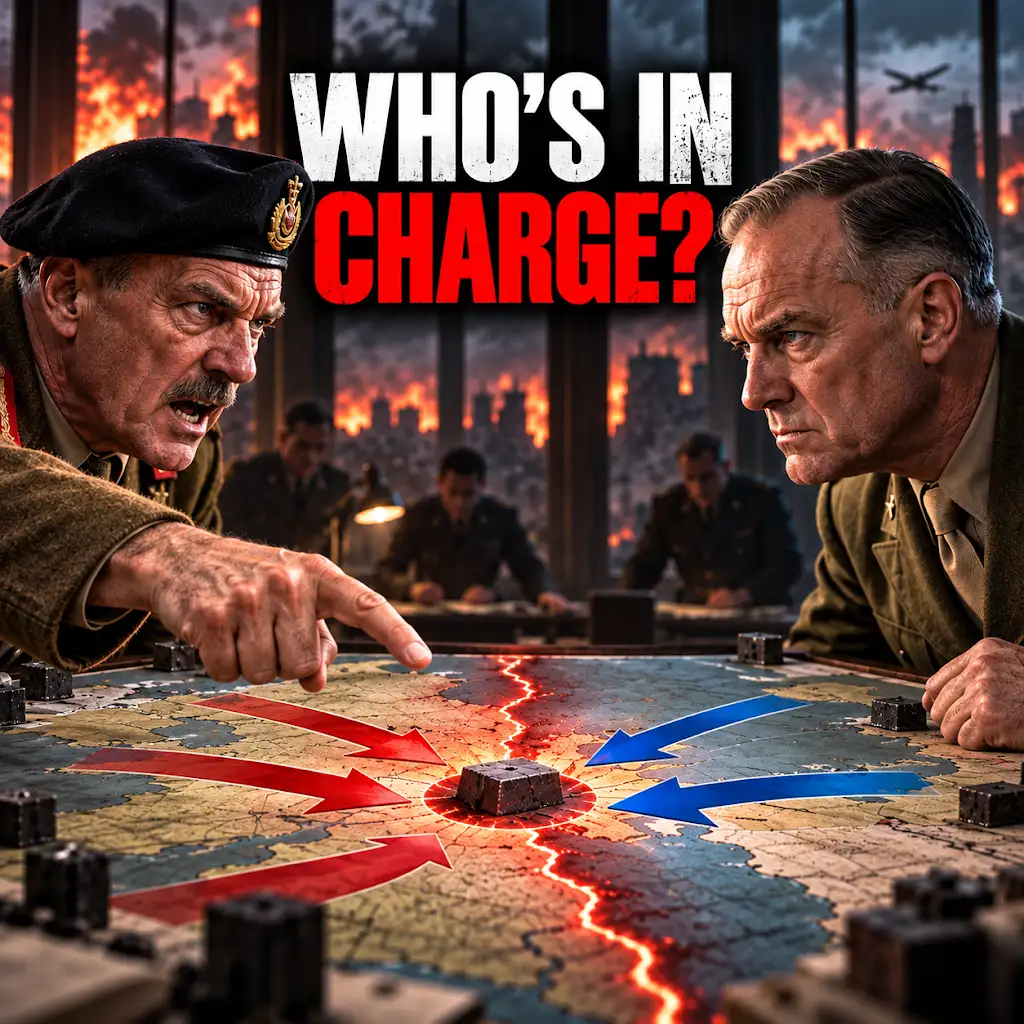
Eisenhower Gave Montgomery 2 U.S. Armies—Then He Wanted More
FAQs
What was the disagreement between Eisenhower and Montgomery?
The disagreement between Eisenhower and Montgomery was primarily about military strategy during World War II, specifically regarding the best approach to defeating the German forces.
What were Eisenhower’s views on military strategy?
Eisenhower believed in a broad front strategy, which involved spreading out Allied forces across a wide front to apply pressure on the Germans from multiple directions.
What were Montgomery’s views on military strategy?
Montgomery favored a narrow front strategy, which involved concentrating Allied forces in a single powerful thrust to deliver a decisive blow to the Germans at a specific point.
How did the disagreement between Eisenhower and Montgomery impact the war effort?
The disagreement between Eisenhower and Montgomery led to delays and disagreements in planning and executing military operations, which affected the coordination and effectiveness of Allied forces in certain campaigns.
Did Eisenhower and Montgomery eventually reconcile their differences?
Despite their disagreements, Eisenhower and Montgomery were able to work together and achieve success in various military campaigns, ultimately contributing to the Allied victory in World War II.