The icy grip of fear tightened around the globe. The year was 1962, a time of heightened tension and palpable dread as the world teetered on the precipice of nuclear annihilation. Two superpowers, the United States and the Soviet Union, stood eyeball to eyeball, each armed with devastating arsenals capable of wiping out civilization. Amidst this geopolitical powder keg, a single decision, made by a seemingly unassuming Soviet submarine officer, would prove to be the linchpin that prevented a global catastrophe. This is the story of Vasili Arkhipov, the man who saved the world.
Setting the Stage: Cold War Tensions Reach Fever Pitch
The Cold War was more than just an ideological struggle; it was a constant, gnawing anxiety that permeated every aspect of life. The arms race, a relentless pursuit of military superiority, had produced weapons of unimaginable destructive power. The United States and the Soviet Union, locked in a zero-sum game of influence and power, viewed each other with deep suspicion and animosity. This atmosphere of mutual distrust created fertile ground for escalation, where a minor miscalculation could have catastrophic consequences.
The Discovery: American Surveillance Uncovers Soviet Intentions
In October 1962, American U-2 spy planes, conducting routine reconnaissance over Cuba, made a chilling discovery. Photographic evidence revealed the presence of Soviet medium-range ballistic missile sites under construction. These missiles, capable of reaching major U.S. cities, represented a drastic shift in the strategic balance of power. The installation of these offensive weapons just 90 miles off the coast of Florida was perceived by the United States as an unacceptable act of aggression, a direct threat to its national security.
President Kennedy’s Response: A Strategic Blockade
President John F. Kennedy was faced with an agonizing choice. Military invasion of Cuba was a high-risk option, almost certain to trigger a Soviet response and potentially a full-scale nuclear war. Diplomatic channels were also strained, and time was of the essence. After intense deliberation, Kennedy opted for a naval blockade, or “quarantine,” of Cuba. This measure aimed to prevent further Soviet military shipments from reaching the island and to pressure Moscow into removing the existing missiles. The world held its breath as Soviet ships, carrying more military equipment, approached the blockade line.
Vasili Arkhipov’s decision to prevent a nuclear torpedo strike during the Cuban Missile Crisis is a pivotal moment in history that highlights the importance of individual judgment in the face of potential catastrophe. For a deeper understanding of the implications of this decision and its relevance to contemporary discussions on nuclear deterrence and military ethics, you can read a related article on this topic at In the War Room. This article delves into the complexities of command decisions during crises and the lessons that can be drawn from Arkhipov’s actions.
The Shadow of the Deep: The B-59 Submarine’s Perilous Mission
A Submerged Threat: The Foxtrot-Class Submarine B-59
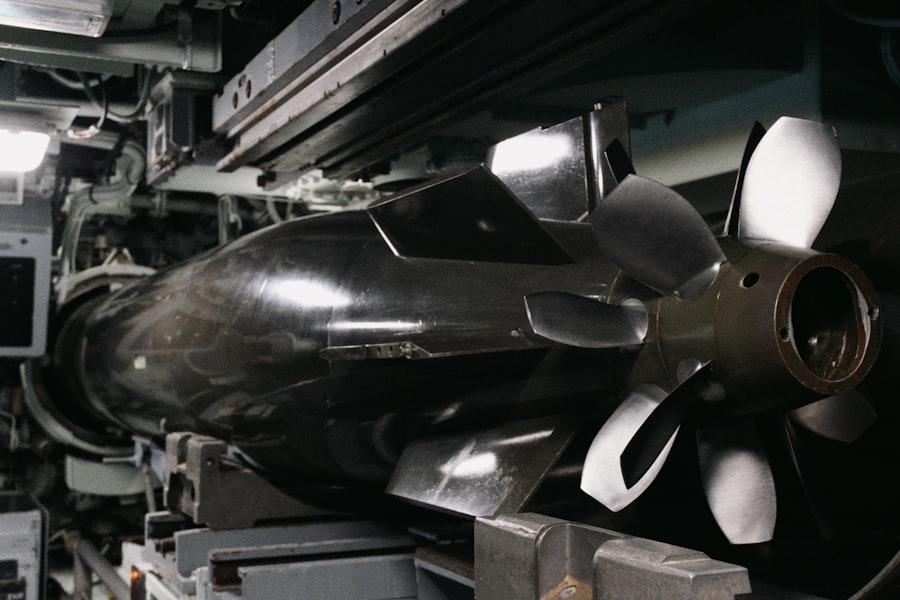
Deep beneath the waves of the Atlantic Ocean, oblivious to the unfolding diplomatic crisis above, the Soviet submarine B-59 was on a covert mission. This Foxtrot-class diesel-electric submarine was one of several deployed to Cuba, tasked with a variety of operations, including potential retaliatory nuclear strikes if necessary. The B-59 carried a significant payload: three nuclear torpedoes, each with a yield comparable to the atomic bomb dropped on Hiroshima.
The Crew’s Isolation: Cut Off from Command
During the tense standoff, the B-59, along with other Soviet vessels, found itself surrounded by American warships. The United States, implementing its naval blockade, began to aggressively assert its authority. Submarines, especially, were vulnerable targets. The American navy employed depth charges, not as weapons of destruction, but as signaling devices, meant to intimidate and force submerged submarines to surface. For the B-59, however, these were perceived as direct attacks. Compounding the danger was the fact that the submarine’s communication equipment was faulty, leaving its crew effectively cut off from Moscow. They had no way of knowing the true intentions of the U.S. or receiving clear orders.
The Three Who Knew: Authority on the B-59
Command of the B-59 rested with Captain Valentin Savitsky. However, in the Soviet military hierarchy, the ultimate authority for the deployment of nuclear weapons lay with a designated officer aboard the submarine who possessed a special “code” to authorize their use. On the B-59, this critical responsibility fell to Vasili Arkhipov, the flotilla commander, who happened to be on board as a political officer, a common practice in Soviet military vessels. The third individual with the authority to authorize a nuclear strike was the chief of staff.
A Ticking Time Bomb: Misunderstandings and Escalation
The Illusion of Attack: Depth Charges as Weapons
The relentless barrage of practice depth charges rained down on the B-59. These were not designed to sink the submarine, but rather to signal its presence and to prompt it to surface. However, for the crew trapped in the cramped, claustrophobic confines of the submarine, battered by the explosions and with their communication lines severed, the situation was terrifyingly ambiguous. They believed they were under sustained attack and that war had already begun.
Captain Savitsky’s Fury: A Desire for Retaliation
Captain Savitsky, a veteran commander, was incensed by what he perceived as an unprovoked assault. The lack of communication meant he had no information to counter his growing conviction that the United States was initiating a full-scale nuclear war. Driven by the perceived threat and the belief that their submarine was being systematically destroyed, Savitsky became increasingly determined to retaliate. He saw the nuclear torpedoes as the only logical response to defend the honor of the Soviet Union and to strike back at the aggressor.
The Dilemma: Three Keys to Annihilation
The B-59 carried three officers who, in concert, could authorize the launch of a nuclear torpedo. Captain Savitsky, driven by his fear and anger, was one of them. The second was the chief of staff. The third was Vasili Arkhipov. While Savitsky pushed for immediate retaliation, the chief of staff, aware of the gravity of the situation and the lack of definitive orders, was hesitant. Arkhipov, however, was the decisive figure. His assent was required, alongside the other two, for a nuclear launch. This gave him an extraordinary and terrifying power.
The Moment of Truth: Arkhipov’s Steadfast Resolve
The Heated Debate: Voices of Reason vs. Rage
As the depth charges continued to explode around the B-59, creating a cacophony of terror and confusion, a heated debate erupted within the submarine. Captain Savitsky, convinced that war had broken out, vehemently argued for the launch of a nuclear torpedo. He painted a grim picture of Soviet ships being destroyed and of the imminent threat to their own lives. The chief of staff, while also concerned, remained more cautious, urging restraint and the need for confirmation of war.
Arkhipov’s Burden: The Weight of the World
Into this tense, pressurized environment stepped Vasili Arkhipov. As the flotilla commander, he outranked Savitsky. Crucially, however, the authorization for nuclear weapons was a collective decision involving the three designated officers. Arkhipov understood the immense power he wielded and the catastrophic consequences that a launch would unleash. He was privy to the fact that the U.S. Navy was using practice depth charges, a detail not fully grasped by all on board, including, it seems, the increasingly agitated Captain Savitsky.
A Calming Influence: Reason Prevails
Arkhipov’s approach was one of calm deliberation amidst the chaos. He listened to Savitsky’s impassioned arguments but refused to be swayed by fear or emotion. He reasoned that the explosions, while alarming, were not causing critical damage. More importantly, he knew that launching a nuclear torpedo without definitive proof of war would not only be a catastrophic act of aggression but would also almost certainly trigger a full-scale nuclear retaliation from the United States, leading to global annihilation. Arkhipov’s steadfast refusal to authorize the launch, his quiet but firm insistence on caution and the need for clear orders from Moscow, was the turning point.
Vasili Arkhipov’s decision to prevent the launch of a nuclear torpedo during the Cuban Missile Crisis is a pivotal moment in history that highlights the importance of individual judgment in critical situations. For those interested in exploring the broader implications of this event, a related article provides an in-depth analysis of the crisis and its impact on nuclear strategy. You can read more about it in this insightful piece here. Understanding Arkhipov’s actions not only sheds light on the tense atmosphere of the Cold War but also emphasizes the significance of restraint in the face of overwhelming pressure.
The Silent Savior: The Legacy of Vasili Arkhipov
| Event | Details |
|---|---|
| Date | October 27, 1962 |
| Location | Onboard the Soviet submarine B-59 near Cuba |
| Decision | Vasili Arkhipov’s refusal to authorize the use of nuclear torpedoes |
| Impact | Prevented a potential nuclear war between the US and the Soviet Union |
| Consequences | Arkhipov’s decision is credited with averting a global catastrophe |
A Near Miss: The Unsung Hero’s Quiet Courage
The world was blissfully unaware of how close it had come to the brink. Vasili Arkhipov, through his composure, his rational judgment, and his courageous refusal to succumb to panic, had averted a global nuclear war. His decision, made under unimaginable pressure and in isolation, prevented the escalation that would have undoubtedly followed the launch of a nuclear torpedo. He did not seek recognition for his actions, and for decades, his pivotal role remained largely unknown.
The Domino Effect: Preventing Catastrophe
The launch of a nuclear torpedo from the B-59 would have almost certainly triggered a retaliatory strike from the United States. This would have led to a cascade of further retaliatory strikes, quickly escalating into a full-blown nuclear exchange. The consequences would have been devastating, with widespread destruction, loss of life on an unprecedented scale, and potentially long-term environmental devastation. Arkhipov’s decision broke this terrifying chain reaction.
A Lesson in Leadership: The Importance of Restraint
Vasili Arkhipov’s story serves as a profound lesson in leadership and the importance of restraint in times of extreme crisis. It highlights the fact that courage is not always about aggressive action, but often about the quiet strength to resist impulse and to adhere to principles, even when facing immense pressure. His ability to remain calm and rational in the face of extreme danger and to prioritize de-escalation over immediate retaliation is a testament to his character.
The Uncelebrated Hero: A Quiet Legacy
While heroes are often celebrated for their public triumphs, Vasili Arkhipov’s heroism was one of quiet solitude, enacted in the silent depths of the ocean. His legacy is not etched in monuments or grand speeches, but in the continued existence of the world he helped to save. He is a reminder that sometimes, the greatest acts of bravery are performed by ordinary individuals in extraordinary circumstances, and that the fate of humanity can, in critical moments, rest on the shoulders of a single, resolute individual.
Remembering the Man Who Saved the World
In an era where geopolitical tensions can still flare, the story of Vasili Arkhipov remains a potent reminder of the dangers of nuclear proliferation and the critical importance of diplomacy and clear communication. It underscores the profound responsibility that leaders bear and the potential consequences of unchecked aggression. Vasili Arkhipov, the man who faced down the abyss and chose peace, deserves to be remembered not just as a Soviet officer, but as a global savior. His quiet courage, etched in the annals of near-misses, continues to echo as a powerful testament to the resilience of the human spirit and the enduring hope for a world free from the shadow of nuclear war.
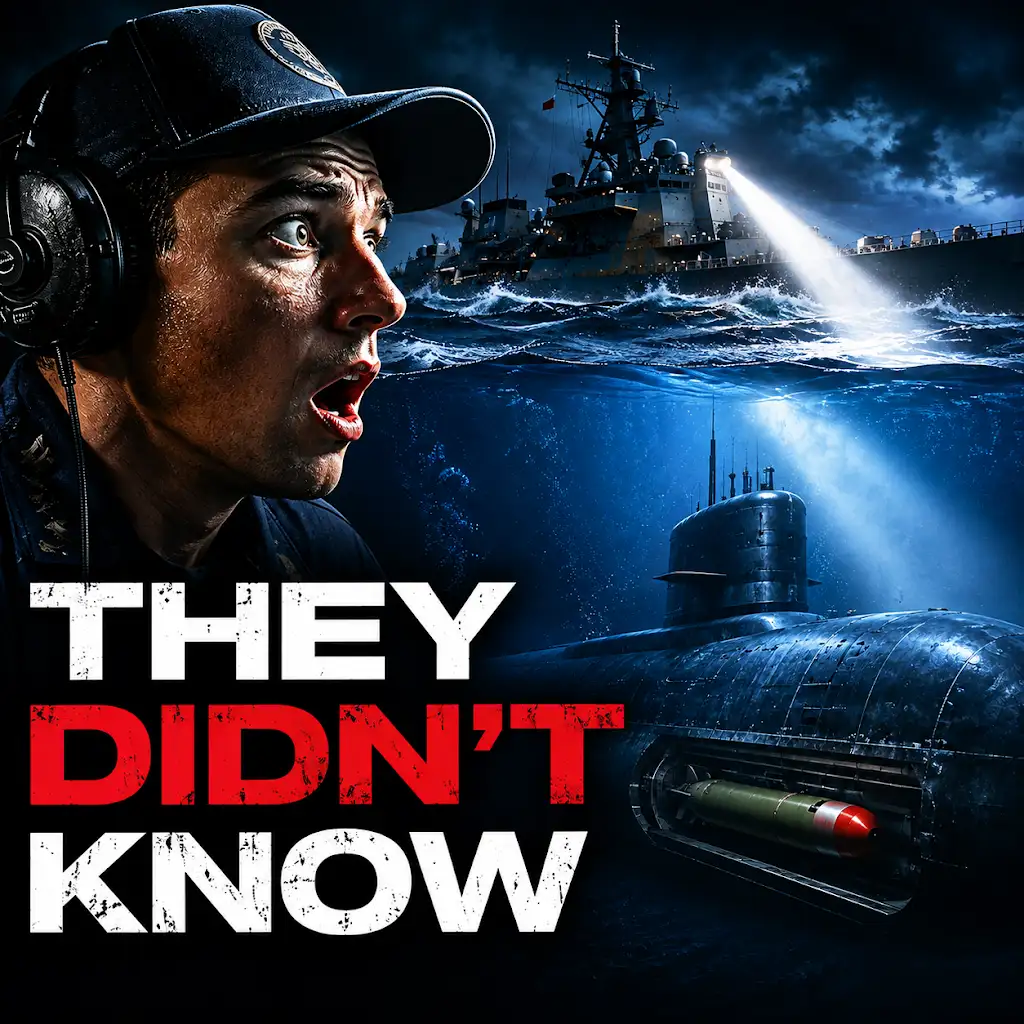
The U.S. Navy Didn’t Know This Submarine Had a Nuclear Torpedo
FAQs
What was the Vasili Arkhipov nuclear torpedo decision?
The Vasili Arkhipov nuclear torpedo decision refers to the critical role played by Soviet naval officer Vasili Arkhipov during the Cuban Missile Crisis in 1962. Arkhipov’s refusal to authorize the use of nuclear torpedoes prevented a potential nuclear war between the United States and the Soviet Union.
What was the Cuban Missile Crisis?
The Cuban Missile Crisis was a 13-day confrontation in October 1962 between the United States and the Soviet Union over Soviet ballistic missiles deployed in Cuba. The crisis is widely regarded as the closest the world has come to nuclear war.
What was Vasili Arkhipov’s role in the Cuban Missile Crisis?
Vasili Arkhipov was the second-in-command on the Soviet B-59 submarine during the Cuban Missile Crisis. When the submarine was detected and subjected to depth charges by the U.S. Navy, the crew believed that war had already broken out. Arkhipov’s decisive intervention prevented the submarine’s captain from launching a nuclear torpedo in retaliation.
What were the potential consequences of the nuclear torpedo decision?
Had the nuclear torpedo been launched, it could have triggered a full-scale nuclear war between the United States and the Soviet Union, with catastrophic consequences for both countries and the world at large. Arkhipov’s decision to prevent the launch is widely credited with averting a global nuclear catastrophe.
How is Vasili Arkhipov remembered today?
Vasili Arkhipov is remembered as a hero and a symbol of rational decision-making in the face of extreme pressure. His actions during the Cuban Missile Crisis have been the subject of numerous books, documentaries, and academic studies, and he is widely celebrated for his role in preventing a nuclear disaster.