
You’re curious about what Ingo Swann got up to at Stanford Research Institute (SRI) and what came out of it. In a nutshell, Swann was a key figure in SRI’s exploration of psychic abilities, particularly remote viewing. His work there helped legitimize this often-skeptical field, leading to significant research and even government interest.
The Early Days: A Spark of Interest
Ingo Swann wasn’t your typical researcher, and his entry into the world of psychic phenomena wasn’t through traditional academic channels. He had a naturally intuitive mind and an early fascination with the unusual. This led him to SRI, a place known for pushing boundaries and exploring unconventional ideas, in the late 1960s and early 1970s.
A Unique Background
Swann’s life experiences were varied and contributed to his open-minded approach. He had a knack for observation and a deep interest in consciousness. This made him a compelling subject and collaborator for SRI’s initial investigations into what they termed “anomalous phenomena.”
SRI’s Open Door
Stanford Research Institute, at the time, was a hotbed of innovation. It wasn’t just about developing new technologies; there was a genuine curiosity about the untapped potential of the human mind. This environment provided the perfect fertile ground for Swann’s unique talents to be explored.
Ingo Swann, a prominent figure in the field of remote viewing, conducted groundbreaking research at the Stanford Research Institute, which has been the subject of various analyses and discussions. For those interested in exploring more about the implications of his work and its impact on the field of parapsychology, a related article can be found at this link: In The War Room. This article delves into the historical context and significance of Swann’s contributions, providing valuable insights into the intersection of science and the paranormal.
Remote Viewing: The Cornerstone of His Work
The most prominent area of Ingo Swann’s work at SRI revolved around what would become known as “remote viewing.” This is the purported ability to perceive information about a distant or unseen target using extrasensory perception (ESP). Swann didn’t just dabble; he was instrumental in developing the methodologies and protocols for this.
Defining the “Viewers”
Swann was one of the earliest and most successful individuals identified as having strong remote viewing capabilities. His personal experiences and the results he achieved provided the initial data that fueled much of SRI’s research in this area. He wasn’t just a participant; he was often the benchmark against which others were measured.
The “Blind” Protocol
A crucial aspect of Swann’s contribution was the development of rigorous experimental protocols. To ensure objectivity and minimize fraud or suggestion, SRI, with Swann’s input, implemented “blind” conditions. This meant the remote viewer would receive very little information about the target, often just a set of coordinates or a number, preventing conscious or unconscious bias.
How the Blind Protocol Worked
Imagine a researcher having a specific target – say, a unique geological formation in a remote desert. They’d assign it a number and give that number, without any other clues, to a remote viewer like Swann. The viewer would then describe their perceptions of that location. The experimenter would then compare the viewer’s descriptions to the actual target.
The Importance of Controls
SRI understood that for remote viewing to be taken seriously, it needed to withstand scientific scrutiny. This meant implementing strict controls to rule out ordinary means of obtaining information, such as guesswork, analytical reasoning, or prior knowledge. The blind protocol was central to achieving this.
Pioneering the Methodology
Swann’s involvement wasn’t limited to simply demonstrating the ability. He was actively involved in refining how remote viewing was practiced and studied. He helped shape the language used to describe perceptions and developed techniques to help other individuals potentially access these abilities.
Associative Remote Viewing (ARV)
While remote viewing focused on direct perception of a target, Swann also contributed to the development of techniques like Associative Remote Viewing (ARV). This involved associating random events, like the outcome of a coin toss or a dice roll, with different possible targets. The idea was that if someone could accurately remote view the outcome of the random event, they could then infer the associated target. This was particularly interesting for its potential applications in prediction.
The “Sensory Modalities” Approach
Swann also emphasized the importance of engaging different sensory modalities in remote viewing. He encouraged viewers to describe not just what they “saw,” but also what they “felt,” “heard,” or “smelled.” This holistic approach aimed to capture a richer and more detailed picture of the target.
Collaborations and Key Figures
Ingo Swann didn’t work in isolation at SRI. His research was part of a larger effort involving other notable figures who were interested in consciousness and psi phenomena. These collaborations were vital for the advancement of the field.
Hal Puthoff and Russell Targ
Two of the most significant collaborators Swann worked with at SRI were Dr. Harold Puthoff and Dr. Russell Targ. These physicists were instrumental in designing and conducting experiments, bringing a scientific rigor to the investigation of psychic abilities. Their work together formed the backbone of much of the publicly known SRI research on remote viewing.
The Role of Funding
The research into remote viewing at SRI, including Swann’s contributions, was often funded by various government agencies, most notably the Defense Intelligence Agency (DIA) and the Central Intelligence Agency (CIA). This government interest, driven by potential national security applications, lent a degree of legitimacy and resources to the field.
Ingo Swann’s groundbreaking work at the Stanford Research Institute has sparked significant interest in the field of remote viewing and psychic phenomena. His experiments not only challenged conventional scientific boundaries but also paved the way for further exploration into human consciousness. For those looking to delve deeper into the implications of his research, a related article can be found at this link, which discusses the broader context of psychic research and its impact on modern science.
The “Grids” and the “Swann Effect”
Swann’s personal experiences and insights also led to the development of specific experimental tools and observations, such as the concept of “grids” and what some have termed the “Swann Effect.”
The Grid System
One of Swam’s innovations was the idea of using a grid system to help standardize and analyze remote viewing data. Instead of just free-form descriptions, viewers might be asked to focus on specific areas within a conceptual grid overlaid on the target. This aimed to bring more structure to the often-elusive nature of psychic perceptions.
The “Swann Effect” (Conceptual)
While not a formally defined scientific term with universal acceptance, the “Swann Effect” generally refers to observations made during experiments involving Swann. This could encompass instances where his perceived psychic abilities seemed to influence the experimental setup or outcome in subtle ways, or where his detailed descriptions offered unique insights that went beyond what might be expected from conventional means. It’s more of an anecdotal or emergent observation from his work.
Legacy and Impact
The work Ingo Swann undertook at SRI had a lasting impact, both within and outside the scientific community, though the acceptance of his findings remains a subject of debate.
Popularizing Remote Viewing
Swann’s involvement and the research conducted at SRI, particularly the publicly released documents from projects like STAR GATE, helped to popularize the concept of remote viewing. It moved from being a fringe curiosity to something that was being seriously investigated, albeit by a select group.
Continuing Research
The methodologies and protocols developed during Swann’s time at SRI have influenced subsequent research into remote viewing and other forms of psi phenomena. Researchers around the world have adapted and built upon the work initiated at SRI.
Skepticism and Controversy
It’s important to acknowledge that the work at SRI, including Swann’s contributions, has also faced significant criticism and skepticism. Critics often point to methodological flaws, statistical anomalies, and the lack of reproducible results in independent settings. The very nature of studying subjective experiences makes objective verification challenging.
The Challenge of Reproducibility
One of the biggest hurdles for the acceptance of psychic phenomena is consistent, reproducible results. While proponents can point to specific successful experiments, skeptics highlight the variability and the difficulty in replicating these findings under strict, controlled conditions by independent researchers.
Interpretation of Results
Even when data is collected, the interpretation of that data can be contentious. Was a perceived success a genuine psychic event, or was it due to subtle cues, analytical reasoning, or the inherent ambiguity of language when describing subjective experiences?
The Influence on Popular Culture
Beyond the scientific discourse, Swann’s work and the SRI experiments have seeped into popular culture, influencing books, documentaries, and even fictional narratives. The idea of psychic spies and mind-over-matter continues to capture the imagination.
Conclusion: A Complex Chapter
Ingo Swann’s tenure at Stanford Research Institute represents a fascinating and complex chapter in the exploration of human consciousness. He was a key player in bringing remote viewing from the realm of speculation into a structured research setting. While the scientific community remains divided on the ultimate validity of his findings, his contributions undeniably shaped the conversation and laid groundwork for future investigations into the extraordinary capabilities of the human mind. His work at SRI wasn’t just about proving psychic abilities; it was about developing the tools and the mindset to even try to understand them.
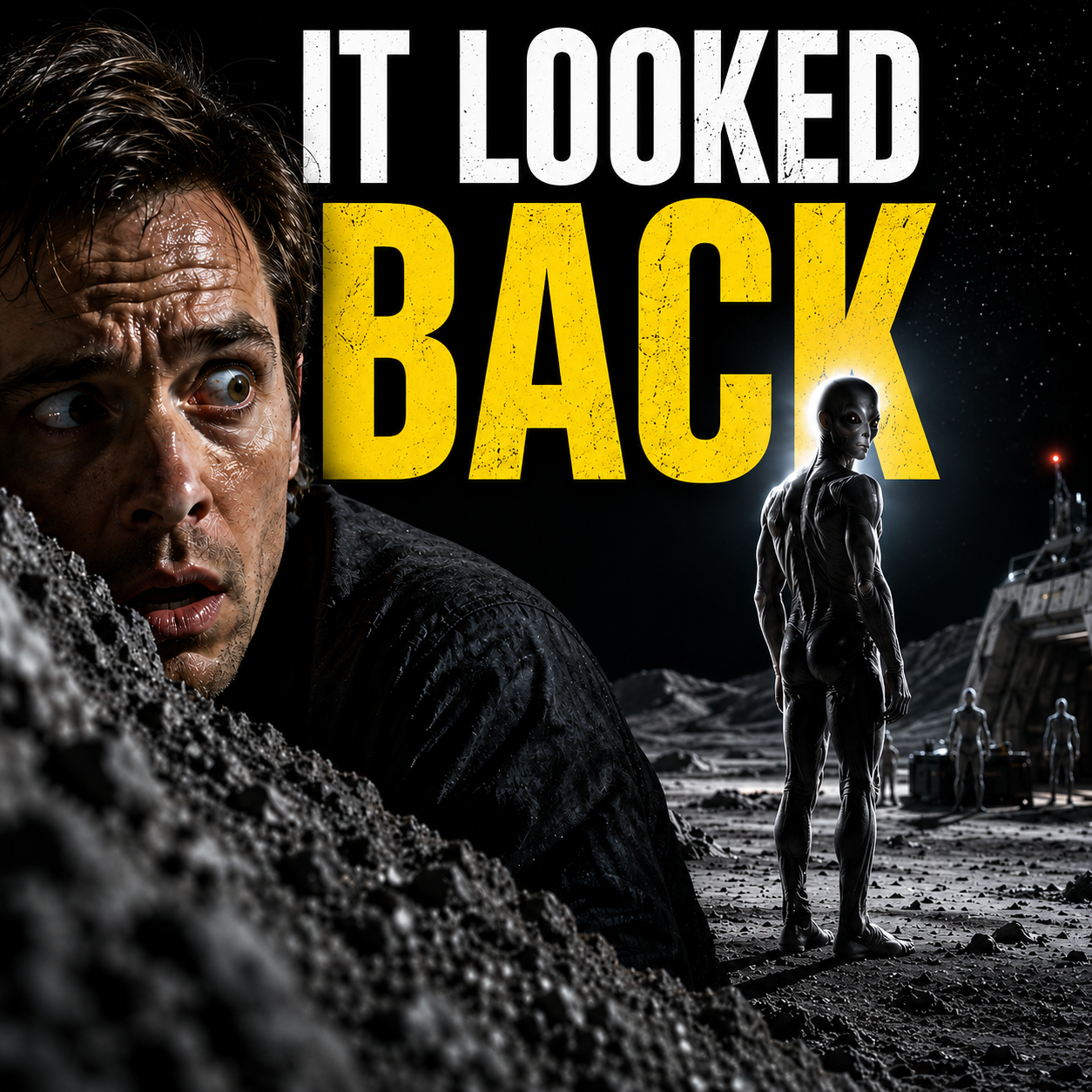
He Remote Viewed the Moon. Then Something Saw Him.
FAQs
What is the Stanford Research Institute?
The Stanford Research Institute (SRI) is a nonprofit scientific research institute located in Menlo Park, California. It is known for its work in a wide range of scientific and technological fields, including psychology, physics, and engineering.
Who was Ingo Swann?
Ingo Swann was a renowned psychic, artist, and author who gained recognition for his work in the field of parapsychology. He is best known for his involvement in the remote viewing program at the Stanford Research Institute in the 1970s.
What was Ingo Swann’s involvement with the Stanford Research Institute?
Ingo Swann was one of the key participants in the remote viewing program conducted at the Stanford Research Institute. He worked closely with researchers to develop and refine the techniques used in remote viewing, a process of gathering information about a distant or unseen target using extrasensory perception.
What is remote viewing?
Remote viewing is a controlled and trainable mental process that allows individuals to perceive and describe information about a distant or unseen target. It is often associated with parapsychology and has been the subject of scientific research, including the program conducted at the Stanford Research Institute.
What were the outcomes of the remote viewing program at the Stanford Research Institute?
The remote viewing program at the Stanford Research Institute produced a significant amount of research and data related to the phenomenon of remote viewing. While the program was controversial and faced skepticism from some quarters, it also generated interest and support from the scientific and intelligence communities.