The United States, a global superpower whose military has long been a cornerstone of international security, has engaged in periodic and significant periods of rearmament. These initiatives are not merely about increasing the number of tanks or aircraft; they represent strategic shifts, responses to evolving threats, and a fundamental recalibration of national defense priorities. Examining the timeline of U.S. military rearmament reveals a recurring pattern of adaptation, innovation, and a sustained commitment to maintaining a technological and operational edge. This article will delve into key epochs of U.S. military build-up, exploring the catalysts, manifestations, and lasting impacts of these transformative periods.
The end of World War II marked not an era of demilitarization for the United States, but rather a dramatic reorientation and expansion of its military capabilities. The conflict had proven the efficacy of industrialized warfare and the necessity of a robust, technologically advanced fighting force. The ensuing Cold War, with its ideological struggle against the Soviet Union, provided the primary impetus for sustained military investment.
The Atomic Age and the Nuclear Deterrent
The U.S. emerged from World War II as the sole possessor of nuclear weapons. This unprecedented power fundamentally altered strategic thinking. The development and proliferation of nuclear arms became a central pillar of U.S. defense policy, designed to deter Soviet aggression through the threat of mutually assured destruction (MAD).
The Manhattan Project’s Legacy and Beyond
The scientific and engineering marvel of the Manhattan Project, which developed the atomic bomb, laid the groundwork for continued nuclear research. Following the war, the Atomic Energy Commission (AEC) was established, tasked with developing and controlling nuclear materials for both civilian and military purposes. This led to the creation of increasingly sophisticated nuclear weapons, including hydrogen bombs, and the development of delivery systems.
Development of Intercontinental Ballistic Missiles (ICBMs)
Recognizing the need to reach Soviet territory directly, the U.S. invested heavily in the development of Intercontinental Ballistic Missiles (ICBMs). This endeavor, driven by the urgency of the Cold War, saw the successful testing and deployment of missiles like the Atlas and the Titan. These land-based deterrents were a critical component of the nuclear triad, alongside submarine-launched ballistic missiles (SLBMs) and strategic bombers.
Expansion of the Strategic Air Command (SAC)
The Strategic Air Command, responsible for the nation’s nuclear bomber fleet and ICBMs, experienced a massive expansion during this period. Its bomber force, equipped with increasingly capable aircraft such as the B-29 Superfortress, B-36 Peacemaker, and later the B-52 Stratofortress, was kept on constant alert, ready to deliver nuclear payloads.
The Conventional Arms Race and Global Projection
While nuclear weapons dominated strategic discussions, the U.S. also engaged in a significant build-up of its conventional forces. The need to project power globally and respond to regional conflicts, often seen as proxy battles with the Soviet Union, necessitated a strong conventional military.
The Korean War as a Catalyst
The outbreak of the Korean War in 1950 served as a stark wake-up call, demonstrating that the Cold War could manifest in hot conflicts. This conflict spurred a dramatic increase in defense spending and the expansion of ground forces, air power, and naval capabilities.
Modernization of Ground Forces
The U.S. Army underwent substantial modernization. New tanks, artillery, and infantry fighting vehicles were developed and deployed. The emphasis shifted towards combined arms operations, integrating armored, mechanized, and infantry units with close air support.
Air Superiority and Jet Technology
The development of advanced jet fighter aircraft became a priority. The Korean War highlighted the need for air superiority, leading to the production of iconic aircraft like the F-86 Sabre. Post-war, this continued with the development of supersonic fighters and bomber aircraft, solidifying American dominance in the skies.
Naval Power and the Aircraft Carrier
The U.S. Navy, already a formidable force, continued its expansion, with the aircraft carrier solidifying its position as the centerpiece of American power projection. The development of nuclear-powered aircraft carriers and increasingly capable carrier-based aircraft allowed the U.S. to maintain a global presence and respond to crises anywhere in the world.
The ongoing discussions surrounding the US military rearmament timeline have sparked significant interest among defense analysts and policymakers. For a deeper understanding of the historical context and implications of these developments, you can refer to a related article that explores the evolution of military strategies and their impact on global security. To read more, visit this article.
The Reagan Buildup: A Cold War Confrontation
The 1980s witnessed a particularly pronounced period of U.S. military rearmament under President Ronald Reagan. Driven by a belief that the Soviet Union was on the rise and a desire to regain what he perceived as a loss of American military superiority, Reagan initiated an ambitious and costly defense build-up. This era was characterized by a focus on technological innovation and a significant increase in the size and readiness of all branches of the armed forces.
The Strategic Defense Initiative (SDI) – “Star Wars”
Perhaps the most ambitious and controversial aspect of the Reagan build-up was the Strategic Defense Initiative (SDI), popularly known as “Star Wars.” This program aimed to develop a space-based missile defense system capable of intercepting Soviet ballistic missiles, thereby rendering nuclear deterrence obsolete.
Research and Development in Advanced Technologies
SDI spurred massive investment in research and development across a wide range of cutting-edge technologies, including lasers, directed energy weapons, advanced sensors, and artificial intelligence. While the full realization of SDI’s ambitious goals remained elusive, the program undoubtedly advanced technological frontiers and influenced future defense systems.
The Pursuit of Space-Based Interceptors
A core component of SDI involved exploring the feasibility of deploying interceptor missiles or energy weapons in space to destroy incoming ballistic missiles. This ambitious undertaking pushed the boundaries of space technology and military application.
The Role of Ground-Based Missile Defense
Alongside space-based concepts, SDI also encompassed research into advanced ground-based missile defense systems, laying the groundwork for modern missile defense programs.
Conventional Force Modernization and Expansion
Beyond SDI, the Reagan administration oversaw a significant modernization and expansion of conventional military forces. The goal was to create a military capable of fighting and winning on multiple fronts simultaneously.
The “600-Ship Navy” Goal
A flagship objective of the Reagan build-up was the ambitious goal of expanding the U.S. Navy to 600 ships. This involved the construction of new aircraft carriers, battleships, cruisers, destroyers, and submarines, significantly enhancing the Navy’s operational capacity and global reach.
The Rise of Carrier Strike Groups
The expansion of the carrier fleet led to the further development and deployment of potent Carrier Strike Groups, each centered around an aircraft carrier and supported by a screen of escort vessels, forming mobile air bases capable of projecting immense power.
Submarine Force Modernization
The submarine force also received significant attention, with the development of advanced attack submarines and the continued modernization of the Ballistic Missile Submarine fleet, maintaining the crucial second-strike capability.
Reinvigorating the Air Force
The U.S. Air Force saw substantial investment in new aircraft and strategic capabilities. The focus was on maintaining air superiority and enhancing long-range strike capabilities.
The B-1 Lancer and B-2 Spirit Bombers
The production of the B-1 Lancer bomber, a supersonic, low-level penetrator, and the commencement of the B-2 Spirit stealth bomber program represented significant advancements in strategic bombing capabilities, designed to evade enemy air defenses.
Expansion of Fighter and Attack Aircraft Fleets
The Air Force’s tactical fighter and attack aircraft fleets were also modernized and expanded, with the introduction of advanced aircraft like the F-15 Eagle and the F-16 Fighting Falcon, ensuring air superiority and battlefield support.
Strengthening the Army and Marine Corps
The Army and Marine Corps also benefited from increased funding, leading to the acquisition of new equipment and an emphasis on readiness and interoperability.
Mechanized Warfare and Armored Prowess
The Army focused on enhancing its armored and mechanized capabilities, with the deployment of the M1 Abrams main battle tank and the Bradley Fighting Vehicle, designed for high-intensity land warfare.
Expeditionary Warfare and Amphibious Capabilities
The U.S. Marine Corps received renewed emphasis on its expeditionary warfare capabilities, with advancements in amphibious assault vehicles, aircraft, and logistics to support rapid deployment and operations in diverse environments.
Post-Cold War Realignment and the War on Terror
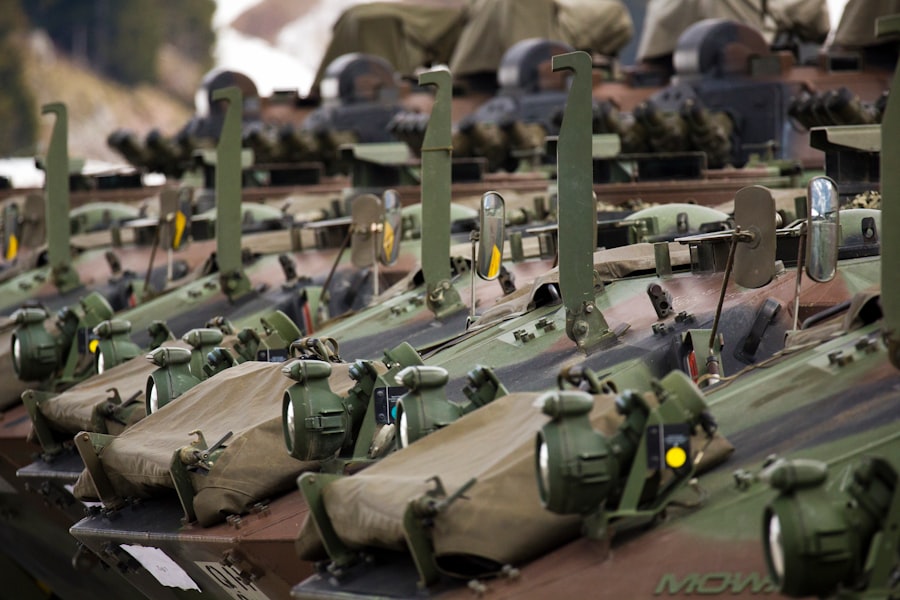
The collapse of the Soviet Union in 1991 ushered in a new era of international relations and necessitated a significant reassessment of U.S. defense strategy. While the immediate post-Cold War period saw a “peace dividend” with some reductions in military spending, the terrorist attacks of September 11, 2001, dramatically reshaped defense priorities, leading to a renewed focus on counterterrorism and asymmetric warfare.
The “Peace Dividend” and Initial Drawdowns
Following the end of the Cold War, there was a period of significant defense budget reductions and a restructuring of the military. The focus shifted from large-scale conventional warfare against a peer competitor to regional security challenges and expeditionary operations.
Downsizing of Conventional Forces
The size of the standing army and other branches was reduced, and many older weapons systems were retired. The emphasis was on maintaining technological superiority and flexibility rather than sheer numbers.
Base Closures and Force Structure Realignment
Numerous military bases were closed or consolidated as the military adapted to a post-Cold War posture, leading to a realignment of force structures and a focus on deployable units.
The September 11th Attacks and the War on Terror
The 9/11 attacks fundamentally altered the U.S. strategic landscape. The threat of non-state actors and asymmetric warfare became the paramount concern, leading to sustained military engagement in Afghanistan and Iraq, and a significant reorientation of defense spending and capabilities.
Increased Spending on Counterterrorism and Intelligence
Defense budgets saw a substantial increase following 9/11, with a significant portion dedicated to counterterrorism operations, intelligence gathering, and homeland security.
Development of Special Operations Forces (SOF) Capabilities
The effectiveness of Special Operations Forces in counterterrorism and unconventional warfare led to a dramatic expansion of SOF capabilities, including increased funding, training, and specialized equipment.
Elite Units and Their Roles
Units like the Navy SEALs, Army Special Forces, and Delta Force became increasingly prominent, undertaking high-risk missions in covert operations, hostage rescue, and direct action against terrorist organizations.
Unmanned Aerial Vehicles (UAVs) and Advanced Surveillance
The War on Terror accelerated the development and deployment of Unmanned Aerial Vehicles (UAVs), or drones, for intelligence, surveillance, and reconnaissance (ISR) missions, as well as for targeted strikes, revolutionizing battlefield awareness.
Expeditionary Operations and Force Projection in the Middle East
The sustained military campaigns in Afghanistan and Iraq necessitated a significant increase in the capacity for expeditionary operations and sustained force projection in complex and challenging environments.
Adaptation to Urban Warfare and Insurgency
The nature of the conflicts in Afghanistan and Iraq forced the U.S. military to adapt its tactics, training, and equipment to counter insurgency and engage in urban warfare, leading to the development of new doctrines and technologies.
IED Countermeasures and Advanced Armor
The widespread use of Improvised Explosive Devices (IEDs) by insurgents spurred significant investment in the development of countermeasures, including advanced armor for vehicles and improved explosive ordnance disposal (EOD) capabilities.
Enhanced Infantry Training and Equipment
Infantry soldiers received enhanced training in counterinsurgency tactics, and new equipment was developed to improve their effectiveness in asymmetric warfare, including advanced communications and personal protective gear.
The Rise of Great Power Competition and the Pivot to Asia
In recent years, the U.S. defense establishment has increasingly emphasized the resurgence of great power competition, particularly with China, and the growing strategic importance of the Indo-Pacific region. This shift is driving a re-evaluation of military capabilities, with a focus on deterring aggression in contested environments and maintaining technological superiority.
The Challenge of China’s Military Modernization
China’s rapid military modernization, including the development of advanced naval capabilities, hypersonic missiles, and sophisticated cyber warfare tools, has prompted a strategic reorientation by the U.S. The focus is shifting from counterterrorism to deterring a peer competitor.
Naval Expansion and Power Projection in the South China Sea
The U.S. Navy is re-emphasizing its role in the Indo-Pacific, focusing on maintaining freedom of navigation and deterring Chinese assertiveness in the South China Sea and beyond. This includes increased deployment of carrier strike groups and surface combatants.
Development of Advanced Naval Technologies
The U.S. is investing in advanced naval technologies such as directed energy weapons, autonomous naval systems, and next-generation submarine technologies to counter potential threats.
Hypersonic Weapons Development
A key area of focus is the development of hypersonic weapons, capable of immense speed and maneuverability, to counter the growing threat posed by similar capabilities being developed by potential adversaries.
Cyber and Space Domain Dominance
The U.S. is placing a greater emphasis on securing its cyber and space domains, recognizing their increasing importance in modern warfare.
Cyber Command Expansion and Capabilities
The U.S. Cyber Command has been significantly expanded, with increased personnel, resources, and advanced capabilities to defend against cyberattacks and conduct offensive cyber operations.
Space Force Establishment and Mission
The establishment of the U.S. Space Force in 2019 underscores the growing recognition of space as a critical warfighting domain, tasked with protecting U.S. interests in space and ensuring access to space-based assets.
Modernizing for Multi-Domain Operations
The U.S. military is increasingly adopting a “multi-domain operations” concept, recognizing that future conflicts will likely involve the integrated use of land, sea, air, space, and cyber domains. This requires significant investment in interoperability and seamless coordination across these domains.
Joint All-Domain Command and Control (JADC2)
A cornerstone of this modernization effort is the development of Joint All-Domain Command and Control (JADC2), a system designed to connect every sensor, shooter, and decision-maker across all services and domains, enabling rapid and synchronized responses.
Network-Centric Warfare and Data Integration
JADC2 relies heavily on advanced networking capabilities and the seamless integration of vast amounts of data, allowing for unprecedented situational awareness and decision-making speed.
Artificial Intelligence and Machine Learning Integration
Artificial intelligence (AI) and machine learning (ML) are being integrated into JADC2 to process information, identify threats, and recommend courses of action, enhancing the speed and effectiveness of military operations.
Next-Generation Combat Platforms
The development of next-generation combat platforms across all branches of the military is crucial for maintaining a technological edge.
Sixth-Generation Fighter Aircraft
The U.S. Air Force and Navy are actively developing sixth-generation fighter aircraft, incorporating advanced stealth capabilities, artificial intelligence, and networked warfare features.
Optionally Manned Aircraft and Swarming Technologies
A significant aspect of future aircraft development involves optionally manned aircraft and the exploration of swarming technologies, where large numbers of smaller, autonomous drones work in concert with manned platforms.
Future Vertical Lift (FVL) Programs
The U.S. Army is investing heavily in Future Vertical Lift (FVL) programs to develop advanced helicopters and other vertical lift aircraft that offer increased speed, range, and payload capacity, enhancing battlefield mobility and support.
The Role of Allies and Partnerships
In an era of complex global challenges, the U.S. recognizes the importance of strong alliances and partnerships in enhancing collective security and deterring aggression.
Strengthening NATO and Indo-Pacific Alliances
The U.S. is actively working to strengthen its alliances, including NATO in Europe and its partnerships in the Indo-Pacific region, such as with Japan, South Korea, and Australia, to ensure a coordinated response to evolving threats.
Interoperability and Joint Exercises
Increased emphasis is placed on enhancing interoperability between allied forces through joint exercises and training, ensuring that allied forces can operate effectively together in combined operations.
Shared Intelligence and Technology Transfer
Cooperation extends to intelligence sharing and the transfer of advanced military technologies, further bolstering the collective defense capabilities of allies.
The ongoing discussions surrounding the US military rearmament timeline have sparked interest in various aspects of defense strategy and modernization efforts. For a deeper understanding of the implications and historical context of these developments, you can explore a related article that delves into the evolution of military capabilities over the decades. This insightful piece can be found at In The War Room, where it highlights key milestones and strategic shifts that have shaped the current landscape of US military readiness.
Sustaining Readiness and Investing in the Future
| Year | Event |
|---|---|
| 1939 | World War II begins, prompting US military rearmament |
| 1940 | The Selective Training and Service Act is passed, initiating the first peacetime draft in US history |
| 1941 | The Lend-Lease Act is passed, allowing the US to provide military aid to foreign nations |
| 1942 | The US establishes the War Production Board to oversee the production of war materials |
| 1945 | World War II ends, leading to a period of demilitarization |
| 1950 | The Korean War begins, prompting a new phase of military rearmament |
| 1953 | The Korean War ends, but military rearmament continues during the Cold War |
Beyond specific rearmament initiatives, the U.S. military operates under a continuous imperative to sustain readiness, maintain its technological edge, and prepare for future, as-yet-unforeseen threats. This involves a multifaceted approach that extends beyond procurement to encompass personnel readiness, training, and the fostering of innovation.
Personnel Readiness and Training Modernization
The effectiveness of any military is ultimately dependent on the quality and readiness of its personnel. The U.S. military invests significantly in training programs and personnel development to ensure its forces are prepared for the complexities of modern warfare.
Realistic Training Environments and Simulations
The military increasingly utilizes realistic training environments and advanced simulations to prepare service members for a wide range of scenarios, from conventional combat to complex humanitarian assistance operations.
Virtual and Augmented Reality Training
The integration of virtual and augmented reality technologies is revolutionizing training, offering immersive and cost-effective ways to develop skills and experience critical operational procedures.
Individual Skill Development and Unit Cohesion
Training programs focus on developing both individual soldier skills and fostering unit cohesion, recognizing that teamwork and effective communication are paramount in high-stakes operations.
Investing in Research and Development (R&D)
A cornerstone of sustained military strength is continuous investment in research and development. This ensures that the U.S. military can anticipate and counter emerging threats with cutting-edge technologies.
Future Technologies and Concepts
The Department of Defense actively explores future technologies and concepts, including artificial intelligence, directed energy weapons, quantum computing, and advanced materials, to maintain a strategic advantage.
The Role of Defense Advanced Research Projects Agency (DARPA)
Organizations like DARPA play a critical role in fostering radical innovation, pushing the boundaries of science and technology to create capabilities that will shape the future of warfare.
From Concept to Deployment
DARPA’s work often involves taking nascent ideas from scientific curiosity and developing them into practical applications that can be transitioned to the military services for further development and deployment.
Innovation Ecosystem and Public-Private Partnerships
The U.S. military increasingly recognizes the value of an innovation ecosystem that includes collaboration with academia, industry, and international partners.
Leveraging Private Sector Innovation
The military seeks to leverage the rapid pace of innovation within the private sector, forging partnerships to develop and acquire cutting-edge technologies that can enhance military capabilities.
Start-up Engagement and Venture Capital Investment
Initiatives are in place to engage with start-up companies and venture capital firms, identifying and investing in promising new technologies that can offer a leap forward in military capabilities.
Maintenance, Modernization, and Modernization Programs
Even the most advanced weapon systems require ongoing maintenance and modernization to remain effective. The U.S. military dedicates significant resources to these efforts.
Sustainment of Existing Fleets and Equipment
Ensuring the operational readiness of existing aircraft, ships, vehicles, and other equipment through rigorous maintenance schedules and component upgrades is a continuous priority.
Upgrades and Life-Extension Programs
Many existing platforms undergo significant upgrades and life-extension programs to incorporate new technologies and extend their service life, representing a more cost-effective approach than entirely replacing aging assets.
Avionics Upgrades and Electronic Warfare Enhancements
Aircraft, for instance, frequently receive avionics upgrades to improve navigation, communication, and situational awareness, along with enhancements to their electronic warfare capabilities to counter sophisticated threats.
Ensuring Strategic Depth and Resilience
Ultimately, U.S. military rearmament is about ensuring strategic depth and resilience. This means possessing the ability to project power, deter aggression, and respond to a wide spectrum of threats, both known and unknown, while adapting to an ever-changing global security landscape. The timeline of U.S. military rearmament is a testament to its enduring commitment to national security and its capacity for strategic adaptation in the face of evolving global challenges.

What Happens If China Moves Before America Rearms?
FAQs
What is the US military rearmament timeline?
The US military rearmament timeline refers to the schedule and process of modernizing and upgrading the equipment, technology, and capabilities of the United States Armed Forces.
When did the US military rearmament begin?
The US military rearmament began in earnest in 2018 with the passing of the National Defense Strategy, which outlined the need for a more lethal and agile military force to address evolving global threats.
What are the key components of the US military rearmament timeline?
The key components of the US military rearmament timeline include the development and acquisition of advanced weapons systems, modernization of existing equipment, investment in emerging technologies such as cyber and space capabilities, and the expansion of military readiness and training programs.
How long is the US military rearmament timeline expected to last?
The US military rearmament timeline is expected to span over several years, with ongoing efforts to ensure that the United States maintains a competitive edge in national defense and security.
What are the goals of the US military rearmament timeline?
The goals of the US military rearmament timeline include enhancing military readiness, deterring potential adversaries, and ensuring that the United States maintains technological superiority and strategic advantage in a rapidly evolving global security landscape.