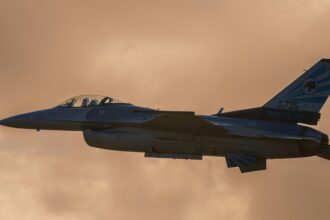
The question of Taiwan’s future remains one of the most significant geopolitical flashpoints of the 21st century. For decades, the People’s Republic of China (PRC) has asserted its claim over the island, viewing it as a renegade province that must eventually be reunified with the mainland, by force if necessary. Taiwan, officially the Republic of China (ROC), operates as a self-governing democracy with its own elected government, military, and economic system. The potential for a military confrontation between the PRC and Taiwan, and the subsequent ripple effects, carries profound consequences that extend far beyond the immediate region. Analyzing these potential outcomes requires a multi-faceted approach, considering economic, political, military, and humanitarian dimensions, as well as the broader implications for global stability.
The Economic Cataclysm: Disrupting Global Supply Chains and Financial Markets
A military conflict over Taiwan would undoubtedly trigger an economic cataclysm, not just for the immediate participants but for the entire global economy. Taiwan occupies a unique and indispensable position in the global economic landscape, particularly in the realm of advanced technology.
The Semiconductor Crisis: Taiwan’s Unassailable Position
The most immediate and significant economic impact would stem from Taiwan’s dominance in semiconductor manufacturing. Taiwan Semiconductor Manufacturing Company (TSMC) is the world’s largest contract chip manufacturer and produces the most advanced semiconductors used in everything from smartphones and computers to advanced military hardware and artificial intelligence.
The Disruption of High-End Chip Production
A conflict would cripple TSMC’s operations. Even a limited blockade or targeted strikes could severely disrupt production. A full-scale invasion would almost certainly lead to the destruction or disabling of these critical manufacturing facilities. The implications are staggering:
- Global Technology Stagnation: The world’s reliance on TSMC means that a disruption in its output would halt innovation and production across numerous high-tech industries. The development of next-generation electronics, AI, and advanced computing would be severely set back.
- Automotive Industry Collapse: Modern vehicles are heavily reliant on semiconductors. A shortage would bring the global automotive industry to a standstill, leading to massive job losses and economic contraction.
- Consumer Electronics Blackout: The availability of smartphones, laptops, gaming consoles, and countless other consumer electronics would plummet, leading to widespread shortages and price gouging.
The Global Economic Downturn
Beyond semiconductors, Taiwan’s economy is deeply integrated into global supply chains. Its strategic location in East Asia also makes it a vital hub for shipping and logistics.
- Disruption of Maritime Trade: Taiwan’s proximity to major shipping lanes in the South China Sea means that any conflict would severely disrupt global maritime trade. Shipping routes would be rerouted, leading to increased costs and delays for a vast array of goods.
- Impact on Regional Economies: Japan, South Korea, and the ASEAN nations are heavily reliant on trade with Taiwan and transit through its waters. A conflict would destabilize these economies and create a domino effect of economic hardship across Asia.
- Financial Market Volatility: The uncertainty and disruption caused by a Taiwan conflict would trigger unprecedented volatility in global financial markets. Stock markets would crash, currencies would fluctuate wildly, and foreign investment would dry up, leading to a global recession.
The Sanctions and Trade Wars: Escalating Economic Warfare
The international response to any PRC aggression would likely involve widespread economic sanctions. The United States and its allies would impose severe penalties on China, aiming to cripple its economy.
The Effectiveness and Reach of Sanctions
The effectiveness of these sanctions would depend on their scope and the degree of international cooperation. However, the interconnectedness of the global economy means that even broadly targeted sanctions would have unintended consequences for sanctioning countries.
- Impact on China’s Economy: China’s export-oriented economy would be severely hit by sanctions, leading to a significant reduction in its GDP, widespread unemployment, and social unrest.
- Collateral Damage to Sanctioning Nations: Countries heavily reliant on trade with China, or those with significant investments in the country, would also suffer considerable economic damage. This includes major economies like the European Union and Australia.
- The Rise of Parallel Economies: Sanctions could also lead to the further development of parallel economies and alternative trading networks, potentially weakening the dominance of existing global financial institutions.
The potential implications of China moving on Taiwan have been a topic of intense discussion among geopolitical analysts. For a deeper understanding of the strategic consequences and the international response that could ensue, you can refer to a related article that explores these dynamics in detail. This article provides insights into the military, economic, and diplomatic ramifications of such a move. To read more, visit this link.
The Geopolitical Repercussions: Reshaping Alliances and International Order
A conflict over Taiwan would not only disrupt economies but would fundamentally reshape the global geopolitical landscape, impacting alliances, international institutions, and the very nature of global governance.
The Strengthening of the US-Led Alliance System
The United States views Taiwan as a crucial partner and a linchpin in its Indo-Pacific strategy. A PRC attack on Taiwan would undoubtedly trigger a strong response from the US and its allies, leading to a significant strengthening of existing alliances and the formation of new ones.
The United States’ Role and Commitment
The US has a long-standing commitment to Taiwan’s defense under the Taiwan Relations Act. While the nature of this commitment is deliberately ambiguous, a direct attack would likely compel a more overt and robust intervention.
- Increased US Military Presence in the Indo-Pacific: The US would likely bolster its military presence in the region, deploying more assets and strengthening its basing infrastructure to deter further aggression and respond to any conflict.
- Deepening Security Cooperation: The US would likely intensify security cooperation with countries like Japan, South Korea, Australia, and the Philippines, creating a more unified and formidable regional security architecture.
- Potential for Direct US Military Involvement: Depending on the scale and nature of the PRC’s actions, the US might find itself directly involved in combat operations, risking a confrontation with a nuclear-armed power.
The Response of Key US Allies
The response of key US allies would be critical in determining the global geopolitical fallout.
- Japan’s Strategic Shift: Japan, with its own security concerns regarding China and its proximity to Taiwan, would likely play a significant role, potentially providing logistical support, intelligence, and even military assistance.
- South Korea’s Dilemma: South Korea faces a complex balancing act due to its economic ties with China and its security alliance with the US. A conflict over Taiwan would force it to make difficult choices.
- Australia’s Security Pivot: Australia has increasingly aligned itself with the US on security matters in the Indo-Pacific. It would likely be a key partner in any regional response.
The Weakening of International Institutions
The United Nations and other international organizations have struggled to effectively address major geopolitical crises in recent years. A conflict over Taiwan would further expose their limitations and could lead to a fragmentation of the international order.
The UN’s Limited Capacity for Intervention
The UN Security Council, with China as a permanent member holding veto power, is unlikely to be able to authorize collective action against Beijing. This would highlight the limitations of multilateralism in addressing existential threats.
- Erosion of Multilateralism: The inability of the UN to act decisively would further erode trust in multilateral institutions and could lead to a more fractured and less cooperative international system.
- Rise of Bilateral and Minilateral Arrangements: Countries might increasingly rely on bilateral agreements and smaller, like-minded groupings to address security challenges, bypassing larger, less effective international bodies.
China’s Growing International Isolation
While China would likely seek to justify its actions on the international stage, a military intervention in Taiwan would almost certainly lead to its significant international isolation, with many nations condemning its aggression.
- Loss of Soft Power: China’s growing economic influence and soft power would be severely undermined by its aggressive military actions, alienating potential partners and damaging its global image.
- Increased Scrutiny and Containment Efforts: China would face increased scrutiny and concerted efforts by a coalition of nations to contain its growing influence and military power.
The Military Confrontation: A Devastating and Uncertain Conflict
The prospect of a military conflict over Taiwan is terrifying, with potential for immense destruction and a highly uncertain outcome. The PRC has been modernizing its military at an unprecedented pace, and its capabilities are increasingly formidable.
The PRC’s Military Modernization and Aims
China’s People’s Liberation Army (PLA) has undergone a dramatic transformation, focusing on developing the capabilities necessary for an amphibious invasion and a protracted conflict in the Western Pacific.
Amphibious Assault Capabilities
The PLA has invested heavily in developing its amphibious assault capabilities, including a large fleet of landing ships, troop transports, and specialized aircraft.
- The Scale of the Challenge: Taiwan’s rugged coastline and mountainous interior present significant challenges for an amphibious landing. However, the PLA’s growing capacity means that a successful landing, while difficult, is not impossible.
- The Role of Naval and Air Power: Controlling the air and sea around Taiwan would be crucial for any invasion. The PLA’s growing naval and air forces, including its aircraft carriers and advanced fighter jets, are designed to challenge US and allied dominance in the region.
Asymmetric Warfare and Anti-Access/Area Denial (A2/AD) Strategies
China has also focused on developing asymmetric warfare capabilities and Anti-Access/Area Denial (A2/AD) strategies to deter or defeat US intervention.
- Missile Systems: The PLA possesses a vast arsenal of ballistic and cruise missiles, many of which are designed to target US aircraft carriers and bases in the region.
- Cyber Warfare and Space Capabilities: China’s advancements in cyber warfare and space-based assets would also play a significant role, potentially disrupting enemy communications, intelligence gathering, and critical infrastructure.
The Defense of Taiwan: A Determined and Resourceful Resistance
Taiwan, despite its smaller military, possesses a well-trained and highly motivated defense force, backed by a resilient population and a strategic advantage in defending its island territory.
Taiwan’s Asymmetric Defense Strategy
Taiwan has long pursued an asymmetric defense strategy, focusing on capabilities that can inflict significant costs on an invading force.
- Mobile Missiles and Anti-Ship Capabilities: Taiwan has invested in mobile missile systems, anti-ship missiles, and naval mines that can be deployed to harass and disable an invading fleet.
- Reservist Mobilization and Civilian Defense: Taiwan has a large reserve force and a well-developed civil defense infrastructure, capable of mounting a protracted resistance and supporting the regular military.
- The “Porcupine Strategy”: This strategy aims to make Taiwan too difficult and costly to conquer, deterring an invasion by promising significant casualties and damage to the aggressor.
The “Grey Zone” Tactics and Escalation Risk
Even without a full-scale invasion, China has employed “grey zone” tactics, such as increased air and naval incursions into Taiwan’s Air Defense Identification Zone (ADIZ) and maritime militia activities.
- The Constant Threat: These tactics create a constant sense of pressure and can gradually erode Taiwan’s defenses and international support.
- The Risk of Accidental Escalation: The proximity of military forces and the constant provocations increase the risk of miscalculation and accidental escalation into a full-blown conflict.
The Humanitarian Catastrophe: Displacement, Suffering, and Loss of Life
Beyond the economic and geopolitical ramifications, a conflict over Taiwan would unleash a humanitarian catastrophe, characterized by immense suffering, displacement, and loss of life for the island’s population.
The Impact on Taiwan’s Civilian Population
Taiwan is a densely populated island with major urban centers. An invasion would expose its citizens to extreme danger.
Civilian Casualties and Infrastructure Destruction
A military invasion would inevitably lead to widespread civilian casualties, destruction of homes, and damage to critical infrastructure.
- Urban Warfare: If an invasion involved urban combat, the scale of destruction and loss of life would be immense, comparable to some of the worst urban conflicts of the past.
- Disruption of Essential Services: Power grids, water supplies, and communication networks would likely be severely damaged, leading to a humanitarian crisis characterized by lack of basic necessities.
Mass Displacement and Refugee Crisis
Millions of Taiwanese civilians would likely be displaced, seeking refuge within the island or attempting to flee to other countries, potentially creating a significant refugee crisis.
- Internal Displacement: Large-scale internal displacement would strain resources and create immense logistical challenges for humanitarian aid organizations.
- External Refugee Flows: Depending on the nature of the conflict and the willingness of neighboring countries, a significant number of Taiwanese refugees could emerge, creating regional and international humanitarian concerns.
The Psychological and Social Trauma
The experience of war, even for those who survive, leaves deep and lasting psychological and social scars.
The Long-Term Impact of Conflict
Generations of Taiwanese would live with the trauma of conflict, impacting their mental health, social cohesion, and their ability to rebuild their lives and society.
- Intergenerational Trauma: The fear, loss, and destruction experienced during a conflict can be passed down through generations, affecting individuals and communities for decades.
- Erosion of Social Fabric: The breakdown of social order, the loss of loved ones, and the destruction of communities can have a profound and long-lasting impact on the social fabric of a nation.
The geopolitical landscape in East Asia could face significant upheaval if China decides to take military action against Taiwan. Such a move would not only impact regional stability but also have far-reaching consequences for global trade and international relations. For a deeper understanding of the potential ramifications of this situation, you can read a related article that explores the strategic implications and responses from various nations. This analysis provides valuable insights into what might unfold in the event of a conflict over Taiwan, which you can find in this article.
The Global Security Implications: A World on the Brink of a New Era of Conflict
The consequences of China’s actions on Taiwan extend far beyond the immediate region, raising fundamental questions about global security and the potential for a new era of widespread conflict.
The Erosion of the Rules-Based International Order
A successful PRC takeover of Taiwan, achieved through military force, would represent a significant blow to the rules-based international order that has largely prevailed since World War II.
The Precedent for Aggression
If China were to achieve its objectives through military means, it could embolden other authoritarian regimes to pursue their territorial claims or ambitions through force, leading to increased instability and conflict worldwide.
- The “Might Makes Right” Mentality: Such an outcome would signal a shift towards a world where power, rather than international law and diplomacy, dictates outcomes, undermining the principles of sovereignty and territorial integrity.
- Increased Regional Tensions: Other territorial disputes, such as those in the South China Sea or parts of Eastern Europe, could see a renewed surge in aggression and conflict.
The Risk of Escalation and Wider Conflict
A conflict over Taiwan, even if initially contained, carries the inherent risk of escalating into a broader regional or even global confrontation.
The Domino Effect of Intervention
The involvement of multiple major powers, including the United States, China, Japan, and potentially others, could quickly draw in additional actors and widen the scope of the conflict.
- The Risk of Nuclear Escalation: While unlikely, the involvement of nuclear-armed states raises the terrifying specter of nuclear escalation, a scenario with unimaginable consequences for humanity.
- Cyber and Hybrid Warfare: The conflict could also manifest in a variety of non-traditional forms, including extensive cyberattacks and hybrid warfare tactics, further blurring the lines between peace and war and making de-escalation incredibly difficult.
The Reshaping of Global Power Dynamics
Regardless of the outcome, a conflict over Taiwan would irrevocably alter global power dynamics, potentially leading to a bipolar world with increased tensions and a greater risk of confrontation.
- The Future of US Hegemony: The way the United States and its allies respond would significantly shape the future of American global leadership and the balance of power between the US and China.
- The Rise of New Power Blocs: The world could see the formation of new, more hardened power blocs, leading to a more polarized and potentially more dangerous international environment.
In conclusion, the potential consequences of China’s actions on Taiwan are far-reaching and profoundly concerning. A military conflict would not only devastate Taiwan and the region but would trigger a global economic crisis, reshape geopolitical alliances, and usher in an era of heightened uncertainty and potential conflict. The international community must continue to explore all avenues of diplomacy and deterrence to prevent such a catastrophic outcome, recognizing that the stakes are not merely regional, but global. The future of peace and stability in the 21st century may well hinge on how the international community navigates this critical juncture.
What Happens If China Moves Before America Rearms?
FAQs
What is the current relationship between China and Taiwan?
China considers Taiwan to be a part of its territory and has not ruled out the use of force to bring the island under its control. Taiwan, on the other hand, operates as a separate and independent entity with its own government, military, and constitution.
What would happen if China were to take military action against Taiwan?
If China were to take military action against Taiwan, it could lead to a significant escalation of tensions in the region and potentially draw other countries, such as the United States, into the conflict. The impact on global trade and security would be substantial.
What is the United States’ stance on the Taiwan issue?
The United States has a longstanding policy of “strategic ambiguity” regarding Taiwan, meaning it does not explicitly support Taiwan’s independence but also does not support China’s use of force to bring Taiwan under its control. The U.S. has also committed to providing Taiwan with defensive weapons and support.
How would a conflict between China and Taiwan affect the global economy?
A conflict between China and Taiwan could disrupt global supply chains, particularly in the technology and manufacturing sectors, as both Taiwan and China are major players in these industries. It could also lead to increased volatility in financial markets and impact global trade.
What are the potential diplomatic and political implications of a Chinese military move on Taiwan?
A Chinese military move on Taiwan could strain diplomatic relations between China and other countries, particularly those with close ties to Taiwan, such as the United States and Japan. It could also lead to increased tensions in the region and potentially impact international security agreements and alliances.