The island of Taiwan, a self-governing democracy with a population of approximately 24 million, has become a focal point of escalating geopolitical tensions between the United States and the People’s Republic of China (PRC). The PRC views Taiwan as a renegade province that must be reunited with the mainland, by force if necessary, while Taiwan, officially the Republic of China (ROC), maintains its de facto independence and democratic system. The United States, while acknowledging Beijing’s “one China” principle, maintains unofficial relations with Taiwan and is committed by the Taiwan Relations Act to assist Taiwan in maintaining its self-defense capabilities. This complex web of historical grievances, political ideologies, and strategic interests has created a volatile situation with the potential for devastating conflict.
The current impasse over Taiwan is deeply rooted in the Chinese Civil War. Following World War II, the conflict between the Nationalist Party (Kuomintang, KMT) led by Chiang Kai-shek and the Communist Party led by Mao Zedong resumed. In 1949, the Communists emerged victorious on the mainland, establishing the People’s Republic of China. The KMT government, along with approximately two million of its supporters, retreated to Taiwan, continuing to claim to be the legitimate government of all of China.
The “One China” Principle and its Interpretations
The concept of “one China” has been a cornerstone of PRC foreign policy since its inception. Beijing asserts that there is only one sovereign state under the name China and that Taiwan is an inalienable part of it. This principle is crucial for Beijing’s legitimacy and its claims over Taiwan.
Beijing’s Unwavering Stance
The PRC government has consistently reiterated its commitment to reunification. This commitment is not merely rhetorical; it is enshrined in national policy and has been accompanied by a significant buildup of military capabilities aimed at deterring Taiwanese independence and, if deemed necessary, facilitating an invasion.
Washington’s Deliberate Ambiguity
The United States’ approach to the “one China” principle has been characterized by deliberate ambiguity. While the US acknowledges Beijing’s position, it does not explicitly endorse China’s claim of sovereignty over Taiwan. This strategic ambiguity allows the US to maintain diplomatic relations with the PRC while simultaneously providing Taiwan with the means to defend itself.
The Republic of China’s Self-Perception
For decades, the KMT government in Taiwan maintained the aspiration of retaking the mainland. However, with the passage of time and the democratic transition on the island, a distinct Taiwanese identity has emerged, separate from mainland China. This has led to a shift in political discourse, with a growing segment of the population preferring to maintain the status quo or pursue formal independence.
The Rise of Taiwanese Identity
Generational shifts and the development of a vibrant democracy have fostered a strong sense of Taiwanese identity. Many younger Taiwanese citizens do not feel a connection to the mainland and view their political and cultural distinctiveness as paramount.
Shifting Political Landscape in Taiwan
The political landscape in Taiwan has evolved significantly since the end of martial law. The Democratic Progressive Party (DPP), which generally favors greater Taiwanese sovereignty, has become a dominant force, further complicating Beijing’s reunification ambitions.
The ongoing tensions between the United States and China over Taiwan have escalated significantly in recent months, prompting analysts to closely examine the potential implications of a military conflict in the region. A related article that delves into the strategic considerations and possible outcomes of this geopolitical standoff can be found at In the War Room. This piece offers valuable insights into the motivations behind each country’s actions and the broader impact on global stability.
Military Buildup and Strategic Posturing
The military balance across the Taiwan Strait has been a subject of intense scrutiny. China’s rapid military modernization and its increasingly assertive posture have heightened concerns about the potential for conflict.
China’s Growing Military Might
The People’s Liberation Army (PLA) has undergone a dramatic transformation in recent decades. Significant investments in naval power, air force capabilities, and missile technology have endowed China with a formidable military that poses a serious challenge to regional security.
Naval Expansion and A2/AD Capabilities
China’s naval expansion, including the development of aircraft carriers and advanced submarines, is a key component of its strategy. Furthermore, its development of Anti-Access/Area Denial (A2/AD) capabilities, designed to prevent external forces from intervening in a conflict, is a major concern for the US and its allies.
Missile Development and Hypersonic Weapons
The PRC has made substantial advancements in missile technology, including the development of sophisticated ballistic and cruise missiles. The potential deployment of these weapons against Taiwanese targets or approaching US naval forces is a significant escalatory factor.
US Military Presence and Alliances
The United States has historically maintained a significant military presence in the Indo-Pacific region. Its network of alliances, particularly with Japan, South Korea, and Australia, is designed to deter aggression and ensure regional stability.
Freedom of Navigation Operations (FONOPs)
The US Navy conducts regular Freedom of Navigation Operations (FONOPs) in the South China Sea and around Taiwan, challenging China’s expansive territorial claims and asserting international maritime rights. These operations are often met with strong condemnation from Beijing.
Taiwan’s Defense Modernization
With US support, Taiwan has been investing in its own defense capabilities. This includes acquiring advanced weaponry, enhancing its reserve forces, and developing asymmetric warfare strategies to counter a potential invasion.
Economic Interdependence and Strategic Leverage
Despite the political and military tensions, the economies of mainland China and Taiwan are deeply intertwined. This economic interdependence presents both potential leverage and significant risks in the event of a conflict.
Taiwan’s Crucial Role in Global Supply Chains
Taiwan plays an indispensable role in global supply chains, particularly in the semiconductor industry. Taiwan Semiconductor Manufacturing Company (TSMC) is the world’s largest contract chip manufacturer, producing the most advanced semiconductors that power everything from smartphones to advanced military hardware.
The Semiconductor Dominance of TSMC
TSMC’s technological prowess and market dominance make Taiwan a critical node in the global economy. Any disruption to its production would have catastrophic consequences for industries worldwide.
Vulnerability and Deterrence
This economic leverage can be viewed from two perspectives. For Beijing, Taiwan’s economic importance could serve as a bargaining chip, while for the international community, it represents a powerful incentive to prevent conflict, as the economic fallout would be immense.
Cross-Strait Economic Ties
Millions of Taiwanese businesses and individuals have invested in and operate on the mainland, creating significant economic ties. This interdependence has, in the past, served as a moderating force, but its effectiveness in the face of escalating political rhetoric is increasingly questioned.
Investment Flows and Trade Balances
Understanding the flow of investments and trade balances between Taiwan and mainland China is crucial for grasping the nuances of their economic relationship. These flows can be influenced by political developments.
The Potential for Economic Coercion
Beijing has, in the past, utilized economic measures as a form of coercion against Taiwan. This could involve imposing trade restrictions or targeting specific industries.
The Specter of Conflict: Scenarios and Consequences
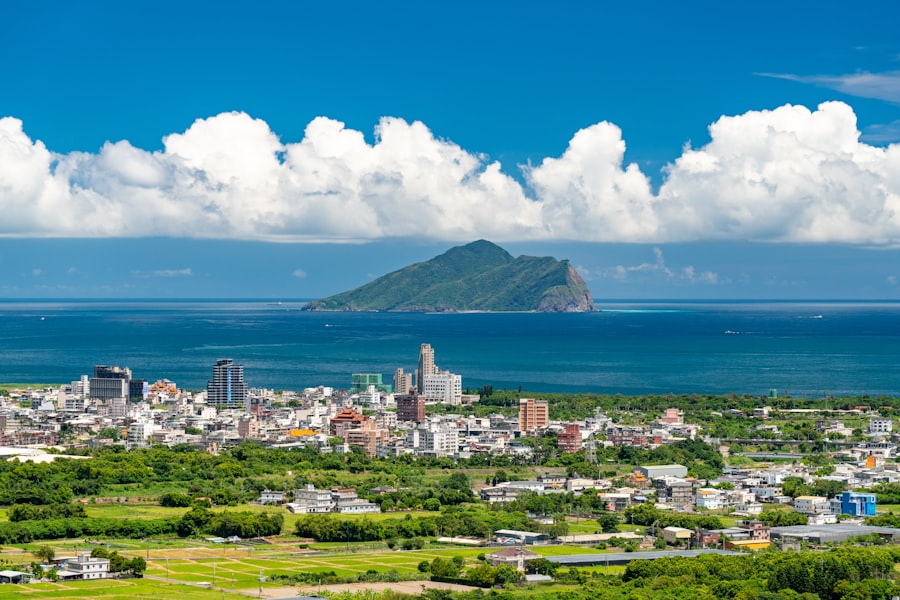
The possibility of a military conflict over Taiwan is a grim reality that looms over the Indo-Pacific region. Various scenarios have been explored, each with its own set of devastating consequences.
The “Short, Sharp Shock” Scenario
One potential scenario involves a swift, decisive military action by China to seize key strategic points on Taiwan, aiming to present the international community with a fait accompli.
Amphibious Assault and Air and Missile Strikes
This scenario would likely involve a massive amphibious assault, supported by extensive air and missile strikes aimed at neutralizing Taiwan’s defenses and command and control structures.
Blockade and Cyber Warfare
Alternatively, China might opt for a blockade of Taiwan, combined with targeted cyberattacks to cripple its infrastructure and economy, aiming to force a capitulation without a full-scale invasion.
The Protracted Conflict Scenario
A more drawn-out conflict is also a possibility, characterized by prolonged fighting and significant international involvement.
Stalemate andattrition Warfare
This scenario could lead to a bloody stalemate, with both sides suffering immense casualties and resource depletion. Taiwan’s defense strategy often focuses on protracted resistance and inflicting significant costs on an invading force.
Escalation to Regional or Global Conflict
The most dangerous aspect of a Taiwan conflict is the potential for escalation. A direct confrontation between the US and China could quickly draw in other regional powers and potentially lead to a wider global conflict.
The Economic and Humanitarian Catastrophe
Regardless of the specific military scenario, the human and economic cost of a Taiwan conflict would be immense.
Devastation of Taiwan and Regional Disruption
Taiwan itself would likely suffer widespread destruction. The disruption to global trade, particularly in semiconductors, would plunge the world into an economic crisis.
Geopolitical Repercussions and a New World Order
The geopolitical ramifications of a Taiwan conflict would be profound, potentially leading to a fundamental shift in the global balance of power and the emergence of a new world order.
As tensions continue to escalate between the United States and China over Taiwan, many analysts are closely monitoring the situation for potential implications on global stability. A recent article delves into the strategic maneuvers both nations are employing in this high-stakes game, providing insights into the military and diplomatic efforts at play. For a deeper understanding of the dynamics involved, you can read more in this informative piece here.
Diplomacy, Deterrence, and the Path Forward
| Metrics | Data |
|---|---|
| Number of Chinese military aircraft incursions into Taiwan’s air defense zone | Over 150 in 2021 |
| Number of US warship transits through the Taiwan Strait | Multiple in 2021 |
| Estimated size of Chinese military force opposite Taiwan | Around 2000 missiles and 250,000 troops |
| US military support for Taiwan | Arms sales and military training |
Amidst the escalating tensions, diplomatic efforts and robust deterrence strategies are crucial for preventing conflict and charting a path towards a more stable future.
The Role of Diplomacy and Dialogue
Open channels of communication and sustained diplomatic engagement are essential for de-escalating tensions and finding peaceful resolutions.
Track II Diplomacy and Confidence-Building Measures
Track II diplomacy, involving non-governmental actors, can play a vital role in fostering understanding and exploring potential solutions. Confidence-building measures, such as military-to-military dialogues and transparency initiatives, can help reduce miscalculation.
International Mediation and Engagement
The international community has a vested interest in peace and stability in the Taiwan Strait. Engaging in mediation and providing platforms for dialogue can be instrumental in defusing crises.
The Importance of Deterrence
A credible deterrence posture is essential to dissuade any party from initiating a conflict.
Strategic Ambiguity vs. Strategic Clarity
The debate over whether the US should adopt strategic clarity regarding its commitment to Taiwan’s defense continues. Proponents of clarity argue it would strengthen deterrence, while opponents worry it could provoke Beijing.
Multilateral Security Cooperation
Strengthening multilateral security cooperation in the Indo-Pacific region, involving a broad coalition of democratic allies, can enhance collective security and deter aggression.
The Long Road to De-escalation
Finding a lasting solution to the Taiwan question is a complex and long-term endeavor. It requires a delicate balance of diplomacy, deterrence, and a willingness to address the underlying grievances and aspirations of all parties involved. The future of Taiwan, and indeed regional and global stability, hinges on the ability of nations to navigate these treacherous waters with wisdom and restraint. The stakes are unimaginably high, and the world watches with bated breath.
What Happens If China Moves Before America Rearms?
FAQs
What is the current situation between the US and China over Taiwan?
The current situation between the US and China over Taiwan is one of heightened tension and potential conflict. The US has expressed support for Taiwan’s independence and has increased military presence in the region, while China considers Taiwan to be a part of its territory and has threatened military action if Taiwan seeks formal independence.
Why is Taiwan a point of contention between the US and China?
Taiwan is a point of contention between the US and China due to its complex political status. While Taiwan operates as a separate and democratic entity, China considers it to be a part of its territory. The US has historically supported Taiwan’s autonomy, leading to friction with China.
What are the potential consequences of a US-China war over Taiwan?
A US-China war over Taiwan could have severe global consequences, including economic disruptions, humanitarian crises, and potential involvement of other countries in the conflict. It could also lead to a significant loss of life and destabilize the entire region.
How is the international community responding to the US-China tensions over Taiwan?
The international community is closely monitoring the US-China tensions over Taiwan and has expressed concerns about the potential for conflict. Many countries have called for peaceful resolution and dialogue to avoid escalation and maintain stability in the region.
What are the diplomatic efforts being made to address the US-China tensions over Taiwan?
Diplomatic efforts to address the US-China tensions over Taiwan include discussions between the US and its allies, as well as efforts to engage in dialogue with China. The goal is to find a peaceful resolution and prevent the situation from escalating into a full-scale conflict.