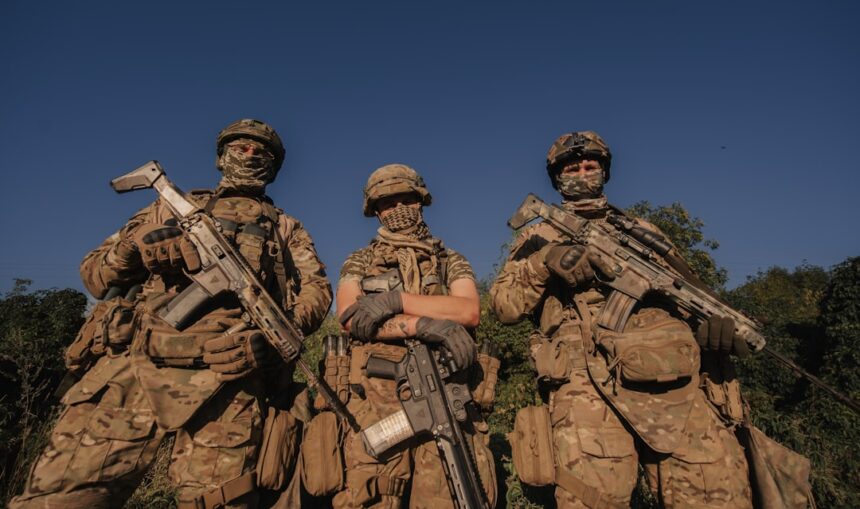
The specter of a major conflict between the United States and China looms large in strategic discussions, prompting an urgent and comprehensive assessment of US military readiness. Such a confrontation, particularly in the Indo-Pacific, would represent a paradigm shift in global affairs, demanding unprecedented levels of preparation, strategic foresight, and resource allocation from the American armed forces. This assessment requires a multi-faceted approach, examining not just the sheer quantity of materiel but also the qualitative aspects of training, doctrine, industrial capacity, and the human element.
The United States military, forged in the crucible of the Cold War and honed through decades of counter-insurgency operations, now faces a peer competitor with a rapidly modernizing and increasingly capable force. China’s People’s Liberation Army (PLA) has dedicated significant resources to developing capabilities specifically designed to counter US advantages, particularly in the maritime domain and in the context of a potential Taiwan contingency. This necessitates a critical re-evaluation of US strengths and weaknesses, ensuring that the readiness of its forces is not merely an abstract concept but a tangible and verifiable reality.
Naval Power Projection and the Indo-Pacific Littoral
The vast expanse of the Pacific Ocean, punctuated by numerous island chains, presents a unique and formidable challenge for naval operations. In the context of a conflict with China, control of the seas, particularly in the East and South China Seas, would be paramount. US naval readiness in this theater is a complex interplay of fleet size, technological superiority, basing infrastructure, and the ability to sustain operations far from home.
Fleet Modernization and Sustainability
The US Navy has long prided itself on its technological edge, but China’s rapid shipbuilding program, characterized by the commissioning of increasingly advanced destroyers, frigates, and aircraft carriers, is narrowing that gap. The readiness assessment must therefore scrutinize the pace and effectiveness of US fleet modernization. Are new platforms being delivered on time and within budget? Are they equipped with the most advanced sensors, weapons systems, and networking capabilities to effectively counter PLA threats?
Aircraft Carrier Strike Group Effectiveness
The carrier strike group remains the centerpiece of US naval power projection. However, the vulnerability of large carriers to advanced anti-ship missile systems, including hypersonic variants, is a growing concern. Assessing readiness involves evaluating the survivability of these platforms in a contested environment, the effectiveness of their escort vessels in providing layered defense, and the ability to rapidly generate and deploy air wings capable of sustained offensive operations. Furthermore, the logistical challenges of supporting carrier operations in the Pacific, including the availability of fuel, ordnance, and repair facilities, are critical to readiness.
Subsurface Dominance and the Silent Service
The US submarine force is widely considered a significant advantage. Its stealth, endurance, and potent offensive capabilities make it a crucial asset in a conflict with China. Readiness here entails ensuring the operational availability of attack and ballistic missile submarines, the effectiveness of their crews, and the development of next-generation platforms and weapon systems. The ability of submarines to conduct reconnaissance, intelligence gathering, and to prosecute enemy surface and subsurface threats undetected is a vital component of deterrence and operational success.
Amphibious Capabilities and Expeditionary Warfare
A potential conflict over Taiwan, or in other scenarios involving island defense, would heavily rely on US amphibious capabilities. The readiness of the Marine Corps to conduct amphibious assaults and sustain operations ashore, along with the Navy’s ability to transport and support these forces, is therefore a critical area of assessment. This includes the availability of amphibious assault ships, landing craft, and the integration of these capabilities with air and naval assets for a combined arms approach. The challenges of operating in a heavily defended littoral environment, with extensive minefields and shore-based missile threats, demand rigorous training and specialized equipment.
In light of the ongoing discussions about U.S. military readiness in the face of potential conflicts with China, an insightful article can be found at In the War Room. This piece delves into the strategic considerations and necessary preparations that the U.S. military must undertake to effectively respond to any emerging threats in the Indo-Pacific region. It highlights the importance of maintaining a robust defense posture and the implications of military readiness on global stability.
Air Superiority and the Tyranny of Distance
Control of the air is inextricably linked to dominance of the sea and land in any modern conflict. The US Air Force and Navy tactical air wings are critical to projecting power, conducting reconnaissance, and interdicting enemy forces. In the context of a conflict with China, the sheer distances involved in the Indo-Pacific, coupled with China’s advanced air defense networks and growing fighter fleet, present significant challenges to air superiority.
Fighter Fleet Modernization and Readiness Rates
The US fighter fleet, comprised primarily of F-22s, F-35s, and F-15s, is technologically advanced. However, the readiness rates of these aircraft are a persistent concern, often impacted by maintenance backlogs, parts shortages, and the complexity of advanced systems. Assessing readiness involves a detailed examination of these rates, the effectiveness of maintenance and repair infrastructure, and the strategies being employed to improve them. The ability to generate and sustain sorties at a high tempo is paramount.
Fifth-Generation Warfare and the F-35 Program
The F-35 program, intended to be the backbone of future US air power, has faced significant challenges in terms of cost, development, and operational readiness. Assessing its readiness for a high-intensity conflict with China requires a frank evaluation of its combat effectiveness in contested environments, its integration with other platforms, and the availability of spare parts and trained personnel across all its variants. The promise of its sensor fusion and networked capabilities must translate into tangible battlefield advantages.
Long-Range Strike and Bomber Operations
The ability to strike targets deep within enemy territory, and to project power over vast distances, is a critical component of US air power. The B-2 Spirit and B-21 Raider bomber fleets are designed for this role. Readiness assessment must focus on the operational availability of these bombers, their ability to penetrate sophisticated air defenses, and the strategic basing options available to support their missions in the Indo-Pacific. The survivability of these high-value assets is a key consideration.
Air-to-Air Refueling and Global Reach
The vast distances of the Pacific theater underscore the critical importance of aerial refueling. The readiness of the US Air Force’s tanker fleet, including the KC-135, KC-46, and KC-10 aircraft, is essential for extending the range and endurance of fighter and bomber operations. Assessing readiness involves evaluating the size and operational availability of this fleet, the training of its crews, and its ability to operate effectively in a contested electromagnetic spectrum.
Ground Forces and Joint Operations in a Contested Domain
While naval and air power are often seen as dominant in the Pacific, the US Army and Marine Corps will play crucial roles in any conflict. Their readiness to conduct sustained ground operations, particularly in island environments or in support of allies, is a vital, yet often overlooked, aspect of overall military preparedness.
Amphibious Operations and Littoral Combat
As mentioned earlier, the Marine Corps’ ability to conduct amphibious landings and establish beachheads is fundamental. Beyond the initial assault, their readiness extends to establishing and defending forward operating bases, conducting reconnaissance, and engaging enemy ground forces. Assessing this readiness requires examining their training for complex joint operations, their equipment for operating in littoral environments, and their ability to receive and integrate support from naval and air components.
Joint All-Domain Command and Control (JADC2)
The future of warfare is increasingly understood as a joint, all-domain endeavor. The ability to seamlessly connect and coordinate air, land, sea, space, and cyber operations is essential for success against a sophisticated adversary like China. Assessing readiness for conflict with China necessitates a robust evaluation of the US military’s progress in developing and implementing Joint All-Domain Command and Control (JADC2) capabilities. This includes the interoperability of various communication systems, the effectiveness of data sharing across different services, and the ability of commanders to make rapid, informed decisions in a complex and dynamic battlespace.
Networked Warfare and Cyber Resilience
The modern battlefield is inherently networked. For the US military to maintain an advantage, its networks must be resilient, secure, and capable of operating in a heavily contested electromagnetic spectrum. Assessing readiness involves evaluating the robustness of these networks, the effectiveness of cyber defenses, and the ability to conduct offensive cyber operations to disrupt enemy command and control. The ability of individual units to maintain communication and situational awareness even when networks are degraded or under attack is a critical measure of readiness.
Logistics and Sustainment in Forward Areas
The ability to supply and sustain ground forces operating far from established bases is a significant challenge in the Indo-Pacific. The readiness of logistics units, including transportation, maintenance, and supply chains, is paramount. This assessment must consider the vulnerability of these supply lines to attack, the ability to preposition supplies, and the development of innovative logistical solutions for dispersed operations. A force, no matter how well-trained or equipped, will falter without the necessary sustainment.
Space and Cyber Warfare: The Unseen Frontlines
The domains of space and cyber warfare are increasingly critical battlegrounds. For a conflict with China, superiority in these areas could offer decisive advantages, or conversely, expose critical vulnerabilities. The US military’s readiness in these domains is a relatively new but rapidly evolving area of assessment.
Space-Based Assets and Resiliency
The US military relies heavily on space-based assets for intelligence, surveillance, reconnaissance (ISR), navigation (GPS), and communications. China’s growing anti-satellite (ASAT) capabilities pose a direct threat to these critical enablers. Assessing readiness involves evaluating the resilience of US space architecture, the development of redundant systems, and the ability to operate effectively even when space-based assets are degraded or denied. This includes understanding the implications of Kessler Syndrome and the need for responsible space behavior.
Offensive and Defensive Cyber Operations
The ability to conduct both offensive and defensive cyber operations is essential for a modern military. In a conflict with China, cyber warfare could be used to disrupt critical infrastructure, disable weapon systems, and undermine command and control. Readiness assessment must examine the capabilities of US Cyber Command, the training and expertise of its personnel, and the effectiveness of its strategies for deterring and responding to cyber attacks. The integration of cyber capabilities into conventional military operations is also a key consideration.
Electromagnetic Spectrum Operations (EMSO)
Control of the electromagnetic spectrum is crucial for all military operations. China has invested heavily in electronic warfare capabilities designed to jam or disrupt US communications and sensor systems. Assessing readiness requires an evaluation of the US military’s ability to operate in a degraded electromagnetic environment, its capacity for electronic attack and protection, and its understanding of adversary capabilities. This includes the development of new technologies and tactics to maintain situational awareness and communication in the face of advanced jamming.
As tensions continue to rise in the Indo-Pacific region, discussions surrounding US military readiness for a potential conflict with China have become increasingly pertinent. A recent article highlights the strategic adjustments being made by the US armed forces to enhance their operational capabilities in the face of growing challenges. For a deeper understanding of these developments, you can read more about the subject in this insightful piece on military strategies and preparedness at In the War Room.
Industrial Base and the Capacity for Sustained Conflict
Beyond the immediate readiness of personnel and platforms, a fundamental aspect of long-term conflict preparedness is the health and capacity of the US industrial base. A sustained conflict with a peer competitor like China would demand a level of production and repair that could strain current capabilities.
Defense Industrial Modernization and Capacity
The US defense industrial base has undergone significant consolidation and relies on a complex global supply chain. Assessing readiness for a major conflict requires a critical look at the capacity of this industrial base to rapidly scale up production of critical munitions, spare parts, and new platforms. Are there sufficient skilled workers? Are key suppliers located in secure regions? Are there vulnerabilities in the supply chain that could be exploited by an adversary?
Munitions Production and Stockpiles
The availability of sufficient quantities of advanced munitions is a cornerstone of military readiness. Recent conflicts have highlighted the rapid consumption of certain types of ordnance. Assessing readiness necessitates a thorough review of current munitions stockpiles, the capacity of production facilities to replenish them, and the development of strategies to ensure a sustained supply of critical weapons in a prolonged conflict scenario. This includes an examination of the production of precision-guided munitions, air-to-air missiles, and anti-ship weapons.
Research, Development, and Acquisition (RDA) Agility
The pace of technological change is accelerating, and adversaries are rapidly adopting new capabilities. The US military’s ability to rapidly research, develop, and acquire new technologies is therefore critical to maintaining its edge. Assessing readiness involves an examination of the agility and effectiveness of the US defense acquisition process, the ability to identify and adapt to emerging threats, and the investment in future technologies that will be crucial for long-term deterrence and potential conflict. This includes fostering innovation and encouraging private sector partnerships.
In conclusion, assessing US military readiness for conflict with China is a monumental undertaking that demands a holistic and unvarnished evaluation across all domains and echelons of the armed forces. It requires more than just counting ships and aircraft; it necessitates a deep dive into the qualitative aspects of training, the robustness of logistical networks, the resilience of technological infrastructure, and the capacity of the defense industrial base. The challenges are significant, but a clear-eyed and honest assessment is the indispensable first step towards ensuring that the United States can effectively deter aggression and, if necessary, prevail in a future conflict. The stakes are simply too high for anything less.

What Happens If China Moves Before America Rearms?
FAQs
What is the current state of US military readiness for a potential conflict with China?
The US military is currently focused on modernizing its forces to better compete with China’s rapidly advancing military capabilities. This includes investments in advanced technologies such as hypersonic weapons, cyber warfare, and space-based systems.
How does the US military’s budget compare to China’s military spending?
The US military budget is significantly larger than China’s, with the US spending over $700 billion in 2020 compared to China’s estimated $250 billion. However, China has been rapidly increasing its military spending and investing in advanced technologies.
What are the key areas of concern for US military readiness in a potential conflict with China?
Key areas of concern for US military readiness in a potential conflict with China include the need to modernize and adapt to new forms of warfare, such as cyber and space-based threats. Additionally, the US military is focused on maintaining a strong presence in the Indo-Pacific region to counter China’s growing influence.
How is the US military working to improve its readiness for a potential conflict with China?
The US military is working to improve its readiness for a potential conflict with China through investments in advanced technologies, such as artificial intelligence, hypersonic weapons, and cyber warfare capabilities. Additionally, the US is strengthening alliances and partnerships in the Indo-Pacific region to enhance deterrence against China.
What are the potential implications of a conflict between the US and China for global security?
A conflict between the US and China could have significant implications for global security, potentially leading to destabilization in the Indo-Pacific region and beyond. It could also impact international trade and economic stability, as well as trigger a broader geopolitical realignment. Diplomatic efforts to prevent conflict and promote peaceful resolution of disputes are crucial for global security.