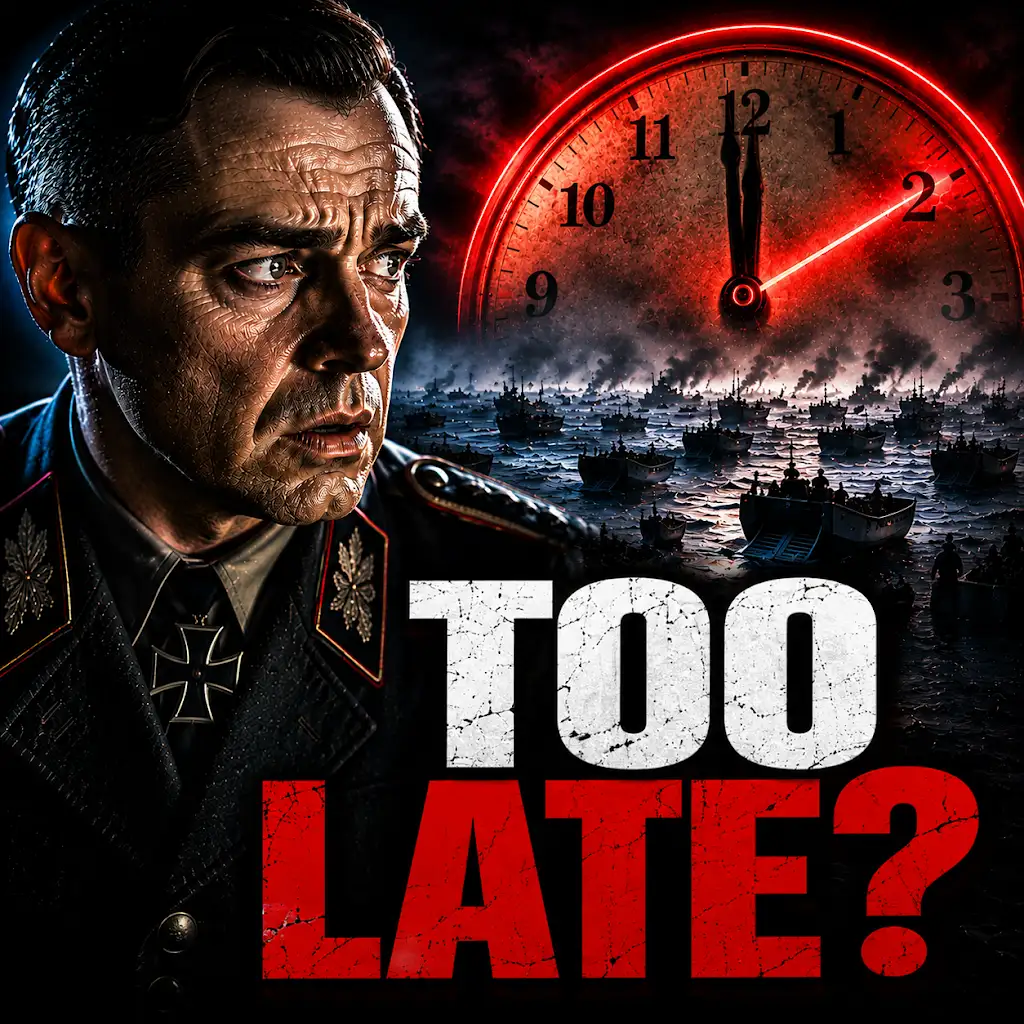
The morning of June 6, 1944, dawned like any other for much of the German military and civilian population on the European continent. The vast Western Front, characterized by fortified defenses and anticipated, though not precisely located, Allied invasion attempts, was a constant source of tension. Yet, the scale and success of the landings in Normandy, codenamed Operation Overlord, unleashed a torrent of shock, disbelief, and ultimately, a grim realization within the German command structure and beyond. The meticulously crafted defenses of the Atlantic Wall, vaunted as impregnable, had been breached.
Misinformation and Underestimation: The Fog of War
The Absence of the Expected: Where Was the Main Assault?
One of the most immediate and profound reactions from the German High Command was a profound sense of bewilderment regarding the location of the primary Allied assault. For months, German intelligence and planning had been fixated on the Pas-de-Calais, the shortest and most logical crossing point from Britain to the continent. This area, bristling with fortifications and strategically vital, was where the bulk of German reserves and elite units were concentrated. The deception operations, meticulously orchestrated by the Allies, had been devastatingly effective.
The Phantom Army of Pas-de-Calais
The Allied deception efforts, notably Operation Fortitude, had successfully convinced German leadership that a massive invasion force, led by the fictional First U.S. Army Group under General George S. Patton, was poised to strike at Pas-de-Calais. Propaganda, dummy landing craft, radio traffic, and even the movement of real but non-threatening units were employed to sow this belief. Consequently, when the landings commenced in Normandy, a region considered a secondary or diversionary objective by the Germans, it was met with a significant delay in accurate assessment and response.
Rommel’s Persistent Concerns Ignored
Field Marshal Erwin Rommel, tasked with overseeing the defenses of the Atlantic Wall in the crucial Normandy sector, had repeatedly voiced his concerns about the potential for landings in less expected locations. He understood the operational flexibility of the Allies and the limitations of solely focusing on Pas-de-Calais. Rommel had urged for greater reserves to be positioned closer to the coast, advocating for a more mobile defense that could react swiftly to any landing. However, his warnings were largely dismissed by Hitler and the High Command, who remained convinced that Pas-de-Calais was the sole target. This disconnect between Rommel’s realistic assessments and the prevailing strategic assumptions proved to be a critical flaw.
The Initial Assessment: A Diversionary Attack?
The initial German reports reaching the OKW (Oberkommando der Wehrmacht – High Command of the Armed Forces) were often fragmented and contradictory. The sheer scale of the landings, however, quickly made it apparent that this was no mere commando raid or minor diversion. Yet, the ingrained belief in the Pas-de-Calais strategy persisted, leading many to interpret the Normandy landings as a feint designed to draw German forces away from the true invasion point. This misinterpretation would have severe consequences in the crucial early hours and days of the campaign.
Conflicting Intelligence Reports
The chaos of a large-scale amphibious assault, coupled with the effectiveness of Allied electronic warfare and the inherent difficulties in communication on the front lines, meant that initial intelligence reaching Berlin was often incomplete and conflicting. Units under attack reported overwhelming enemy numbers, while others, further inland or in less threatened sectors, observed no significant activity. This made it difficult for the OKW to form a coherent picture of the situation and to make informed decisions about troop movements.
Hitler’s Vacillation: The Crucial Hours Lost
Perhaps the most significant manifestation of the initial confusion and miscalculation was Adolf Hitler’s personal indecision. He was reportedly asleep during the initial hours of the landings and was not immediately awakened. When he was informed, the persistent notion of a diversionary attack and the reliance on intelligence from the Pas-de-Calais area contributed to his reluctance to release critical armored reserves, particularly the Panzer divisions stationed in France. These reserves, when finally authorized to move, were significantly delayed, allowing the Allied beachheads to solidify and expand.
The Grim Realization: A Full-Scale Invasion
As the hours stretched into days, and the Allied forces consolidated their gains, the illusion of a mere diversionary attack began to crumble. The sheer tenacity of the Allied fighting, the continuous flow of troops and equipment, and the evident strategic depth of the invasion forced a grudging acknowledgment within the German military leadership: this was no feint, but the long-feared, full-scale invasion of Western Europe. The consequences of this delayed realization were profound, impacting not only battlefield decisions but also the morale of the troops and the populace.
The Atlantic Wall Breached: A Symbol of Failure
The Atlantic Wall, a massive network of coastal defenses stretching from Denmark to the Spanish border, was intended to be an insurmountable barrier against any Allied invasion. Its construction had been a monumental undertaking, involving concrete bunkers, minefields, anti-tank obstacles, and heavily armed gun emplacements. Its supposed impregnability was a key element of German defensive strategy and a potent propaganda tool. The fact that it was breached so comprehensively on D-Day was a devastating blow to German morale and a stark symbol of their declining military fortunes.
The Vulnerability Exposed: Beyond Pas-de-Calais
The success of the landings in Normandy exposed a critical vulnerability in the German defensive doctrine. By concentrating their best forces and fortifications in the Pas-de-Calais, they had left other sectors, including Normandy, relatively weaker. While defenses existed, they were not as robust, and the dispersal of German reserves meant that local units were often outnumbered and outgunned in the crucial initial hours.
The Psychological Impact: A Knockout Blow to Morale
For the German soldier fighting on the front lines, the news of the landings, coupled with the evident strength of the Allied assault, was profoundly demoralizing. The myth of invincibility of the German military, carefully cultivated throughout the war, was severely tested. For civilians, the invasion brought the reality of total war to their doorstep, sparking fears of occupation and further devastation.
The Enemy’s Scale and Determination: A New Level of Threat
As the Normandy campaign unfolded, the Germans were forced to confront the sheer scale of the Allied operation and the unwavering determination of their adversaries. The continuous influx of troops, aircraft, and matériel from Britain, supported by the vast industrial might of the United States, presented a strategic challenge of unprecedented magnitude. The Allies were not simply attempting a beachhead landing; they were initiating a full-scale liberation of Europe.
Allied Air Superiority: A Constant Menace
One of the most immediate and significant impacts of the D-Day landings was the undeniable demonstration of Allied air superiority. The skies over Normandy were dominated by Allied aircraft, which provided crucial air cover for the invasion forces, interdicted German supply lines, and conducted relentless bombing raids on German positions and infrastructure. This air dominance severely hampered German troop movements, resupply efforts, and any attempts at effective counter-attacks.
The Logistics of Invasion: An Overwhelming Force
The logistical capabilities displayed by the Allies were astonishing. The sheer volume of ships involved in the amphibious assault, the efficient offloading of troops and equipment, and the rapid establishment of supply lines onto the continent demonstrated a level of planning and execution that the Germans, facing increasing resource constraints, struggled to match. The Allies were not only capable of landing an army but of sustaining and reinforcing it indefinitely.
Hitler’s Fury and Frustration: Blame and Reckoning
As the situation on the Western Front deteriorated, Adolf Hitler’s reactions became increasingly volatile. His initial disbelief and frustration morphed into a furious search for scapegoats and a desperate attempt to regain control of a rapidly escalating crisis. The military leadership found themselves under immense pressure, facing not only the formidable might of the Allied forces but also the volatile temper of their Führer.
The Search for Blame: Unloading Responsibility
Hitler, prone to blaming others for military setbacks, quickly began to cast about for those he deemed responsible for the failure to prevent or contain the Normandy landings. His disillusionment with his generals grew, fueling existing suspicions and paranoia within the regime. This often led to arbitrary decisions and the unjust punishment of individuals who were simply carrying out their orders in an increasingly untenable situation.
The Ouster of Key Commanders
In the aftermath of D-Day, several high-ranking German officers faced severe repercussions. Field Marshal Gerd von Rundstedt, the supreme commander in the West, was initially relieved of his command, though later reinstated. Field Marshal Rommel, already under suspicion for his perceived lack of decisive action and his alleged involvement in plotting against Hitler, was wounded in an air raid and later implicated in the July 20th assassination attempt, leading to his forced suicide. The constant threat of purges and demotions created a climate of fear and uncertainty within the military.
The Myth of Treachery: Doubts and Suspicions
Fueled by his paranoia, Hitler began to suspect widespread treachery within the Wehrmacht. He questioned the loyalty of his generals and believed that key strategic decisions had been deliberately undermined. This made it even more difficult for his commanders to act decisively, as they feared that any perceived failure would be interpreted as sabotage.
Desperate Measures: Shifting Command and Reorganization
In a bid to regain control, Hitler made several drastic changes to the command structure in the West. He sought to replace experienced commanders with those he believed to be more loyal, even if they lacked the necessary strategic acumen. This constant reshuffling and interference often proved counterproductive, disrupting established command chains and sowing further confusion.
The Rise of Von Kluge
General Günther von Kluge was appointed commander of Army Group B in the West, taking over from Rommel after the latter’s wounding. Kluge, while a capable commander, found himself operating in an increasingly desperate situation, facing overwhelming Allied superiority and the constant interference of Hitler’s directives. His efforts to stabilize the front were ultimately unsuccessful.
The Infighting Within the High Command
The pressure of the situation exacerbated existing rivalries and infighting within the German High Command. Different branches of the military, such as the Army, Air Force, and Navy, often clashed over resources and strategic priorities. This disunity further hampered Germany’s ability to mount a cohesive and effective defense.
The German Defensive Response: A Struggle Against Overwhelming Odds
Despite the initial shock and confusion, the German military did mount a defense against the Allied invasion. However, this response was characterized by a desperate struggle against overwhelming odds, hampered by strategic miscalculations, resource limitations, and the relentless pressure of the Allied war machine. The German soldiers fought with a mixture of bravery, grim determination, and often, a sense of futility.
The Battle for the Beachheads: Initial Counter-Attacks
In the immediate aftermath of the landings, German forces in the Normandy sector launched a series of counter-attacks in an attempt to push the Allied forces back into the sea. These attacks, often carried out by isolated units without adequate support or coordination, were largely unsuccessful. The heavily defended Allied beachheads, supported by naval gunfire and air power, proved to be formidable obstacles.
The Fight for Caen: A Symbol of Resistance and Stalemate
The city of Caen, a key strategic objective for the Allies, became the focal point of some of the fiercest fighting in the Normandy campaign. German defenders, including elite Panzer divisions, fought tenaciously to hold the city, inflicting heavy casualties on the attacking Allied forces. The battle for Caen, characterized by brutal urban warfare and heavy artillery duels, devolved into a costly stalemate for much of June, highlighting the fierce resistance the Germans could still muster.
The Defense of the Coastal Fortifications
While some coastal defenses were quickly overwhelmed, others, particularly those manned by determined garrisons, offered stiff resistance. The concrete bunkers and gun emplacements, though vulnerable to sustained bombardment, required significant effort and sacrifice to neutralize. These pockets of resistance, while often localized, added to the cost of the Allied advance.
The Strategic Dilemma: Where to Deploy Reserves?
The fundamental strategic dilemma facing the German command was the question of where to deploy their precious reserves. The insistence on holding back forces to counter a potential larger invasion at Pas-de-Calais continued to plague decision-making. This meant that the Normandy front was often reinforced with less experienced units or with units that arrived too late to have a decisive impact.
The Limited Impact of Panzer Divisions
While Germany possessed some of the finest armored fighting vehicles of the war, their deployment in Normandy was often piecemeal and delayed. The need to husband these vital assets, coupled with the constant threat of Allied air attacks, meant that Panzer divisions were often committed to battle in isolated engagements rather than in a decisive, concentrated thrust. This prevented them from achieving the battlefield successes they were capable of in earlier stages of the war.
The Inability to Seal the Beachhead
Ultimately, the German forces were unable to prevent the Allies from expanding and securing their beachheads. The combination of Allied air superiority, overwhelming numbers, and efficient logistical support meant that the Germans were fighting a losing battle from the outset in terms of preventing the initial foothold.
The Long-Term Consequences: The Beginning of the End
The German reaction to the Normandy landings, marked by initial shock, miscalculation, and a desperate, ultimately futile, defensive struggle, had profound and lasting consequences for the Third Reich. D-Day was not just another battle; it was the opening of the long-awaited Second Front, a blow from which Germany would never fully recover. The events of June 6, 1944, marked the beginning of the end for Nazi Germany.
The Strategic Shift: A Two-Front War Realized
For years, Germany had striven to avoid a true two-front war, a scenario that had proven disastrous in World War I. The Normandy landings finally brought this existential threat to fruition. With Allied forces now firmly established in Western Europe and Soviet forces relentlessly advancing from the East, Germany was caught in a pincer movement that stretched its resources to the breaking point.
The Drainage of Resources
The commitment of troops, equipment, and resources to the Western Front meant that Germany was forced to divert forces and supplies that could have been used on the Eastern Front, or to defend its homeland. This constant drain of resources accelerated the decline of the German war effort.
The Loss of Strategic Initiative
From D-Day onwards, Germany was largely on the defensive. The strategic initiative had irrevocably passed to the Allies, who were now dictating the pace and location of the war. The German military was forced into a reactive posture, constantly trying to contain Allied advances rather than launching its own offensive operations.
The Collapse of Morale and the Imminent Defeat
The failure to decisively repel the Normandy landings, coupled with the relentless advances on both fronts, led to a significant decline in German morale, both within the military and among the civilian population. The propaganda machine, once a powerful tool for maintaining public support, struggled to explain away the mounting losses and the seemingly inevitable defeat.
The Growing Dissatisfaction with Hitler’s Leadership
While open dissent was still dangerous, the continued military failures began to erode the unwavering faith that many had placed in Adolf Hitler. The July 20th assassination attempt on Hitler later that year, though unsuccessful, was a stark indicator of the growing discontent and desperation within the regime.
The Inevitability of Defeat Becomes Clear
By the autumn of 1944, with Allied forces pushing deeper into France and the Eastern Front collapsing, the inevitability of Germany’s defeat became increasingly apparent to all but the most ardent of Nazi ideologues. The Normandy landings had opened the door to liberation, and the subsequent campaign represented the inexorable march towards the final collapse of the Third Reich. The German reaction to D-Day, from its initial shock to its desperate defenses, was ultimately a prelude to its own downfall.