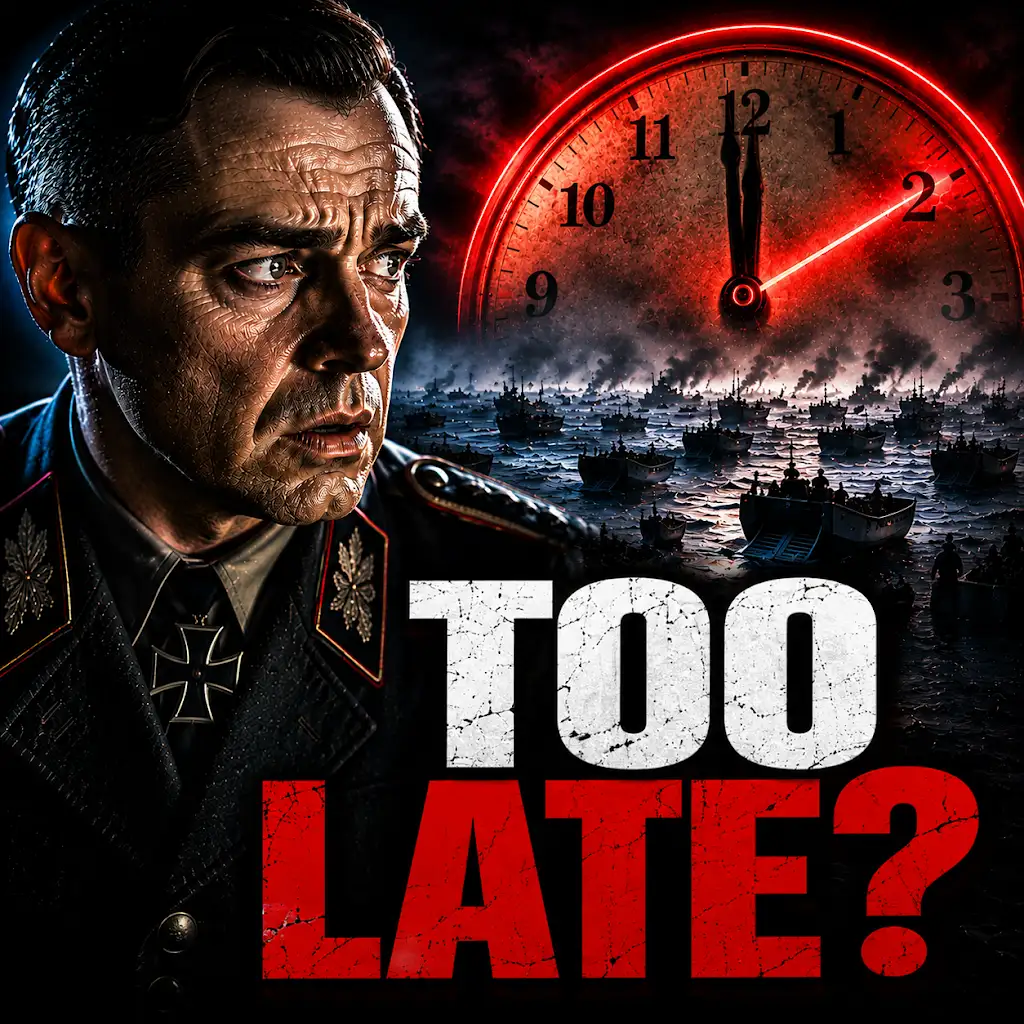
The dawn of June 6, 1944, was shrouded in mist and uncertainty. For months, Allied planners had meticulously crafted Operation Overlord, the colossal undertaking to liberate Western Europe from Nazi Germany’s iron grip. The success of this monumental invasion hinged on a series of critical hours, a razor’s edge between triumph and catastrophic failure. These were the moments when courage, precision, and sheer will would carve the course of history.
Long before the first boots touched the sands of Normandy, the airborne assault was already underway. Paratroopers and glider-borne troops were tasked with securing vital bridges, disrupting enemy communications, and neutralizing artillery emplacements that could devastate the seaborne landings. Their mission was a high-stakes gamble, requiring immense bravery and often leading to intense, isolated battles in the pre-dawn darkness.
Operation Tonga: Securing the Orne Bridges
One of the most critical objectives was the capture of the bridges over the River Orne and its tributary, the Canal de Caen. These bridges were vital for preventing German reinforcements from reaching the beaches and for providing a secure flank for the Allied forces once they landed. The British 6th Airborne Division, under the command of Major General Richard Gale, was assigned this perilous task. The dawn broke with paratroopers descending into a hostile landscape, facing immediate resistance. The fighting to secure Pegasus Bridge, in particular, became legendary, a desperate struggle against overwhelming odds. The glider landings, often inaccurate in the darkness and heavy fire, further complicated the mission, scattering units and forcing impromptu leadership to emerge from the chaos. The success of these airborne operations was not guaranteed; it was a testament to the valor of individual soldiers and small units fighting in isolation.
Mission Albany and Boston: Disrupting the German Interior
Across the Cotentin Peninsula, American airborne divisions, the 82nd and 101st, faced equally daunting challenges. Their objectives included capturing Sainte-Mère-Église, a strategic crossroads, and securing causeways leading inland from Utah Beach. The parachute drops were notoriously scattered due to poor weather and intense anti-aircraft fire. Many paratroopers landed miles from their intended drop zones, often in enemy-held territory. Despite this disarray, they rallied, formed small groups, and fought with remarkable tenacity to achieve their objectives. The capture of Sainte-Mère-Église was a symbolic victory, as the town’s liberation was relayed by radio, boosting Allied morale. However, the scattered nature of the drops meant that many units had to fight their way to their objectives, often encountering far more German resistance than anticipated.
The Cost of Surprise: Individual Heroism and Unit Cohesion
The critical hours of the airborne assault were characterized by extreme danger and the necessity for independent action. Without centralized command and control, the initiative often fell to junior officers and NCOs. The ability of these scattered units to regroup, assess their situation, and adapt their plans on the fly was paramount. The stories of individual bravery, often in the face of overwhelming odds, are numerous. Soldiers who fought for hours with minimal ammunition, who single-handedly neutralized enemy positions, and who risked their lives to rescue comrades, exemplify the spirit that defined these critical moments. The preservation of unit cohesion, even in the most chaotic circumstances, was a testament to the rigorous training and shared purpose of the airborne troops.
The Amphibious Tide: The Beachhead Battles
As the sun began to rise, casting an eerie light on the choppy waters of the English Channel, the main amphibious assault was about to commence. The beaches of Normandy, codenamed Utah, Omaha, Gold, Juno, and Sword, were the gateways to continental Europe. The success of the landings depended on the swift and decisive overcoming of German defenses, a task that would prove far more brutal and costly than many had imagined.
Omaha Beach: The Inferno of the Atlantic Wall
Omaha Beach was destined to become the bloodiest of the D-Day landing sites. The pre-landing bombardment by naval artillery and air power, crucial for softening up defenses, proved less effective than hoped. German defenses, particularly machine-gun nests and artillery positions on the bluffs overlooking the beach, remained largely intact. As the first landing craft approached the shore, they were met with a hail of fire that ripped through the boats and decimated the soldiers attempting to disembark. The exposed nature of the beach, with its lack of natural cover, turned the landing zone into a deathtrap. The initial waves suffered horrific casualties, and the advance ground to a halt.
The “Bloody Hundredth”: Fighting for Every Inch
The American 29th Infantry Division, nicknamed the “Bloody Hundredth” for its ferocity and tenacity, bore the brunt of the assault on Omaha. The soldiers were pinned down on the beach, taking heavy fire from multiple directions. The lack of effective leadership in the initial stages, coupled with the sheer ferocity of the German resistance, led to moments of near collapse. However, pockets of brave soldiers, led by determined officers, began to advance, crawling and fighting their way inland. The capture of key German strongpoints, often through suicidal bravery and daring assaults, was essential for any progress.
Naval Support’s Crucial Role
The presence of Allied warships offshore proved to be a critical factor. Despite the overwhelming fire from the German defenses, naval guns relentlessly pounded enemy positions that were proving impervious to air and artillery bombardments. Destroyers moved dangerously close to the shore to provide direct fire support, targeting enemy strongpoints and enabling some of the beleaguered infantry to advance. The coordination between naval and ground forces, though challenging under fire, was a vital component of overcoming the formidable defenses.
Utah Beach: A More Fortunate Landing
In contrast to Omaha, the landings on Utah Beach were significantly less costly. While still facing enemy fire, the German defenses were not as heavily concentrated, and the pre-landing bombardment had been more effective. Furthermore, a fortuitous drift in the tide pushed the landing craft further down the beach than planned, placing them in a less heavily defended sector.
The 4th Infantry Division’s Advance
The American 4th Infantry Division, tasked with assaulting Utah Beach, was able to establish a foothold with relative speed. Once ashore, they faced the challenge of clearing the German defenses and pushing inland towards their objectives, including securing causeways that provided access to the Cotentin Peninsula. The paratroopers who had landed earlier, though scattered, were able to provide valuable support to the beach assault.
The Canadian Sector: Juno Beach’s Fierce Resistance
The Canadian 3rd Infantry Division faced a formidable challenge on Juno Beach. They encountered some of the most determined German resistance of the entire invasion. The beach was heavily mined, and the German defenders, well-entrenched in concrete bunkers, inflicted heavy casualties on the initial landing waves.
The “Seaforth Highlanders” and the Struggle for the Defenses
Units like the Seaforth Highlanders of Canada faced intense fighting to breach the German defenses. They had to overcome obstacles like anti-tank ditches and minefields while under direct enemy fire. The courage and determination of the Canadian soldiers, fighting for every yard of ground, were crucial in overcoming the initial German onslaught and establishing a beachhead.
The Crucial Air Superiority: Dominating the Skies
The success of Operation Overlord was not solely dependent on the ground and naval forces. Allied air superiority played a pivotal role in softening defenses, disrupting enemy reinforcements, and providing vital reconnaissance and support throughout the critical hours of D-Day. The control of the skies was hard-won and maintained through relentless effort.
The Battle for the Skies: RAF and USAAF Efforts
From the hours leading up to the invasion, Allied air forces, the Royal Air Force (RAF) and the United States Army Air Forces (USAAF), were engaged in a massive effort to achieve and maintain air superiority over the invasion beaches. This involved bombing strategic targets, interdicting enemy supply lines, and engaging German aircraft in dogfights. The overwhelming numerical superiority of Allied aircraft, coupled with their tactical prowess, gradually wore down the Luftwaffe.
Interdiction and Disruption of German Reinforcements
A key objective of the Allied air campaign was to prevent German reinforcements from reaching the Normandy front. Aircraft relentlessly attacked railway lines, bridges, and roads, making it incredibly difficult for German armor and troop transports to move towards the invasion sites. The disruption caused by these air attacks was a significant factor in the Allies’ ability to consolidate their gains on the beaches.
Close Air Support: A Lifeline for the Ground Troops
As the fighting intensified on the beaches, Allied fighter-bombers provided crucial close air support to the beleaguered ground troops. They attacked German strongpoints that were holding up advances, silenced enemy artillery positions, and provided a vital morale boost to soldiers engaged in desperate struggles. The ability of these aircraft to react quickly to battlefield needs, often flying in dangerous conditions and under heavy enemy fire, was indispensable.
The Challenge of Identifying Friend from Foe
One of the significant challenges faced by aircrews was the difficulty of distinguishing Allied and German forces on the ground, particularly in the initial chaotic hours of the invasion. This led to some tragic friendly-fire incidents. However, with improved coordination and the use of identification signals, this risk was gradually mitigated.
The Race Against Time: Reinforcements and Consolidation
Once the initial beachheads were secured, the race against time began. The Allies had to land as many troops and as much equipment as possible before the Germans could mount a significant counter-attack. This phase was just as critical as the initial landings, as it determined whether the foothold gained would be expanded or lost.
The Flow of Supplies: Maintaining Momentum
The logistical challenge of supplying the invasion forces was immense. Landing craft, troop transports, and cargo ships continuously ferried men, ammunition, fuel, food, and medical supplies to the beaches. The speed and efficiency of this logistical operation were paramount. Any significant delay could have jeopardized the entire invasion.
Mulberry Harbors: Engineering Marvels in a War Zone
To overcome the lack of natural port facilities, the Allies deployed their ingenious Mulberry harbors – prefabricated artificial harbors that were towed across the Channel and assembled off the coast of Normandy. These massive structures provided sheltered anchorages for ships and facilitated the rapid offloading of supplies, becoming a vital lifeline for the Allied forces.
German Counter-Attacks: The Fierce Response
As news of the invasion spread, German forces began to mobilize for a counter-offensive. While hampered by Allied air power and the destruction of infrastructure, their attempts to push back the Allied landings were fierce. The Allies had to constantly be on the alert, reinforcing their positions and repelling enemy assaults.
The Battle for the Bridges: Holding the Flanks
Securing vital bridges and road networks inland was crucial for preventing German armored formations from reaching the beaches. The airborne troops, along with the advancing infantry, fought desperate battles to hold these strategic points, often outnumbered and outgunned. The success or failure of these engagements had a direct impact on the overall progress of the invasion.
The Aftermath and the Dawn of Liberation: Securing the Beachhead
The critical hours of D-Day did not end with the initial landings. The subsequent hours and days were a relentless struggle to expand the beachheads, push inland, and establish a secure perimeter. The decisions made and the sacrifices endured during these crucial periods laid the foundation for the eventual liberation of Europe.
The Capture of Cherbourg: A Strategic Prize
The capture of the vital port of Cherbourg was a key objective for the Allied forces. This would provide a much-needed deep-water port for the massive flow of supplies and reinforcements. The fighting for Cherbourg was intense, with German defenders putting up a determined resistance. Its eventual capture was a significant strategic victory.
The Role of Resistance Fighters: Undermining the Enemy
Throughout Normandy, French Resistance fighters played a crucial role in disrupting German communications, gathering intelligence, and even engaging enemy patrols. Their bravery and commitment further aided the Allied cause during these critical hours.
The Path to Paris: The Beginning of the End
While the fighting on the beaches and in the immediate hinterland was far from over, the successful consolidation of the D-Day landings marked the beginning of the end for Nazi Germany. The Allies had established a firm foothold in Western Europe, and the relentless advance inland had begun. The critical hours of D-Day, a testament to human courage and strategic brilliance, had truly turned the tide of World War II. The sacrifices made during those fateful hours would resonate for generations, a stark reminder of the cost of freedom and the enduring power of determination in the face of overwhelming adversity.