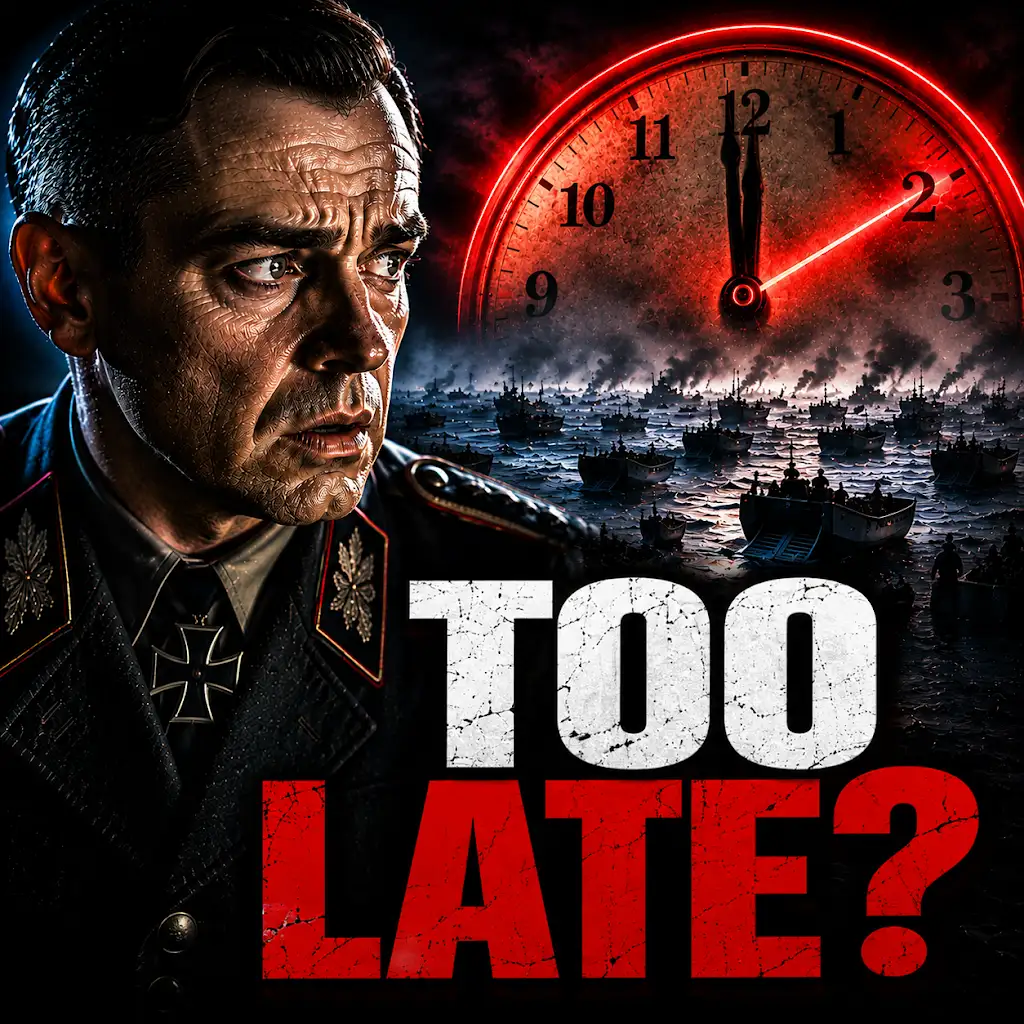
The dawn of June 6th, 1944, marked the beginning of an epochal struggle. On the blood-soaked beaches of Normandy, Allied forces launched Operation Overlord, aiming to liberate Western Europe from the iron grip of Nazi Germany. But lurking behind the formidable Atlantic Wall were two of Germany’s most seasoned commanders, each with a distinct strategic vision and a profound understanding of warfare. Their names: Erwin Rommel and Gerd von Rundstedt. The clash of their differing philosophies, their tactical decisions, and their perceived shortcomings would ultimately shape the initial stages of the D-Day invasion, a pivotal moment in history.
Gerd von Rundstedt, a scion of Prussian military tradition, embodied the quintessential German general. His career spanned decades, from the trenches of World War I to his leadership in the invasion of France in 1940. He was a man of discipline, experience, and a deep appreciation for established military doctrine. For Hitler, Rundstedt was the steady hand, the reliable commander tasked with defending the Reich’s western flank.
Rundstedt’s Strategic Doctrine: Defense in Depth
Von Rundstedt’s primary strategic philosophy was rooted in a concept of defense in depth. He believed that the most effective way to counter an enemy assault was not to concentrate all forces at the initial point of attack, but rather to create a layered defense. This meant establishing strong forward positions, but crucially, retaining powerful mobile reserves behind the front lines, ready to be deployed to plug any breaches or to launch devastating counterattacks once the initial Allied onslaught had been blunted.
The Importance of Reserves
For Rundstedt, reserves were the linchpin of a successful defense. He understood that any invasion would inevitably achieve localized successes. The key, in his view, was to prevent these successes from escalating into a breakthrough. These reserves, composed primarily of armored divisions, were meant to be the scalpel, precisely deployed to isolate and annihilate enemy salients before they could gain a foothold.
Fortifications as a First Line
While not a proponent of static defenses as the sole solution, Rundstedt acknowledged the necessity of fortified positions. The Atlantic Wall, though often criticized for its inconsistencies and the speed at which it was constructed, represented a significant attempt to create a formidable barrier. He saw these concrete emplacements, minefields, and barbed wire as the initial shock absorbers, designed to degrade enemy forces and buy time for his reserves to mobilize.
Rundstedt’s Apprehension of the Invasion
Despite his reputation, Rundstedt harbored significant doubts about Germany’s ability to repel a full-scale invasion in 1944. He recognized the overwhelming Allied superiority in air power, naval strength, and industrial capacity. He understood that Germany, depleted by years of relentless fighting on multiple fronts, was stretched too thin.
The Air and Sea Disadvantage
Rundstedt was acutely aware of the crippling disadvantages Germany faced in the air and at sea. Allied air superiority meant that German troop movements and logistical efforts were constantly under threat, and that any defensive maneuvers would be observed and targeted. The naval blockade further restricted Germany’s ability to reinforce and resupply its western defenses. This knowledge tempered his confidence in the effectiveness of even the most well-laid plans.
The Two-Front War’s Toll
The persistent fighting on the Eastern Front against the Soviet Union was a constant drain on German resources and manpower. Rundstedt understood that any major commitment of forces to the west would leave the eastern front vulnerable. This strategic dilemma, the perennial problem of fighting a two-front war, was a significant concern that colored his strategic thinking.
The Desert Fox’s Vision: Erwin Rommel
Erwin Rommel, affectionately known as the “Desert Fox,” was a different breed of commander. His early successes in North Africa had cemented his reputation as a daring and aggressive tactician. He was a field commander, more comfortable on the front lines, sensing the flow of battle and reacting with lightning speed. His approach was characterized by audacity, improvisation, and a relentless drive to seize the initiative.
Rommel’s Philosophy: Aggression and the Enemy’s Beachhead
Rommel’s core belief was that the best defense was a proactive offense. He argued vehemently that Germany could not afford to wait for the Allies to establish a secure beachhead. If the invasion was to be repelled, it had to be done on the beaches themselves, before the invaders could bring their full might to bear.
Striking at the Water’s Edge
Rommel’s most fervent advocacy was for the placement of significant armored reserves closer to the coast. He believed that by deploying these mobile forces forward, they could engage and destroy Allied landing craft and troops as they attempted to disembark. This was a radical departure from Rundstedt’s preference for holding reserves further inland, and it became a major point of contention between the two generals.
The Importance of Air Dominance for Attack
Rommel, in contrast to Rundstedt’s focus on defensive air power, envisioned offensive aerial support as crucial for his beachhead strategy. He understood that his forward-deployed armor would need the protection of German aircraft to counter the overwhelming Allied air superiority that would undoubtedly descend upon any such engagement. The lack of this air cover was a significant impediment to his plans.
Rommel’s Growing Unease with the Atlantic Wall
While tasked with strengthening the Atlantic Wall, Rommel was increasingly disillusioned with its effectiveness as a purely static defense. He saw it as a porous barrier, vulnerable to concentrated assaults and aerial bombardment. His vision was for a more dynamic defense, one that could absorb initial blows and then quickly counterattack.
The Imperfect Fortifications
Rommel toured the Atlantic Wall extensively, and his reports back to OKW (Oberkommando der Wehrmacht) were filled with criticisms of the fortifications. He found them to be incomplete in many areas, poorly coordinated, and lacking in the necessary firepower to truly halt a determined invasion. His engineers were often hampered by a lack of resources and conflicting directives.
The Need for Mobile Obstacles
Beyond concrete and steel, Rommel emphasized the importance of mobile obstacles. He advocated for the extensive use of mines, anti-tank ditches, and other impediments that could channel enemy forces and disrupt their advance, making them easier targets for his forward-deployed reserves.
The Clash of Titans: Rommel Versus Rundstedt on Strategy
The fundamental disagreement between Rommel and Rundstedt revolved around the crucial question of where and how to deploy Germany’s limited armored reserves. This strategic schism was not merely an academic debate; it had direct implications for the survival of the Third Reich.
The Reserve Debate: Forward Deployment vs. Mobile Retraction
The most significant point of contention was the location of the Panzer divisions. Rommel was adamant that they needed to be positioned close to the coast, ready to surge forward and engage the enemy the moment they landed. He believed this was the only way to prevent the Allies from establishing a secure foothold.
Rommel’s “Beach Defense” Argument
Rommel’s logic was that if the Allies could land and consolidate their forces, the subsequent task of dislodging them would be exponentially more difficult. He envisioned a scenario where German tanks would be in a position to “roll over” the invading forces while they were still struggling to get off the beaches, before their air and naval support could be fully effective.
Rundstedt’s “Counterstroke” Doctrine
Rundstedt, conversely, advocated for holding the armored divisions further inland. His strategy was to allow the initial Allied assault to exhaust itself against the coastal defenses and then commit his reserves to a decisive counterstroke, designed to cut off and destroy the enemy penetration. He feared that a forward deployment would expose his precious armor to Allied air power and naval gunfire before they could even engage the enemy effectively.
The Role of the Führer: Hitler’s Interference
Adding a layer of complexity and frustration to the strategic debate was the direct involvement of Adolf Hitler. The Führer, notoriously disconnected from the realities of the battlefield, often imposed his will on military decisions, overriding the advice of his experienced generals.
Hitler’s Hesitation to Commit Reserves
Hitler, still haunted by the perceived failures of France in 1940 where armored divisions were committed too early, was reluctant to release the panzer divisions for Rommel’s proposed beach defense. He harbored a lingering belief that the Allies might attempt a feint invasion elsewhere, and he wanted to retain control of these vital mobile forces.
The “Führer Reserve” Conundrum
The strategic paralysis was exacerbated by the fact that the most powerful armored formations were designated as “Führer Reserve,” meaning they could only be committed with Hitler’s direct authorization. This often led to critical delays in deployment, as generals waited for a decision from the distant Führerbunker.
The Eve of Invasion: Intelligence and Misinformation
Leading up to D-Day, German intelligence played a crucial role in shaping the defensive preparations, or in many cases, failing to do so effectively. The Allies, with their sophisticated deception operations, managed to sow confusion and misdirect German efforts.
The Deception of Fortitude
Operation Fortitude, a masterful Allied deception campaign, was designed to convince the Germans that the main invasion would occur at the Pas-de-Calais, the narrowest point of the English Channel, rather than Normandy. This involved the creation of phantom armies, inflatable tanks, and a vast propaganda effort.
The Phantom Army of FUSAG
The First United States Army Group (FUSAG), commanded by the non-existent General George S. Patton, was a cornerstone of Fortitude. Allied agents fed information about FUSAG’s supposed strength and intentions to German intelligence, creating the illusion of an imminent invasion in the Pas-de-Calais.
Radio Traffic and Dummy Installations
The Allies also used extensive radio traffic, often broadcast from areas where FUSAG was supposedly located, to reinforce the deception. Dummy landing craft and aircraft were positioned in southern England to further mislead German reconnaissance.
German Intelligence Failures
Despite the efforts of the German intelligence apparatus, they largely fell for the Allied ruse. Their assessments of Allied strength and intentions were often flawed, leading them to misallocate their defensive resources.
Underestimating Allied Intentions in Normandy
The German high command, including Rundstedt and Rommel to a degree, did not entirely dismiss the possibility of an invasion in Normandy. However, they consistently believed that the main thrust would come through the Pas-de-Calais. This led to a significant proportion of their reserves being positioned in the wrong theater.
The “Phoney War” Mindset
A contributing factor to German intelligence failures may have been a lingering “Phoney War” mindset. After years of anticipated invasions that never materialized, there might have been a subconscious tendency to downplay the immediate threat and to believe that the Allies would delay their offensive further.
D-Day: The Realization of the Discrepancy
When the Allied armada finally descended upon the beaches of Normandy on June 6th, 1944, the German defensive plan, shaped by the divergent strategies of Rommel and Rundstedt and hampered by intelligence failures, began to unravel.
The Ineffectiveness of Coastal Defenses
The initial assault forces faced fierce resistance, but the Atlantic Wall, while formidable in places, proved to be less impregnable than anticipated. Allied air and naval bombardment had softened many of the key defenses, and the defenders, though brave, were outnumbered and outgunned.
The “Hedgerow Country” Advantage
The Allied forces that landed in Normandy found themselves fighting in a bocage landscape of dense hedgerows and narrow lanes. This terrain, while difficult for the attackers, also proved to be a significant obstacle for the German armor when it was eventually deployed. It allowed the Allies to use their superior firepower and infantry tactics to contain and attrcton German counterattacks.
The Struggle for Air Support
Rommel’s worst fears were realized. The German Luftwaffe, severely depleted and facing overwhelming Allied air superiority, could offer little in the way of effective support to the beleaguered defenders on the beaches. This meant that the panzer divisions, when they were eventually released, had to contend with a hostile sky.
The Delayed Response of the Panzer Divisions
The critical delay in committing the panzer divisions proved to be a decisive factor. While Rommel had urged for their immediate deployment, and Rundstedt had eventually agreed to move some reserves forward, Hitler’s indecision and the time it took to coordinate these vast armored formations meant that the Allies gained precious hours to consolidate their positions.
The Role of the 12th SS Panzer Division and Panzer Lehr Division
The 12th SS Panzer Division “Hitlerjugend” and the Panzer Lehr Division were among the key armored units that eventually engaged the Allied forces. However, their arrival on the battlefield was often fragmented and too late to prevent the establishment of significant Allied beachheads.
The Battle for Caen: A Symbol of the Struggle
The ensuing battle for Caen, a strategically important city near the invasion beaches, became a brutal and prolonged struggle. It exemplified the costly and attritional nature of the fighting that resulted from the German inability to effectively counter the initial invasion. The fragmented deployment of German forces and the persistent Allied air dominance meant that the defenders were constantly on the back foot.
In the grand tapestry of D-Day, the strategic differences between Erwin Rommel and Gerd von Rundstedt, coupled with the fateful interference of Adolf Hitler and the cunning of Allied deception, created a German defense that, while fiercely contested, was ultimately outmaneuvered and outfought. The ensuing years of war would be a testament to the immense sacrifices made and the profound impact of the decisions – and indecisions – of these two influential commanders. The legacy of “Rommel Versus Rundstedt” on D-Day is not just a tale of two generals, but a stark illustration of how strategic vision, operational realities, and the unpredictable hand of fate can converge to determine the course of history.