Napoleon’s Defeat: The Prussian Army’s Role
The annals of military history are replete with tales of decisive battles that have reshaped the course of nations and continents. Among these pivotal confrontations, the Battle of Waterloo, fought on June 18, 1815, stands as a monumental event, marking the definitive end of Napoleon Bonaparte’s reign and his imperial ambitions. While the French Emperor’s defeat is often attributed to a combination of Wellington’s strategic brilliance and Napoleon’s own tactical missteps, a crucial, yet sometimes underestimated, element in this victory was the timely and decisive intervention of the Prussian army. The Prussian forces, under the command of Gebhard Leberecht von Blücher, arrived on the battlefield when the outcome hung precariously in the balance, transforming a potential French triumph into a catastrophic rout. Their relentless advance and fierce engagement shattered Napoleon’s lines and sealed his fate.
France, in the spring of 1815, found itself in a precarious state. Napoleon, having escaped his exile on Elba, had orchestrated a swift and astonishing return to power, known as the Hundred Days. This resurgence sent shockwaves across Europe, re-igniting the fear and animosity of the allied powers who had once defeated him. The Seventh Coalition was rapidly formed, a formidable alliance of nations determined to prevent the return of Napoleonic dominance. At its heart were the seasoned armies of Great Britain, led by the Duke of Wellington, and the revitalized forces of Prussia, eager to avenge past humiliations at the hands of the French.
The Shadow of Past Defeats
For Prussia, the early 19th century had been a period of profound national trauma. The stunning victories of Napoleon at Jena-Auerstedt in 1806 had utterly shattered the Prussian military and led to a humiliating peace treaty. This defeat had exposed the deep-seated weaknesses within the Prussian state and military, prompting a period of introspection and radical reform. The subsequent years saw a determined effort to rebuild and modernize the army, inspired by many of the very innovations that had made Napoleon so formidable. The desire for retribution, coupled with a renewed sense of national pride, fueled the Prussian commitment to the Coalition.
The Formation of the Seventh Coalition
The swiftness of Napoleon’s return from Elba forced the allied powers to act with unprecedented speed. Diplomacy, though often fraught with tension, eventually solidified the Seventh Coalition. Great Britain, through its vast resources and Wellington’s military prowess, committed significant forces. Austria, though initially hesitant, eventually joined the alliance, as did Russia and a host of smaller German states. However, the two most immediate and strategically positioned powers were Britain and Prussia. Their armies formed the vanguard of the Allied efforts to contain Napoleon, operating in close proximity in the Belgian theater.
Napoleon’s Strategic Gamble
Napoleon, aware of the gathering storm, recognized the critical need to strike before the full might of the Coalition could be brought to bear. His strategy was audacious and characteristic of his genius: to divide and conquer. He aimed to isolate the Prussian and Anglo-Allied armies and defeat them in detail before they could unite. This would, he hoped, break the Coalition’s resolve and allow him to dictate terms from a position of strength. The initial engagements in the days leading up to Waterloo, particularly at Ligny and Quatre Bras, were designed to achieve this objective.
The intricate relationship between Napoleon and the Prussian Army is a fascinating topic that sheds light on the military strategies and political maneuvers of the early 19th century. For a deeper understanding of this dynamic, you can explore a related article that discusses the impact of Napoleon’s campaigns on Prussian military reforms and the eventual rise of the Prussian Army as a formidable force in Europe. To read more about this subject, visit this article.
The Engagements of June 16th: A Divergence of Fates
The initial phase of Napoleon’s campaign unfolded on June 16th, 1815, with two significant battles fought simultaneously: the Battle of Ligny, where Napoleon himself engaged the Prussian army, and the Battle of Quatre Bras, where Marshal Ney led French forces against Wellington’s troops. These engagements set the stage for the climactic battle two days later, and critically, influenced the subsequent movements of both the Prussian and Allied armies.
The Battle of Ligny: A Pyrrhic Victory
At Ligny, Napoleon threw the bulk of his Imperial Guard and seasoned corps against the Prussian forces. Blücher, commanding the Prussian army, fought with characteristic tenacity, but his army, though reformed, was still in the process of reorganization and lacked the battle-hardened experience of the French veterans. The battle was a brutal affair, with heavy casualties on both sides. Napoleon, through a combination of superior numbers and effective tactical maneuvers, managed to drive the Prussians from the field. However, this victory was not as decisive as he had hoped.
Prussian Resilience and Blücher’s Determination
Despite being outnumbered and outmaneuvered in certain phases, the Prussian army displayed remarkable resilience. Blücher, in particular, embodied the fighting spirit of his nation. Wounded and unhorsed during the fighting, he famously rallied his men, a testament to his personal bravery and the unwavering loyalty he inspired. The Prussians, though forced to retreat, did so in relatively good order, preserving a significant portion of their fighting strength. This was a critical factor, as it ensured they were not eliminated from the campaign.
The Missed Opportunity at Sombref
Crucially, Napoleon’s focus on Ligny meant that he detached Marshal Grouchy with a significant force to pursue the retreating Prussians and prevent them from regrouping or reinforcing Wellington. This decision, though seemingly logical, proved to be a major strategic miscalculation. Grouchy’s pursuit was slow and ultimately ineffective, failing to prevent Blücher from making his crucial march to Waterloo. The failure to decisively annihilate the Prussians at Ligny, and the subsequent division of French forces, allowed for the possibility of their reunification with Wellington.
The Battle of Quatre Bras: A Tactical Stalemate
Concurrently, at Quatre Bras, Marshal Ney, under Napoleon’s orders to prevent Wellington from reinforcing the Prussians, clashed with Wellington’s rapidly arriving forces. This battle was a fierce struggle for control of a vital crossroads. Wellington, though initially caught off guard, skillfully deployed his troops, including British infantry, Dutch-Belgian troops, and Highlanders, to hold the position. The battle ended as a tactical draw, with both sides suffering significant losses. While Wellington secured his objective of preventing the French from advancing further, he also sustained casualties that weakened his army for the upcoming confrontation.
Wellington’s Skillful Defense
Wellington’s defensive tactics at Quatre Bras were exemplary. He utilized the terrain to his advantage, employing strong defensive positions and well-timed counter-attacks. The famous “squares” formed by his infantry proved to be an effective bulwark against French cavalry charges. However, the intensity of the fighting and the casualties sustained meant that Wellington’s army was far from at full strength by the evening of June 16th.
The Importance of Holding the Crossroads
The strategic importance of Quatre Bras cannot be overstated. Had Ney succeeded in his objective, he would have prevented Wellington from withdrawing his forces to the more defensible position on the ridge of Mont-Saint-Jean, where the Battle of Waterloo would ultimately be fought. By holding the crossroads, Wellington was able to achieve a crucial positional advantage, albeit at a considerable cost.
The March to Waterloo: A Race Against Time
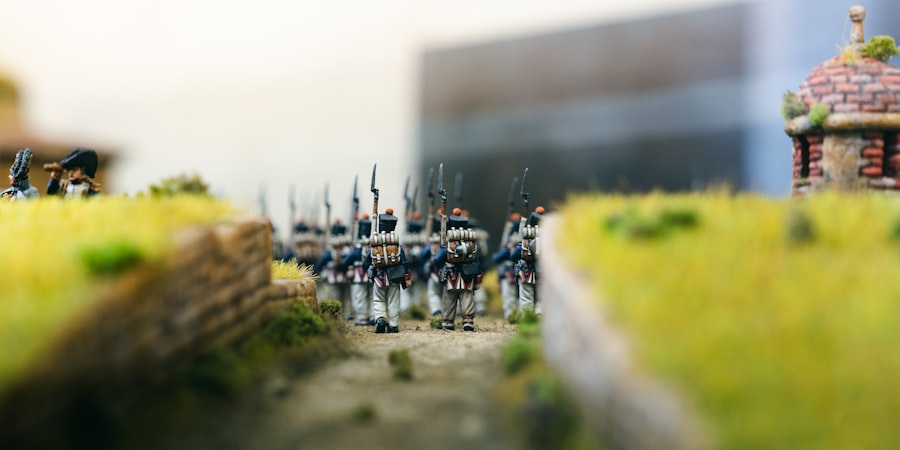
Following the engagements of June 16th, both the Prussian and Anglo-Allied armies faced critical decisions that would shape the events of June 18th. The Prussian army, despite its defeat at Ligny, was not broken. Blücher and his staff, recognizing the gravity of the situation, made the momentous decision to march to the sound of Wellington’s guns, a commitment that would prove instrumental.
Blücher’s Strategic Realignment
Despite the wounds and the exhaustion of his men, Blücher and his Chief of Staff, August von Gneisenau, understood that their immediate priority was to support Wellington. While Napoleon believed the Prussians were in disarray and focused on Grouchy’s pursuit, Blücher and Gneisenau were already planning their counter-stroke. They recognized that the fate of Prussia, and indeed of Europe, rested on the successful coordination of their forces with Wellington’s army.
The Prussian Council of War
A critical meeting of Prussian commanders took place on the night of June 16th. While some expressed doubts about the feasibility of a rapid advance, Blücher’s determination and Gneisenau’s strategic foresight prevailed. They decided to forgo a full tactical regrouping and instead ordered their corps to begin an immediate march towards Wellington’s anticipated position. This bold decision was a testament to their understanding of the fluid nature of the campaign and the necessity of swift, decisive action.
The Role of August von Gneisenau
August von Gneisenau, Blücher’s Chief of Staff, was a brilliant strategist who had played a significant role in reforming the Prussian military after the disasters of 1806. His strategic acumen and unwavering resolve were crucial in convincing Blücher to pursue the offensive approach and in coordinating the complex march of the Prussian army under challenging circumstances.
Wellington’s Defensive Preparation
Wellington, having held Quatre Bras, recognized that his position was untenable in the long term. He ordered a strategic withdrawal to the strategically advantageous ridge of Mont-Saint-Jean, a position that offered good defensive terrain and protected his lines of communication. This withdrawal was executed with characteristic skill, ensuring that his army was not significantly harassed by French pursuit.
The Ridge of Mont-Saint-Jean
The choice of the Mont-Saint-Jean ridge was a masterstroke of defensive positioning. The crest of the ridge provided a commanding view of the battlefield, and the reverse slope offered protection from direct artillery fire. Wellington also skillfully incorporated key strongpoints, such as the farmhouse of La Haye Sainte and the chateau of Hougoumont, into his defensive line, creating formidable obstacles for the attacking French.
The Importance of Wellington’s Delaying Tactics
Wellington’s ability to delay Napoleon at Quatre Bras and then conduct a controlled withdrawal to Mont-Saint-Jean was crucial. It bought him precious time to consolidate his defenses and, more importantly, to await the arrival of the Prussian reinforcements, which he knew were on their way. Without this crucial delay, Napoleon might have been able to assault Wellington’s positions before the Prussians could intervene.
The Dawn of Battle: June 18th, 1815
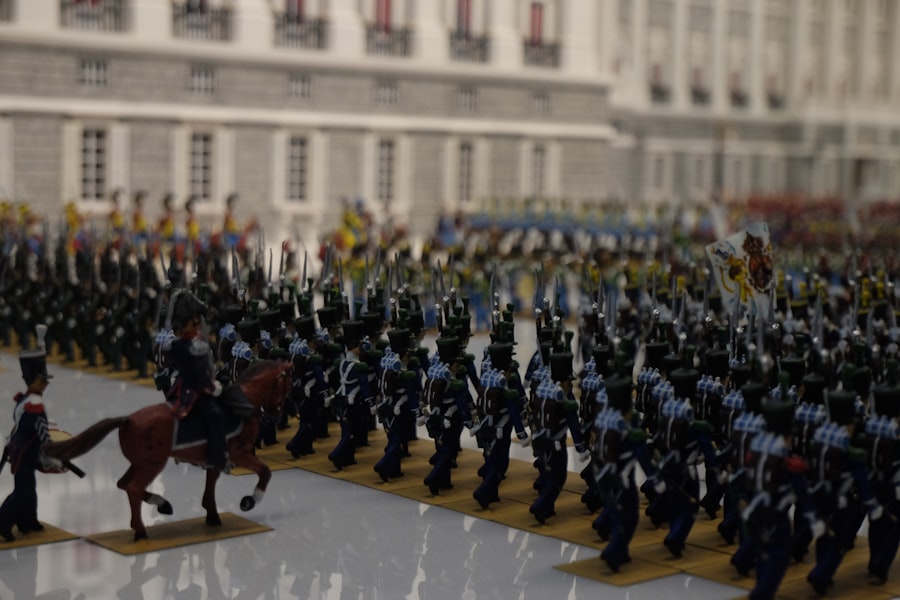
The morning of June 18th dawned with a heavy mist and a lingering sense of anticipation. Napoleon, confident in his ability to defeat Wellington’s isolated army, delayed his attack, waiting for the ground to dry after a night of heavy rain. This delay, while intended to facilitate his cavalry, proved to be a critical error, allowing the Prussian army more time to close the distance.
Napoleon’s Delayed Offensive
Napoleon’s decision to postpone the attack until late morning was a significant tactical misjudgment. He believed the wet ground would impede his artillery and cavalry. However, this decision inadvertently played into the hands of his enemies. It gave the marching Prussian columns, which were on a difficult terrain, crucial extra hours to cover the miles separating them from the battlefield.
The Impact of the Rain
The heavy rainfall throughout the night and into the early morning had a significant impact on the battlefield. It turned the ground into a muddy quagmire, making movement difficult for large formations, particularly cavalry and artillery. While Napoleon’s concern about this was valid, his subsequent delay, rather than a swift assault, proved to be the more detrimental factor.
The Missed Opportunity to Strike Early
Had Napoleon launched his assault earlier in the morning, as was his initial inclination, he might have achieved a significant advantage. Wellington’s army was still consolidating its positions, and the Prussian reinforcements were still a considerable distance away. An earlier French attack could have potentially overwhelmed Wellington before the Prussians could make their decisive appearance.
Wellington’s Steadfast Defense
Wellington’s army, positioned on the ridge, braced for the onslaught. The Allied troops, a mix of British, Dutch-Belgian, Hanoverian, and Brunswick units, stood firm. The battle began with a series of French assaults on key defensive positions, most notably Hougoumont and La Haye Sainte.
The Struggle for Hougoumont
The chateau of Hougoumont, an isolated country house, became a focal point of intense fighting from the outset. The French launched repeated attacks to capture it, recognizing its strategic value in outflanking Wellington’s right wing. The tenacious defense of Hougoumont by Allied troops, particularly the British Guards, tied down significant French forces throughout the day, preventing them from being deployed elsewhere on the battlefield.
The Defense of La Haye Sainte
Similarly, the farm of La Haye Sainte, situated in the center of Wellington’s line, was a crucial anchor. The French launched ferocious assaults to seize it, and for much of the day, the outcome of the battle hinged on its defense. The desperate fight for La Haye Sainte raged with immense ferocity, with both sides suffering horrific casualties. Its eventual fall to the French in the late afternoon was a moment of grave concern for Wellington.
The complex relationship between Napoleon and the Prussian Army has been a subject of extensive study, particularly in the context of the Napoleonic Wars and their impact on military strategies. For a deeper understanding of this dynamic, you can explore an insightful article that delves into the tactical innovations and the eventual rise of Prussia as a formidable military power. This article provides a comprehensive analysis of how Napoleon’s campaigns influenced Prussian military reforms and strategies. To read more about this fascinating topic, visit this article.
The Prussian Intervention: The Tide Turns
| Year | Event | Outcome |
|---|---|---|
| 1806 | Battle of Jena-Auerstedt | Prussian Army defeated by Napoleon |
| 1807 | Treaty of Tilsit | Prussia forced to ally with France |
| 1813 | Battle of Leipzig | Prussian Army joined forces against Napoleon |
As the day wore on, and Wellington’s forces began to falter under the relentless French assaults, the distant sound of cannon fire signaled the arrival of the Prussians. Their timely intervention, a testament to their endurance and Blücher’s determination, proved to be the decisive turning point of the Battle of Waterloo.
The Arrival on the Flank
The Prussian army, having marched tirelessly, began to arrive on Napoleon’s right flank in the late afternoon. Their advance was not a subtle arrival; it was a thunderous engagement that immediately put immense pressure on the French forces. The Prussian IV Corps, under General Bülow, was the first to make contact, launching a fierce assault on the French corps positioned to their front.
Bülow’s Breakthrough
General Bülow’s Prussian IV Corps arrived in the vicinity of Plancenoit, a village to the east of the main battlefield. Their unexpected appearance and aggressive attack threw Napoleon’s right flank into disarray. The Prussian artillery opened up, and their infantry advanced with relentless determination, forcing Napoleon to divert crucial reserves to counter this new threat. This forced Napoleon to split his already stretched forces.
The Pressure on Napoleon’s Right Flank
The Prussian arrival effectively pinned down significant portions of Napoleon’s army, particularly those corps that were meant to support the main assaults on Wellington’s center and left. The pressure on Napoleon’s right flank became immense, forcing him to make difficult choices about where to commit his remaining reserves. This diversion of French strength was critical in relieving the pressure on Wellington’s beleaguered troops.
The Battle in the Woods and at Plancenoit
The fighting in the woods around Plancenoit and within the village itself became a brutal microcosm of the larger battle. Prussian troops fought with ferocity, pushing back French units and slowly but surely gaining ground. Napoleon, desperate to contain the Prussian advance, committed his Young Guard to the defense of Plancenoit, a testament to the strategic importance of this sector.
The Fierce Fighting for Plancenoit
Plancenoit became a bloody battleground. The Prussians, reinforced by other corps, launched relentless assaults. The French, fighting desperately to hold the village, inflicted heavy casualties. However, the sheer weight of Prussian numbers and their unwavering resolve gradually wore down the French defenses. The capture of Plancenoit by the Prussians in the evening would prove to be a significant strategic blow.
The Impact on French Reserves
The commitment of French reserves, including elements of the Imperial Guard, to counter the Prussian threat meant that these elite troops were no longer available to support Napoleon’s final, desperate assaults on Wellington’s center. This strategic withdrawal of his most experienced troops from the decisive sector severely weakened his offensive capabilities at a critical juncture.
The Final Collapse: Waterloo’s Legacy
The combined pressure of Wellington’s steadfast defense and the relentless Prussian onslaught proved too much for Napoleon’s exhausted army. As the Prussian forces secured key positions and continued to push forward, the French lines began to buckle and break, leading to a full-scale rout.
Wellington’s Final Counter-attack
With the Prussians bearing down on his right flank and rear, and his own lines still holding but severely weakened, Wellington seized the opportunity. He ordered a general advance of his army, signaling the beginning of the end for Napoleon. Wellington’s troops, buoyed by the knowledge of Prussian success and their own endurance, surged forward.
The Advance of the Allied Line
The Allied advance was a slow but determined push across the battlefield. Wellington’s famous Duke of Wellington’s charge, though not a single cavalry charge, but a general advance, was a testament to the spirit of his army. The French Imperial Guard, demoralized and battered, attempted to hold their ground but were eventually overwhelmed.
The Rout of the French Army
The sight of the Imperial Guard retreating, a symbol of Napoleon’s invincibility, shattered the morale of the remaining French troops. What followed was a disorganized and panicked flight. The Prussians, continuing their relentless pursuit, harried the retreating French, ensuring that there was no possibility of a regrouping.
The Prussian Pursuit and the End of an Era
The Prussian army, fueled by a thirst for vengeance and a commitment to securing the peace, pursued the fleeing French with relentless vigor. This pursuit was crucial in preventing any further attempts by Napoleon to rally his forces or escape capture. The Battle of Waterloo, therefore, was not just a defeat but a comprehensive annihilation of Napoleon’s last hope.
The Significance of the Prussian Pursuit
The Prussian pursuit was vital in ensuring that Napoleon’s defeat was absolute. Had the French army been allowed to escape in a more organized fashion, Napoleon might have been able to regroup and continue the fight, prolonging the conflict and potentially altering the eventual outcome. The Prussian relentless pursuit transformed a battlefield victory into a decisive strategic triumph.
The Exile and the Restoration
The finality of Napoleon’s defeat at Waterloo, cemented by the Prussian intervention, led to his second and final exile to the remote island of Saint Helena. The Bourbon monarchy was restored in France, and Europe entered a new era of relative peace, albeit one shaped by the lessons learned from Napoleon’s tumultuous reign. The role of the Prussian army in this outcome, though often overshadowed by Wellington’s name, was undeniably pivotal and deserves its rightful place in the narrative of Waterloo’s transformative impact. The Prussian army’s courage, endurance, and strategic acumen were indispensable in ensuring Napoleon’s ultimate downfall.

The Military Machine That Didn’t Need a Napoleon
FAQs
1. Who was Napoleon and what was his role in relation to the Prussian Army?
Napoleon Bonaparte was a French military and political leader who rose to prominence during the French Revolution. He played a significant role in the Napoleonic Wars, including conflicts with the Prussian Army.
2. What was the significance of the Prussian Army during Napoleon’s reign?
The Prussian Army was one of the most formidable military forces in Europe during Napoleon’s reign. It played a crucial role in the series of conflicts known as the Napoleonic Wars, including the decisive Battle of Jena-Auerstedt in 1806.
3. How did Napoleon’s interactions with the Prussian Army impact European history?
Napoleon’s interactions with the Prussian Army had a profound impact on European history. The defeat of the Prussian Army at the hands of Napoleon’s forces led to significant territorial and political changes in Europe, including the creation of the Confederation of the Rhine and the dissolution of the Holy Roman Empire.
4. What were some key battles between Napoleon and the Prussian Army?
One of the key battles between Napoleon and the Prussian Army was the Battle of Jena-Auerstedt in 1806, where Napoleon’s forces decisively defeated the Prussian Army. This battle marked a turning point in the Napoleonic Wars and solidified Napoleon’s dominance in Europe.
5. How did Napoleon’s relationship with the Prussian Army contribute to his eventual downfall?
Napoleon’s relationship with the Prussian Army contributed to his eventual downfall as the Prussian forces, along with other European powers, formed coalitions against him. The defeat of Napoleon’s forces by the Prussian Army at the Battle of Waterloo in 1815 ultimately led to his exile and the end of the Napoleonic Wars.