The rise of Prussia from a modest margraviate on the Baltic frontier to the dominant military power of the German states is a compelling narrative of ambition, strategic brilliance, and relentless militarization. This transformation was not a sudden event but a gradual process, shaped by geography, a unique political system, and the unwavering vision of its rulers. Prussia’s journey from a minor player to a continental force is a testament to the power of state-building and the effective application of military might.
The origins of Prussia lie in the Teutonic Knights, a military order that conquered and colonized the lands of the indigenous Prussians in the 13th century. While the Knights established a powerful state, internal struggles and external pressures gradually weakened their grip. In the 15th century, the territory was divided, with a significant portion falling under the control of the Hohenzollern dynasty, who had previously ruled Brandenburg. This union of Brandenburg and the former lands of the Teutonic Knights, later known as Prussia, laid the foundation for a future power.
The Duchy of Prussia: A New Beginning
The formal establishment of the Duchy of Prussia in 1525, a secularization of the former Teutonic Knights’ lands by Duke Albert of Prussia, marked a significant step. This personal union with Brandenburg, although separate administratively, began to forge a common identity and shared interests. The geographical location of these territories, fragmented and bordering several rival powers, fostered a defensive mindset and the need for a strong military from the outset. The early Hohenzollerns recognized that their survival and prosperity depended on their ability to project power and secure their borders.
Early Challenges and the Need for Defense
The early Hohenzollern rulers faced a precarious geopolitical landscape. The Holy Roman Empire, to which Brandenburg belonged, was a complex and often unstable entity. To the east, Poland-Lithuania and later Russia posed potential threats. To the west, Sweden and other German states were also vying for influence. This constant threat perception instilled a culture of preparedness and a willingness to invest heavily in military strength, even when resources were scarce.
Prussia’s rise as a formidable military power in the 19th century can be attributed to a combination of strategic reforms, innovative military tactics, and a focus on discipline and training. For a deeper understanding of this transformation and its implications on European politics, you can explore the article titled “The Militarization of Prussia: Strategies and Outcomes” available at this link. This article delves into the key factors that contributed to Prussia’s military prowess and its influence on the balance of power in Europe during that era.
The Great Elector and the Birth of a Standing Army
Frederick William, known as the “Great Elector,” who reigned from 1640 to 1688, is widely considered the architect of Prussia’s military ascendancy. In the aftermath of the devastating Thirty Years’ War, he inherited a depleted state but possessed a clear vision for its future. He understood that Prussia’s fragmented territories and limited resources demanded a more centralized and efficient approach to governance and defense. His reforms laid the groundwork for the disciplined and professional Prussian army.
Centralization of Power and Fiscal Reforms
The Great Elector recognized that a strong military required a robust financial base. He implemented significant fiscal reforms, consolidating tax collection and creating a more centralized bureaucracy. This allowed him to secure consistent revenue streams, essential for funding a standing army, a concept that was still relatively new and expensive for many European states at the time. He bypassed the traditional estates and parliaments, asserting royal authority and directly controlling the nation’s finances.
The Creation of a Professional Standing Army
Perhaps the Great Elector’s most significant achievement was the establishment of a permanent, professional standing army. Before his reign, military forces were largely levied during times of war. Frederick William, however, began to recruit and train a dedicated force of soldiers and officers who served on a full-time basis. This professionalization fostered discipline, expertise, and loyalty. He implemented rigorous training regimens and introduced standardized tactics, setting Prussia apart from many of its contemporaries.
Military Innovations and Expansion
The Great Elector also understood the importance of military innovation. He encouraged the development of new tactics and strategies, often drawing inspiration from other successful European armies. He gradually expanded his military from a small contingent to a formidable force, capable of defending Prussia’s interests and projecting power beyond its borders. His victory at the Battle of Warsaw in 1656 against the Polish-Lithuanian Commonwealth demonstrated the growing effectiveness of his revamped military.
The Soldier Kings: Militarization as State Policy
The Hohenzollern rulers who succeeded the Great Elector, particularly Frederick I and Frederick William I, embraced and intensified the militaristic ethos. They elevated the military to the very core of Prussian identity and state policy, forging what is often referred to as a “militaristic society” or a “garrison state.” For them, military strength was not merely a tool for defense but the ultimate expression of state power and prestige.
Frederick I: The First King of Prussia
Frederick I, son of the Great Elector, secured royal status for Prussia in 1701, a significant achievement that elevated the Hohenzollerns and their state to a higher tier of European recognition. While he was more interested in the trappings of royalty and the development of Berlin, he maintained and even expanded the army inherited from his father. The coronation itself was a symbolic act, underscoring Prussia’s growing importance and its aspirations.
Frederick William I: The “Soldier King”
Frederick William I, his son, fully embodied the militaristic ideal. He famously prioritized the military above all else, dedicating an enormous portion of the state budget to its upkeep and expansion. His reign saw the army grow significantly in size and quality, becoming one of the largest and best-drilled in Europe, despite Prussia’s relatively small population and economic base. He was known for his personal involvement in military affairs, inspecting troops daily and personally overseeing training.
The “Potsdam Giants”
One of Frederick William I’s eccentric but indicative obsessions was the recruitment of exceptionally tall soldiers, known as the “Potsdam Giants.” While this might seem like a trivial pursuit, it reflected his profound belief in the importance of military might and his willingness to go to extreme lengths to build the most formidable fighting force possible. These men were highly prized and often attracted considerable diplomatic attention.
The Obsession with Discipline and Efficiency
Frederick William I’s reforms were characterized by an unyielding focus on discipline, order, and efficiency. He instilled a rigorous drill and parade system that produced highly disciplined soldiers capable of executing complex maneuvers with precision. This emphasis on order and obedience extended beyond the military, permeating Prussian society and administration, creating a reputation for punctuality and meticulousness.
The “Soldier’s State”
Under Frederick William I, Prussia truly became a “soldier’s state.” Military service was seen as a sacred duty, and the officer corps held a privileged position in society. Even civilians were encouraged to adopt military-like discipline, and the military ethos permeated schools, administration, and everyday life. This total commitment to military preparedness ensured that Prussia was always ready for conflict.
Frederick the Great and the Art of War
Frederick II, known as “Frederick the Great,” inherited a well-trained and formidable army from his father and proceeded to prove its mettle on the battlefield. He was a brilliant strategist and tactician, a ruthless pragmatist, and a visionary ruler who solidified Prussia’s position as a major European power through a series of successful wars. His military genius cemented Prussia’s reputation and reshaped the European balance of power.
The Silesian Wars: Forging a Reputation
Frederick the Great’s reign was defined by his aggressive foreign policy, most notably his pursuit of Silesia, a wealthy Austrian province. The First and Second Silesian Wars (1740-1742 and 1744-1745) saw Prussia clash with Austria and its allies. Despite facing numerically superior forces, Frederick achieved remarkable victories, such as the Battle of Mollwitz and the Battle of Kesselsdorf, showcasing the superiority of his tactics and the discipline of his troops. These wars were instrumental in establishing Prussia as a significant military force and earned Frederick the moniker “the Great.”
The Seven Years’ War: Survival Against All Odds
The Seven Years’ War (1756-1763) represented Prussia’s greatest existential challenge. Frederick found himself fighting against a formidable coalition of Austria, France, Russia, and Sweden. Against overwhelming odds, he managed to keep Prussia from being annihilated. Victories like the Battle of Rossbach and the Battle of Leuthen demonstrated his tactical brilliance and the resilience of the Prussian army. Although the war ended with Prussia retaining Silesia, it was a testament to sheer grit and military prowess.
Innovative Tactics and Grand Strategy
Frederick the Great was not just a battlefield commander; he was a master of grand strategy. He understood the importance of logistics, intelligence, and diplomacy. He innovated on the battlefield with tactics like the oblique order, which allowed his forces to concentrate their strength against a weaker point of the enemy line. He also effectively used maneuver warfare to keep his opponents off balance.
The Importance of the Officer Corps
Frederick the Great placed immense trust in his officer corps, drawing from the Prussian Junkers (landowning aristocracy) and promoting based on merit. He fostered a sense of pride and responsibility among his officers, who were expected to lead by example and possess initiative. This created a highly motivated and competent leadership structure that was crucial for the army’s success.
Military Reforms and the Prussian Model
Beyond his battlefield exploits, Frederick the Great continued to refine the Prussian military system. He focused on improving training, logistics, and the efficiency of supply lines. He also introduced reforms in the administration of the army, ensuring that it remained a disciplined and effective fighting force. The Prussian military model, characterized by its discipline, professionalism, and strategic acumen, became an object of admiration and imitation throughout Europe.
Prussia’s rise as a military power is a fascinating topic that intertwines with various historical events and strategies. The transformation of Prussia into a formidable military state can be traced through its innovative approaches to warfare and organization. For a deeper understanding of this evolution, you can explore a related article that delves into the key factors that contributed to Prussia’s military success. This insightful piece can be found at In the War Room, where you will discover how leadership, reforms, and military tactics played crucial roles in shaping Prussia’s destiny on the European stage.
The Legacy of Militarization: A Double-Edged Sword
| Factors | Impact |
|---|---|
| Military Reforms | Modernized army structure and tactics |
| Strategic Alliances | Formed alliances with other European powers |
| Industrialization | Developed advanced weaponry and technology |
| Leadership | Strong and capable military leaders |
| Training and Discipline | Emphasized rigorous training and discipline |
Prussia’s rise to military dominance had profound and lasting consequences, both for Germany and for Europe. The militaristic ethos that permeated its society became a defining characteristic, shaping its identity and its interactions with other nations. While it brought Prussia power and prestige, it also sowed the seeds of future conflicts.
Unification of Germany: The Prussian Sword
The military might forged by Prussia was instrumental in the unification of Germany under Prussian leadership in the 19th century. Under Chancellor Otto von Bismarck, Prussia fought and won three decisive wars: against Denmark (1864), Austria (1866), and France (1870-1871). These victories, particularly the Franco-Prussian War, led to the proclamation of the German Empire in 1871, with Prussia as its dominant component. The Prussian army was the decisive instrument of this unification.
The Prussian Military Ethos and its Spread
The Prussian military model, with its emphasis on discipline, obedience, and efficiency, became highly influential. Other nations studied and emulated Prussian military organization and training methods. This dissemination of the Prussian military ethos contributed to a broader trend of militarization across Europe in the late 19th and early 20th centuries.
The Shadow of Militarism: World Wars and Beyond
However, the unwavering focus on military strength also cast a long shadow. The Prussian military tradition, with its inherent belief in the efficacy of force, arguably contributed to the aggressive foreign policies that ultimately led to the devastating World Wars of the 20th century. The highly efficient and disciplined German military, a direct descendant of the Prussian army, played a central role in these conflicts. The legacy of Prussia’s rise is therefore a complex one, marked by both extraordinary achievement and ultimately, destructive ambition.
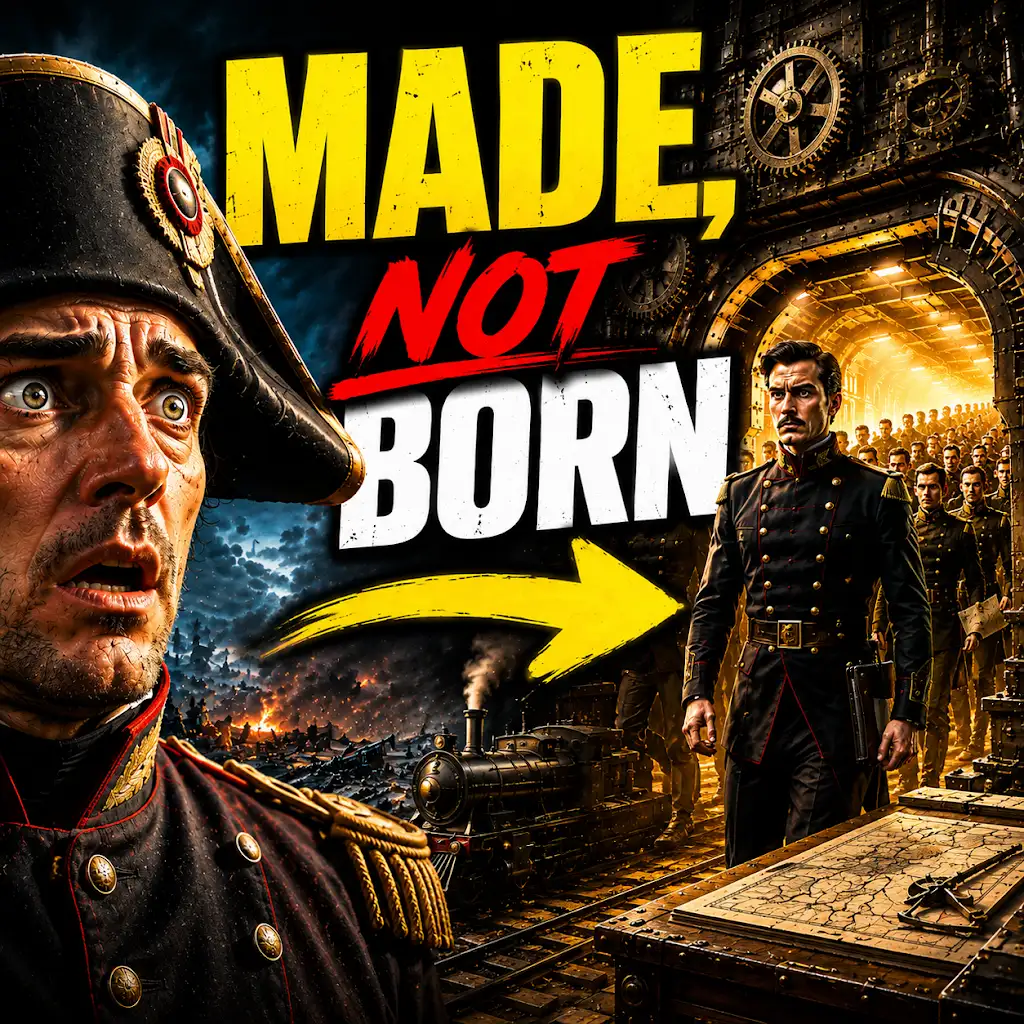
The Military Machine That Didn’t Need a Napoleon
FAQs
1. What factors contributed to Prussia becoming a military power?
Prussia became a military power due to a combination of factors, including its strong leadership under Frederick William I and Frederick the Great, its disciplined and well-trained army, and its strategic alliances with other European powers.
2. How did Prussia’s military tactics and innovations contribute to its rise as a military power?
Prussia’s military tactics and innovations, such as the development of the Prussian drill and the establishment of a professional officer corps, helped it to build a highly effective and disciplined army that was able to compete with larger and more established military powers.
3. What role did the Seven Years’ War play in Prussia’s rise as a military power?
The Seven Years’ War, in which Prussia successfully defended itself against a coalition of European powers, solidified its reputation as a formidable military power and established its position as a major player in European politics.
4. How did Prussia’s military power impact its influence in Europe?
Prussia’s military power allowed it to expand its territory and influence in Europe, particularly through the acquisition of Silesia and the establishment of the Kingdom of Prussia. It also played a significant role in shaping the balance of power in Europe during the 18th and 19th centuries.
5. What legacy did Prussia’s military power leave on European history?
Prussia’s military power and its legacy as a formidable military force laid the foundation for the eventual unification of Germany and the establishment of the German Empire in the 19th century. Its military traditions and innovations also influenced the development of modern military tactics and strategies.