
The Military Success of Prussia: Strategy and Discipline
Prussia’s meteoric rise from a relatively minor German state to a dominant European power is a tale intrinsically woven with military prowess. For centuries, the Prussian army stood as a paragon of efficiency, a testament to a strategic vision that prioritized meticulous planning, rigorous training, and an unwavering commitment to discipline. This formidable force was not merely a product of good fortune; it was a deliberately cultivated instrument of statecraft, whose successes fundamentally reshaped the political landscape of the 19th century and laid the groundwork for German unification. Understanding the military achievements of Prussia requires a deep dive into the strategic doctrines that guided its leaders and the ingrained discipline that characterized its soldiers.
Prussian military success was not an overnight phenomenon but rather a continuous process of adaptation and refinement. From its early beginnings as the Margraviate of Brandenburg, territorial expansion and defense were paramount. This necessity fostered a military culture that would be honed over generations, absorbing lessons from both victory and defeat. The concept of a standing army, a relatively novel idea in earlier centuries, was embraced and expanded upon, creating a professional military force that was always ready for deployment. This standing army became the bedrock upon which Prussia’s subsequent military triumphs were built.
The Foundations of a Professional Army
The origins of Prussia’s professional military can be traced back to the reign of the Great Elector, Frederick William I of Brandenburg. He recognized the critical importance of a well-trained and loyal fighting force, independent of the capricious loyalties of feudal levies. His efforts laid the groundwork for a centralized military administration, the establishment of regular recruitment methods, and the beginnings of standardized training. Subsequent rulers continued this work, building upon the foundation of a dedicated military apparatus.
The Influence of Frederick the Great
Frederick II, famously known as Frederick the Great, stands as a colossal figure in Prussian military history. His reign witnessed Prussia’s transformation into a major European power, largely due to his innovative strategic thinking and his personal involvement in military affairs. He inherited a well-organized army but elevated it to unprecedented levels of effectiveness. His campaigns, particularly the Seven Years’ War, demonstrated a mastery of maneuver, a willingness to take calculated risks, and an exceptional ability to inspire his troops. His military writings and maxims continued to influence Prussian military doctrine for decades to come.
The Reforms of Scharnhorst and Gneisenau
The crushing defeat at the hands of Napoleon at the Battle of Jena-Auerstedt in 1806 proved to be a harsh but vital lesson for Prussia. This ignominious loss spurred a period of profound military reform spearheaded by figures like Gerhard von Scharnhorst and August Neithardt von Gneisenau. They recognized that Prussia’s traditional military structures and strategies were no longer sufficient in the face of Napoleon’s revolutionary military innovations. Their reforms aimed to modernize the army, introduce a more flexible command structure, and foster a sense of national commitment to defense.
Prussia’s military success can be attributed to several key factors, including its innovative strategies, disciplined training, and effective use of technology. For a deeper understanding of these elements and their impact on Prussian military prowess, you can explore the article titled “The Secrets of Prussian Military Success” available at this link. This article delves into the historical context and the strategic decisions that enabled Prussia to emerge as a dominant military power in Europe.
Strategic Innovations and Operational Doctrine
Prussian military strategy was characterized by a proactive and often aggressive approach, emphasizing decisive battles and strategic envelopments. Their doctrines were not static; they evolved in response to changing warfare and the innovations of their adversaries. The emphasis was always on achieving a clear military objective through calculated means, often exploiting the strengths of their well-trained infantry and artillery.
The Doctrine of Annihilation
A core tenet of Prussian strategy, particularly under Frederick the Great, was the pursuit of the “Kesselschlacht,” or battle of annihilation. The aim was not merely to defeat the enemy but to destroy their army as a cohesive fighting force. This involved maneuvering to gain a decisive advantage, forcing the enemy into a position where retreat was impossible, and then systematically destroying them through a concentrated offensive. This doctrine, while risky, offered the potential for swift and decisive victories that could cripple an opponent.
The Importance of Maneuver and Envelopment
Prussian generals understood the critical role of maneuver warfare. They were adept at outflanking enemy positions, disrupting their lines of communication, and forcing them to fight on ground of Prussia’s choosing. The oblique order of battle, famously employed by Frederick the Great, allowed a smaller force to concentrate its strength against a portion of the enemy’s line, achieving local superiority and then rolling up the enemy’s formation. This emphasis on skillful movement and positioning was a hallmark of Prussian tactical brilliance.
The Role of the General Staff
The development of a highly professional and influential General Staff was a crucial strategic innovation that set Prussia apart. This body of highly educated officers was responsible for meticulous planning, detailed intelligence gathering, and the development of war plans. Unlike in many other European armies where generals often acted more on instinct, the Prussian General Staff provided a framework of rigorous analysis and strategic foresight. This institution ensured continuity of thought and execution, allowing for effective coordination across vast distances and complex operations.
The Concentration of Force
Prussian strategy consistently emphasized the concentration of force at the decisive point. Instead of spreading their armies thinly across a wide front, they aimed to mass their troops where they could achieve the greatest impact. This meant making difficult decisions about where and when to commit their forces, ensuring that their best troops and most effective weaponry were brought to bear against the enemy’s weakest points. This principle of mass was a recurring theme in their successful campaigns.
The Unyielding Power of Prussian Discipline
Beyond grand strategy, the bedrock of Prussia’s military might lay in its unwavering discipline. This was not merely the blind obedience of conscripts but a deeply ingrained sense of duty, order, and esprit de corps that permeated every level of the army. The Prussian soldier was trained to be a disciplined cog in a larger, well-oiled machine, capable of executing complex maneuvers under extreme pressure.
The Cultivation of Obedience and Order
Discipline in the Prussian army was cultivated from the moment of enlistment. Rigorous drills, repetitive exercises, and a strict hierarchy ensured that soldiers understood their roles and responded to commands without hesitation. This emphasis on order extended to every aspect of military life, from the neatness of uniforms to the precise execution of marching formations. This instilled a sense of unity and predictability that was crucial on the battlefield.
The Importance of Esprit de Corps and Patriotism
While discipline provided the structure, it was the cultivation of esprit de corps and patriotism that truly motivated the Prussian soldier. The army was seen as an embodiment of the Prussian state, and service in it was a matter of honor and duty to the nation. Shared hardships, collective victories, and a strong sense of brotherhood forged between soldiers created a powerful bond that went beyond mere obedience. This fostered a willingness to endure hardship and to fight with exceptional bravery.
The Role of the Non-Commissioned Officer
The non-commissioned officer (NCO) played a vital role in enforcing discipline and bridging the gap between officers and enlisted men. These experienced soldiers were responsible for the day-to-day training and supervision of their units. They were often the direct embodiment of Prussian military values, setting the example for their subordinates and ensuring that orders were carried out effectively, even in the chaos of battle. Their authority and expertise were essential for maintaining order and effectiveness.
Training and Professionalization
Prussian military training was exceptionally thorough and demanding. Soldiers underwent extensive drills in musketry, bayonet charges, and formations. Officers received specialized education in tactics, strategy, and leadership. The introduction of professional training schools and academies ensured a steady supply of well-qualified leaders. This commitment to continuous learning and professional development meant that the Prussian army was always at the forefront of military innovation.
Technological Adoption and Adaptation
Prussia was not inherently resistant to technological advancements. While discipline and strategy were paramount, they understood the importance of integrating new technologies to maintain their edge. Their approach was often pragmatic, focusing on practical applications and ensuring that new weaponry could be effectively employed within their established doctrines.
Artillery Prowess
Prussian artillery, particularly under Frederick the Great, was renowned for its effectiveness. They invested in quality cannons, developed advanced aiming techniques, and integrated artillery fire into their overall battlefield plan. Their artillery could provide crucial fire support, disrupt enemy formations, and break enemy morale, often playing a decisive role in their victories.
Infantry Firepower
While Prussian infantry remained famed for their bayonet charges, they also recognized the importance of improving their firepower. They were early adopters of improved musket designs and emphasized volley fire tactics, which could deliver a devastating coordinated fusillade. The training in rapid reloading and accurate firing was a critical component of their infantry tactics.
The Introduction of Rifled Weapons
In the later stages of Prussia’s military ascendancy, the adoption of rifled weapons, such as the Dreyse needle gun, marked a significant technological leap. This breech-loading rifle allowed for a much higher rate of fire and greater accuracy than previous muzzle-loading muskets. The Prussian army effectively integrated these weapons, gaining a crucial advantage in conflicts like the Austro-Prussian War of 1866.
Logistical Innovations
While not always as glamorous as battlefield tactics, Prussia also made significant strides in military logistics. They understood the importance of efficient supply lines, the organization of field hospitals, and the movement of troops and materiel. Effective logistics were crucial for sustaining long campaigns and ensuring that their armies were well-equipped and ready for action.
Prussia’s remarkable military success can be attributed to a combination of strategic innovation, disciplined training, and effective leadership. The Prussian military reforms of the early 19th century, particularly under the influence of figures like Gerhard von Scharnhorst and August von Gneisenau, played a crucial role in transforming the army into a highly efficient fighting force. For a deeper understanding of the factors that contributed to Prussia’s military prowess, you can explore this insightful article on military strategy which delves into the historical context and key developments that shaped Prussia’s approach to warfare.
The Legacy of Prussian Military Success
| Factors | Explanation |
|---|---|
| Disciplined Army | Prussia had a highly disciplined and well-trained army, which allowed for effective and coordinated military actions. |
| Leadership | Prussia had strong and capable military leaders who were able to strategize and lead their troops effectively. |
| Organization | The Prussian military was well-organized, with clear chains of command and efficient logistical support. |
| Training and Education | Prussian soldiers underwent rigorous training and education, which prepared them for the challenges of warfare. |
| Technology and Tactics | Prussia utilized advanced military technology and developed innovative tactics to gain an advantage on the battlefield. |
| Strategic Alliances | Prussia formed strategic alliances with other powerful nations, which provided additional military support and resources. |
The military successes of Prussia fundamentally altered the balance of power in Europe and left an indelible mark on military history. The unification of Germany in 1871, a direct consequence of Prussian military victories, created a new major power on the continent. The Prussian military model, with its emphasis on strategic planning, professional leadership, and rigorous discipline, became a subject of study and emulation for armies around the world.
The Unification of Germany
The wars of unification, particularly the Second Schleswig War (1864), the Austro-Prussian War (1866), and the Franco-Prussian War (1870-1871), were testaments to Prussia’s military superiority. These conflicts demonstrated the effectiveness of Prussian strategy, the reliability of their army, and the leadership of figures like Helmuth von Moltke the Elder. The victory over France in 1871 led to the proclamation of the German Empire, with Prussia at its core.
Influence on Global Military Thought
The Prussian military system became a benchmark for military professionalism. Its emphasis on a highly educated general staff, meticulous planning, and a well-trained, disciplined army influenced the development of military institutions in many other nations, including the United States. The study of Prussian campaigns and doctrines became a cornerstone of military education worldwide.
The Darker Side of Discipline
It is important to acknowledge that the relentless pursuit of discipline and military efficiency in Prussia also had its limitations and contributed to certain negative aspects of German society and military culture. The authoritarian tendencies inherent in the system, the unquestioning obedience demanded, and the glorification of militarism would later have profound and tragic consequences in the 20th century.
A Model for Modern Warfare
Despite its eventual problematic legacy, the Prussian military machine offered profound insights into the organization and execution of warfare. Their strategic foresight, their tactical innovations, and their unwavering commitment to discipline provided a powerful blueprint for military effectiveness that continues to be analyzed and understood in the context of modern conflict. The Prussian military legacy is a complex tapestry of brilliant strategy, iron discipline, and a force that irrevocably shaped the course of history.
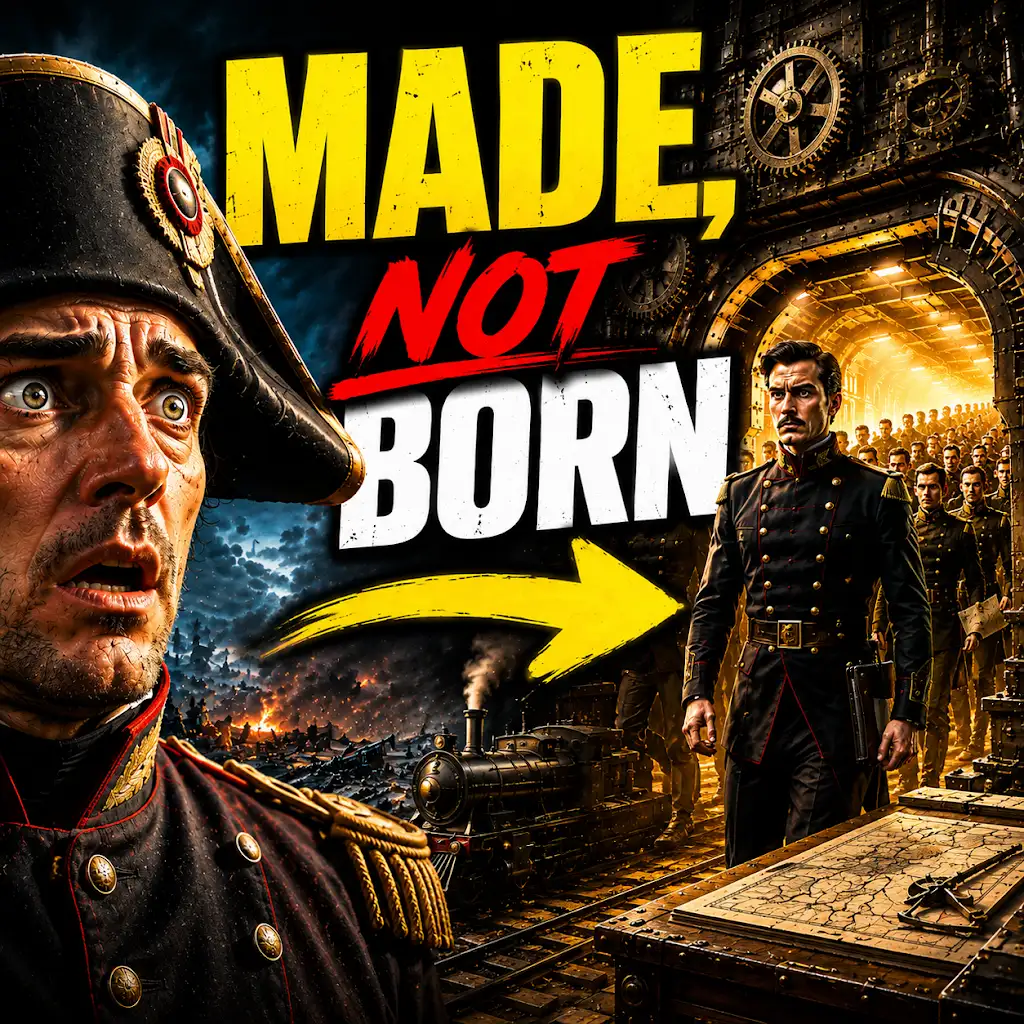
The Military Machine That Didn’t Need a Napoleon
FAQs
1. What factors contributed to Prussia’s military success?
Prussia’s military success can be attributed to several factors, including its well-trained and disciplined army, effective leadership, and strategic geographical location.
2. How did Prussia’s army differ from other European armies at the time?
Prussia’s army was known for its strict discipline, innovative tactics, and emphasis on training and professionalism. This set it apart from other European armies, which often relied on outdated tactics and had less disciplined soldiers.
3. What role did Prussia’s leadership play in its military success?
Prussia’s leadership, particularly under King Frederick the Great, played a crucial role in its military success. Frederick was a skilled military strategist and reformer, who modernized the army and implemented new tactics and training methods.
4. How did Prussia’s geographical location contribute to its military success?
Prussia’s central location in Europe allowed it to strategically position its army and quickly respond to threats from neighboring countries. This geographical advantage gave Prussia a strong defensive position and allowed it to expand its influence in the region.
5. What impact did Prussia’s military success have on European history?
Prussia’s military success had a significant impact on European history, as it played a key role in shaping the balance of power in the region. Prussia’s victories in various wars and conflicts solidified its position as a major European power and laid the groundwork for the unification of Germany.