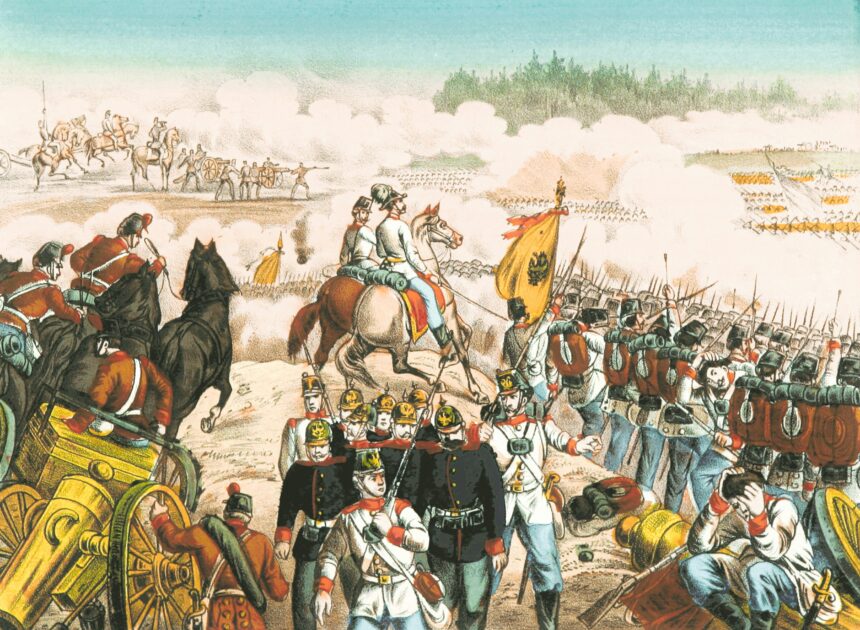
Prussian command and control, particularly as it evolved in the 19th century and was codified by thinkers like Carl von Clausewitz, offers a compelling case study for understanding the principles of effective military leadership and operational execution. While the geopolitical landscape and technological advancements of modern warfare have drastically altered the battlefield, the core tenets of Prussian doctrine—clarity of mission, decisive leadership, decentralized execution, and a robust intelligence apparatus—remain remarkably relevant. Examining this historical model can illuminate enduring challenges and provide valuable insights for contemporary strategists and commanders seeking to optimize their forces’ performance in an increasingly complex and dynamic global environment.
A cornerstone of Prussian military success was its unwavering emphasis on articulating and understanding the overarching strategic objective. This was not merely a matter of setting broad goals, but of ensuring that every subordinate commander and unit grasped the why behind their actions, not just the what. The Prussian general staff, a revolutionary development in military organization, played a pivotal role in this process, meticulously planning campaigns and translating high-level political objectives into concrete military tasks.
Clausewitzian “Fog of War” and the Need for Clear Intent
Carl von Clausewitz, the preeminent theorist of Prussian military thought, famously described warfare as a “fog of war,” a realm of uncertainty, friction, and chance. Within this inherently chaotic environment, clear mission intent becomes an indispensable compass. The Prussian approach sought to cut through this fog by defining the primary goal of an operation with absolute precision. This meant identifying the decisive point of the enemy’s strength or weakness and formulating a plan designed to achieve dominance at that specific nexus. The objective was not simply to engage the enemy, but to achieve a specific strategic or operational outcome that would contribute to the overall political aims. This clarity of intent allowed commanders, even when separated from higher echelons by the fog of war, to adapt their actions and make informed decisions that remained aligned with the overarching mission.
The Role of the General Staff in Translating Political Aims into Military Objectives
The Prussian general staff, established in the early 19th century, was instrumental in bridging the gap between political leadership and military execution. Composed of highly educated and experienced officers, the staff was tasked with analyzing the geopolitical situation, formulating strategic plans, and developing detailed operational orders. Their work ensured that military objectives were not conceived in a vacuum, but were directly subservient to the political will of the state. This integration of political and military planning fostered a cohesive approach to warfare, where every military action was understood to serve a broader national purpose. The general staff’s meticulous planning provided the framework, but it also imbued subordinate commanders with the understanding necessary to act independently within that framework.
The Importance of a Singular, Understandable Goal
In practice, this meant that a Prussian commander would receive orders that were not only precise in their tactical requirements but also clearly communicated the ultimate desired outcome. For example, an order to capture a specific bridge might be accompanied by an explanation of its strategic importance in facilitating the advance on a key city. This transparency fostered initiative and allowed junior officers to understand the broader context of their actions, enabling them to react effectively to unforeseen circumstances. The emphasis was on achieving a decisive effect, a specific disruption or gain that would irrevocably alter the balance of power on the battlefield, rather than engaging in attritional combat for its own sake.
In exploring the intricacies of Prussian command and control, one can gain valuable insights from the article available at this link. The article delves into the historical context and strategic frameworks that defined Prussian military operations, highlighting the effectiveness of their command structures and communication methods. Understanding these elements can provide a deeper appreciation of how Prussian innovations influenced modern military tactics and organizational principles.
Decentralized Execution and the Cultivation of Initiative
While the Prussian general staff provided meticulous planning, Prussian doctrine also recognized the limitations of rigid, centralized control on the modern battlefield. A key innovation was the empowerment of subordinate commanders to exercise initiative within the framework of the overall mission. This fostered agility and resilience, allowing Prussian forces to adapt to the rapidly changing circumstances inherent in warfare.
Auftragstaktik: The Prussian Doctrine of Mission Command
Central to this concept was Auftragstaktik, often translated as “mission command.” This doctrine empowered subordinate commanders to achieve a given objective in the manner they deemed best, based on their understanding of the situation on the ground. The superior commander would define the what and the why, but the subordinate commander was entrusted with determining the how. This fostered a culture of responsibility and encouraged creative problem-solving at lower levels, recognizing that those closest to the action often possessed the most accurate and timely information. Auftragstaktik was not a license for insubordination, but rather a sophisticated system of trust and empowerment designed to maximize operational effectiveness.
Fostering Initiative Through Training and Education
The cultivation of initiative was not left to chance. Prussian military education and training emphasized developing officers’ critical thinking, tactical acumen, and adaptability. Cadets and junior officers were exposed to complex hypothetical scenarios, encouraged to analyze situations, and taught to make decisive judgments under pressure. This rigorous training instilled confidence and competence, enabling them to step up and lead effectively when faced with unexpected challenges. The emphasis was on developing leaders who could not only follow orders but also improvise and innovate.
The Advantages of Decentralized Decision-Making in a Dynamic Battlefield
The Prussian battlefield was characterized by speed and maneuver, making centralized command and control increasingly impractical. By empowering subordinates, Prussian forces could react with greater speed and flexibility than their more rigidly controlled adversaries. This allowed them to exploit enemy weaknesses as they emerged, maintain momentum, and avoid being paralyzed by the delays inherent in seeking constant approval from higher headquarters. The ability of units to act independently yet cohesively was a significant force multiplier.
Balancing Initiative with Subordination and Control
It is crucial to understand that Auftragstaktik did not imply a lack of discipline or an abdication of responsibility. Subordinate commanders were still expected to operate within the overall strategic framework and to maintain communication with their superiors. The success of this doctrine relied on a deep understanding of the superior commander’s intent and a shared commitment to the mission’s success. The Prussian system fostered a hierarchical structure where trust and competence flowed both ways, with superiors trusting subordinates to execute and subordinates understanding their obligations.
The Role of Intelligence and Reconnaissance in Prussian Operations

Effective command and control, regardless of the era, is fundamentally reliant on accurate and timely intelligence. The Prussians understood this implicitly, developing sophisticated systems for gathering, processing, and disseminating information about the enemy and the operational environment. This intelligence-driven approach allowed for informed decision-making and the proactive shaping of the battlefield.
The “Scout’s Eye”: Emphasizing Reconnaissance and Information Gathering
Prussian doctrine placed a high premium on reconnaissance. Cavalry units, in particular, were extensively used for scouting, mapping enemy movements, and identifying potential routes of advance or engagement. This emphasis on gathering granular battlefield intelligence was crucial for understanding the “fog of war” and for identifying opportunities and threats. The concept of the “scout’s eye” was embedded in the training and ethos of Prussian reconnaissance units.
The General Staff’s Role in Intelligence Analysis and Synthesis
The Prussian general staff was not merely a planning body; it was also a sophisticated intelligence hub. Officers meticulously analyzed reports from reconnaissance units, diplomatic sources, and other intelligence channels. This analysis allowed them to build a comprehensive picture of the enemy’s strengths, weaknesses, intentions, and disposition. The synthesis of this information provided the basis for strategic planning and operational adjustments.
Dissemination and the Challenge of Timeliness
A critical aspect of intelligence is its timely dissemination. The Prussians recognized that even the most accurate intelligence was useless if it arrived too late to influence decision-making. While communication technologies of the 19th century were rudimentary compared to today, the Prussian system emphasized efficient channels for getting actionable intelligence to the commanders who needed it. This often involved pre-planned reconnaissance missions and established communication protocols.
Intelligence as a Means to Shape the Battlefield, Not Just React to It
By understanding the enemy’s likely actions and the terrain, Prussian commanders could proactively shape the battlefield to their advantage. This could involve selecting engagement areas, preparing defensive positions, or initiating actions designed to disrupt enemy cohesion before contact was even made. Intelligence was not simply a tool for reacting to enemy moves, but a proactive instrument for achieving battlefield dominance.
Leadership Qualities and the Character of Command
Beyond structures and doctrines, the success of Prussian command and control was deeply rooted in the qualities and character of its leadership. Prussian officers were expected to embody a specific set of virtues, including courage, discipline, decisiveness, and a profound sense of duty.
The Prussian Officer Corps: Education, Discipline, and Professionalism
The Prussian officer corps was a highly professionalized body, rigorously selected and educated. Their training emphasized not only tactical proficiency but also moral and ethical development. This fostered a sense of esprit de corps and a shared commitment to the ideals of service and sacrifice. The professionalization of the officer corps ensured a consistent standard of leadership across the army.
Decisiveness and the Will to Act
In the crucible of combat, indecisiveness can be as fatal as any enemy action. Prussian leaders were trained and expected to be decisive, to make bold choices even in the face of uncertainty. This decisiveness, when coupled with a clear understanding of the mission, allowed Prussian forces to seize opportunities and overwhelm their adversaries. The ability to commit to a course of action and see it through was paramount.
The Importance of Morale and Esprit de Corps
Prussian doctrine recognized the crucial role of morale in military effectiveness. Leaders were expected to inspire their troops, to foster a sense of unity and shared purpose. This was achieved through leading by example, ensuring the welfare of soldiers, and cultivating a strong sense of esprit de corps. A motivated and cohesive fighting force, even if outnumbered, could achieve remarkable results.
Leading by Example: Courage in the Face of Adversity
Prussian officers were expected to lead from the front, to share the risks and hardships of their soldiers. This not only inspired confidence but also provided invaluable firsthand experience of the battlefield. The visible courage of leaders in the face of danger was a powerful motivator and a testament to their commitment.
The effectiveness of Prussian command and control strategies has been a subject of extensive analysis, particularly in how they influenced modern military operations. A related article that delves into the intricacies of these strategies can be found on In The War Room, which explores the evolution of military leadership and decision-making processes. For those interested in understanding the historical context and its implications, this insightful piece can be accessed through this link.
Enduring Relevance for Modern Warfare: Adaptations and Applications
| Metrics | Data |
|---|---|
| Command Structure | Centralized with clear hierarchy |
| Communication | Relied on messengers and signal flags |
| Control | Emphasized discipline and obedience |
| Flexibility | Allowed for initiative at lower levels |
While the Prussians fought with muskets and sabers, the fundamental principles underpinning their command and control systems offer a valuable framework for understanding and improving modern military operations. The nature of warfare has changed, but the challenges of leadership, decision-making, and coordination in complex environments persist.
The Modern “Fog of War” and the Need for Mission Command
Modern warfare, with its sophisticated electronic warfare, cyber operations, and the proliferation of non-state actors, arguably presents an even thicker “fog of war.” The Prussian concept of Auftragstaktik is therefore highly relevant today. Empowering subordinate commanders with clear intent, trusting their judgment, and allowing for decentralized execution can enhance the agility and responsiveness of modern forces, especially in complex and rapidly evolving environments.
Technology as an Enabler, Not a Replacement, for Leadership
While technology has revolutionized battlefield communication and intelligence gathering, it has not rendered effective human leadership obsolete. In fact, the sheer volume of data generated by modern surveillance and reconnaissance systems requires skilled leaders to filter, interpret, and act upon it. The Prussian emphasis on intelligent analysis and decisive action remains critical in an era of information overload.
The Challenges of Information Overload and the Need for Critical Thinking
Modern commanders face the challenge of processing unprecedented amounts of data. The Prussian emphasis on rigorous analysis and critical thinking is therefore more important than ever. Leaders must be able to discern reliable intelligence from misinformation and to make sound judgments amidst a constant flow of information.
The Adaptability of Prussian Principles to Asymmetric Warfare
In conflicts characterized by asymmetric warfare, where the adversary operates outside traditional military structures, the Prussian emphasis on initiative and adaptability is particularly valuable. The ability of smaller, decentralized units to identify and exploit opportunities, to operate with a clear understanding of the mission’s broader goals, and to adapt to unconventional tactics is crucial for success.
Continuous Learning and the Evolution of Command and Control
The Prussian military was not static; it evolved and learned from its experiences. This commitment to continuous improvement and adaptation is a vital lesson for modern militaries. As the nature of warfare continues to change, so too must our approaches to command and control, drawing inspiration from historical models while embracing new technologies and strategies. The legacy of Prussian command and control lies not in its direct replication, but in the enduring wisdom of its foundational principles, adapted and applied to the challenges of the 21st century.

The Military Machine That Didn’t Need a Napoleon
FAQs
What is Prussian command and control?
Prussian command and control refers to the military tactics and strategies employed by the Prussian army during the 18th and 19th centuries. It emphasized disciplined and flexible leadership, rapid decision-making, and decentralized authority.
What were the key principles of Prussian command and control?
The key principles of Prussian command and control included the use of mission-type orders, where subordinate officers were given a clear objective but were allowed flexibility in how to achieve it. It also emphasized the importance of initiative, leadership at all levels, and the ability to adapt to changing circumstances on the battlefield.
How did Prussian command and control influence modern military tactics?
Prussian command and control had a significant influence on modern military tactics, particularly in the development of the concept of mission command. This approach to leadership and decision-making has been adopted by many modern military organizations, emphasizing decentralized authority and the empowerment of subordinate leaders.
Who were some notable Prussian military leaders known for their command and control abilities?
Notable Prussian military leaders known for their command and control abilities include Frederick the Great, Helmuth von Moltke the Elder, and Carl von Clausewitz. These leaders were instrumental in shaping the Prussian military’s approach to command and control and had a lasting impact on military strategy and tactics.
What impact did Prussian command and control have on military history?
Prussian command and control had a significant impact on military history, particularly in the success of the Prussian army in various conflicts, including the Napoleonic Wars. Its influence can also be seen in the development of modern military doctrine and the continued emphasis on decentralized leadership and initiative on the battlefield.