The Evolution of the Prussian Army General Staff
The Prussian Army General Staff stands as a monumental achievement in military organization, a testament to methodical planning, intellectual rigor, and an unwavering pursuit of strategic superiority. Its evolution from a nascent advisory body to the most sophisticated military planning entity of its time is a narrative of adaptation, innovation, and the profound influence of key figures. This development was not a sudden leap but a gradual, iterative process, shaped by the crucible of conflict and the farsighted vision of Prussian leadership. The General Staff’s journey is a compelling case study in how strategic thinking and organizational structure can become a decisive force on the battlefield and in the broader geopolitical arena.
The early days of Prussian military organization saw no distinct General Staff in the modern sense. Commanders relied on personal assistants and a loosely structured network of officers for operational advice and logistical support. However, the strains of the Thirty Years’ War and subsequent conflicts highlighted the critical need for more centralized and professionalized staff functions. The fragmented nature of command, the reliance on personal whim, and the absence of standardized procedures often led to inefficiency and tactical blunders.
Early Forms of Staff Support
Prior to the formal establishment of a General Staff, military planning and execution were largely dependent on the personal staff of the monarch or the commanding general. This meant that the quality of staff work was directly tied to the individual competence and foresight of these officers. There was no established doctrine, no standardized training, and no institutional memory beyond the immediate needs of a particular campaign. This ad hoc approach proved increasingly inadequate as warfare became more complex and the scale of operations expanded.
The Influence of Frederick the Great
Frederick the Great, a brilliant military theorist and practitioner, recognized the limitations of his existing command structure. While he himself possessed an exceptional strategic mind, he understood that even the greatest commander could benefit from a dedicated corps of highly competent officers to handle the intricate details of planning, logistics, and intelligence. He began to formalize certain staff functions, assigning officers to specific roles related to reconnaissance, mapmaking, and supply management. His campaigns, particularly the Silesian Wars, provided valuable lessons about the importance of thorough preparation and coordinated execution, which implicitly laid some groundwork for future institutional development. However, even under Frederick, these were largely extensions of his personal command, not an independent, enduring institution.
The Need for a Professionalized Cadre
The recurring challenges faced by the Prussian army in the 18th century, including logistical failures and communication breakdowns, underscored a persistent deficiency: the lack of a trained and dedicated body of officers capable of undertaking complex strategic and operational planning. The existing system was too reliant on the personal abilities of a few individuals, making it vulnerable to personnel changes and the vagaries of wartime leadership. The need for a professionalized cadre, capable of enduring beyond individual reigns or command assignments, became increasingly apparent. This realization would eventually spur the creation of an institution that would fundamentally alter the nature of military command.
The history of the Prussian Army General Staff is a fascinating subject that delves into the strategic innovations and military organization that shaped modern warfare. For those interested in exploring this topic further, a related article can be found at this link, which provides insights into the evolution of military strategy and the pivotal role played by the General Staff in the Prussian military system.
The Birth of the Great General Staff
The true genesis of the Prussian General Staff, as a distinct and influential institution, can be traced to the aftermath of the Seven Years’ War and, more significantly, the devastating defeats suffered at the hands of Napoleon in 1806. These ignominious losses served as a profound wake-up call, exposing the deep-seated weaknesses in the Prussian military system. The ensuing period of reform, often referred to as the Stein-Hardenberg reforms, was a comprehensive effort to modernize Prussia, and the creation of a professional General Staff was a cornerstone of this military overhaul.
The Impact of the Napoleonic Wars
The French Revolution and the subsequent Napoleonic Wars revolutionized warfare. Napoleon’s campaigns demonstrated the power of a highly motivated, well-led, and strategically adept army. His ability to rapidly mobilize, maneuver, and concentrate forces, often through superior staff work and logistical organization, overwhelmed many of his adversaries, including Prussia. The crushing defeat at Jena-Auerstedt in 1806 was a particularly humiliating moment, revealing the Prussian army’s outdated tactics, poor leadership, and inadequate planning capabilities. This defeat served as a catalyst for radical reform.
The Creation of the General Command and the “Topographical Bureau”
In response to the humiliation of 1806, Prussian reformers recognized the need for a more robust and systematic approach to military planning. The immediate aftermath saw the establishment of the “General Command” which, while not yet the fully formed General Staff, represented a significant step towards centralized oversight. Crucially, the “Topographical Bureau” was established, marking a formal recognition of the importance of detailed geographical information and mapmaking for military operations. This bureau became a precursor to the intelligence and reconnaissance functions that would later be central to the General Staff.
The Influence of Scharnhorst and Gneisenau
The intellectual architects behind the creation of the General Staff were undeniably Gerhard von Scharnhorst and August Neithardt von Gneisenau. These visionary reformers, deeply disturbed by Prussia’s military decline, advocated for a radical overhaul of the army. They understood that true military strength lay not only in courage and discipline but in intellectual preparation and strategic foresight. Scharnhorst, in particular, is credited with articulating the need for a body of officers dedicated to the study of war, independent of battlefield command. Gneisenau, with his keen strategic mind, championed the idea of a highly mobile and adaptable army, which required sophisticated planning and coordination. Their tireless efforts laid the institutional and intellectual foundations for what would become the Great General Staff.
The Formal Establishment of the General Staff Corps
The formal establishment of the General Staff Corps in 1814, following Prussia’s victory in the Napoleonic Wars, marked a pivotal moment. This was not merely an administrative change but a fundamental restructuring of military decision-making. The General Staff was envisioned as an independent body, tasked with planning campaigns, organizing armies, and advising commanders. Its members were to be selected for their intellectual prowess, analytical skills, and dedication to the study of military affairs. This institutionalization of strategic thinking would prove to be a decisive advantage for Prussia in the decades to come.
The Organization and Functions of the Great General Staff
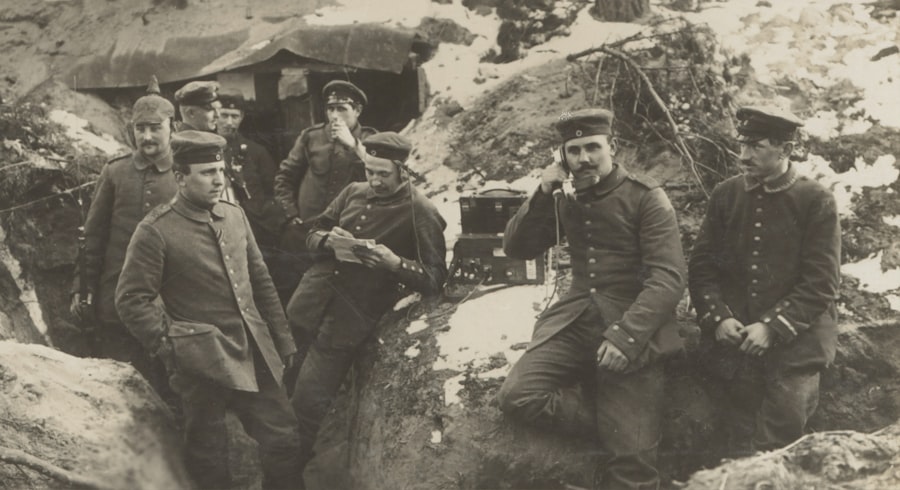
The Great General Staff, once established, evolved into a highly structured and sophisticated organization. Its primary role was to ensure that Prussian armies were meticulously prepared for war, not just in terms of troop strength and equipment, but in terms of strategic concept, operational execution, and logistical support. Its influence extended far beyond the battlefield, shaping Prussian military doctrine and contributing to the nation’s overall geopolitical strategy.
The Chief of the General Staff
The Chief of the General Staff was the linchpin of the entire organization. This position was not merely administrative; it was arguably the most influential military role in Prussia, often rivaling, and sometimes surpassing, the authority of the Minister of War or even the King himself in military matters. The Chief was responsible for setting the strategic direction, overseeing planning, and ensuring the professional development of the General Staff officers. The caliber of individuals appointed to this role, such as Helmuth von Moltke the Elder, was instrumental in the General Staff’s success.
The Divisions of the General Staff
The General Staff was typically organized into several divisions, each with specific responsibilities. The most prominent of these were:
The Operations Division (Erster Generalstabsoffizier – I.A.O.)
This division was responsible for the planning and direction of military operations. Its officers meticulously studied terrain, assessed enemy capabilities, and developed detailed operational plans, including troop movements, battle formations, and timelines. This was the heart of the General Staff’s war-fighting function, translating strategic objectives into concrete military actions.
The Adjutant General’s Office (Zweiter Generalstabsoffizier – II.A.O.)
This division handled matters related to troop organization, mobilization, and logistics. It ensured that the army had the necessary supplies, transportation, and infrastructure to support its operations. This often-overlooked but critical function ensured that plans could actually be executed on the ground, avoiding the logistical nightmares that plagued less well-prepared armies.
The Historical Section
A unique and highly influential aspect of the Prussian General Staff was its dedicated Historical Section. This body was tasked with meticulously documenting past campaigns, analyzing their successes and failures, and extracting lessons for future warfare. This commitment to learning from history provided the General Staff with an unparalleled depth of understanding and a rich repository of knowledge. It ensured that strategic thinking was grounded in empirical evidence and historical precedent.
Intelligence and Reconnaissance
The General Staff placed a paramount importance on intelligence gathering and reconnaissance. Officers were trained to observe, report, and analyze enemy strengths, weaknesses, movements, and intentions. This information was crucial for developing accurate threat assessments and formulating effective counter-strategies. The detailed mapping and survey work undertaken by the Topographical Bureau evolved into a sophisticated intelligence network, providing the General Staff with critical situational awareness.
The Impact and Legacy of Moltke the Elder

Helmuth von Moltke the Elder’s tenure as Chief of the General Staff (1857-1888) represented the zenith of the Prussian General Staff’s influence and effectiveness. His strategic genius, combined with his organizational acumen, transformed the General Staff into the undisputed architect of Prussian military victories and a model for armies worldwide. His leadership solidified the General Staff’s position as the supreme military planning authority.
The Wars of Unification: Denmark, Austria, and France
Moltke’s leadership was instrumental in Prussia’s decisive victories in the Danish War of 1864, the Austro-Prussian War of 1866, and the Franco-Prussian War of 1870-1871. These wars were not simply about military might; they were masterpieces of strategic planning and execution orchestrated by the General Staff.
The Danish War (1864)
While seemingly a smaller conflict, this war served as a crucial testing ground for Moltke’s evolving ideas. It allowed for the refinement of mobilization procedures and initial operational planning, setting the stage for more ambitious undertakings.
The Austro-Prussian War (1866)
This war, often dubbed the “Seven Weeks’ War,” was a stunning demonstration of the General Staff’s operational brilliance. Moltke’s strategy of concentrating superior forces rapidly through extensive railway networks, combined with the devastating effectiveness of the Prussian needle gun, resulted in a swift and decisive victory over Austria at Königgrätz. The General Staff’s meticulous planning ensured that Prussian forces were positioned to maximum advantage.
The Franco-Prussian War (1870-1871)
This conflict, culminating in the defeat of France and the proclamation of the German Empire, showcased the full might of the Moltkean General Staff. The comprehensive mobilization of the German armies, their efficient deployment, and their strategic envelopment of French forces were testament to the General Staff’s unparalleled planning capabilities. The Siege of Paris and the subsequent armistice were direct results of this meticulous military machine.
The Doctrine of “Auftragstaktik” (Mission Command)
While often attributed to Moltke himself, the development of “Auftragstaktik” was a direct outgrowth of the General Staff’s philosophy. This doctrine emphasized decentralization of execution, giving subordinate commanders broad latitude to achieve their assigned missions within the overall strategic framework. The General Staff provided the clear objectives and parameters, but it trusted its commanders to adapt to the realities of the battlefield. This fostered initiative and agility, making the Prussian army remarkably adaptable.
The Influence on Other Armies
The successes of the Prussian army under Moltke’s General Staff were closely observed by military leaders around the world. Many nations sent observers and study groups to Prussia, seeking to understand the secrets of its military dominance. The Prussian General Staff became a model for the development of similar organizations in other countries, profoundly influencing the organization and practice of military planning globally.
The history of the Prussian Army General Staff is a fascinating topic that highlights the evolution of military strategy and organization in Europe. For those interested in delving deeper into this subject, a related article can be found at In the War Room, which explores the impact of the General Staff on modern military operations. This resource provides valuable insights into how the Prussian model influenced various armies around the world and shaped contemporary warfare.
The Evolution and Enduring Legacy
| Year | Event |
|---|---|
| 1806 | Establishment of the Prussian General Staff |
| 1812 | Reforms by General Gerhard von Scharnhorst |
| 1871 | Role in the Franco-Prussian War |
| 1914-1918 | Contribution to World War I |
| 1945 | Dissolution after World War II |
The Prussian General Staff’s evolution was a continuous process of adaptation and refinement. It was not a static entity but a dynamic organization that learned from experience and embraced innovation. Its legacy extends far beyond the battlefield, shaping the very concept of military professionalism and strategic planning.
Adapting to New Technologies and Warfare
As warfare evolved with the advent of new technologies such as railways, telegraphs, and later, motor vehicles and aircraft, the General Staff consistently adapted its planning and organizational structures. The railway was particularly critical in the 19th century, enabling the rapid concentration of troops and supplies, a factor that Moltke the Elder masterfully exploited. The General Staff’s ability to integrate these new tools into its operational planning was key to maintaining its effectiveness.
The General Staff in the 20th Century
While the Prussian General Staff as a distinct entity ceased to exist with the end of World War I and the dissolution of the German Empire, its principles and organizational structure profoundly influenced the development of the German General Staff in the interwar period and beyond. The principles of meticulous planning, rigorous analysis, and the pursuit of strategic advantage continued to inform German military thinking, albeit with varying degrees of success and ethical considerations in later conflicts.
The Enduring Principles of Strategic Planning
The fundamental principles championed by the Prussian General Staff—thorough preparation, detailed analysis, understanding of the enemy, adaptability, and the professionalization of military planning—remain cornerstones of modern military strategy. The concept of a dedicated, intellectually rigorous planning body, insulated from the immediate pressures of command and focused on the long-term strategic landscape, is a direct inheritance from the Prussian model. The emphasis on learning from history and adapting to changing circumstances continues to be a vital aspect of successful military endeavors. The Prussian Army General Staff, therefore, stands not just as a historical artifact but as a foundational element in the ongoing evolution of military thought and practice.

The Military Machine That Didn’t Need a Napoleon
FAQs
What is the Prussian Army General Staff?
The Prussian Army General Staff was a military institution responsible for planning and executing military operations for the Prussian Army. It played a crucial role in the success of the Prussian military during the 19th and early 20th centuries.
When was the Prussian Army General Staff established?
The Prussian Army General Staff was established in 1808 by the military reformer Gerhard von Scharnhorst. It was created to improve the efficiency and effectiveness of the Prussian Army.
What were the responsibilities of the Prussian Army General Staff?
The Prussian Army General Staff was responsible for strategic planning, intelligence gathering, operational coordination, and the training and education of officers. It also played a key role in the development of military doctrine and tactics.
How did the Prussian Army General Staff influence military history?
The Prussian Army General Staff’s emphasis on meticulous planning, rapid mobilization, and flexible command structure became a model for other military organizations. Its methods and principles were influential in the development of modern military staff systems.
What was the legacy of the Prussian Army General Staff?
The Prussian Army General Staff’s legacy includes its impact on the development of the German General Staff, which played a significant role in the successes of the German military during the 19th and 20th centuries. Its influence also extended to other military organizations around the world.