The Origins of the Modern General Staff
The seemingly monolithic and indispensable institution of the General Staff, a ubiquitous feature of modern military organizations, did not spring fully formed from the brow of Mars. Its evolution is a testament to the complex and often messy process of adapting military thought and organization to the ever-changing demands of warfare. The modern General Staff, as we understand it today – a body of officers dedicated to planning, coordinating, and supervising military operations under the direction of a commander – has its roots deeply embedded in the crucible of European warfare, particularly during the turbulent 18th and 19th centuries. It emerged not as a sudden invention, but as a gradual response to the growing scale, complexity, and strategic challenges that characterized the wars of this period.
Before the formal establishment of General Staffs, the functions that would eventually become their purview were often fragmented, ad hoc, and dependent on the personal abilities of individual commanders and their aides. Warfare, though often brutal and large-scale, lacked the centralized, systematic planning that the modern era would necessitate. However, certain developments laid the groundwork for the eventual emergence of a dedicated staff.
The Role of the Adjutant and the Quartermaster
In earlier military structures, the adjutant played a crucial role in conveying orders and managing administrative tasks. They were the commander’s personal messenger and aide-de-camp, ensuring that directives reached the troops. The quartermaster, on the other hand, was responsible for logistics – the provision of food, supplies, and shelter – a vital but often overlooked aspect of military success. These roles, while essential, were typically focused on execution and immediate needs rather than strategic foresight. They lacked the broader operational and strategic planning capabilities that would define the modern General Staff. The limitations of these individual roles became increasingly apparent as armies grew larger and campaigns became more ambitious.
The Impact of Enlightenment Thought and Professionalization
The Enlightenment, with its emphasis on reason, order, and scientific methodology, had a profound impact on military thought. This intellectual climate fostered a desire for greater professionalism within armies. The idea of a standing army, composed of trained professionals rather than levies or mercenaries, gained traction. This professionalization extended to the officer corps, encouraging the development of specialized skills and knowledge beyond mere battlefield command. The concept of military science, the study of tactics, strategy, and logistics as disciplines in themselves, began to take shape. This intellectual shift provided the fertile ground upon which the modern General Staff would eventually grow.
Early Attempts at Centralized Planning
While not constituting a formal General Staff, some commanders in the 18th century began to experiment with more centralized approaches to planning and coordination. The Prussian armies, under leaders like Frederick the Great, demonstrated a remarkable ability for logistical organization and tactical maneuver. Frederick’s system, while not a formal staff structure, relied on a highly disciplined and well-drilled army, with clear lines of command and communication. His success in coordinating large forces on the battlefield and in campaign offered a glimpse of what could be achieved with more systematic planning. Similarly, French military thinkers and practitioners were also exploring ways to improve the efficiency and effectiveness of their armies.
The origins of the modern General Staff can be traced back to various military reforms and organizational changes that emerged in the 19th century, particularly in Prussia. For a deeper understanding of this evolution and its impact on contemporary military strategy, you can explore the article titled “The Evolution of Military Command Structures” available at In the War Room. This article delves into the historical context and key figures that shaped the development of the General Staff system, highlighting its significance in modern warfare.
The Napoleonic Wars: A Crucible for Innovation
The French Revolution and the subsequent Napoleonic Wars marked a pivotal turning point in the evolution of military organization and the concept of the General Staff. The sheer scale of the Grande Armée and the unprecedented scope of Napoleon’s campaigns demanded a level of coordination and planning that had previously been unimaginable.
Napoleon’s System: The Corps d’Armée and the Chef d’État-Major
Napoleon Bonaparte was a master of operational art, and his success was intimately tied to his innovative organizational methods. He understood the necessity of dividing his vast army into self-sufficient corps d’armée, each capable of independent action but also integrated into a larger strategic framework. Crucially, he developed a system of staff officers who assisted him in planning and coordinating these corps. The role of the Chef d’État-Major (Chief of Staff) emerged as a critical position, responsible for collecting intelligence, preparing orders, and ensuring the smooth flow of information. This was a significant step towards a dedicated planning and coordinating body.
The Development of the État-Major Général
While Napoleon himself was the ultimate strategic mind, he relied heavily on his staff to translate his vision into actionable plans. The État-Major Général (General Staff) began to take a more defined shape during this period. It was not a single, monolithic entity, but rather a network of officers tasked with specific functions. These functions included intelligence gathering, mapping, logistics, and the drafting of operational orders. The sheer volume of information and the speed at which decisions needed to be made during Napoleon’s campaigns necessitated a more formalized and professionalized approach to staff work.
The Importance of Logistics and Intelligence
The Napoleonic Wars underscored the critical importance of logistics and intelligence. Campaigns on a continental scale were impossible without meticulous planning for supply lines, troop movements, and the maintenance of the army’s fighting capacity. Napoleon’s reliance on rapid movement and decisive battles meant that accurate and timely intelligence about enemy dispositions and intentions was paramount. The staff played an increasingly vital role in gathering, analyzing, and disseminating this information. The success or failure of a campaign often hinged on the staff’s ability to provide the commander with the best possible picture of the battlefield.
The Prussian Model: The Birth of the Modern General Staff
Following the decisive defeat of Prussia by Napoleon in 1806, a period of profound military reform swept through the Prussian state. Recognizing the shortcomings of their existing military system, Prussian reformers looked to the Napoleonic model for inspiration, but also sought to build upon it, creating a more enduring and institutionalized General Staff.
The Reforms of Scharnhorst and Gneisenau
The intellectual architects of Prussian military reform were Gerhard von Scharnhorst and August Wilhelm von Gneisenau. They understood that Prussia’s survival depended on a more effective and professional military. Their reforms encompassed a broad range of areas, including the abolition of aristocratic privilege in the officer corps, the introduction of universal conscription, and, crucially, the creation of a dedicated General Staff. This General Staff was envisioned not as a mere appendage to the commander, but as a permanent, professional body responsible for strategic planning and the professional development of the officer corps.
The Großer Generalstab (Great General Staff)
The institution that emerged from these reforms was the Großer Generalstab, or Great General Staff. This was a landmark development in military history. Unlike previous ad hoc arrangements, the Great General Staff was a permanent, institutionalized body with clearly defined responsibilities. Its primary functions included:
- Strategic Planning: Developing long-term war plans and contingency strategies.
- Operational Planning: Detailing the execution of campaigns and battles.
- Intelligence Analysis: Gathering and assessing information about potential adversaries.
- Logistics and Mobilization: Ensuring the efficient deployment and sustainment of forces.
- Training and Education: Establishing schools and systems for the professional development of officers in staff duties.
The Great General Staff was designed to be a source of continuous military expertise, independent of individual commanders, and dedicated to the abstract principles of warfare.
The Importance of the Kriegsakademie (War Academy)
A key component of the Prussian reform was the establishment and strengthening of the Kriegsakademie. This institution was tasked with educating and training officers for staff duties, fostering a common understanding of military doctrine, strategy, and operational art. Graduates of the Kriegsakademie formed the pool from which the Great General Staff was largely drawn. This emphasis on formal education and professional development ensured that staff officers possessed the necessary intellectual tools and analytical skills to perform their complex roles effectively.
The General Staff as a “Thinking Organ”
The Prussian General Staff was often described as the “thinking organ” of the army. It was intended to provide objective advice and detailed plans, freeing the commander to focus on leadership and decision-making during operations. The General Staff operated independently of the fighting units, allowing for a more detached and analytical approach to military problems. This separation of planning from immediate command was a radical departure from earlier practices and proved to be a significant factor in Prussia’s subsequent military successes.
The 19th Century: Consolidation and Expansion

Following Prussia’s triumphs in the mid-19th century, the concept and structure of the General Staff spread throughout Europe and beyond. The effectiveness of the Prussian model was undeniable, and other nations sought to emulate it to enhance their own military capabilities.
The Austro-Prussian War (1866) and the Franco-Prussian War (1870-1871)
The victories of Prussia in these wars served as powerful demonstrations of the efficacy of its reformed military system, with the Great General Staff playing a central role. The speed and decisibility of Prussian campaigns, coupled with their meticulous planning and logistical prowess, shocked the military establishments of Austria and France. These conflicts essentially validated the Prussian model and acted as catalysts for other nations to adopt similar General Staff structures.
Emulation by Other European Powers
France, recovering from its defeat, began to rebuild its own General Staff, learning from its mistakes. Great Britain, with its global empire and maritime focus, also began to develop a more professionalized staff system, though it took longer to fully embrace the continental model. Russia and other continental powers also initiated reforms, establishing or strengthening their own General Staffs to keep pace with the evolving military landscape. The General Staff became an internationally recognized and admired institution.
The Rise of Military Theory and Doctrine
The existence of dedicated General Staffs spurred the development of military theory and doctrine. With a core group of professional officers focused on studying warfare, new ideas about strategy, tactics, and organization emerged. This led to the publication of influential military works and the refinement of military education. The General Staff became a hub for intellectual inquiry and the systematic study of conflict.
The evolution of the modern General Staff can be traced through various historical developments, particularly in the context of military organization and strategy. An insightful article that delves into this topic is available at In the War Room, where readers can explore how the concept of a General Staff emerged and its significance in contemporary warfare. This resource provides a comprehensive overview of the factors that shaped military leadership and planning, making it a valuable read for those interested in military history.
The 20th Century and Beyond: Challenges and Adaptations
| Country | Year | Significance |
|---|---|---|
| Prussia | 1806 | Established the modern General Staff system |
| Russia | 1832 | Adopted the Prussian model for its own General Staff |
| United States | 1903 | Established the General Staff as a permanent body within the Army |
The 20th century presented the General Staff with unprecedented challenges, from the industrialized slaughter of World War I to the complex demands of coalition warfare and the advent of nuclear weapons. The institution adapted, but not without significant debate and evolution.
World War I and the Strain on General Staffs
The opening years of World War I exposed the limitations of rigid pre-war planning in the face of unforeseen circumstances and the brutal realities of trench warfare. While General Staffs had meticulously planned for mobilization and initial offensives, the static nature of the conflict and the immense casualties placed an enormous strain on their ability to adapt and innovate. The rigid command structures and the reliance on pre-ordained plans often hampered effective responses to changing battlefield conditions.
World War II and the Diversification of Staff Functions
World War II saw a further expansion and diversification of General Staff functions. With the advent of air power, armored warfare, and amphibious operations, staff responsibilities grew immensely. The coordination of multiple service branches – army, navy, and air force – became a crucial task. The concept of joint staffs and combined staffs emerged to address the complexities of multi-service operations. Intelligence gathering, code-breaking, and psychological warfare also became increasingly important staff functions.
The Cold War and the Nuclear Age
The Cold War and the threat of nuclear annihilation introduced new dimensions to strategic planning. General Staffs were tasked with developing deterrence strategies, managing the arms race, and planning for the unthinkable consequences of nuclear war. The role of strategic analysis and long-term planning became even more critical.
Modern General Staffs: Jointness, Specialization, and Information Dominance
Today’s General Staffs are highly specialized and integrated institutions. The concept of “jointness” – the coordinated action of different military branches – is paramount. Staff officers are trained to operate across service lines and to manage complex logistical, intelligence, and operational challenges. The pursuit of information dominance, the ability to gather, process, and disseminate information faster and more effectively than the adversary, has become a defining characteristic of modern warfare, with the General Staff at the forefront of this endeavor. The evolution from the ad hoc aides of centuries past to the sophisticated planning and coordinating bodies of today reflects a continuous struggle to professionalize warfare and to adapt military organizations to the ever-escalating complexities of conflict.
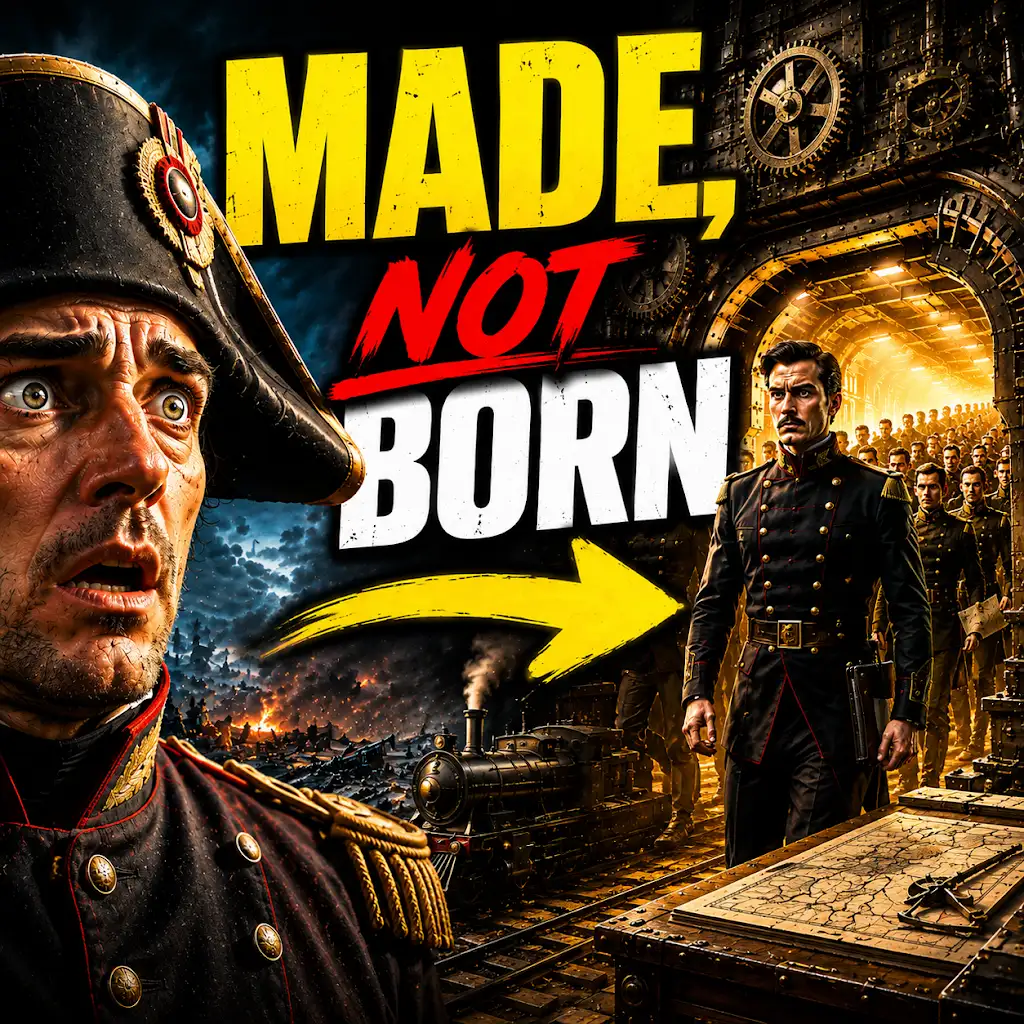
The Military Machine That Didn’t Need a Napoleon
FAQs
What is the General Staff?
The General Staff is a military organization responsible for strategic planning, operational coordination, and intelligence assessment within a nation’s armed forces.
When did the modern General Staff system originate?
The modern General Staff system originated in Prussia in the early 19th century, under the leadership of General Gerhard von Scharnhorst.
What were the key developments in the evolution of the General Staff?
Key developments in the evolution of the General Staff included the establishment of a centralized staff organization, the adoption of a systematic approach to military planning, and the integration of intelligence gathering and analysis into military decision-making.
How did the General Staff system spread to other countries?
The General Staff system spread to other countries through military exchanges, alliances, and the influence of Prussian and later German military thought and practice.
What impact did the General Staff system have on modern warfare?
The General Staff system had a significant impact on modern warfare by promoting professional military education, fostering a culture of strategic thinking, and enhancing the effectiveness of military operations through systematic planning and coordination.