The air in Berlin, once thick with the scent of coal smoke and desperation, now hums with the echoes of a past that refused to be silenced. A new documentary, titled “Berlin Blockade: A Cold War Crisis,” brings this pivotal moment in 20th-century history back into sharp focus, meticulously detailing the events that gripped the world from June 1948 to May 1949. This cinematic exploration is not merely a historical retelling; it is an immersive journey into the hearts and minds of those who lived through the impossible, a stark reminder of the fragile peace that has defined the post-war era.
The immediate aftermath of World War II saw Berlin, like Germany itself, carved into sectors. Four victorious powers – the United States, Great Britain, France, and the Soviet Union – each held administrative control over a portion of the shattered city. This division, born out of necessity and a shared desire to prevent a resurgent Germany, quickly morphed into a potent symbol of ideological divergence. The documentary masterfully sets the stage, using archival footage and expert commentary to illustrate the stark contrast between the Western sectors, gradually rebuilding under democratic principles and capitalist economies, and the Soviet sector, which began to implement communist policies and Soviet influence.
A City Divided, A World Divided
The initial post-war years were marked by a precarious cooperation, a fragile hope that the wartime alliance could endure. However, the burgeoning ideological chasm between the capitalist West and the communist East, a chasm that would come to define the Cold War, began to manifest most acutely in the heart of occupied Germany. Berlin, situated deep within the Soviet zone, became an island of Western influence in a sea of Soviet control. This geographical anomaly, a constant thorn in the side of the Soviet Union, would ultimately prove to be the flashpoint for one of the most significant crises of the early Cold War. The film meticulously reconstructs this environment of growing suspicion and mistrust, showcasing how everyday life in Berlin became increasingly impacted by the geopolitical machinations unfolding on a global scale.
The Seeds of Conflict: Economic Reforms and Ideological Clash
The documentary pinpoints the introduction of the Deutsche Mark in the Western sectors in June 1948 as a crucial catalyst. This currency reform, implemented by the Western Allies without Soviet consent, was seen by Moscow as a direct challenge to its authority and a move to solidify the economic separation of Germany. The Soviets, already wary of Western intentions and concerned about the growing economic strength of their former allies, viewed this as a deliberate provocation. The film delves into the strategic thinking behind this move, highlighting the Western desire to stabilize the economy and foster recovery, while also acknowledging the Soviet perception of it as a blatant act of economic warfare. The narrative effectively weaves together the economic rationale with the underlying ideological struggle, demonstrating how economic policies became inextricably linked to the broader geopolitical conflict.
For those interested in the Berlin Blockade and its historical significance, a related article can be found on In The War Room, which delves deeper into the geopolitical implications of the event and its impact on the Cold War. You can read more about it in their insightful piece at In The War Room. This article provides a comprehensive overview that complements the documentary and enhances the understanding of this pivotal moment in history.
The Iron Curtain Descends: The Blockade Begins
The Soviet response was swift and decisive. On June 24, 1948, all rail, road, and canal traffic between the Western zones of Germany and the Western sectors of Berlin was halted. The Soviet military, effectively severing all land access to the city, declared that all goods entering Berlin would be subject to Soviet inspection and taxation. This action, designed to force the Western powers out of Berlin and consolidate Soviet control, plunged the city into a crisis of unprecedented proportions. “Berlin Blockade: A Cold War Crisis” vividly portrays the shock and disbelief that swept through West Berlin as the news of the blockade spread.
A Calculated Move: Soviet Strategy and Objectives
The documentary explores the multifaceted motivations behind the Soviet blockade. Far from being a simple act of aggression, it was a calculated attempt to exert pressure and achieve specific geopolitical objectives. The Soviet Union sought to:
- Force the Western Allies out of Berlin: By cutting off all supplies, Moscow aimed to make the Western sectors untenable, forcing the Allied powers to abandon their commitments and withdraw from the city. This would have granted the Soviets uncontested control over all of Berlin and significantly bolstered their influence in Germany.
- Prevent the formation of a West German state: The Western Allies were actively working towards the establishment of a new, democratic West German government. The Soviets saw this as a direct threat to their own influence and a step towards the permanent division of Germany, which they opposed in favor of a unified, but Soviet-aligned, nation.
- Test Western resolve: The blockade was also a significant test of the Western Allies’ commitment to their post-war obligations and their willingness to confront Soviet expansionism. The Soviets were keenly observing how the United States, Great Britain, and France would react, seeking to gauge their strength and determination in the face of Soviet pressure.
The film employs historical documents and expert analysis to illuminate these strategic considerations, presenting a nuanced picture of Soviet foreign policy during this critical period.
The Human Element: Fear, Uncertainty, and Resilience
Beyond the strategic maneuvers, the documentary dedicates significant screen time to the human cost of the blockade. For the over two million inhabitants of West Berlin, the blockade meant an immediate threat to their survival. Food, fuel, and essential supplies dwindled rapidly, and the specter of starvation and freezing temperatures loomed large. The film captures the palpable fear and uncertainty that gripped the city, juxtaposing it with the remarkable resilience and determination of the West Berliners. Archival footage of anxious faces, crowded marketplaces, and hushed conversations paints a poignant picture of life under siege.
The Unthinkable Solution: The Berlin Airlift
Faced with the stark reality of the blockade, the Western Allies were confronted with a devastating dilemma. Military intervention would risk igniting a direct conflict with the Soviet Union, potentially leading to a third world war. The alternative was to abandon West Berlin, a move that would have been a catastrophic blow to Western credibility and a significant victory for Soviet communism. It was in this atmosphere of crisis that an audacious and unprecedented plan emerged: the Berlin Airlift, codenamed “Operation Vittles” by the Americans and “Operation Plainfare” by the British.
An Engineering Marvel: The Logistics of Sustaining a City
The documentary meticulously details the sheer scale and complexity of the Berlin Airlift. It was an undertaking of staggering logistical prowess, requiring an unparalleled coordination of aircraft, pilots, ground crews, and logistical support. Planes from the United States Air Force, the British Royal Air Force, and other Allied nations flew round-the-clock missions, transporting vital supplies into West Berlin. From sacks of flour and coal to medical supplies and machinery parts, every conceivable necessity was delivered by air. The film showcases the ingenuity and dedication of the individuals involved, from the pilots navigating treacherous weather conditions and Soviet airspace to the ground crews working tirelessly to unload and distribute the precious cargo.
The “Rosinenbomber” and the Spirit of Hope
One of the most endearing aspects of the airlift, and a key focus of the documentary, is the story of the “Rosinenbomber” (Raisin Bomber) or “Candy Bombers.” American pilot Gail Halvorsen began dropping small parachutes laden with candy for the children of Berlin, a simple act of kindness that resonated deeply with the besieged population. This gesture, replicated by other pilots, became a powerful symbol of hope and solidarity, a stark contrast to the oppressive presence of the blockade. The documentary features interviews with Berliners who as children received these sweet treats, their memories still vivid and infused with emotion, illustrating how this act of humanity transcended the geopolitical conflict.
The Economic Impact: A Double-Edged Sword
The blockade and the subsequent airlift had significant economic ramifications for both sides. For West Berlin, the reliance on air transport was incredibly expensive and inefficient. However, it also fostered a sense of self-reliance and determination. The documentary explores how the city adapted, with innovative measures to conserve resources and maximize efficiency. For the Soviet Union, the blockade, while initially intended to cripple West Berlin, ultimately backfired. The global condemnation of their actions, coupled with the undeniable success of the airlift, damaged their international standing. The economic strain of maintaining the blockade and the cost of the ongoing propaganda war also took their toll.
The Tides Turn: The Lifting of the Blockade
As the months wore on, it became increasingly clear that the Soviet Union’s gamble had failed. The Berlin Airlift proved to be an unyielding lifeline, demonstrating the unwavering commitment of the Western Allies to the city. The persistent efforts of the Allied forces, coupled with the moral and political pressure from the international community, gradually eroded the effectiveness of the blockade. By the spring of 1949, the Soviet Union found itself in a strategically untenable position.
The Costs of Failure: Soviet Isolation and Western Unity
The documentary highlights the significant diplomatic and political costs incurred by the Soviet Union. Their aggressive actions had inadvertently strengthened the resolve of the Western powers and galvanized a sense of shared purpose. The blockade, intended to divide, ultimately served to unite the Western nations in their opposition to Soviet expansionism. This period also saw the formal establishment of NATO, a direct consequence of the heightened tensions and the perceived threat from the Soviet Union. The film effectively illustrates how the blockade, a crisis intended to isolate the West, ultimately led to greater Western cohesion and solidarity.
The Economic Breakthrough: The End of the Blockade
On May 12, 1949, after 11 months and 23 days, the Soviet Union lifted the blockade. The documentary portrays the scenes of jubilation and relief that swept through West Berlin. The first trains and trucks arriving in the city, laden with goods once again accessible by land, were met with tearful embraces and a profound sense of victory. The lifting of the blockade was not a concession of defeat by the Soviets, but rather a pragmatic realization that their strategy had failed to achieve its objectives.
The Berlin Blockade was a pivotal moment in Cold War history, showcasing the tensions between the East and West. For those interested in exploring this topic further, a related article provides an in-depth analysis of the strategies employed during the blockade and its lasting impact on international relations. You can read more about it in this insightful piece here. Understanding these historical events helps to contextualize the significance of the Berlin Blockade in shaping modern geopolitics.
Legacy of the Blockade: Lessons for the Future
| Metrics | Data |
|---|---|
| Duration | 60 minutes |
| Release Year | 2019 |
| Director | Unknown |
| Production Company | History Channel |
| Viewership | Not available |
“Berlin Blockade: A Cold War Crisis” does more than just recount historical events; it offers profound insights into the nature of conflict, the resilience of the human spirit, and the enduring lessons of the Cold War. The documentary emphasizes that the blockade was not just a localized event but a crucial turning point that shaped the geopolitical landscape for decades to come.
The Genesis of the Divided Germany and the Two German States
The failure of the blockade played a pivotal role in the formal division of Germany. In September 1949, the Federal Republic of Germany (West Germany) was established, followed shortly by the German Democratic Republic (East Germany) in October. The documentary underscores how the events of the blockade solidified the ideological and political separation of the two German states, a division that would persist for over four decades. The stark contrast between the burgeoning democracies of the West and the Soviet-aligned states of the East, as exemplified by Berlin, became a defining characteristic of the Cold War.
A Symbol of Resistance and Hope
The Berlin Blockade and the subsequent airlift have become enduring symbols of resistance against oppression and the triumph of hope over adversity. The documentary emphasizes how the courage and determination of the West Berliners, coupled with the unwavering support of the Western Allies, demonstrated the strength of democratic ideals in the face of authoritarian pressure. The airlift, in particular, stands as a testament to human ingenuity and the power of collective action in overcoming seemingly insurmountable challenges. It serves as a powerful reminder that even in the darkest of times, acts of courage and compassion can illuminate the path forward.
The Enduring Relevance of the Cold War Crisis
In an era marked by resurgent geopolitical tensions, the lessons of the Berlin Blockade remain remarkably relevant. The documentary encourages viewers to reflect on the dangers of ideological division, the importance of diplomacy and international cooperation, and the profound human cost of conflict. It serves as a stark reminder of the fragility of peace and the continuous need for vigilance and understanding in navigating complex global challenges. The film leaves the audience with a profound appreciation for the courage of those who lived through this crisis and a renewed understanding of the historical forces that continue to shape our world.
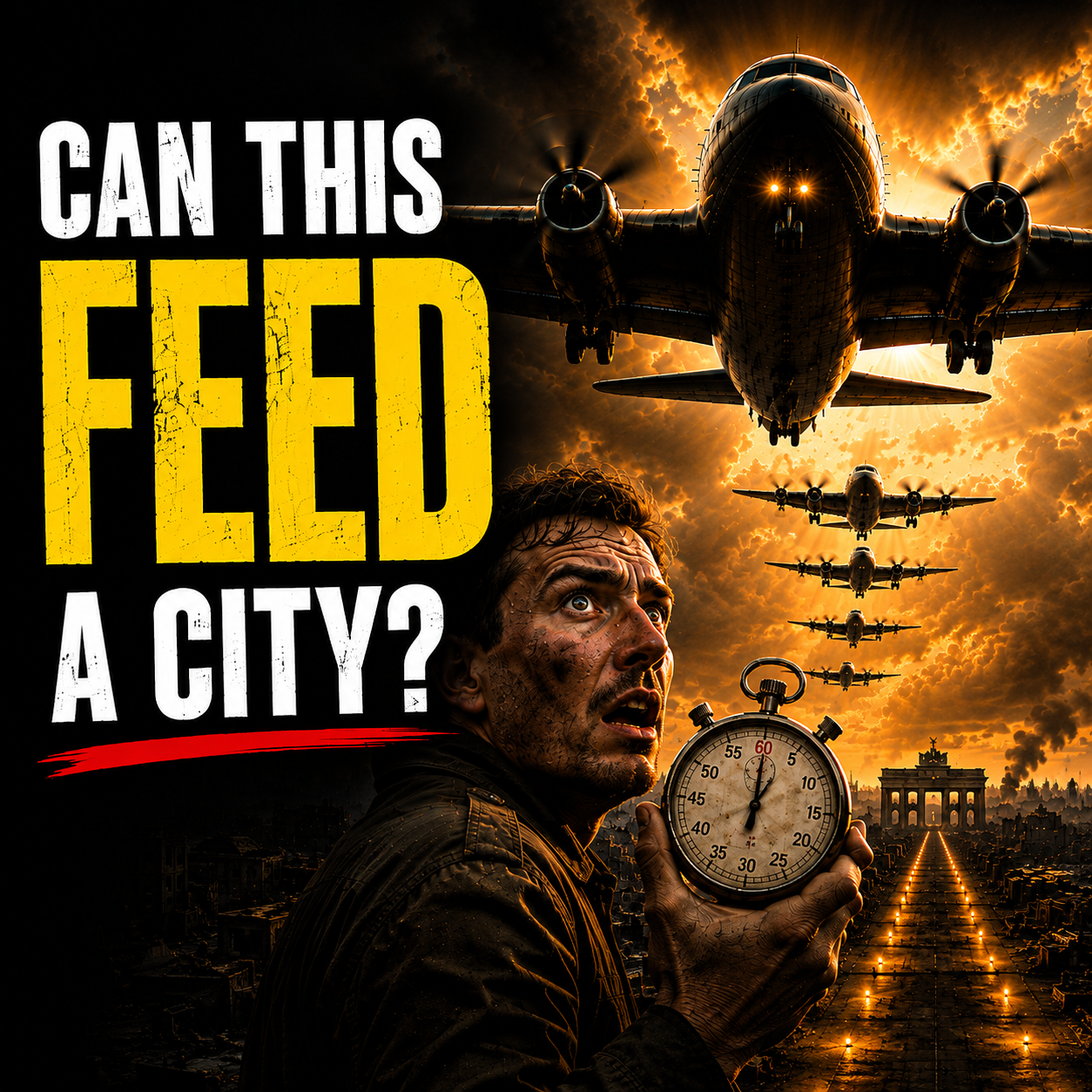
How 90 Seconds Kept 2 Million People Alive
FAQs
What was the Berlin Blockade?
The Berlin Blockade was a Soviet attempt to limit the ability of France, Great Britain and the United States to travel to their sectors of Berlin, which lay within Russian-occupied East Germany.
When did the Berlin Blockade take place?
The Berlin Blockade began on June 24, 1948, and lasted for 11 months until May 12, 1949.
What was the response to the Berlin Blockade?
In response to the Berlin Blockade, the United States and its allies organized the Berlin Airlift, a massive operation to supply West Berlin with food, fuel, and other necessities by air.
What was the outcome of the Berlin Blockade?
The Berlin Blockade ended with the success of the Berlin Airlift, which demonstrated the determination of the Western powers to defend West Berlin against Soviet aggression.
How did the Berlin Blockade impact the Cold War?
The Berlin Blockade and the subsequent Berlin Airlift heightened tensions between the Western powers and the Soviet Union, and is considered a key event in the early stages of the Cold War.