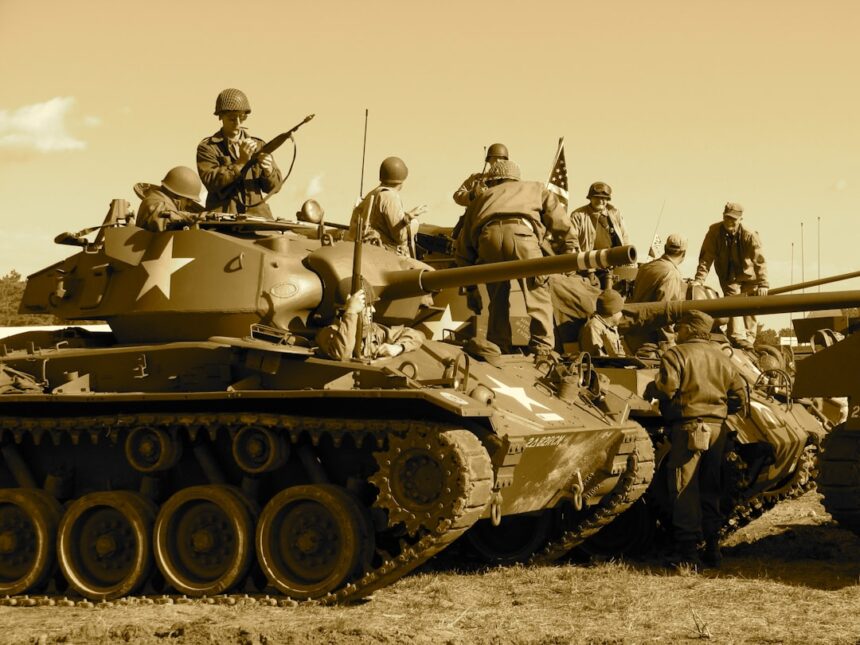
The Six-Day War, a pivotal moment in the complex history of the Middle East, remains a subject of intense study and debate. In June 1967, a swift and decisive conflict erupted between Israel and a coalition of Arab states, primarily Egypt, Jordan, and Syria. This brief but impactful war reshaped the geopolitical landscape of the region, leaving an enduring legacy that continues to influence international relations and the lives of millions. Understanding the causes, events, and consequences of the Six-Day War is crucial to grasping the ongoing complexities of the Israeli-Palestinian conflict and the broader Arab-Israeli dispute.
The seeds of the Six-Day War were sown in the years and decades preceding the actual hostilities. A volatile mix of escalating tensions, nationalistic fervor, and deeply entrenched animosities created an environment ripe for confrontation. The aftermath of the 1948 Arab-Israeli War, which resulted in the establishment of the State of Israel and the displacement of hundreds of thousands of Palestinians, cast a long shadow. Arab nations viewed Israel as an illegitimate entity, a product of Western imperialism, and the cause of what they termed the “Nakba” – the catastrophe. Israel, on the other hand, felt existentially threatened by its Arab neighbors, perpetually bracing for attacks and seeking to secure its borders and its right to exist.
The Legacy of 1948: Lingering Grievances and Unresolved Issues
The 1948 war, often referred to as the War of Independence by Israelis and the Nakba by Palestinians, left a legacy of profound bitterness. The armistice lines established at its conclusion were considered temporary by many, and neither side fully accepted them. For Palestinians, the dispossession of their land and homes and the creation of refugee camps across neighboring Arab states fueled a persistent desire for return and justice. For Israel, the lack of formal peace treaties and the ongoing hostility from its neighbors fostered a sense of insecurity and a determination to maintain a strong defense.
The Rise of Arab Nationalism and Pan-Arabism
The mid-20th century witnessed a surge of Arab nationalism across the region. Leaders like Gamal Abdel Nasser of Egypt emerged as charismatic figures who championed the cause of Arab unity and self-determination, often in opposition to Western influence and the perceived threat of Israel. Nasser’s vision of a powerful, unified Arab world resonated deeply with many, and his rhetoric often stoked anti-Israeli sentiment. This pan-Arabist fervor created a sense of collective responsibility among Arab states to confront Israel, even if their individual interests and capabilities varied.
Escalating Border Skirmishes and Infiltration
The period leading up to 1967 was characterized by a significant increase in border skirmishes and acts of infiltration. Palestinian fedayeen groups, often operating from neighboring Arab countries, launched attacks into Israel, targeting civilians and military installations. These attacks were met with retaliatory Israeli raids, creating a cycle of violence that further heightened tensions. The Syrian border, in particular, was a frequent flashpoint, with artillery duels and clashes over disputed territories.
The Arms Race and Military Buildup
Both sides engaged in a significant arms race in the years preceding the war. Israel, with its access to Western military aid, steadily built up its technologically advanced armed forces. The Arab states, particularly Egypt, also received substantial arms shipments from the Soviet Union. This military buildup, while intended to deter aggression, also contributed to an atmosphere of anticipation and a readiness for conflict. Each side perceived the other’s growing military might as an imminent threat.
The Six Day War of 1967 was a pivotal moment in Middle Eastern history, significantly altering the geopolitical landscape of the region. For a deeper understanding of the events leading up to and following this conflict, you can explore a related article that provides comprehensive insights and analysis. To read more, visit this article.
The Spark: Egypt’s Provocative Actions
The immediate trigger for the Six-Day War was a series of provocative actions taken by Egypt in May 1967, orchestrated by President Gamal Abdel Nasser. These moves, ostensibly aimed at deterring Israeli aggression, were perceived by Israel and much of the international community as an unmistakable prelude to war. The delicate balance of power in the region was shattered as Egyptian actions signaled an aggressive intent that could no longer be ignored.
The Withdrawal of UN Peacekeeping Forces from Sinai
A crucial development that emboldened Egypt was the abrupt withdrawal of the United Nations Emergency Force (UNEF) from the Sinai Peninsula. The UNEF had been stationed in Sinai since the Suez Crisis of 1956, acting as a buffer between Egypt and Israel. UN Secretary-General U Thant acceded to Nasser’s request for their removal, a decision that proved to be a critical miscalculation. Without the UN presence, the Sinai border became a direct and exposed frontier, increasing the perceived vulnerability of Israel.
The Blockade of the Straits of Tiran
Perhaps the most direct act of aggression by Egypt was the reimposition of a blockade on the Straits of Tiran. These narrow waterways, connecting the Red Sea to the Gulf of Aqaba, were Israel’s vital sea link to the port of Eilat. International law generally considers the closing of such international straits to be an act of war. For Israel, this blockade was a casus belli, a direct threat to its economic lifeline and its access to vital resources.
Mobilization and Rhetoric of War
In the days and weeks leading up to June 5th, Egypt dramatically escalated its military posture. Tanks and troops were mobilized to the Sinai border, and Egyptian aircraft were positioned for combat. Nasser’s public pronouncements became increasingly bellicose, filled with fiery rhetoric about confronting Israel and liberating Palestine. This aggressive posturing, coupled with the blockade, left Israel with little doubt that an attack was imminent.
The Formation of the United Arab Republic (UAR) and Jordanian Alliance
Adding to the regional threat, Egypt, Syria, and Jordan moved closer to military cooperation. While the formal United Arab Republic between Egypt and Syria had dissolved in 1961, a de facto military alliance was solidified. Jordan, under King Hussein, also joined the confrontation, signing a mutual defense pact with Egypt. This consolidated front presented a formidable challenge to Israel, both in terms of military numbers and strategic positioning.
The War Erupts: Israel’s Preemptive Strike and Blitzkrieg Campaign
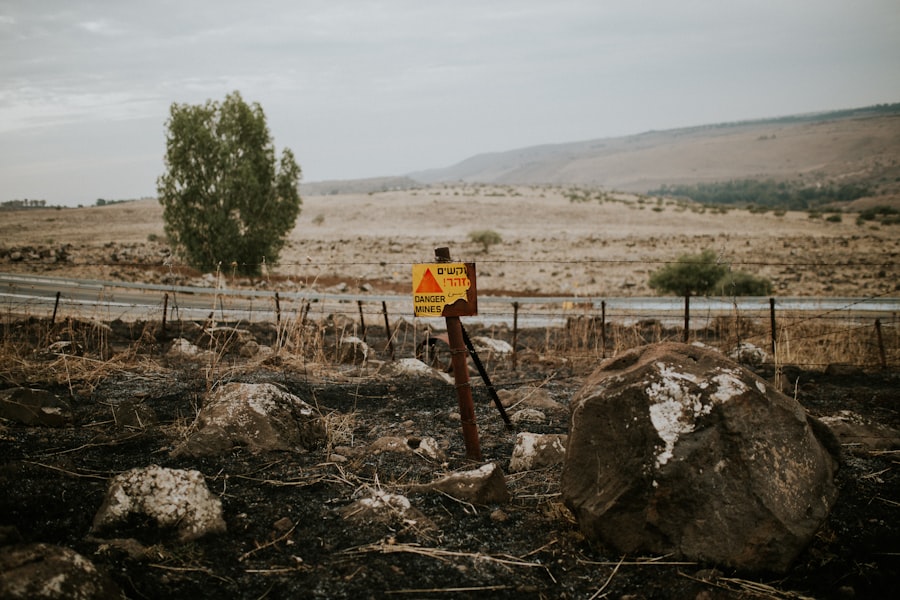
Faced with what it perceived as an imminent existential threat, Israel launched a preemptive strike on the morning of June 5, 1967. This audacious move, executed with remarkable precision and speed, involved a devastating air assault that crippled the air forces of Egypt, Syria, and Jordan within hours. The subsequent ground offensive was a classic example of blitzkrieg warfare, utilizing superior strategy, training, and equipment to achieve decisive victories across multiple fronts.
Operation Focus: Decimating the Egyptian Air Force
The cornerstone of Israel’s initial strategy was Operation Focus, a meticulously planned and flawlessly executed aerial assault. Israeli aircraft, striking in waves, targeted Egyptian airfields at dawn. Within a matter of hours, the vast majority of Egypt’s Soviet-built air force was destroyed on the ground, effectively neutralizing their air superiority and paving the way for uncontested Israeli air cover for their ground forces. This devastating blow was repeated against Syrian and Jordanian air assets, ensuring Israeli air supremacy for the remainder of the conflict.
The Sinai Campaign: A Swift Ground Offensive
Following the successful air campaign, Israeli ground forces launched a rapid and overwhelming offensive into the Sinai Peninsula. Utilizing armored divisions and mechanized infantry, they swept through Egyptian defenses, encircling and defeating Egyptian units. The speed and ferocity of the Israeli advance caught the Egyptian army, which was largely unprepared for such a coordinated and effective assault, by surprise. Key battles raged around the Abu Ageila pass and Rafah.
The Jordanian Front: The Capture of East Jerusalem and the West Bank
In parallel with the Sinai campaign, Israel also opened a front against Jordan. While initially hesitant to engage, Jordan’s artillery began shelling Israeli positions in Jerusalem. Israel responded by launching an offensive to capture East Jerusalem, which had been under Jordanian control since 1948. The fighting in Jerusalem was intense, marked by fierce street battles. Within days, Israeli forces had secured the Old City and the entire West Bank, including towns like Bethlehem, Jericho, and Hebron.
The Syrian Front: The Capture of the Golan Heights
The final front opened by Israel was against Syria, targeting the strategically important Golan Heights. Syrian artillery had been frequently shelling Israeli settlements in the north. The Israeli advance into the Golan was challenging due to the rugged terrain, but Israeli forces, supported by artillery and air power, systematically pushed Syrian defenders back. The capture of the Golan Heights provided Israel with a crucial strategic buffer against future Syrian aggression.
The Aftermath: A New Regional Order and Enduring Scars

The Six-Day War concluded with an overwhelming Israeli victory, dramatically altering the geopolitical map of the Middle East. In just six days, Israel had tripled the territory under its control, capturing the Sinai Peninsula and Gaza Strip from Egypt, the West Bank and East Jerusalem from Jordan, and the Golan Heights from Syria. The swift and decisive nature of the conflict left Arab nations reeling and ushered in a new era of regional dynamics, characterized by both profound changes and deep-seated resentments.
Territorial Conquests and Strategic Gains
Israel’s territorial gains were immense and strategically significant. The capture of the Sinai Peninsula provided a buffer zone against Egypt and access to the Suez Canal, although it was not immediately reopened. The West Bank and East Jerusalem became areas of intense Israeli control, leading to the establishment of Israeli settlements. The Golan Heights provided a commanding strategic position overlooking Israeli territory. These new borders, however, also created new challenges and fueled ongoing political and military tensions.
The Palestinian Question: Occupation and Displacement
The most profound and lasting consequence of the Six-Day War was the escalation of the Palestinian issue. With the occupation of the West Bank and Gaza Strip, hundreds of thousands of Palestinians found themselves under Israeli military rule. The dream of a Palestinian state, already distant, became more complex. The ongoing occupation, the expansion of Israeli settlements, and the displacement of Palestinians became central to the Palestinian struggle for self-determination and fueled decades of conflict and resistance.
The United Nations and Resolution 242
The international community, largely taken by surprise by the speed and outcome of the war, scrambled to respond. The United Nations Security Council passed Resolution 242, which called for “the application of the following principles: (i) Withdrawal of Israeli armed forces from territories occupied in the recent conflict; (ii) Termination of all claims or states of belligerency and respect for and acknowledgement of the sovereignty, territorial integrity and political independence of every State in the area and their right to live in peace within secure and recognized boundaries.” This resolution, however, has been interpreted differently by various parties, becoming a cornerstone of ongoing peace negotiations but also a source of considerable debate.
Arab Humiliation and the Rise of New Ideologies
The decisive defeat suffered by the Arab coalition was a profound humiliation. It shattered the myth of Arab military invincibility and led to introspection and reevaluation of strategies. The failure of conventional warfare to defeat Israel contributed to the rise of new ideologies and tactics, including the growing prominence of Palestinian militant groups and a renewed focus on guerrilla warfare and resistance. The war also solidified the perception among many Arabs that Israel was a Western-backed entity, further fueling anti-Western sentiment.
The Cold War Dimension: Superpower Involvement and Influence
The Six-Day War also had significant implications for the Cold War. The United States, a staunch ally of Israel, provided crucial diplomatic and military support. The Soviet Union, a major supplier of arms to the Arab states, was embarrassed by their defeat. The war intensified the proxy rivalry between the superpowers in the Middle East, with both seeking to maintain influence and shape the post-war regional order. This superpower involvement often complicated peace efforts and exacerbated regional tensions.
The Six Day War in 1967 significantly altered the geopolitical landscape of the Middle East, particularly the relationship between Israel and Egypt. For a deeper understanding of the events leading up to this conflict and its aftermath, you can explore a related article that provides insightful analysis and context. This article delves into the military strategies employed and the political ramifications that followed, making it a valuable resource for anyone interested in this pivotal moment in history. To read more, visit this link.
The Long Shadow: Lasting Impacts and Unresolved Conflicts
| Event | Date | Outcome |
|---|---|---|
| Start of the Six Day War | June 5, 1967 | Israeli preemptive strike on Egyptian air force, followed by attacks on Jordanian and Syrian forces |
| End of the Six Day War | June 10, 1967 | Israeli victory, gaining control of the Sinai Peninsula, Gaza Strip, West Bank, and Golan Heights |
| Casualties | Estimated 20,000-30,000 | Israeli: 776 killed, 2,586 wounded; Arab: 15,000-20,000 killed, 5,000 captured |
| Impact | Shift in regional power dynamics, increased Israeli territory, and ongoing conflict with Palestinians and neighboring Arab states |
The Six-Day War was not an end, but rather a turning point that ushered in a new and often more complex phase of the Arab-Israeli conflict. Its legacy continues to shape the political, social, and humanitarian landscape of the Middle East. The territorial changes, the unresolved issue of Palestinian statehood, and the deep-seated animosities forged in those six days continue to resonate powerfully today.
The Occupied Territories: A Persistent Source of Tension
The occupation of the West Bank, Gaza Strip, and East Jerusalem remains one of the most enduring and contentious legacies of the Six-Day War. The presence of Israeli settlements, the restrictions on Palestinian movement, and the ongoing cycle of violence have created a deeply entrenched humanitarian crisis and a significant obstacle to any lasting peace. The international community has consistently called for an end to the occupation, but finding a mutually acceptable solution has proven to be an immense challenge.
The PLO and the Palestinian National Movement
The war significantly impacted the development of the Palestinian national movement. In the aftermath of the defeat, the Palestine Liberation Organization (PLO), established in 1964, gained greater prominence and became the primary representative of the Palestinian people. The PLO, initially advocating for the destruction of Israel, gradually shifted its focus towards establishing a Palestinian state through negotiation, although internal divisions and external pressures continued to shape its trajectory.
The Yom Kippur War and Subsequent Conflicts
The deep resentments and unaddressed grievances stemming from the Six-Day War directly contributed to the outbreak of the Yom Kippur War in 1973. This war, launched by Egypt and Syria on the Jewish holy day of Yom Kippur, aimed to regain lost territories. While initially successful, it ultimately ended in a strategic stalemate, but it forced Israel to acknowledge the need for a political resolution to the conflict. The Six-Day War’s territorial changes also fueled numerous other conflicts and skirmishes throughout the subsequent decades.
The Quest for Peace: Peace Treaties and Ongoing Negotiations
Despite the enduring animosities, the Six-Day War also spurred efforts towards peace. The Camp David Accords of 1978, leading to the Egypt-Israel Peace Treaty in 1979, marked a significant breakthrough, with Egypt becoming the first Arab nation to formally recognize Israel. However, the core issues of Palestinian statehood and the status of the occupied territories remain largely unresolved, leading to a protracted and often frustrating peace process characterized by intermittent negotiations, setbacks, and continued violence.
The Enduring Impact on Regional Security and Global Politics
The Six-Day War irrevocably altered the security landscape of the Middle East and had ripple effects on global politics. It solidified Israel’s military dominance in the region, influenced superpower strategies in the Middle East, and continues to be a focal point for international diplomacy and conflict resolution. The unresolved issues stemming from this conflict remain a significant source of instability and a constant challenge to the pursuit of lasting peace and security in one of the world’s most volatile regions. The lessons learned, or sometimes ignored, from those six days in June 1967 continue to inform the present and shape the future of the Middle East.

The Intelligence System That Won the Six-Day War Before It Began
FAQs
What was the Six Day War?
The Six Day War was a brief but significant conflict that took place between June 5 and June 10, 1967, involving Israel and the neighboring states of Egypt, Jordan, and Syria.
What were the main causes of the Six Day War?
The main causes of the Six Day War included escalating tensions between Israel and its Arab neighbors, particularly Egypt, which had blockaded the strategic Strait of Tiran, and the buildup of military forces and rhetoric on both sides.
What were the key events of the Six Day War?
Key events of the Six Day War included Israel launching a preemptive strike against the Egyptian Air Force, quickly gaining air superiority, and then launching ground offensives against Egypt, Jordan, and Syria, resulting in the capture of the Sinai Peninsula, the West Bank, and the Golan Heights.
What were the outcomes of the Six Day War?
The outcomes of the Six Day War included a decisive Israeli victory, the occupation of the Sinai Peninsula, the West Bank, and the Golan Heights, and a significant shift in the balance of power in the Middle East.
What were the long-term effects of the Six Day War?
The long-term effects of the Six Day War included the continued Israeli occupation of the captured territories, the displacement of Palestinian and Arab populations, and the ongoing conflict and tensions in the region.