The scar that divided a city, a nation, and a world, the Berlin Wall stands as a stark monument to ideological conflict and human aspiration. For nearly three decades, this imposing barrier of concrete, barbed wire, and guard towers not only physically separated East and West Berlin but also served as the most potent symbol of the Iron Curtain that descended across Europe after World War II. Its construction, its existence, and its dramatic fall are a testament to the power of political division, the resilience of the human spirit, and the enduring desire for freedom.
The genesis of the Berlin Wall can be traced back to the ashes of World War II and the subsequent geopolitical realignments. The Allied powers, victorious but deeply divided on the future of Europe, agreed to divide Germany and its capital, Berlin, into four occupation zones. This temporary measure, intended to facilitate reconstruction and denazification, soon became a permanent fixture as the Cold War intensified.
The Allied Occupation Zones
Following Germany’s unconditional surrender in May 1945, the country was carved up by the victorious Allied powers: the United States, Great Britain, France, and the Soviet Union. Berlin, located deep within the Soviet zone, was similarly divided. This quadripartite control, while initially intended to be cooperative, quickly devolved into a source of friction.
The American, British, and French Sectors
These Western sectors of Berlin, collectively known as West Berlin, were governed by the Western Allies. They received significant economic and political support, fostering a democratic and capitalist system that stood in stark contrast to the Soviet-dominated East.
The Soviet Sector
The Soviet sector of Berlin, known as East Berlin, was integrated into the newly formed German Democratic Republic (GDR), a socialist state established by the Soviet Union in 1949. Under Soviet influence, East Berlin became the capital of the GDR and a hub for communist ideology.
The Growing Chasm: Ideological and Economic Divergence
As the Cold War deepened, the ideological and economic disparities between the Soviet Union and the Western powers widened. This divergence was acutely felt in Berlin, a city literally on the front lines of this global struggle.
The Marshall Plan and Western Recovery
The United States’ Marshall Plan, a massive economic aid program for Western Europe, played a crucial role in the recovery and prosperity of West Berlin. This fostered a thriving economy and a higher standard of living compared to its Eastern counterpart.
The Soviet Model and Economic Hardship
In contrast, the Soviet Union implemented its own economic model in East Germany, prioritizing heavy industry and collectivized agriculture. This approach, coupled with the economic strain of war reparations imposed by the Soviets, led to widespread shortages and economic hardship in East Berlin.
The Berlin Blockade and Airlift: A Prelude to Division
The simmering tensions between the Soviets and the Western Allies in Berlin culminated in the Berlin Blockade of 1948-1949. The Soviet Union, seeking to consolidate its control and force the Western powers out of the city, cut off all land and water routes to West Berlin.
Soviet Aggression and Western Resolve
Stalin’s blockade was a bold attempt to starve West Berlin into submission. However, the Western Allies responded with a remarkable feat of logistical coordination: the Berlin Airlift.
The “Rosinenbomber” (Raisin Bombers)
For nearly a year, Allied aircraft ferried essential supplies—food, fuel, medicine—to the beleaguered citizens of West Berlin. These “Rosinenbomber,” as they were affectionately known by the German population for dropping candy to children, became symbols of Western commitment and defiance. The airlift’s success ultimately forced the Soviets to lift the blockade, but the incident solidified the division of Germany and the strategic importance of Berlin.
The history behind the Berlin Wall is a profound narrative that encapsulates the tensions of the Cold War and the division of East and West Germany. For a deeper understanding of this significant historical event, you can explore a related article that delves into the political and social implications of the Wall’s construction and eventual fall. To read more, visit this article.
The “Antifaschistischer Schutzwall”: Constructing the Barrier
The escalating flow of East Germans seeking political freedom and economic opportunity in the West created a significant demographic and ideological problem for the GDR. This exodus, often referred to as “Republikflucht” (flight from the republic), threatened the very foundations of the socialist state. The official justification for the wall’s construction, as proclaimed by the GDR government, was to protect its citizens from alleged Western sabotage and fascism, a narrative that masked the true intent of preventing emigration.
The “Brain Drain” and Economic Instability
The continuous outflow of skilled workers, professionals, and young people from East Germany had a devastating impact on its economy. The GDR was losing its most valuable human capital, hindering its ability to develop and compete. This “brain drain” was a constant source of instability and a major embarrassment for the communist regime.
Emigration Statistics and Growing Concerns
By 1961, millions of East Germans had already fled to the West since the GDR’s founding in 1949. The rate of emigration was accelerating, creating a sense of desperation within the East German leadership and its Soviet patrons.
The Decision to Build: A Soviet-Backed Initiative
The decision to erect a physical barrier was not solely an East German initiative. It was a strategic move heavily influenced and supported by the Soviet Union, which saw the uncontrolled emigration as a threat to the stability of its satellite states and the broader communist bloc.
Khrushchev’s Approval and Ulbricht’s Determination
Soviet Premier Nikita Khrushchev initially harbored some reservations but ultimately gave his approval. Walter Ulbricht, the leader of the GDR, was a staunch proponent of the wall, viewing it as the only viable solution to stem the tide of emigration and solidify socialist control.
The Night of Barbed Wire: August 13, 1961
In the early hours of Sunday, August 13, 1961, East German police and military units, under the cover of darkness and with Soviet backing, began to seal off the border between East and West Berlin. The initial barrier was constructed from barbed wire and rudimentary fences, quickly transforming the once fluid boundary into a heavily guarded frontier.
The Shock and Disbelief
The suddenness and brutality of the action stunned the residents of both East and West Berlin. Families were separated, workplaces became inaccessible, and the city, already a symbol of division, was now physically cleaved in two.
The Rapid Fortification
What began as barbed wire quickly evolved into a more formidable structure. Over the ensuing days and weeks, the rudimentary barrier was replaced by concrete slabs, and the fortifications were systematically strengthened.
A Symbol of Oppression: The Wall’s Evolution and Deadly Effectiveness

The Berlin Wall was not a static structure; it underwent continuous development and fortification over its nearly three decades of existence. It evolved from a simple barrier into a complex and deadly system designed to prevent any unauthorized crossings. The human cost of this endeavor was immense, with countless individuals attempting to escape, many of whom paid the ultimate price.
The “Death Strip” and Sophisticated Defenses
The most notorious aspect of the Wall’s evolution was the creation of the “death strip” (Todesstreifen). This no-man’s-land, stretching between the inner and outer walls, was meticulously designed to ensure that any escape attempt would be detected and thwarted.
Watchtowers and Guard Patrols
Strategically placed watchtowers manned by armed border guards provided an unobstructed view of the entire area. Regular patrols, often accompanied by attack dogs, crisscrossed the death strip, alert to any movement.
Mines and Anti-Vehicle Trenches
In an effort to deter and disable escape vehicles, anti-vehicle trenches were dug, and in some sections, landmines were laid. While the official GDR stance later downplayed the use of mines, evidence suggests their presence and deadly effectiveness.
Floodlights and Alarm Systems
The death strip was illuminated by powerful floodlights throughout the night, eliminating any possibility of concealment. Sophisticated alarm systems were also installed, designed to trigger an alert at the slightest disturbance.
The Grim Toll: Lives Lost at the Wall
The Berlin Wall became a literal and metaphorical killing ground. The GDR regime prioritized the prevention of emigration above all else, and its border guards were authorized to use lethal force against anyone attempting to cross.
Documented Deaths and Estimated Casualties
Official figures from the GDR claimed hundreds of deaths at the Wall, but historical research and investigations suggest the number is significantly higher, with estimates ranging from over 140 to more than 200 individuals. These figures do not include those who died during escape attempts in other parts of the inner-German border.
Notable Escape Attempts and Tragic Endings
Numerous individuals attempted to escape over, under, or through the Wall using a variety of ingenious methods, from hot air balloons and homemade submarines to tunneling and even flying small planes. While some were successful, many were captured, injured, or killed. The stories of Peter Fechter, Ida Siekmann, and Conrad Schumann, among others, became poignant reminders of the Wall’s brutality.
Everyday Life Under the Shadow of the Wall
For the residents of Berlin, the Wall cast a long and oppressive shadow over their daily lives. It was a constant reminder of their separation from family, friends, and loved ones, and a symbol of the restrictions imposed by the communist regime.
Families Divided and Separated
The most profound impact of the Wall was on families. Brothers and sisters, parents and children, husbands and wives were abruptly separated, often for years, with communication severely limited.
Restrictions on Movement and Freedoms
For East Berliners, the Wall meant a complete loss of freedom of movement. Travel to the West was virtually impossible, and even within East Berlin, surveillance and restrictions were pervasive. West Berliners, while free to travel, were constantly aware of the barrier and the ideological divide it represented.
Resistance and Escape: The Human Spirit’s Triumph Over Division
Despite the formidable defenses and the constant threat of capture or death, the human spirit of defiance and the yearning for freedom proved to be a powerful force. Throughout the Wall’s existence, acts of resistance and daring escape attempts continued, fueled by a desperate desire for a better life and reunification.
Tunnels and Ingenious Escape Routes
The desire to escape led to some of the most audacious and creative endeavors. Underground tunnels, meticulously dug by hand, became one of the most popular and successful methods of crossing the Wall, particularly in the early years.
The “Tunnel 57” Operation
One of the most famous escape operations was “Tunnel 57,” dug in 1964, which successfully facilitated the escape of 57 East Germans through a network of tunnels connecting a West Berlin workshop to an East Berlin apartment building.
Other Methods: Vehicles, Hot Air Balloons, and More
Beyond tunnels, escape artists employed a variety of other methods. Some converted vehicles into escape machines, others built hot air balloons, and some even attempted to swim across the Spree River or use ziplines. Each attempt was a testament to the extraordinary courage of those seeking freedom.
International Condemnation and Diplomatic Pressure
The existence of the Berlin Wall drew widespread international condemnation. Western governments and human rights organizations consistently criticized the GDR and the Soviet Union for the human rights abuses associated with the Wall.
Statements from Western Leaders
Leaders like John F. Kennedy, in his iconic “Ich bin ein Berliner” speech in 1963, and Ronald Reagan, with his impassioned plea, “Mr. Gorbachev, tear down this wall!”, used their platforms to highlight the injustices of the Wall and advocate for its dismantling.
The Impact on East-West Relations
While diplomatic efforts to dismantle the Wall were largely unsuccessful for decades, the continued international scrutiny and condemnation undoubtedly put pressure on the East German regime and its Soviet backers.
The Role of West Berliners and International Support
West Berliners played a crucial role in supporting escape attempts and maintaining a sense of hope. They provided assistance, offered safe houses, and were vocal in their opposition to the Wall. International organizations and individuals also contributed to funds and efforts aimed at helping those fleeing the East.
The history behind the Berlin Wall is a compelling narrative of division and reunification that shaped the course of the Cold War. For those interested in exploring this topic further, an insightful article can be found that delves into the events leading up to the wall’s construction and its eventual fall. This piece provides a detailed analysis of the political tensions and social implications surrounding this iconic structure. To read more about this significant chapter in history, you can visit this article.
The Fall of the Wall: A Revolution of People and Politics
| Event | Date | Description |
|---|---|---|
| Construction of the Berlin Wall | August 13, 1961 | The wall was built by the German Democratic Republic (GDR) to separate East and West Berlin and prevent mass emigration to the West. |
| Fall of the Berlin Wall | November 9, 1989 | Following weeks of protests and political changes in East Germany, the GDR announced that citizens could cross the border. This led to the eventual fall of the wall. |
| Reunification of Germany | October 3, 1990 | East and West Germany officially reunified, marking the end of the division caused by the Berlin Wall. |
The late 1980s witnessed a seismic shift in the geopolitical landscape of Eastern Europe. Economic stagnation, growing discontent among the populace, and the reformist policies of Mikhail Gorbachev in the Soviet Union created an environment ripe for change. The Berlin Wall, once an unbreachable symbol of communist control, began to crumble under the weight of popular pressure and shifting political tides.
Gorbachev’s Reforms: Glasnost and Perestroika
Mikhail Gorbachev’s policies of “glasnost” (openness) and “perestroika” (restructuring) signaled a significant departure from traditional Soviet dogma. These reforms, intended to revitalize the Soviet system, inadvertently unleashed forces that would lead to the dismantling of communist regimes across Eastern Europe.
Loosening Soviet Grip on Satellite States
Gorbachev made it clear that the Soviet Union would no longer intervene militarily to prop up unpopular communist governments in Eastern Europe, a departure from the Brezhnev Doctrine. This gave reformers and dissidents in countries like Hungary, Poland, and Czechoslovakia the confidence to push for greater freedoms.
The “Monday Demonstrations” and Growing Protests
In East Germany, the seeds of discontent sown by decades of repression began to bloom. Inspired by events in neighboring countries and fueled by their own desire for freedom, East Germans began to organize and protest.
Leipzig and the Power of Peaceful Assembly
The city of Leipzig became a focal point for these protests, with hundreds of thousands of East Germans participating in the “Monday Demonstrations.” These peaceful, yet powerful, gatherings chanted slogans like “Wir sind das Volk!” (We are the people!) and demanded democratic reforms.
Emigration Through Other Eastern Bloc Countries
As borders in other Eastern Bloc countries began to open, a new wave of East Germans sought to emigrate. Thousands traveled to Hungary, Czechoslovakia, and Poland, seeking passage to the West. This mass exodus further embarrassed and destabilized the GDR government.
The Infamous Press Conference: November 9, 1989
The events of November 9, 1989, unfolded with a sense of almost surreal inevitability. In an attempt to ease mounting pressure and stem the exodus, the East German government decided to relax travel restrictions. However, the poorly communicated announcement at a press conference by Günter Schabowski, a Politburo member, had an unforeseen and dramatic consequence.
Schabowski’s Misstatement and the Immediate Impact
When asked when the new travel regulations would take effect, Schabowski, seemingly unprepared, stammered, “As far as I know, it takes effect immediately, without delay.” This statement, broadcast live, was misinterpreted by many East Germans as an immediate opening of the borders.
The Floodgates Open: Scenes of Jubilation
Thousands of East Berliners, hearing the news, converged on the border crossings. Faced with overwhelming numbers and unclear instructions, the bewildered border guards eventually opened the gates. The ensuing scenes were euphoric: East and West Berliners embraced, wept, and celebrated as they crossed freely between the two halves of their city for the first time in 28 years.
A World Transformed: The Legacy of the Berlin Wall
The fall of the Berlin Wall was not merely the end of a physical barrier; it was a watershed moment that signaled the end of the Cold War and the dawn of a new era in global politics. Its legacy continues to resonate today, a reminder of the enduring struggle for freedom and the profound impact of ideological division on human lives.
The Reunification of Germany
The breaching of the Wall paved the way for the swift reunification of Germany, which officially occurred on October 3, 1990. After decades of division, the nation was once again whole, a powerful symbol of overcoming artificial borders and political strife.
Challenges and Opportunities of Reunification
While reunification was a cause for widespread celebration, it also presented significant economic and social challenges. Integrating the vastly different systems of East and West Germany required immense effort and resources, and the scars of division have taken time to heal.
The Dissolution of the Soviet Union and the End of the Cold War
The fall of the Berlin Wall was a significant catalyst for the collapse of communist regimes across Eastern Europe and ultimately contributed to the dissolution of the Soviet Union itself in December 1991. This marked the definitive end of the Cold War, a period of intense ideological rivalry and proxy conflicts that had shaped global affairs for nearly half a century.
A New World Order
The end of the Cold War ushered in a new global order, characterized by the rise of unipolarity and the increasing interconnectedness of the world. While new challenges have emerged, the absence of the bipolar ideological struggle has fundamentally reshaped international relations.
Preserving the Memory: Memorials and Museums
Today, the remnants of the Berlin Wall serve as powerful memorials and educational sites. These preserved sections and dedicated museums offer vital insights into the history of the Wall, the human stories of division and escape, and the importance of remembering the lessons of this dark chapter.
The East Side Gallery and the Brandenburg Gate
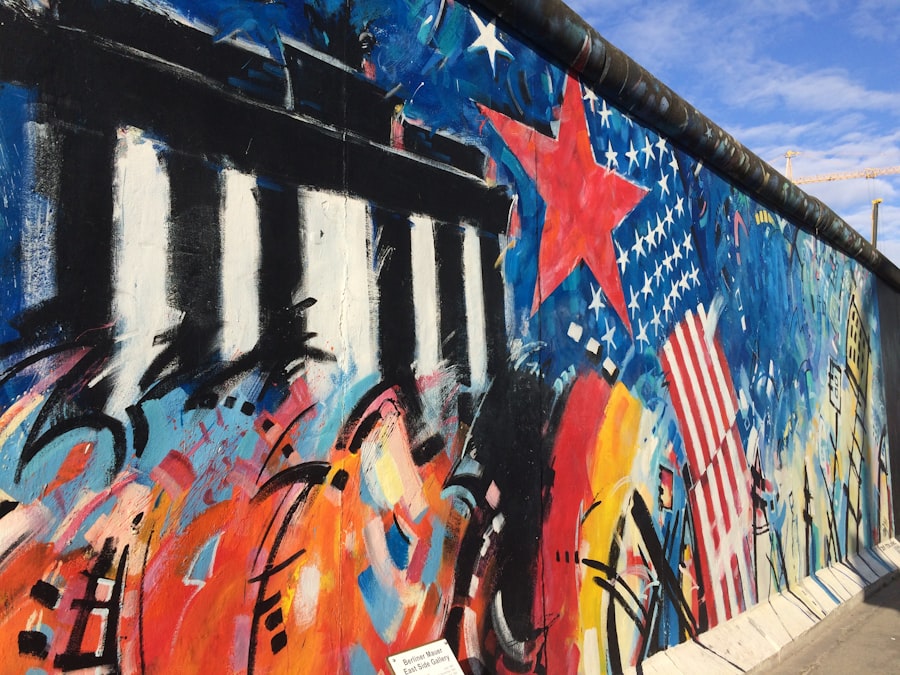
The East Side Gallery, a long stretch of the Wall adorned with murals by artists from around the world, stands as a vibrant testament to freedom and remembrance. The Brandenburg Gate, once a symbol of division, has become a global icon of unity and peace.
The Berlin Wall Memorial
The Berlin Wall Memorial provides a comprehensive historical context, including a preserved section of the Wall, a documentation center, and an observation tower, allowing visitors to understand the scale and brutality of the division.
The history of the Berlin Wall is a complex tapestry woven with threads of political ambition, ideological conflict, human courage, and the unyielding pursuit of freedom. It stands as a somber reminder of the destructive potential of division but also as an inspiring testament to the resilience of the human spirit and the eventual triumph of hope over oppression. The scar that once divided Berlin now serves as a permanent lesson, urging future generations to cherish liberty and strive for unity.

The $17 Million That Helped Destroy an Empire
FAQs
What was the Berlin Wall?
The Berlin Wall was a barrier that divided Berlin from 1961 to 1989, separating East Germany from West Germany. It was constructed by the German Democratic Republic (GDR, East Germany) to prevent East Germans from fleeing to West Germany.
Why was the Berlin Wall built?
The Berlin Wall was built to stop the mass emigration of East Germans to West Germany. The GDR government claimed that the wall was necessary to protect its population from fascist elements conspiring to prevent the “will of the people” in building a socialist state in East Germany.
What were the consequences of the Berlin Wall?
The Berlin Wall had significant political, social, and economic consequences. It deepened the divide between East and West Germany, separated families, and led to numerous deaths of individuals attempting to cross from East to West. It also became a powerful symbol of the Cold War and the division between communist and capitalist ideologies.
When and why was the Berlin Wall demolished?
The Berlin Wall was demolished in 1989, following a series of peaceful protests and political changes in East Germany. The fall of the wall was a result of the changing political climate in Europe, including the reforms initiated by Soviet leader Mikhail Gorbachev and the growing pressure for reunification of Germany.
What is the significance of the Berlin Wall in history?
The Berlin Wall is a symbol of the division between East and West during the Cold War era. Its construction and eventual fall represent the struggle for freedom and the reunification of Germany. The fall of the Berlin Wall is considered a pivotal moment in modern history, marking the end of the Cold War and the beginning of a new era in Europe.