The twilight of the 20th century witnessed a seismic shift in the global political landscape, a transformation so profound that it irrevocably altered the course of history. The dismantling of communist regimes across Eastern Europe, a process that gained momentum in 1989, marked not merely the end of an era, but the dawn of a new one. This monumental upheaval, characterized by peaceful revolutions and the assertion of democratic aspirations, resonated far beyond the borders of the former Soviet bloc, ushering in an era of renewed hope and challenging the established world order.
The seemingly monolithic edifice of communist control in Eastern Europe, established in the aftermath of World War II, was in reality riddled with internal contradictions and growing popular dissatisfaction. Decades of centralized planning, political repression, and economic stagnation had created fertile ground for dissent. While official propaganda painted a picture of socialist paradise, the lived realities of citizens in countries like Poland, Hungary, Czechoslovakia, and East Germany painted a starkly different picture. The absence of basic freedoms, the omnipresent surveillance, and the stark economic disparities between East and West fueled a simmering resentment that would eventually boil over.
Economic Stagnation and the Promise Unfulfilled
The centrally planned economies of the Eastern Bloc, designed to achieve rapid industrialization and equitable distribution of wealth, ultimately failed to deliver on their promises. Instead, they often succumbed to inefficiency, corruption, and a chronic inability to adapt to changing global markets. State-owned enterprises were frequently unproductive, lacking innovation and driven by quotas rather than consumer demand. The result was a pervasive scarcity of goods, long queues for basic necessities, and a growing awareness among citizens of the relative prosperity enjoyed in the West. This economic chasm became a constant source of frustration and a powerful indictment of the communist system.
- The ‘Second Economy’ and Black Markets: As official channels struggled to meet demand, informal economies and black markets flourished. These underground networks, while providing some relief, also highlighted the failures of the state and further eroded its legitimacy.
- Technological Lag: The closed nature of the Eastern Bloc limited access to cutting-edge technology and scientific advancements. This technological gap widened the economic divide and hampered efforts to modernize industries.
- Consumerism as a Symbol of Freedom: The desire for Western consumer goods, from blue jeans to cassette tapes, became a potent symbol of the freedoms and opportunities denied to citizens behind the Iron Curtain.
Political Repression and the Thirst for Freedom
Beyond economic woes, the iron fist of communist rule stifled fundamental human rights and political freedoms. Single-party states, controlled by the Communist Party, tolerated no opposition. Freedom of speech, assembly, and the press were severely curtailed. Citizens lived under constant surveillance, with secret police forces actively monitoring and often persecuting those deemed to be disloyal. The memory of past purges and the fear of reprisal created a climate of intimidation, yet the yearning for self-determination and genuine democratic participation persisted.
- The Role of Dissident Movements: Despite the risks, courageous individuals and groups formed dissident movements, circulating samizdat (underground literature), organizing protests, and advocating for human rights. These movements, though often small, kept the flame of resistance alive.
- The Imposition of Soviet Ideology: The imposition of Soviet-style communism, often disregarding local historical and cultural specificities, led to a sense of alienation and resentment. The perceived subservience to Moscow fueled nationalist sentiments and a desire for independence.
- The Impact of Events in the West: Events in the West, such as the civil rights movement and the student protests of the 1960s, offered alternative models of governance and societal organization, inspiring hope and fueling aspirations for change.
The fall of communism in Eastern Europe marked a significant turning point in global politics, leading to the emergence of new democracies and the reconfiguration of international relations. For a deeper understanding of this transformative period, you can read the related article that explores the various factors contributing to the collapse of communist regimes in the region. This insightful piece provides a comprehensive analysis of the social, economic, and political changes that paved the way for a new era in Eastern Europe. To learn more, visit this article.
The Winds of Change: Gorbachev and the Perestroika Era
A pivotal catalyst for the unraveling of communism in Eastern Europe was the rise of Mikhail Gorbachev to power in the Soviet Union in 1985. Gorbachev, recognizing the deep-seated problems plaguing the Soviet system, embarked on a path of reform with his policies of “glasnost” (openness) and “perestroika” (restructuring). While his intention was to revitalize communism, these reforms inadvertently created the conditions for its downfall.
Glasnost: Opening the Floodgates of Information
Glasnost allowed for greater freedom of expression and a relaxation of censorship. This openness permitted the airing of grievances, the exposure of past injustices, and a more critical examination of the communist system. Suddenly, previously suppressed historical narratives and public criticisms of the regime could be openly discussed. This unprecedented flow of information empowered citizens and eroded the state’s monopoly on truth.
- Rehabilitation of Victims: Glasnost led to the rehabilitation of individuals who had been persecuted under previous communist regimes, acknowledging past wrongs and fostering a sense of historical reckoning.
- Increased Media Scrutiny: Independent media, emboldened by glasnost, began to question government policies and expose corruption, further undermining public trust in the authorities.
- The Power of Public Discourse: Open debates on television and in newspapers allowed for the widespread dissemination of dissenting views and the formation of public opinion outside of official channels.
Perestroika: The Illusion of Economic Revitalization
Perestroika aimed to introduce market-like mechanisms into the Soviet economy, hoping to stimulate growth and efficiency. However, these reforms were often half-hearted, poorly implemented, and met with resistance from entrenched bureaucrats. Instead of revitalization, perestroika often led to economic dislocation and further instability. More importantly, Gorbachev’s signals of a loosening grip on Eastern Europe emboldened reformist and dissident movements in satellite states.
- Economic Disruptions: The attempts to reform the economy often led to unintended consequences, including inflation, shortages, and a decline in living standards for some segments of the population.
- The Dilemma of Reform: Gorbachev faced the difficult task of balancing reform with the need to maintain the stability of the Soviet empire, a balancing act that ultimately proved unsustainable.
- Signal to Satellite States: Crucially, Gorbachev made it clear that the Soviet Union would no longer intervene militarily to prop up faltering communist regimes in Eastern Europe, a departure from the Brezhnev Doctrine. This declaration was a critical turning point, signaling to the peoples of Eastern Europe that the path to change was open.
The Domino Effect: The Revolutions of 1989
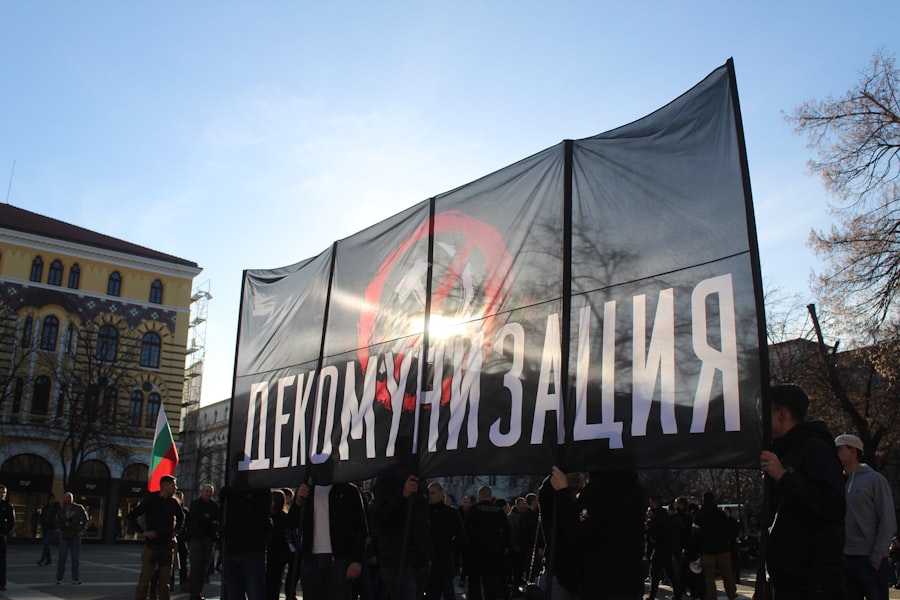
The year 1989 became synonymous with the dramatic and largely peaceful collapse of communism across Eastern Europe. Inspired by the changes within the Soviet Union and emboldened by the weakening of Soviet resolve, citizens in country after country began to assert their demands for freedom and democracy. The events unfolded with breathtaking speed, each successful revolution further fueling the desire for change in neighboring nations.
Poland: The Solidarity Movement and the Round Table Talks
Poland served as a vanguard in the struggle against communism. The independent trade union Solidarity, founded in 1980, had already demonstrated the power of organized popular resistance. Facing mounting pressure and economic crisis, the Polish government, after years of suppression, entered into negotiations with Solidarity in what became known as the “Round Table Talks.” These historic talks led to semi-free elections in June 1989, which resulted in a landslide victory for Solidarity and the formation of the first non-communist government in the Eastern Bloc since the late 1940s.
- Lech Wałęsa and the Symbol of Resistance: The charismatic leadership of Lech Wałęsa, a shipyard electrician and co-founder of Solidarity, provided a unifying figure for the opposition.
- The Significance of Semi-Free Elections: The agreement to hold elections, even if initially only partially free, was a monumental concession by the communist regime and a clear indication of its declining power.
- A Peaceful Transition: The Polish experience, characterized by negotiation and compromise, offered a model for peaceful transitions away from communist rule.
Hungary: The Opening of the Iron Curtain and the Fall of the Wall
Hungary played a crucial role in weakening the physical barriers of the Iron Curtain. In May 1989, Hungary began dismantling its border fortifications with Austria, creating a physical breach that would have profound implications. This paved the way for thousands of East Germans to escape to the West through Hungary, creating a burgeoning crisis for the East German regime. The opening of the Hungarian border became a symbolic act of defiance against the division of Europe.
- The Pan-European Picnic: A symbolic opening of the border at the Hungarian-Austrian frontier, known as the Pan-European Picnic, allowed hundreds of East Germans to cross into the West, further highlighting the fragility of the Iron Curtain.
- Mass Exodus of East Germans: The flow of East Germans through Hungary placed immense pressure on the GDR, accelerating calls for reform and freedom of travel.
- The Domino Effect on East Germany: The successful exodus through Hungary and the growing protests within East Germany directly contributed to the eventual fall of the Berlin Wall.
The Fall of the Berlin Wall: A Symbol of Freedom’s Triumph
The most iconic moment of the 1989 revolutions was undoubtedly the fall of the Berlin Wall on November 9, 1989. For nearly three decades, the Wall had stood as a stark physical and ideological barrier, separating families, friends, and a nation. When the East German government, overwhelmed by protests and a mass exodus of its citizens, announced relaxed travel regulations, the news was misinterpreted as an immediate opening of the border. Thousands of East Berliners flocked to the Wall, and in a spontaneous and joyous outpouring of emotion, border guards, faced with an unstoppable tide of people, opened the gates.
- The Power of People Power: The fall of the Wall was a testament to the power of ordinary people to challenge and dismantle oppressive regimes through peaceful protest.
- A Global Symbol of Hope: The images of jubilant crowds celebrating atop the Wall and chipping away at its concrete structure became a global symbol of freedom, hope, and the end of division.
- The Immediate Aftermath: The fall of the Wall led to the rapid reunification of Germany, a process that had been unimaginable just months before.
Czechoslovakia: The Velvet Revolution
Czechoslovakia experienced its own transformation through the “Velvet Revolution,” a series of largely peaceful demonstrations and strikes that began in November 1989. The brutal suppression of a student protest by the communist authorities ignited widespread public outrage, leading to mass demonstrations across the country. Within weeks, the Communist Party relinquished its monopoly on power, and negotiations led to the establishment of a democratic government. The transition was remarkably swift and remarkably peaceful, earning it the moniker “Velvet Revolution.”
- Student Protests as the Spark: The initial crackdown on students galvanized public opinion and served as a catalyst for broader protests.
- Václav Havel and the Moral Authority: The intellectual and moral authority of playwright Václav Havel, a prominent dissident, played a crucial role in unifying the opposition and guiding the transition to democracy.
- The Peaceful Dissolution of the Federation: The Velvet Revolution ultimately led to the peaceful dissolution of Czechoslovakia into the Czech Republic and Slovakia in 1993, a testament to the region’s commitment to democratic principles.
Romania: The Violent End to Ceaușescu’s Reign
In stark contrast to the largely peaceful transitions elsewhere, Romania’s revolution was marked by violence. Under the iron rule of Nicolae Ceaușescu, Romania had maintained a relatively hard-line communist regime. Protests against his oppressive rule, sparked by events in other Eastern Bloc countries and fueled by widespread discontent over economic hardship and repression, erupted in cities like Timișoara. The regime’s violent response to these protests led to a nationwide uprising, culminating in the overthrow and subsequent execution of Ceaușescu and his wife on Christmas Day 1989.
- Ceaușescu’s Brutal Repression: The stark contrast between Romania’s experience and the peaceful revolutions elsewhere highlighted the unique brutality of Ceaușescu’s regime.
- The Role of the Army: The eventual defection of the army from Ceaușescu’s side was a critical factor in his downfall.
- A Scarred Transition: While the revolution brought an end to dictatorship, the violence and subsequent political instability left lasting scars on the country.
The Aftermath: A New European Order and Lingering Challenges

The fall of communism in Eastern Europe ushered in an era of profound geopolitical realignment and presented a new set of challenges and opportunities for the continent. The ideological division that had defined the Cold War for decades evaporated, leading to the reunification of Germany and the eastward expansion of both NATO and the European Union. However, the transition was not without its difficulties, and the legacy of communist rule continued to shape the societies of Eastern Europe for years to come.
The End of the Cold War and a Unipolar World
The collapse of the Soviet bloc signaled the definitive end of the Cold War. The ideological and geopolitical rivalry between the United States and the Soviet Union, which had dominated international relations for over four decades, ceased to exist. This led to a shift towards a more unipolar world, with the United States emerging as the sole superpower.
- New Geopolitical Landscape: The redrawing of maps and the emergence of new nations created a complex and dynamic geopolitical landscape.
- The Dissolution of the Warsaw Pact: The military alliance of the Warsaw Pact, the Soviet Union’s counterpart to NATO, dissolved, marking the end of a major military bloc.
- The Rise of New Conflicts: While the overarching superpower conflict ended, the vacuum of power and the resurgence of nationalist sentiments also contributed to the emergence of new regional conflicts, particularly in the Balkans.
Economic Transitions and the Lure of Capitalism
The transition from centrally planned economies to market-based capitalism proved to be a complex and often painful process for the countries of Eastern Europe. While the allure of Western prosperity was strong, the dismantling of state-owned enterprises, privatization, and the integration into the global economy led to significant economic restructuring.
- Privatization and its Discontents: The privatization of state assets was often controversial, leading to concerns about corruption, asset stripping, and the rise of a new class of wealthy elites.
- Unemployment and Social Inequality: The rapid economic changes resulted in widespread unemployment and increased social inequality, as some segments of the population struggled to adapt.
- Integration into the Global Economy: The desire to join Western economic structures like the European Union drove many reforms, but also exposed these economies to the volatility of global markets.
Democratic Consolidation and the Rule of Law
The establishment of democratic institutions and the consolidation of the rule of law were central to the post-communist transformation. While many countries made significant strides, the process of building robust democratic systems, independent judiciaries, and effective governance structures took time and faced numerous obstacles.
- The Challenge of Institutional Building: Rebuilding institutions from the ground up, after decades of communist control, was a monumental task.
- Corruption and Governance Issues: Lingering corruption and challenges in establishing effective governance structures continued to plague some nations.
- The Importance of Civil Society: The growth and empowerment of civil society organizations played a crucial role in holding governments accountable and promoting democratic values.
The fall of communism in Eastern Europe marked a significant turning point in global history, reshaping political landscapes and inspiring movements for democracy worldwide. A fascinating article that delves deeper into the factors leading to this monumental shift can be found at In The War Room, where it explores the social and economic challenges that fueled the desire for change among Eastern European nations. Understanding these dynamics provides valuable insights into the resilience of people striving for freedom and the impact of grassroots movements in the region.
The Legacy of 1989: A World Transformed
| Country | Date of Fall | Key Events |
|---|---|---|
| Poland | 1989 | Solidarity movement, Round Table Talks |
| Hungary | 1989 | Opening of the border with Austria |
| Czechoslovakia | 1989 | Velvet Revolution, Vaclav Havel elected president |
| East Germany | 1989 | Fall of the Berlin Wall |
| Romania | 1989 | Execution of Nicolae Ceausescu |
The fall of communism in Eastern Europe in 1989 stands as one of the most significant turning points of the 20th century. It was a testament to the enduring human desire for freedom, self-determination, and dignity. The events of that year not only reshaped the political map of Europe but also had profound implications for the global order, ushering in an era of unprecedented change and offering a powerful reminder of the potential for peaceful revolution.
A Triumph of Human Aspirations
The primary legacy of 1989 is the triumph of human aspirations for freedom and democracy. The courage and resilience of ordinary citizens who risked their lives to challenge oppressive regimes inspired the world and demonstrated that even the most entrenched dictatorships are not invincible.
- The End of Ideological Blocs: The collapse of communism effectively ended the bipolar world of the Cold War and the ideological struggle between communism and capitalism.
- The Spread of Democratic Ideals: The success of the Eastern European revolutions fueled the spread of democratic ideals and inspired movements for change in other parts of the world.
Lingering Questions and the Ongoing Evolution of Europe
Despite the triumphs, the legacy of 1989 is not without its complexities. The transition to democracy and market economies has been uneven, and many countries continue to grapple with the economic, social, and political challenges inherited from the communist era. The rise of new political trends and the ongoing evolution of the European Union demonstrate that the story of post-communist Europe is still being written.
- The East-West Divide Within Europe: While Europe is now largely united, subtle economic and social divides between former Eastern and Western bloc countries persist.
- The Rise of Nationalism and Populism: In some post-communist states, resurgent nationalism and populist movements have emerged, posing new challenges to democratic stability.
- The Continuing Relevance of Freedom: The lessons of 1989 remain profoundly relevant today, reminding us of the constant need to defend democratic values and safeguard human rights in the face of authoritarianism and repression. The fall of communism was not an end, but a beginning, a pivotal moment that continues to shape our world.

The $17 Million That Helped Destroy an Empire
FAQs
What led to the fall of communism in Eastern Europe?
The fall of communism in Eastern Europe was primarily due to a combination of factors including economic stagnation, political repression, and the influence of the Soviet Union.
When did the fall of communism in Eastern Europe occur?
The fall of communism in Eastern Europe began in 1989 with the collapse of the Berlin Wall and culminated in 1991 with the dissolution of the Soviet Union.
Which countries in Eastern Europe were most affected by the fall of communism?
Countries such as Poland, Hungary, Czechoslovakia, East Germany, and Romania were among the most affected by the fall of communism in Eastern Europe.
What were the immediate effects of the fall of communism in Eastern Europe?
The immediate effects of the fall of communism in Eastern Europe included the transition to democratic governments, the privatization of state-owned industries, and the integration of these countries into the global economy.
How did the fall of communism in Eastern Europe impact the world?
The fall of communism in Eastern Europe had a significant impact on the world, leading to the end of the Cold War, the expansion of NATO, and the emergence of new geopolitical dynamics in Europe.