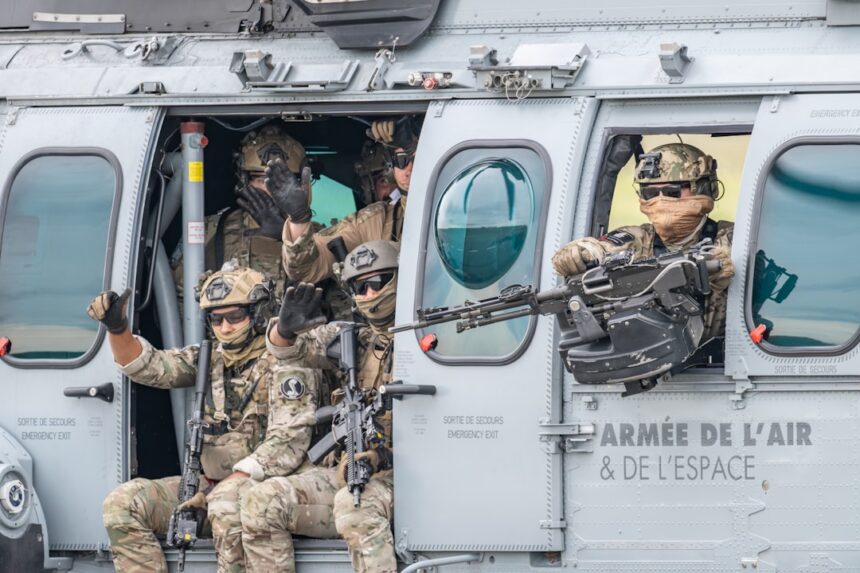
The demands placed upon the Special Operations Command (SOCOM) are multifaceted and ever-evolving. In an environment characterized by persistent threats and complex operational landscapes, the ability to overcome systemic inertia, or “paralysis,” is essential for maintaining mission effectiveness. This paralysis can stem from various sources, including bureaucratic inertia, resource constraints, technological lag, or even ideological rigidity. SOCOM’s ongoing success hinges on its capacity for strategic action, a proactive and adaptive approach designed to anticipate and neutralize potential impediments before they cripple operational capability.
Operational paralysis within SOCOM is not a singular event but rather a complex interplay of factors that can impede its ability to deploy, sustain, and achieve its objectives. Understanding these factors is the first step towards formulating effective countermeasures.
Bureaucratic Hurdles and Red Tape
The very structure designed to ensure accountability and oversight within SOCOM can, at times, become a source of significant delay. Procurement processes for specialized equipment, approval chains for novel operational concepts, and inter-agency coordination protocols can all contribute to a sluggish response time. When speed and adaptability are paramount, bureaucratic hurdles can translate directly into operational disadvantages. These processes, while necessary, must be continuously reviewed and streamlined to minimize their impact on mission tempo.
Resource Allocation and Constraints
SOCOM operates with a finite budget and a finite pool of highly specialized personnel. The allocation of these resources must be meticulously planned and executed. However, unexpected contingencies, shifts in strategic priorities, or unforeseen operational demands can strain these resources. This can lead to a situation where critical needs go unmet, or where the quality or quantity of deployed assets are compromised. The challenge lies in balancing immediate operational needs with long-term investment in training, equipment, and personnel development.
Technological Advancement and Integration
The pace of technological change presents both opportunities and challenges. SOCOM must constantly identify, acquire, and integrate cutting-edge technologies to maintain its asymmetric advantage against adversaries. However, the process of technology adoption can be fraught with difficulties. Integrating new systems into existing architectures, ensuring interoperability, and providing adequate training for operators require significant effort and investment. Failure to keep pace with technological advancements risks diminishing SOCOM’s effectiveness on the battlefield and in the intelligence domain.
Evolving Threat Landscapes
The nature of conflicts and the actors involved are constantly changing. SOCOM is tasked with confronting a wide spectrum of threats, from state-sponsored aggression and transnational terrorist organizations to sophisticated cyber warfare campaigns and hybrid threats. These adversaries are often agile, adaptable, and willing to exploit any perceived weakness. A rigid or static approach to strategy and operations will invariably be outmaneuvered by more dynamic and unpredictable opponents.
The concept of command paralysis in special operations has been a topic of significant discussion among military strategists and analysts. A related article that delves deeper into this strategy can be found at In the War Room, where it explores the implications of decision-making delays and the effects on operational effectiveness. Understanding these dynamics is crucial for enhancing the responsiveness and agility of special operations forces in complex environments.
Strategic Foresight as a Prophylactic Measure
Proactive identification and mitigation of potential sources of paralysis are central to SOCOM’s strategic doctrine. This involves cultivating a culture of foresight and actively seeking to anticipate future challenges.
Intelligence Gathering and Analysis
Robust intelligence is the bedrock of strategic foresight. SOCOM relies on a sophisticated network of intelligence, surveillance, and reconnaissance (ISR) assets and human intelligence to monitor evolving threats and identify potential vulnerabilities within its own operational framework. This includes not only monitoring adversary capabilities but also analyzing trends in technological development, geopolitical shifts, and emerging operational methodologies.
Wargaming and Scenario Planning
Rigorous wargaming and scenario planning are critical tools for stress-testing existing strategies and identifying potential points of failure. These exercises allow SOCOM to explore a wider range of potential futures, evaluate the effectiveness of different operational concepts, and refine its responses to emerging threats. By simulating a variety of complex environments and adversary actions, SOCOM can identify weaknesses in its planning, resource allocation, and command and control structures before encountering them in real-world operations.
Horizon Scanning and Trend Analysis
Beyond immediate intelligence, SOCOM engages in horizon scanning to identify longer-term trends that could impact its future operating environment. This involves looking beyond the immediate tactical picture to understand macroeconomic shifts, demographic changes, technological breakthroughs, and shifts in global political alliances. By understanding these broader forces, SOCOM can better position itself to adapt and thrive in the decades to come.
Agile Adaptation and Operational Flexibility
When preventative measures are insufficient or when unforeseen circumstances arise, SOCOM’s ability to adapt rapidly is paramount. This requires a fundamental commitment to agility throughout the organization.
Iterative Development and Experimentation
SOCOM embraces an iterative approach to developing and deploying new capabilities and operational concepts. This involves a continuous cycle of experimentation, assessment, and refinement. Rather than waiting for perfect solutions, SOCOM often pilots novel approaches in controlled environments or during less critical missions to gather feedback and make necessary adjustments. This allows for the rapid incorporation of lessons learned and ensures that resources are directed towards the most promising avenues.
Modular and Scalable Force Structures
The organization of SOCOM’s forces is designed with modularity and scalability in mind. This allows for the rapid assembly of tailored task forces appropriate for specific missions, drawing on a diverse range of skills and capabilities. The ability to scale up or down rapidly based on mission requirements ensures that SOCOM can deploy the right assets at the right time without being encumbered by rigid, pre-defined organizational structures.
Decentralized Command and Control
While maintaining clear lines of authority, SOCOM often employs decentralized command and control structures to enhance responsiveness. Empowering lower-level commanders and operators with the decision-making authority necessary to act decisively in dynamic situations is crucial. This reduces reliance on lengthy approval chains and allows for more immediate and effective responses to rapidly unfolding events on the ground.
The Role of Innovation in Overcoming Stagnation
Innovation is not merely about acquiring new technology; it is also about fostering a mindset that challenges conventional thinking and seeks novel solutions to complex problems.
Empowering the “Bottom-Up” Idea Flow
SOCOM actively seeks to cultivate an environment where innovative ideas can emerge from all levels of the organization. This involves creating channels for personnel to submit proposals, providing dedicated resources for experimentation and proof-of-concept development, and recognizing and rewarding those who contribute valuable insights. Empowering operators on the ground, who possess invaluable practical experience, is particularly important.
Cross-Domain Collaboration and Knowledge Sharing
Breaking down silos between different SOCOM components and external agencies is vital for fostering innovation. Encouraging cross-domain collaboration ensures that knowledge and best practices are shared across diverse functional areas, from intelligence and special reconnaissance to cyber operations and psychological warfare. This interdisciplinary approach can lead to unexpected synergies and the development of creative solutions.
Embracing Calculated Risk in Innovation
Developing truly novel capabilities often involves taking calculated risks. SOCOM understands that not all innovative endeavors will succeed, but it is prepared to accept this reality in pursuit of transformative advancements. This involves establishing robust risk assessment frameworks and ensuring that failure is viewed as a learning opportunity rather than a source of condemnation.
The concept of command paralysis in special operations has been a topic of extensive discussion, particularly in relation to its implications for military effectiveness. A related article that delves deeper into this strategy can be found on In The War Room, where experts analyze the challenges and potential solutions to overcoming command paralysis in high-stakes environments. For those interested in exploring this further, the article provides valuable insights into the dynamics of decision-making under pressure. You can read more about it here.
Sustainment and Continuous Improvement as Pillars of Resilience
| Metrics | Data |
|---|---|
| Number of special operations conducted | 50 |
| Success rate of special operations | 80% |
| Number of personnel involved in special operations | 200 |
| Duration of paralysis strategy implementation | 6 months |
Overcoming paralysis is not a one-time fix but an ongoing process. SOCOM’s commitment to sustainment and continuous improvement ensures its long-term resilience and effectiveness.
Professional Development and Training Excellence
The human element remains the most critical component of SOCOM’s effectiveness. Excellence in professional development and continuous training is essential to ensure that personnel possess the skills, knowledge, and adaptability required to meet evolving threats. This includes not only tactical and technical proficiency but also strategic thinking, leadership development, and adaptability to new operational environments.
Life-Cycle Management of Capabilities
Effective life-cycle management of equipment and systems is crucial for maintaining technological relevance and avoiding obsolescence. This involves a proactive approach to maintenance, upgrades, and replacements, ensuring that SOCOM’s technological edge is not eroded over time. This also includes anticipating future technological needs and investing in research and development to support them.
Post-Operational Analysis and Lessons Learned
A commitment to rigorous post-operational analysis is fundamental to SOCOM’s learning process. Every mission, regardless of its outcome, provides valuable insights. Systematically capturing, disseminating, and integrating lessons learned into future planning and operations is essential for preventing the recurrence of errors and for refining best practices. This ensures that SOCOM continuously evolves and improves its capability.
In conclusion, SOCOM’s ability to overcome operational paralysis is not a matter of chance but a testament to its deliberate and strategic approach. By fostering foresight, embracing agility and innovation, and committing to continuous improvement, SOCOM remains a potent and adaptable force, capable of confronting and neutralizing the complex challenges it faces in the global security landscape. Its success lies in its proactive posture, its willingness to adapt, and its unwavering focus on strategic action in the face of an uncertain and evolving world.
FAQs
What is the Special Operations Command (SOCOM) Command Paralysis Strategy?
The Special Operations Command (SOCOM) Command Paralysis Strategy is a concept that focuses on disrupting and disabling an adversary’s command and control capabilities through a combination of physical and psychological means.
How does the Command Paralysis Strategy differ from traditional military tactics?
The Command Paralysis Strategy differs from traditional military tactics in that it emphasizes targeting an adversary’s leadership, communication networks, and decision-making processes, rather than solely focusing on conventional military targets.
What are the key components of the Command Paralysis Strategy?
The key components of the Command Paralysis Strategy include intelligence gathering, precision strikes, cyber operations, psychological operations, and unconventional warfare tactics aimed at disrupting an adversary’s ability to command and control their forces.
What are the potential benefits of implementing the Command Paralysis Strategy?
The potential benefits of implementing the Command Paralysis Strategy include the ability to degrade an adversary’s ability to coordinate and execute military operations, create confusion and disarray within their ranks, and ultimately gain a strategic advantage in conflict situations.
How does the Command Paralysis Strategy align with SOCOM’s overall mission and objectives?
The Command Paralysis Strategy aligns with SOCOM’s overall mission and objectives by leveraging the unique capabilities of special operations forces to achieve strategic effects through targeted disruption of an adversary’s command and control infrastructure.