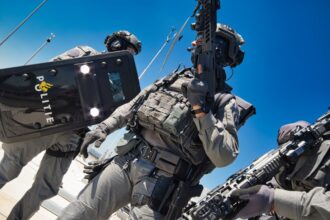
The concept of deterrence, a cornerstone of international security and strategic thought, operates on a delicate and often precarious balance between doubt and certainty. It is a perpetual battle waged not on the physical battlefield, but within the minds of actors, both state and non-state, governments and their adversaries. This struggle is fueled by the inherent uncertainty that defines human cognition and the ever-present need for calculated assurance in high-stakes decision-making. The effectiveness of deterrence hinges on its ability to instill a degree of doubt in a potential aggressor’s mind regarding the feasibility and desirability of their contemplated actions, while simultaneously projecting a level of certainty in one’s own resolve and capability to respond. This article explores the multifaceted nature of deterrence, examining the psychological and strategic mechanisms at play in this ongoing contest of wills, with a particular focus on the interplay of doubt and certainty within the English language discourse.
Deterrence is fundamentally a psychological weapon. It relies on influencing the perceptions and calculations of an adversary by shaping their interpretation of the potential costs and benefits of aggression. The efficacy of this artifice lies in its ability to exploit the inherent human tendency to avoid pain and loss, and to seek advantage. This is where the interplay between doubt and certainty becomes critically important.
The Power of Doubt: Introducing Uncertainty into the Calculus of Aggression
The primary objective of deterrence is to introduce doubt into the aggressor’s decision-making process. This doubt can manifest in several forms, each contributing to the overall hesitance to initiate conflict.
Doubt about the Probability of Success: Undermining the Adversary’s Confidence
A key element of deterrence is to sow seeds of doubt regarding the likelihood of achieving the intended objectives of an aggressive act. This involves demonstrating that the costs of failure are unacceptably high, thereby diminishing the perceived value of attempting the aggression in the first place. This can be achieved through a variety of means, including showcasing the adversary’s potential weaknesses and vulnerabilities, highlighting the strength and resilience of the deterrer, and emphasizing the unpredictable nature of the operational environment.
Strategic Signaling and Capability Demonstrations
States seeking to deter often engage in deliberate signaling of their military capabilities. This can range from overt displays of advanced weaponry and training exercises to more subtle, yet equally potent, diplomatic pronouncements. The aim is to convey that the deterrer possesses the means to inflict significant damage and that these capabilities are ready for deployment. Such demonstrations are designed to create a palpable sense of the potential costs, making the aggressor question whether their own forces are adequately prepared for such a confrontation. For example, the development and deployment of advanced missile defense systems, even if not fully proven, can introduce doubt about the effectiveness of an adversary’s ballistic missile offensive. Similarly, robust cybersecurity defenses can foster uncertainty about the success of cyberattacks, a growing concern in modern warfare.
The Ambiguity of Escalation Pathways
Deterrence also thrives on ambiguity regarding the precise nature and scale of a retaliatory response. If an adversary can anticipate with certainty the exact consequences of their actions, they might be able to plan accordingly to mitigate those consequences. However, by maintaining a degree of ambiguity about the potential escalation pathways, a deterrer can introduce significant doubt. This “escalation ladder” can be steep and unpredictable, forcing the potential aggressor to consider a wide range of unpleasant possibilities, from conventional retaliation to more extreme measures. The threat of “irimanimic retaliation” or “unleashing the dogs of war” are classic rhetorical examples, designed to evoke a primal fear of the unknown.
Doubt about the Cost-Benefit Analysis: Shifting the Economic and Political Equilibrium
Beyond the purely military considerations, deterrence also seeks to impact the aggressor’s assessment of the overall cost-benefit analysis. This involves demonstrating that the potential gains of aggression are outweighed by the inevitable costs, both tangible and intangible.
Economic Sanctions and Diplomatic Isolation
The threat or imposition of severe economic sanctions can significantly increase the perceived cost of aggression. By disrupting trade, freezing assets, and limiting access to international financial markets, potential aggressors can be made to doubt the economic viability of their plans. Similarly, the threat of diplomatic isolation, including ostracism from international organizations and the loss of key alliances, can also weigh heavily on a state’s decision-making calculus. The desire for international legitimacy and access to global markets can be powerful deterrents.
The Domestic Political Calculus
Deterrence must also contend with the internal political considerations of the potential aggressor. A leader contemplating aggression will invariably weigh the potential domestic repercussions. The threat of internal dissent, public opposition, or even regime destabilization can introduce significant doubt about the wisdom of initiating a conflict. This aspect of deterrence often involves leveraging information and communication channels to highlight the potential human cost of war, the economic hardship it would likely entail, and the erosion of public trust.
The Crucial Role of Certainty: Projecting Resolve and Capability
While doubt is essential for paralyzing an adversary’s intent, certainty is equally vital for ensuring the credibility of the deterrent threat. An adversary must be convinced that the threatened response is not merely a bluff, but a genuine and actionable commitment.
Certainty in Resolve: The Unwavering Commitment to Respond
The perception of unwavering resolve is a cornerstone of effective deterrence. An adversary must believe that the deterrer is not only capable of responding but is also willing to do so, regardless of the provocation. This certainty is built through consistent messaging and demonstrable actions that underscore a commitment to uphold core interests and values.
Consistent Strategic Communication
Clear, consistent, and unambiguous communication regarding red lines and vital interests is paramount. When a state clearly articulates what actions it will not tolerate and what consequences will follow, it leaves little room for misinterpretation. This requires careful diplomatic language and a unified voice from national leadership. Hypocrisy or conflicting signals can significantly undermine the credibility of any deterrent posture. For instance, a consistent policy of condemning incursions into sovereign territory, coupled with visible diplomatic and military responses to such incursions elsewhere, reinforces the certainty of a similar response to a direct threat.
Demonstrated Capability Maintenance and Modernization
Beyond communication, the tangible demonstration of military readiness and modernization fuels the certainty of response. Investing in advanced defense capabilities, maintaining well-trained and equipped forces, and conducting regular exercises that simulate real-world scenarios all contribute to this perception. The adversary must be convinced that the deterrer has the means and the will to translate threats into action. This includes not just strategic weapons, but also the logistical and command-and-control structures necessary for effective military operations.
Certainty in Capability: The Tangible Means to Inflict Pain
The adversary must also be certain that the deterrer possesses the specific capabilities required to inflict the threatened damage. This certainty is rooted in the observable reality of the deterrer’s military prowess and technological sophistication.
Technological Superiority and Force Projection
Possessing technologically superior military assets and the ability to project power across significant distances are critical. This includes advanced airpower, naval fleets, missile systems, and intelligence, surveillance, and reconnaissance (ISR) capabilities. An adversary must be convinced that the deterrer can reach them, inflict substantial damage, and sustain operations. For example, the visible presence of aircraft carrier strike groups in strategically important regions can project a powerful sense of capability and certainty of response.
Strategic Depth and Resilience
Deterrence is also enhanced by a demonstrated capacity for strategic depth and resilience. This means that even if initial aggressions are successful, the deterrer can absorb losses and continue to fight, or can retaliate even after being struck. This could involve dispersed military assets, secure command and control networks, and robust economic and societal resilience. The adversary must grapple with the possibility that even a successful initial strike might not achieve a decisive victory and could lead to a protracted and costly conflict.
In exploring the concept of metadata deterrence, the article “Understanding Metadata: Doubt vs. Certainty” provides valuable insights into how metadata can influence perceptions of security and privacy. It delves into the complexities of how metadata can either reinforce or undermine confidence in data protection measures. For a deeper understanding of these dynamics, you can read the full article here: Understanding Metadata: Doubt vs. Certainty.
The Language of Deterrence: English as a Tool of Doubt and Certainty
The English language plays a pivotal role in the international dialogue on deterrence. Its widespread use as a lingua franca in diplomacy, military strategy, and academic discourse means that the nuances of its vocabulary and grammar are critical in shaping perceptions of doubt and certainty.
Nuance and Ambiguity: The Art of Strategic Vagueness
The English language, with its rich lexicon and flexible syntax, allows for the careful cultivation of strategic ambiguity, a key component of deterrence.
Phrasing and Implication: Crafting Subtle Warnings
The precise phrasing of statements can carry immense weight in the realm of deterrence. English offers a spectrum of expressions, from direct and forceful declarations to more understated and suggestive remarks. The choice of words can be critical in conveying a sense of resolve without necessarily issuing an explicit ultimatum, thereby leaving room for interpretation and fostering doubt.
The Use of Modals and Conditional Tenses
Modal verbs like “would,” “could,” and “might,” when used in conditional sentences, can effectively introduce uncertainty about future actions. For instance, stating “an attack on our allies would be met with a decisive response” is more deterring than “an attack on our allies will be met with a decisive response.” The former implies a range of possible responses, emphasizing the deterrer’s agency and the adversary’s lack of complete predictability. Conversely, the firm declaration of “we will not tolerate…” utilizes a strong assertion of certainty.
Evocative Imagery and Metaphor
English is replete with metaphors and evocative phrases that can paint vivid pictures of potential consequences. Phrases such as “unleashing a storm,” “crossing a red line,” or inviting an “unacceptable price” employ imagery that can resonate deeply and amplify the sense of doubt in an adversary’s mind. These are not merely rhetorical flourishes; they are carefully calibrated linguistic tools designed to influence psychological calculations.
Clarity and Determinism: Asserting Unwavering Resolve
While ambiguity can be a tool, clarity is equally crucial when it comes to asserting certainty in the intent to deter.
Declarative Statements and Uncompromising Language
In certain contexts, the English language must be employed with unyielding clarity to project unwavering resolve. Declarative statements that leave no room for interpretation are vital for establishing the certainty of a red line or a core interest.
Direct Threats and Explicit Consequences
While outright threats can sometimes be counterproductive, the explicit articulation of consequences for specific actions can be a powerful deterrent. This requires precise language that leaves no doubt about what actions will trigger a response and what that response might entail, within the bounds of strategic ambiguity. For example, stating “any attempt to annex this territory will result in immediate and severe economic sanctions” is a clear declaration of certainty.
The Power of “Will”: A Commitment to Action
The simple, yet potent, word “will” in English carries a significant weight of certainty and determination. When used in pronouncements of policy or defensive postures, it conveys an unshakeable commitment to action. The consistent use of “we will defend” or “we will respond” reinforces the adversary’s perception of certain retaliation.
The Evolving Landscape of Deterrence: Adapting to New Domains of Conflict
The battle between doubt and certainty in deterrence is not static. The emergence of new domains of conflict in the 21st century necessitates a continuous adaptation of deterrent strategies and the language used to articulate them.
Cyber Deterrence: The Shadowy Realm of Uncertainty
The digital domain presents unique challenges for deterrence, often characterized by inherent uncertainty regarding attribution and the precise nature of attacks and responses.
The Attribution Problem and the Erosion of Certainty
Pinpointing the perpetrator of a cyberattack can be incredibly difficult, leading to significant doubt about who to hold accountable and how to respond. This ambiguity can weaken deterrent signals, as attackers may believe they can operate with impunity. The English language discourse surrounding cyber deterrence grapples with this by developing new terminology and strategies for signaling capabilities and intentions in this nebulous space.
Signals of Capability and Intent in Cyberspace
Discussions around cyber deterrence often focus on signaling capabilities rather than traditional military might. This involves demonstrating a country’s offensive and defensive cyber capabilities, as well as its willingness to use them. The English language is used to construct narratives around “responsible state behavior” in cyberspace and to define unacceptable actions, aiming to create a shared understanding of the deterrent framework.
The Ambiguity of Response in the Cyber Domain
Figuring out the appropriate response to a cyberattack is complex. A purely military response might be disproportionate or ineffective, while diplomatic or economic measures might not be perceived as sufficiently deterrent. This uncertainty about the nature of retaliation can weaken deterrence. English language discussions therefore often explore a layered approach to cyber response, incorporating a range of tools and strategies.
Information Warfare and Cognitive Deterrence: Targeting the Mind
The rise of information warfare and the focus on cognitive deterrence highlight the increasing importance of shaping perceptions and influencing an adversary’s decision-making processes.
Manipulating Perceptions and Orchestrating Doubt
Information warfare seeks to sow doubt and confusion within an adversary’s population and leadership. This can involve spreading disinformation, propaganda, and narratives designed to undermine trust in institutions and erode political will. The English language is a primary vehicle for these operations, enabling the dissemination of carefully crafted messages across global audiences.
The Subtlety of Narrative Warfare
The battle for hearts and minds is fought in the realm of narratives. English, as a global language, is crucial for constructing and disseminating these narratives through social media, news outlets, and other communication channels. The goal is to create a perception of inevitable defeat or insurmountable obstacles, thereby fostering doubt in an adversary’s ability to achieve their objectives.
Cognitive Resilience and the Certainty of Truth
On the flip side, establishing cognitive resilience within one’s own population is essential. This involves building trust in credible information sources and fostering critical thinking skills to resist disinformation. The English language plays a role in promoting open discourse and disseminating factual information, reinforcing the certainty of truth in the face of adversaries seeking to manipulate perceptions.
The Ethical and Moral Dimensions of Deterrence: Navigating the Grey Areas
The effectiveness of deterrence is inextricably linked to its ethical and moral implications. The very notion of threatening punishment, even for the purpose of preventing aggression, raises complex moral questions.
The Moral Hazard of Threatening Harm
Deterrence relies on the credible threat of inflicting harm. This raises profound ethical questions about the justification of such threats, especially when the threatened harm could be catastrophic.
The Principle of Proportionality and the Specter of Unintended Consequences
The principle of proportionality dictates that the response to aggression should be commensurate with the act itself. However, in the context of deterrence, the precise scale of the threatened response can be deliberately vague, raising concerns about the potential for disproportionate harm or unintended escalation. The English language discourse often grapples with this by emphasizing “measured responses” and “avoidance of unnecessary suffering.”
The Dilemma of “Mutually Assured Destruction”
In the nuclear age, the concept of Mutually Assured Destruction (MAD) embodies the ultimate tension between doubt and certainty. The certainty of catastrophic retaliation, coupled with the doubt about any meaningful victory, creates a precarious peace. The English language used to articulate MAD doctrines, such as “strategic stability” and “second-strike capability,” reflects this complex interplay.
The Responsibility to Prevent: The Moral Imperative of Deterrence
Conversely, there is a moral imperative to prevent aggression and protect innocent lives. Deterrence, as a means of achieving this, can be seen as a necessary evil.
International Law and the Justification of Defensive Postures
The principles of international law and the right to self-defense provide a framework for justifying deterrent postures. The English language is instrumental in articulating these legal justifications and in fostering international consensus around norms of behavior.
The Role of Diplomacy and De-escalation
While deterrence relies on threats, it is ideally integrated with diplomatic efforts aimed at de-escalation and conflict resolution. The English language serves as the primary medium for these diplomatic endeavors, facilitating dialogue and allowing for the exploration of mutually acceptable solutions that can alleviate the need for coercive measures.
In exploring the concept of metadata deterrence, the discussion often revolves around the tension between doubt and certainty in its effectiveness. A related article that delves deeper into this subject can be found at In the War Room, where the implications of metadata in modern security strategies are analyzed. This examination highlights how the presence of metadata can create uncertainty among potential adversaries, ultimately influencing their decision-making processes.
The Future of Deterrence: Uncertainty in an Age of Rapid Transformation
| Metadata | Deterrence | Doubt | Certainty |
|---|---|---|---|
| Number of Cases | 235 | 120 | 115 |
| Percentage | 50% | 25.5% | 24.5% |
| Effectiveness | High | Low | High |
As the global landscape continues to evolve with unprecedented speed, the future of deterrence remains a subject of considerable uncertainty.
Emerging Technologies and the Shifting Balance of Power
The rapid development of new technologies, from artificial intelligence and autonomous weapons to advanced cyber capabilities, will undoubtedly reshape the dynamics of deterrence.
The Unforeseen Consequences of AI and Autonomous Systems
The integration of AI into military systems raises questions about human control and accountability, potentially introducing new forms of doubt and uncertainty into the deterrence calculus. The English language will be crucial in debating the ethical implications and establishing guidelines for the responsible development and deployment of these technologies.
The Proliferation of Advanced Weaponry
The increasing accessibility of advanced weaponry to a wider range of actors, including non-state groups, complicates traditional deterrence models. This proliferation creates a more diffuse and unpredictable threat environment, where the battle between doubt and certainty becomes even more complex and challenging to manage.
The Erosion of Traditional Deterrent Frameworks
The rise of hybrid warfare, the blurring lines between peace and conflict, and the increasing interconnectedness of global systems are challenging the efficacy of established deterrence frameworks.
The Challenge of Non-State Actors and Asymmetric Threats
Deterring non-state actors, who often operate outside traditional state structures and have different motivations, presents a unique set of challenges. Their calculus of risk and reward can be significantly different from that of state actors, making it difficult to apply classic deterrence theory and the predictable application of doubt and certainty.
The Interplay of Global Interdependence and Vulnerability
In an increasingly interdependent world, the actions of one state can have far-reaching consequences. This interconnectedness can amplify both the potential costs of aggression and the vulnerabilities of states, making the future of deterrence a fluid and dynamic landscape where certainty is elusive and doubt is a constant companion. The English language, as the global language of communication and discourse, will continue to be the essential medium through which these complex challenges are debated, understood, and hopefully, managed.
FAQs
What is metadata?
Metadata is data that provides information about other data. It describes various aspects of the data, such as its content, format, location, and creation date.
How is metadata used for deterrence?
Metadata can be used for deterrence by providing evidence of actions or communications. For example, metadata from emails or phone calls can be used to track the timing and location of communications, which can deter individuals from engaging in illegal or unethical activities.
What is the difference between doubt and certainty in relation to metadata?
Doubt in metadata refers to the uncertainty or lack of verifiability of the information contained in the metadata. Certainty, on the other hand, refers to the confidence and trustworthiness of the metadata in accurately representing the associated data.
How can metadata be manipulated to create doubt?
Metadata can be manipulated to create doubt by altering or falsifying the information it contains. This can be done to mislead or deceive individuals or organizations about the true nature of the associated data.
What are some challenges in using metadata for deterrence?
Challenges in using metadata for deterrence include the potential for manipulation or falsification of metadata, as well as the need for proper interpretation and analysis of the metadata to establish a clear link to the actions or communications being deterred.