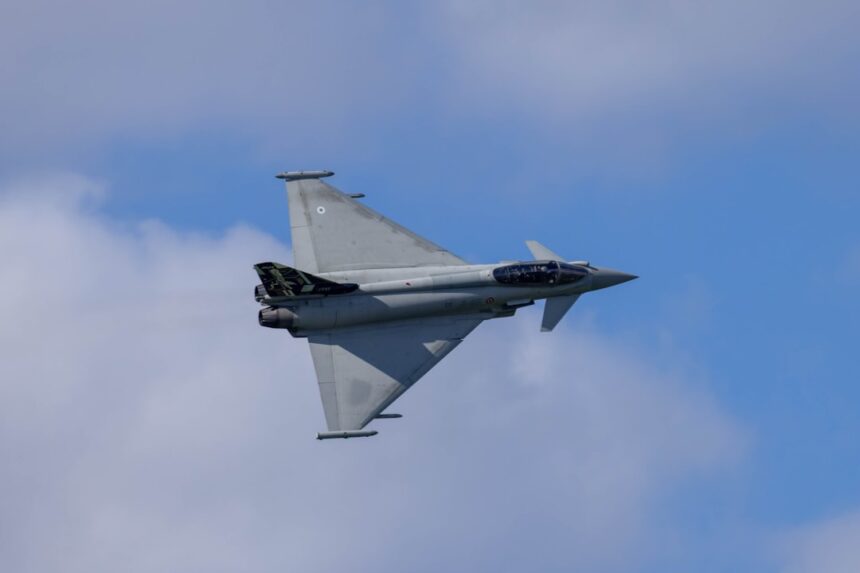
The F-22 Raptor, a fifth-generation stealth fighter aircraft developed by Lockheed Martin and Boeing, represents a significant leap in air combat capabilities. Its introduction by the United States Air Force (USAF) in 2005 marked a paradigm shift in aerial warfare, ushering in an era where technological superiority dictates battlefield dominance. The Raptor’s design focuses on achieving and maintaining air superiority, a crucial objective in modern conflicts.
The genesis of the F-22 program lies in the perceived need for an aircraft that could counter emerging threats from potential adversaries. As early as the 1980s, the USAF recognized that existing fighter aircraft were becoming increasingly vulnerable to advanced Soviet air defense systems and next-generation fighters. The Advanced Tactical Fighter (ATF) program was initiated to develop a superior platform that could overcome these challenges. The ATF program, a crucible of innovation, sought to combine several key technologies: stealth, supercruise, integrated avionics, and advanced maneuverability. Lockeed Martin’s YF-22 demonstrator, flown by the USAF in 1990, ultimately triumphed over Northrop’s YF-23. Initial production orders followed, and the Raptor’s journey from concept to operational reality was a testament to sustained investment in aerospace research and development. The program, however, was not without its complexities, facing cost overruns and debates about its necessity in the post-Cold War era. Nevertheless, the decision to proceed underscored the belief that air superiority remains a cornerstone of national security.
The F-22’s impact on air combat is multifaceted, stemming from its revolutionary design and operational philosophy. It is not merely an incremental improvement on existing fighters; it is a fundamental redefinition of what an air superiority fighter can and should be. The aircraft’s capabilities are a distillation of years of research and technological advancement, designed to provide the United States with a decisive edge over any potential adversary.
The F-22’s most heralded feature is its stealth, a characteristic that fundamentally alters the dynamics of air engagement. The aircraft is designed to be virtually invisible to enemy radar systems, a crucial advantage in a domain where detection is often synonymous with destruction. This low observability is achieved through a combination of advanced shaping, radar-absorbent materials (RAM), and careful integration of all external elements. Unlike earlier stealth aircraft which prioritized a specific aspect of stealth, the F-22 was designed for all-aspect stealth, meaning it is difficult to detect from virtually any angle.
Shaping and Material Science: The Foundation of Invisibility
The F-22’s external geometry is meticulously crafted to deflect radar waves away from the emitting source. Serrated edges on control surfaces, flush-mounted antennas, and blended wing-body construction all contribute to this effect. Furthermore, sophisticated radar-absorbent materials are applied to the aircraft’s skin. These materials function much like a sponge, absorbing radar energy rather than reflecting it. This integrated approach to stealth design means that the F-22 can penetrate contested airspace with a significantly reduced risk of being detected by even advanced radar systems. The implication for air combat is profound: the F-22 can initiate engagements from a position of knowledge, without the opponent being aware of its presence. This is akin to being able to observe a battlefield from behind a curtain, while others are exposed in the open.
Sensor Fusion and Data Integration: The Pilot’s Sixth Sense
Beyond its passive stealth capabilities, the F-22 is equipped with an advanced suite of sensors that provide an unparalleled level of situational awareness. Its Integrated Avionics system, a network of sophisticated computers and processors, fuses data from multiple sources – its own radar, electronic support measures (ESM), and external datalinks – into a coherent and easily understandable picture for the pilot. This fusion of information allows the pilot to see more, understand more, and react faster than an opponent. The AN/APG-77 Active Electronically Scanned Array (AESA) radar, a centerpiece of the F-22’s avionics, offers superior performance in detection range, tracking, and electronic counter-countermeasures (ECCM) capabilities compared to traditional mechanically scanned radars. The ability to detect threats at longer ranges, identify them with high confidence, and engage them before being detected is a cornerstone of the Raptor’s superiority. This integrated approach transforms the pilot from a reactive operator into a proactive commander of the aerial battlespace.
The introduction of the F-16 Fighting Falcon revolutionized air combat, showcasing advanced agility and versatility that changed the dynamics of aerial warfare. For a deeper understanding of how this iconic jet transformed military aviation, you can explore the article on its impact and legacy at In The War Room. This piece delves into the technological advancements and strategic shifts that the F-16 brought to the battlefield, illustrating its enduring significance in modern air forces around the world.
Supercruise and Speed: The Advantage of Velocity
The F-22’s ability to fly at supersonic speeds without engaging its fuel-guzzling afterburners, a capability known as “supercruise,” is another defining characteristic. This allows the Raptor to transit to and from combat areas more quickly, extend its engagement radius, and maintain a tactical advantage during engagements.
Sustained Supersonic Flight: Beyond the Brick Wall
Traditional fighter jets can achieve supersonic speeds, but only for limited durations, typically by engaging their afterburners. This high-speed flight is energy-intensive and burns fuel rapidly, limiting its tactical utility. The F-22’s Pratt & Whitney F119-PW-100 engines are designed for efficient supersonic performance, allowing the aircraft to cruise at speeds exceeding Mach 1.5 for extended periods. This capability allows pilots to cover vast distances quickly, reposition rapidly on the battlefield, and engage targets with a significant velocity advantage. Imagine a sprinter who can maintain their top speed for the entire race, rather than just a short burst; this is the kind of advantage supercruise provides.
Tactical Maneuvering at Speed: The Art of the Chase
The ability to supercruise not only enhances transit speed but also offers significant tactical advantages during combat. A pilot can use supercruise to rapidly close with an enemy, dictate the terms of engagement, and disengage at will. Furthermore, the F-22 can perform high-g maneuvers while in supercruise. This combination of speed and agility allows it to outmaneuver opponents, forcing them into disadvantageous positions while remaining out of their effective engagement envelope. The Raptor can essentially outrun and outfight its adversaries, changing the fundamental calculus of aerial duels.
Lethality and Payload: The Tools of Engagement
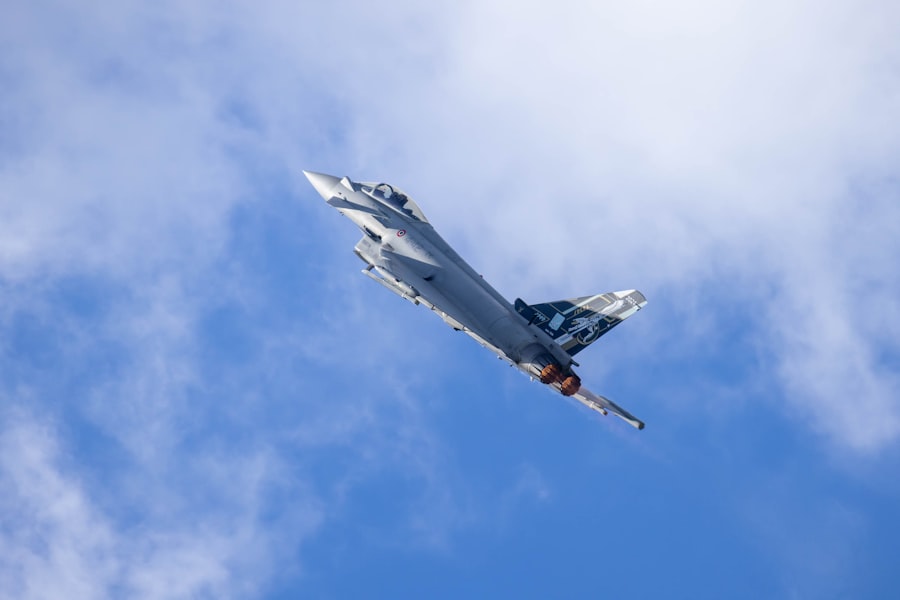
While stealth and speed are crucial for survival and positioning, the F-22’s lethality is delivered through its advanced weaponry and sophisticated fire-control systems. The aircraft is designed to engage multiple targets simultaneously, both air-to-air and air-to-ground.
Internal Weapons Bays: Stealthy Delivery Systems
To maintain its stealth profile, the F-22 carries its primary armament in internal weapons bays. This prevents the drag-inducing and radar-reflecting pylons and stores that are characteristic of conventional fighter aircraft. The main ventral bay can carry six AIM-120 AMRAAM air-to-air missiles, while two smaller side bays can each carry an AIM-9 Sidewinder missile. This internal carriage ensures that the aircraft’s radar cross-section remains minimal, even when armed for combat. The AIM-120 AMRAAM is a state-of-the-art, all-weather, medium-range, air-to-air missile that uses active radar homing. The AIM-9 Sidewinder is a short-range, infrared-seeking missile.
Beyond Visual Range (BVR) Engagement Capability: The Silent Assassin
The F-22 excels in Beyond Visual Range (BVR) engagements. Its advanced radar, combined with the AIM-120 AMRAAM, allows it to detect, track, and engage enemy aircraft from distances far beyond the visual horizon. This means the Raptor can often eliminate threats before the adversary even knows it has been targeted. The F-22’s ability to engage multiple targets simultaneously with BVR missiles further amplifies its combat effectiveness. The pilot, guided by the fused sensor data, can launch volleys of missiles and then reposition, leaving the enemy to deal with a barrage of unseen threats. This capability effectively shifts the engagement from a dogfight to a calculated hunt.
Precision Strike Capabilities: Expanding the Role
While primarily an air superiority fighter, the F-22 also possesses significant air-to-ground capabilities. It can employ precision-guided munitions, such as the GBU-32 Joint Direct Attack Munition (JDAM), allowing it to strike ground targets with accuracy. This dual-role capability makes the F-22 a versatile asset, capable of providing air cover for ground forces while also possessing the ability to strike pre-planned enemy targets on the ground. This versatility expands its utility in modern combat scenarios.
Maneuverability and Thrust Vectoring: The Art of Agility
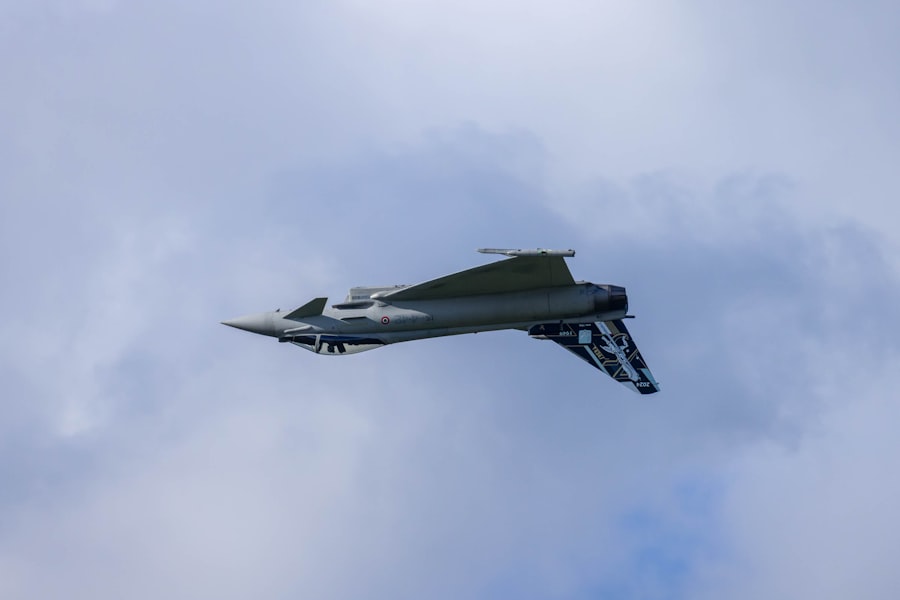
The F-22’s agility, particularly its ability to perform complex maneuvers at both high and low speeds, is crucial for survival and engagement in a dynamic air combat environment. This is significantly enhanced by its two-dimensional thrust vectoring.
Thrust Vectoring Control: The Dogfighter’s Edge
The Pratt & Whitney F119 engines incorporate pitch-axis thrust vectoring. This means that the nozzles of the engines can be deflected up or down, allowing the aircraft to pitch its nose independently of its aerodynamic control surfaces. This thrust vectoring control provides an unprecedented level of maneuverability, particularly at high angles of attack and low speeds, where traditional aerodynamic controls become less effective. The F-22 can out-turn opponents in ways that were previously thought impossible for a high-performance jet. This is like having a rudder that can pivot in any direction, offering an almost supernatural degree of control.
Post-Stall Maneuverability: Unlocking New Tactics
The combination of thrust vectoring and advanced flight controls gives the F-22 exceptional post-stall maneuverability. This allows pilots to enter a stall – a condition where the wings lose lift – and still maintain control of the aircraft, performing maneuvers that would be impossible for less capable aircraft. This capability opens up entirely new tactical possibilities, allowing pilots to disrupt an opponent’s attack, evade incoming missiles, and re-establish an offensive position even from a seemingly untenable situation. It gives the F-22 a buffer against errors and a means to exploit an opponent’s limitations.
The introduction of the F-16 Fighting Falcon revolutionized air combat, showcasing advanced maneuverability and versatility that changed the dynamics of aerial warfare. This jet not only enhanced the capabilities of air forces around the world but also set new standards for fighter design and technology. For a deeper understanding of the impact of this remarkable aircraft, you can read more in this insightful article about its legacy and influence on modern military aviation. Check it out here.
Operational Philosophy and Strategic Impact: The Dominator
| Metric | Pre-Jet Era | Post-Jet Era (After Introduction of Jet Fighter) | Impact on Air Combat |
|---|---|---|---|
| Maximum Speed | Up to 400 mph (propeller-driven aircraft) | Over 600 mph (early jet fighters like the Messerschmitt Me 262) | Increased speed reduced reaction times and changed dogfighting tactics |
| Climb Rate | Approx. 2,000 ft/min | Over 7,000 ft/min | Allowed rapid altitude changes, improving tactical positioning |
| Operational Ceiling | 20,000 – 30,000 ft | 40,000 ft and above | Enabled engagements at higher altitudes, expanding combat zones |
| Armament | Machine guns and cannons with limited range | Introduction of air-to-air missiles and advanced cannons | Shifted combat from close-range dogfights to beyond visual range engagements |
| Range | 300-500 miles | 600+ miles with afterburners and external fuel tanks | Extended mission duration and operational reach |
| Radar and Avionics | Minimal or no radar | Integrated radar and electronic systems | Improved target detection and engagement capabilities |
| Survivability | Vulnerable to ground fire and enemy fighters | Higher speed and altitude improved survivability | Reduced losses and increased mission success rates |
The F-22 Raptor is more than just a collection of advanced technologies; it represents a strategic shift in how air superiority is conceived and achieved. Its introduction has had a profound impact on military planning, technological development, and international power dynamics.
Denying the Adversary Air Superiority: The Shield and Sword
The primary role of the F-22 is to achieve and maintain air superiority. In essence, it is designed to ensure that hostile aircraft cannot operate freely within a given airspace. By being able to detect and engage enemy aircraft at long ranges, before being detected itself, the Raptor effectively neutralizes any aerial threat. This capability provides a crucial shield for friendly forces, both airborne and ground-based, and acts as a sword against enemy air power. Its presence can deter adversaries from even attempting to contest airspace, a form of silent, technological dissuasion.
The “Peace Through Strength” Doctrine: A Deterrent Effect
The F-22’s unparalleled capabilities serve as a potent deterrent against potential adversaries. The knowledge that the United States possesses an aircraft that can achieve air dominance with such a high degree of impunity influences the strategic calculations of other nations. This aligns with the principle of “peace through strength,” where overwhelming military capability discourages aggression. The F-22 is a tangible embodiment of this doctrine, a technological trump card that shapes global security considerations.
The Cost of Superiority: Balancing Capability and Affordability
The development and procurement of the F-22 Raptor were undeniably expensive, leading to debates about its overall value and the number of aircraft ultimately produced. The program’s significant cost is a recurring point of discussion, prompting a broader examination of the balance between achieving technological superiority and maintaining affordability in defense spending. The high price tag, while reflecting the cutting-edge nature of its technology, also meant that fewer of these aircraft were acquired than initially planned. This has led to ongoing discussions about how to best leverage the existing fleet and the potential for future developments.
Legacy and Future Implications: The Horizon of Air Warfare
The F-22 Raptor’s legacy is assured as a landmark achievement in aerospace engineering. It has pushed the boundaries of what is possible in air combat and has influenced the design of subsequent fighter aircraft programs globally. While no longer in production, the Raptor continues to serve as a benchmark for air superiority, a testament to the transformative power of integrated stealth, speed, lethality, and agility. Its impact serves as a living laboratory for air combat doctrine and a constant reminder to adversaries of the technological edge that can be achieved through dedicated innovation. The lessons learned from its development and deployment will undoubtedly shape the future of aerial warfare for decades to come.

WATCH NOW ▶️ STOP: The $100 Billion Titanium Myth Exposed
FAQs
What jet is referred to as having changed air combat forever?
The jet often credited with changing air combat forever is the McDonnell Douglas F-4 Phantom II, introduced in the 1960s.
What were the key innovations of this jet that impacted air combat?
Key innovations included its powerful twin engines, advanced radar and missile systems, and versatility in both air-to-air and air-to-ground roles.
How did this jet influence future fighter aircraft design?
It influenced future designs by demonstrating the importance of multi-role capabilities, beyond-visual-range missile combat, and integrating advanced avionics.
In which conflicts did this jet prove its effectiveness?
The F-4 Phantom II saw extensive combat in the Vietnam War, the Arab-Israeli conflicts, and the Gulf War, proving its effectiveness in various combat scenarios.
Is this jet still in service today?
While largely retired from frontline service in many countries, some variants of the F-4 Phantom II remain in limited use for training and specialized roles.