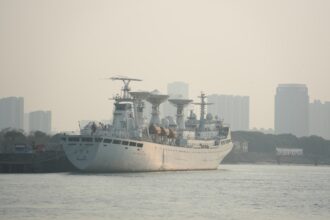
In the annals of Cold War espionage, few tales rival the audacity and technical brilliance of Project Azorian, the Central Intelligence Agency’s (CIA) covert operation to recover a sunken Soviet submarine. This endeavor, shrouded in secrecy for decades, represented a pinnacle of clandestine engineering and strategic deception. The project’s most remarkable feat was arguably the construction and concealment of its primary recovery vessel, the Hughes Glomar Explorer. This article delves into the intricate web of illusion spun by the CIA to hide a ship the size of an oil supertanker in plain sight, transforming a monumental undertaking into an engineering curiosity.
The story began with a catastrophe. In March 1968, the Soviet Golf II-class ballistic missile submarine K-129 suffered an internal explosion and sank approximately 1,560 nautical miles northwest of Hawaii, at a depth exceeding 16,000 feet (4,900 meters). The potential intelligence windfall was immense: nuclear missiles, cryptographic equipment, and a wealth of Soviet naval technology. However, retrieving such an object from such depths was, at the time, considered technically impossible.
The Problem of Visibility
The sheer scale of the operation posed an immediate, and seemingly insurmountable, challenge. Any conventional vessel capable of lifting a submarine from nearly 5 kilometers beneath the ocean’s surface would be conspicuous. Such an operation would require massive cranes, specialized submersible vehicles, and a vast crew, all elements that would be difficult to conceal from Soviet intelligence. The CIA understood that the world’s oceans, while vast, offered little refuge for a project of this magnitude, akin to trying to hide an elephant in a bathtub.
Howard Hughes: A Convenient Cover
The solution lay in cultivating a plausible, civilian cover story. The CIA leveraged the eccentric reputation and financial might of Howard Hughes, the enigmatic billionaire industrialist. Hughes’s burgeoning deep-sea mining interests provided the perfect façade. He had a genuine interest in extracting manganese nodules from the ocean floor, and the technology required for such an endeavor bore a superficial resemblance to the deep-sea recovery methods required by the CIA. This provided a ready-made narrative for the Hughes Glomar Explorer‘s construction and subsequent deployment. The public, and crucially, Soviet intelligence, would see a civilian venture, not a spy operation.
In exploring the intriguing tactics employed by intelligence agencies, a related article titled “The Secrets Behind Covert Operations” delves into various methods used by the CIA and other organizations to conceal their activities. This piece provides a broader context for understanding how the CIA hid a ship and the implications of such operations. For more insights, you can read the article here: The Secrets Behind Covert Operations.
Designing the Unseen Giant
The Hughes Glomar Explorer was no ordinary ship. It was a purpose-built behemoth, specifically designed for deep-sea recovery, but with a crucial additional requirement: the ability to conceal its true function. Its design incorporated innovative features that facilitated both its covert mission and its plausible cover story.
The Moon Pool: The Heart of the Illusion
The ship’s most distinctive feature, and the lynchpin of its cover, was what became known as the “moon pool.” This massive internal bay, located in the center of the ship, was capacious enough to house the entire forward section of the K-129 submarine. It was an engineering marvel, effectively transforming the ship into a giant, self-contained workshop.
Concealing the Clam
Beneath the moon pool, a colossal mechanical grappling device, nicknamed “Clementine” or “the claw,” was designed to seize and lift the sunken submarine. This claw was a testament to Cold War engineering, a complex array of hydraulic machinery and structural steel. During operation, the moon pool gates would open, allowing the claw to descend and retrieve its target. When not in use, these gates would close, sealing off the moon pool and presenting a flat, unremarkable hull, offering no discernible clue to its true purpose. This was the ultimate shell game, where the shell itself was part of the deception.
Dynamic Positioning System
To operate with precision over a target at such extreme depths, the Hughes Glomar Explorer was equipped with a state-of-the-art dynamic positioning system. This system allowed the ship to maintain its exact position without anchoring, using an array of thrusters and sophisticated computer controls. This was essential for the delicate task of lowering and raising the enormous claw over the sunken submarine, even in adverse weather conditions. The technology was cutting-edge for its time, further reinforcing the image of a pioneering deep-sea mining vessel.
In exploring the intriguing tactics employed by intelligence agencies, one can gain further insight by reading a related article that delves into the covert operations of the CIA. This piece highlights not only the methods used to conceal a ship but also the broader implications of such actions on international relations. For a deeper understanding of these clandestine activities, you can check out the article here.
Civilian Aesthetics, Military Capabilities
From its exterior, the Hughes Glomar Explorer presented a sleek, somewhat utilitarian profile, consistent with a deep-sea engineering vessel. Its distinctive A-frame structure, which would overtly hint at its lifting capabilities, was ingeniously integrated into the design. Cranes and other heavy machinery were either hidden or presented as standard equipment for deep-sea resource extraction. The ship was often accompanied by support vessels that further reinforced the cover story, resembling those typically employed in offshore oil exploration or mining.
The Cover Story in Action
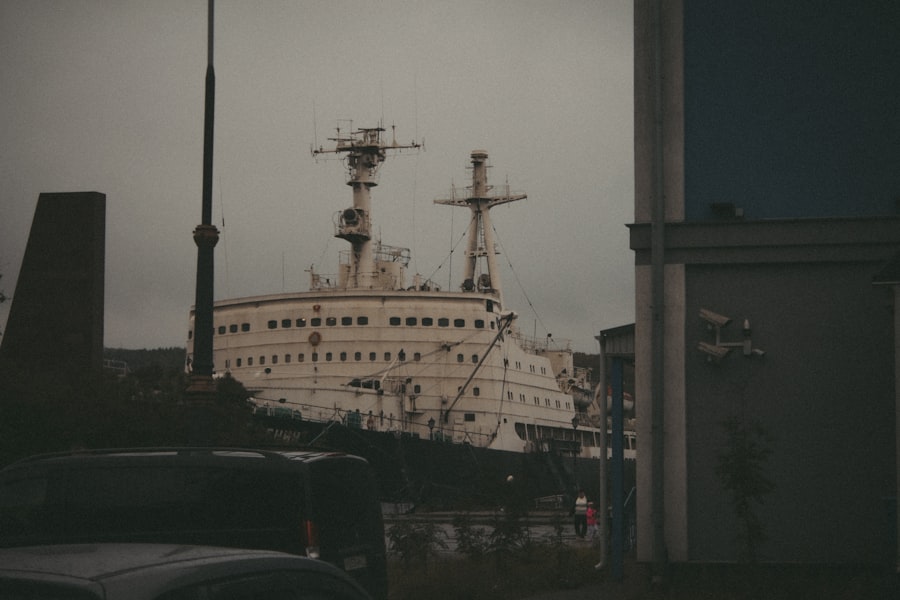
The operational deployment of the Hughes Glomar Explorer saw the full realization of the CIA’s elaborate deception. Every component of the mission, from the crew selection to the communication protocols, was geared towards maintaining the illusion of a legitimate deep-sea mining operation.
A Crew of Double Lives
The crew of the Hughes Glomar Explorer consisted of a mix of genuine civilian contractors and CIA operatives. The civilian personnel were largely unaware of the ship’s true mission, believing they were engaged in a groundbreaking deep-sea mining venture. This compartmentalization of information was crucial. Even those involved in the technical aspects of the recovery might only have understood their specific tasks, without comprehending the broader strategic objective. This created a natural barrier against leaks, as those who knew the full truth were few, and those who didn’t had plausible deniability.
The Manganese Nodule Myth
To further solidify the cover, the Hughes Glomar Explorer did, in fact, collect manganese nodules during its operations. These deep-sea mineral formations were genuinely seen as a potential future resource, lending credence to Howard Hughes’s public statements about his mining ambitions. This practical application of the cover story was a stroke of genius, as it provided tangible evidence that supported the deception, making it harder for doubters to dismiss outright. Imagine building a magnificent stage production, and then actually putting on a believable, albeit diversionary, play.
Avoiding Soviet Scrutiny
Soviet naval intelligence, keenly aware of the K-129‘s disappearance, was actively searching for the submarine. The presence of the Hughes Glomar Explorer in the vicinity naturally attracted their attention. However, due to the meticulous cover story and the ship’s civilian appearance, Soviet surveillance vessels merely noted its deep-sea mining activities, concluding it was an elaborate but genuine deep-sea resource exploration. The ship’s dynamic positioning system, which allowed it to remain precisely over the recovery site without traditional anchoring, also helped to avoid the tell-tale signs of a complex salvage operation, which would often involve multiple support vessels and anchored equipment. The sheer unlikelihood of such a recovery being possible also served as a psychological barrier, making it harder for the Soviets to believe what was happening before their eyes.
The Unraveling and Aftermath
Despite the extraordinary efforts at concealment, the secret of Project Azorian eventually leaked, though not before a significant portion of the K-129 was recovered. The leak and its aftermath highlight the inherent challenges of maintaining such complex deceptions.
The Los Angeles Times Leak
In 1975, the Los Angeles Times published an article exposing the true purpose of the Hughes Glomar Explorer. This leak, attributed to a former Hughes employee and exacerbated by the publicity surrounding a burglary at Hughes’s offices, forced the CIA to publicly acknowledge portions of the project. The revelation was a major embarrassment for the US government and a significant intelligence coup for the Soviet Union, who finally understood the true nature of their distant adversary’s activities.
The “Glomar Response”
The CIA’s refusal to confirm or deny the existence of the Azorian project in response to Freedom of Information Act requests became a legal precedent known as the “Glomar Response.” This doctrine allows government agencies to neither confirm nor deny the existence of records if doing so would reveal classified information. This legal tool, born from the need to protect the Hughes Glomar Explorer‘s secrets, continues to be a staple of government secrecy to this day.
Legacy of Innovation and Deception
The Hughes Glomar Explorer, despite its ultimately revealed mission, remains a testament to human ingenuity and the lengths to which state actors will go to gain strategic advantage. The ship itself became a symbol of both technological marvel and deep-seated political intrigue. After its service with the CIA, the ship was repurposed for deep-sea oil drilling, continuing its life as a working vessel, its past as a spy ship fading into the background for many, but remaining a fascinating footnote in the history of the Cold War.
In conclusion, the concealment of the Hughes Glomar Explorer was a masterpiece of strategic deception, blending engineering prowess with a carefully crafted public narrative. It serves as a compelling example of how a complex web of illusion, supported by genuine scientific and technological achievement, can be woven to hide momentous undertakings in plain sight. The Cold War was, in many respects, a game of shadows and mirrors, and the story of the Glomar Explorer stands as one of its most intricate and captivating productions.

WATCH NOW ▶️ SHOCKING: How The CIA Stole A Nuclear Submarine
FAQs
What was the purpose of the CIA hiding a ship?
The CIA hid a ship as part of covert operations during the Cold War to gather intelligence and conduct secret missions without detection by adversaries.
How did the CIA manage to conceal the ship?
The CIA used various methods to hide the ship, including disguising it as a commercial vessel, using advanced camouflage techniques, and operating it in remote or international waters to avoid scrutiny.
What was the name of the ship involved in the CIA’s covert operation?
One of the most famous ships used by the CIA for covert operations was the Glomar Explorer, which was involved in a secret mission to recover a sunken Soviet submarine.
During which period did the CIA conduct these ship-hiding operations?
These operations primarily took place during the Cold War era, particularly in the 1960s and 1970s, when intelligence gathering was critical to national security.
What was the outcome of the CIA’s efforts to hide the ship?
The CIA’s efforts were partially successful; while some missions achieved their objectives, such as recovering sensitive materials, others faced challenges and remained classified for many years.