You are about to embark on an examination of one of the most intriguing geopolitical chess matches of the Cold War era. This article will dissect the Central Intelligence Agency’s (CIA) calculated use of Howard Hughes, not as a mere asset, but as a strategic lever in a complex game of international espionage and power projection. We will delve into the motivations, mechanics, and ramifications of this partnership, recognizing that in the shadowy world of intelligence, utility often trumps conventional morality. Prepare to scrutinize the layers of this fascinating historical interplay, understanding that perceptions of a historical figure can often be recontextualized when viewed through the lens of national security.
The decision by the CIA to cultivate Howard Hughes as an asset was far from arbitrary; it was a testament to the confluence of unique circumstances and pressing national security concerns. Imagine the landscape of the early Cold War: a relentless technological arms race, a desperate need for intelligence on Soviet capabilities, and a constant search for innovative, deniable avenues to achieve strategic objectives. In this environment, Hughes, a man often perceived as eccentric, even reclusive, became an irresistible magnet for intelligence agencies. But what made him so indispensable?
The Untouchable Industrialist: A Shield of Plausible Deniability
Howard Hughes was not merely wealthy; he was an empire unto himself. His vast holdings spanned aviation, film, real estate, and manufacturing. This sprawling industrial empire offered the CIA an unparalleled shield of plausible deniability. Imagine trying to explain away a government project of immense scale and secrecy; it’s a difficult proposition. Now, imagine attributing such a project to the whims of a notoriously private, visionary, and occasionally erratic billionaire. The very idea lent itself to easy dismissal as another of Hughes’s peculiar endeavors, a perfect cover for operations that required a deep veil of secrecy. His persona, a mix of business genius and reclusive eccentricity, served as an ideal camouflage, diverting public and international scrutiny away from the true nature of his undertakings on behalf of the state.
Technical Prowess: A Resource Beyond Compare
Beyond his financial might, Hughes possessed a profound technical acumen and the resources to translate radical ideas into tangible machines. His companies, particularly Hughes Aircraft, were at the cutting edge of aerospace engineering. The CIA, often limited by bureaucratic processes and congressional oversight, could tap into Hughes’s private research and development capabilities without the traditional constraints. This meant faster prototyping, more daring designs, and an ability to operate outside the glare of public procurement. If the agency needed a specific piece of technology – be it a long-range reconnaissance aircraft or a sophisticated submersible – Hughes had the engineers, the factories, and the financial wherewithal to deliver, often with a speed and secrecy that government contractors could not match. Consider the difference between a government-funded project, subject to multiple layers of approval and public scrutiny, and a private venture, driven by the singular vision and resources of an individual. This stark contrast highlights the unique advantage Hughes presented.
Global Reach and Independent Networks: Unconventional Access
Hughes’s business interests spanned the globe. His web of contacts, both legitimate and less so, provided the CIA with an independent network, unencumbered by official diplomatic channels. This allowed for covert operations in regions where direct government involvement would have been politically sensitive or outright impossible. His vast real estate holdings, for instance, could offer secure staging grounds or storage facilities. His shipping interests could transport sensitive equipment or personnel. Essentially, Hughes operated as a shadow state, possessing resources and influence that transcended national borders, offering the CIA a parallel operational infrastructure that could bypass conventional protocols and scrutiny.
In exploring the intricate relationship between the CIA and prominent figures in American history, one can gain further insights by reading the article “The Secret Life of Howard Hughes” available at this link. This article delves into how Hughes’ innovative spirit and vast resources made him an invaluable asset for the CIA during the Cold War, shedding light on the covert operations that intertwined his legacy with national security efforts.
Project Azorian: The Jewel in the Crown of Hughes’s Utility
While Hughes was involved in various intelligence-related activities, Project Azorian stands as the quintessential embodiment of his strategic value to the CIA. This audacious undertaking, to recover a sunken Soviet submarine, demonstrated the agency’s willingness to leverage Hughes’s unique capabilities for a high-stakes intelligence coup. It was a project that perfectly illustrated the convergence of all the aforementioned factors: deniability, technical prowess, and independent resources.
The K-129 Incident: A Prized Target
In March 1968, the Soviet diesel-electric submarine K-129, equipped with nuclear missiles, sank in the Pacific Ocean, approximately 1,600 miles northwest of Hawaii. The intelligence haul from this vessel—its codebooks, cryptographic equipment, and nuclear missile technology—represented an unparalleled opportunity to gain critical insights into Soviet naval capabilities and strategic thinking. The intelligence community viewed this as akin to finding a sunken treasure chest filled with the enemy’s most guarded secrets. Recovering it, however, presented an unprecedented technological and logistical challenge.
The Hughes Glomar Explorer: A Feat of Engineering and Deception
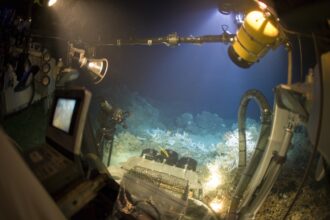
To recover the K-129 from a depth of over three miles, the CIA conceived of a highly specialized vessel, the Hughes Glomar Explorer. This ship was designed with a massive “moon pool” and a sophisticated mechanical claw, capable of retrieving large objects from the deep ocean floor. Crucially, the ship was ostensibly commissioned by Hughes Tool Company for “manganese nodule mining” – a plausible, if ambitious, commercial venture. The cover story was so convincing that it deflected suspicion for years, even after the partial recovery mission. The very scale and audacity of the cover story made it difficult to question. Who but a visionary, and perhaps slightly mad, billionaire would invest so heavily in such a futuristic mining operation? This elaborate deception was a masterstroke, allowing a covert national security operation to proceed under the guise of private enterprise.
The Costs and Conundrums of a Deniable Partnership
While the benefits of utilizing Howard Hughes were substantial, the strategic decision was not without its costs and a peculiar set of conundrums. The very nature of the relationship, built on secrecy and an individual’s eccentricities, introduced unique challenges and ethical considerations that are worth examining.
The Reclusive Repercussions: Managing an Unconventional Asset
Hughes’s increasingly reclusive lifestyle and deteriorating mental and physical health posed significant challenges for his CIA handlers. Imagine managing an asset who might disappear for weeks, refuse direct communication, or make highly unconventional demands. The CIA was not dealing with a conventional operative; they were managing a force of nature, albeit one in decline. This required constant adaptation, indirect communication channels, and a willingness to navigate a labyrinth of personal eccentricities to ensure the continuity of critical projects. It was a delicate dance, balancing the need for operational security with the unpredictable nature of their principal benefactor.
Ethical Labyrinths: The Line Between Covert and Exploitative
The relationship also raises profound ethical questions. Was Hughes a willing partner, a patriot, or was he, as some have suggested, increasingly manipulated by his inner circle, rendering him an unwitting, if useful, tool? The CIA, operating under the imperatives of national security, likely viewed his personal state as secondary to the strategic benefit he provided. However, from a contemporary perspective, the extent to which a government agency should capitalize on an individual’s vulnerabilities, even in pursuit of vital intelligence, remains a subject of considerable debate. Where does the pursuit of national interest intersect with the individual’s autonomy, especially when that autonomy is perceived to be compromised? This is a moral quandary that intelligence agencies consistently grapple with.
The Long Shadow: Legacy and Implications of the Hughes-CIA Nexus
The CIA’s use of Howard Hughes left an indelible mark on intelligence history, demonstrating the efficacy of unconventional partnerships and pushing the boundaries of what was considered operationally feasible. The lessons learned from this intricate relationship continue to resonate, informing debates about intelligence gathering, technological innovation, and the perennial tension between secrecy and transparency.
Redefining Covert Operations: The Private Sector as a Veil
The Hughes saga fundamentally reshaped the landscape of covert operations by demonstrating the extraordinary potential of leveraging private sector wealth and talent not merely as contractors, but as integral components of national security strategy. It normalized the idea of “front” companies and the attribution of highly sensitive government projects to private, seemingly idiosyncratic ventures. This model provided a template for future operations, allowing agencies to operate with greater flexibility and a deeper layer of plausible deniability, essentially privatizing elements of espionage. It showed that the deepest shadows for covert action could often be found within the folds of legitimate, large-scale commercial enterprise.
The Technological Imperative: Prioritizing Innovation for Intelligence
The reliance on Hughes also underscored the unwavering commitment of intelligence agencies to technological superiority. Project Azorian, in particular, was a monumental technological undertaking, pushing the boundaries of deep-sea engineering. This strategic decision highlighted that in the intelligence realm, innovation is not a luxury but a fundamental necessity. The willingness to invest in groundbreaking, often experimental, technologies, even through unconventional means, became a cornerstone of intelligence gathering, ensuring that the agency maintained a cutting edge in the relentless arms race of information.
The intricate relationship between the CIA and Howard Hughes has been a subject of much intrigue, shedding light on the covert operations during the Cold War era. For those interested in exploring this topic further, a related article delves into the broader implications of Hughes’ involvement in intelligence activities and the impact on American espionage tactics. You can read more about it in this insightful piece found at In the War Room, which provides a comprehensive analysis of the intersection between business magnates and government agencies.
Reconsidering Howard Hughes: A Tool, a Visionary, or Both?
| Metric | Details |
|---|---|
| Purpose | Use of Howard Hughes as a cover for CIA operations |
| Time Period | 1950s-1960s |
| Key Operation | Project Mockingbird and other intelligence gathering missions |
| Reason for Using Hughes | Hughes’ public persona and business empire provided excellent cover |
| Type of Activities | Espionage, surveillance, and covert operations |
| Impact | Enhanced CIA’s ability to operate internationally without suspicion |
| Outcome | Successful intelligence missions with minimal exposure |
In conclusion, when we speak of the CIA’s use of Howard Hughes, it is imperative to move beyond simplistic labels. He was not merely a pawn, nor was he solely a celebrated humanitarian. He was, in the context of the Cold War, a highly valuable strategic asset, a man whose unique fusion of wealth, technical genius, and eccentric reclusiveness provided an unparalleled opportunity for the United States to pursue its national security objectives in a fundamentally deniable and effective manner.
The Art of the Undetected Hand: Subtlety in Statecraft
The saga of Hughes and the CIA is a masterclass in the art of the undetected hand in statecraft. It demonstrates how a nation can project power, gather critical intelligence, and mitigate threats without direct attribution, utilizing the opaque curtain of private enterprise. This subtle approach allowed for high-risk, high-reward endeavors to proceed without triggering international incidents or inviting overt retaliation. It’s a powerful reminder that in the realm of intelligence, the most effective operations are often those that remain hidden in plain sight, camouflaged by the very normalcy they seek to exploit.
A Legacy of Ambiguity: Interrogating Historical Narratives
Ultimately, the CIA’s strategic utilization of Howard Hughes forces us to interrogate our historical narratives, to look beyond the popular image of a figure and understand their multifaceted role in complex geopolitical dramas. His story is a testament to the fact that individuals, even those seemingly detached from conventional power structures, can become pivotal instruments in the grander struggles of nations. It serves as a reminder that history, particularly the clandestine elements of it, is often far more nuanced and strategically intricate than initial appearances might suggest. The relationship between Hughes and the CIA remains a potent symbol of Cold War ingenuity, deception, and the lengths to which states will go to secure their interests in a world often governed by shadows and secrets.
WATCH NOW ▶️ SHOCKING: How The CIA Stole A Nuclear Submarine
FAQs
1. Who was Howard Hughes and why was he significant to the CIA?
Howard Hughes was a famous American business magnate, aviator, and film producer. The CIA used his public persona and resources as part of covert operations during the Cold War, leveraging his influence and technological interests to support intelligence activities.
2. What role did Howard Hughes play in CIA operations?
Howard Hughes was involved indirectly in CIA operations, particularly in projects related to aviation and technology. The CIA utilized his companies and innovations to advance surveillance and reconnaissance capabilities.
3. Why did the CIA choose to work with a private individual like Howard Hughes?
The CIA collaborated with Howard Hughes because his private enterprises provided cover and access to advanced technology and aviation assets that were valuable for intelligence missions, allowing the agency to operate discreetly.
4. Were there any specific projects or missions linked to Howard Hughes and the CIA?
Yes, one notable example includes the use of Hughes Aircraft Company in developing reconnaissance aircraft and other technologies that supported CIA surveillance efforts during the Cold War.
5. Is the relationship between Howard Hughes and the CIA publicly acknowledged?
While some details have been declassified, much of the relationship between Howard Hughes and the CIA remains classified or speculative, with information emerging gradually through historical research and government disclosures.