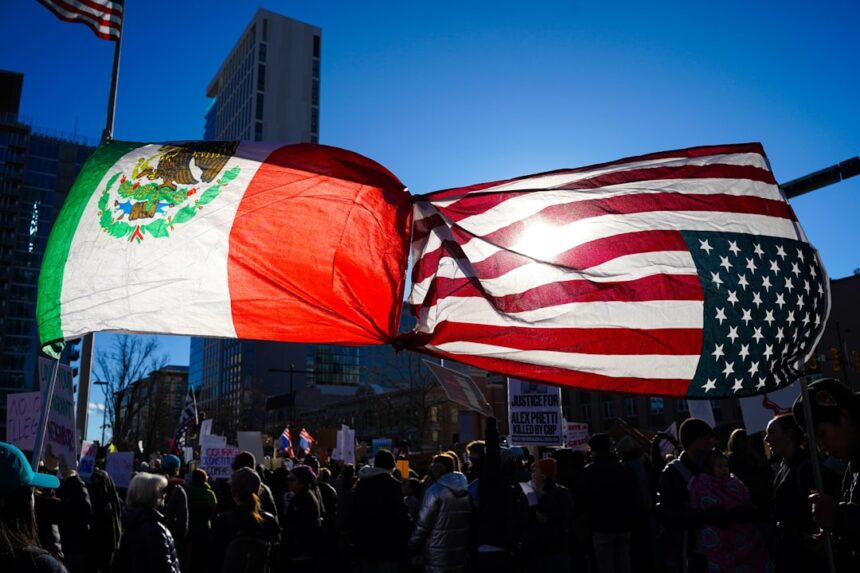
The history of Mexican Americans, a vibrant community deeply woven into the fabric of the United States, is often characterized by resilience and cultural richness. However, beneath the surface of this narrative lies a complex tapestry of historical injustices that have significantly shaped their experiences, societal position, and ongoing struggles. To truly comprehend the contemporary challenges and triumphs of Mexican Americans, one must delve into these historical grievances, understanding them not merely as isolated incidents but as interconnected threads forming a pattern of systemic disadvantage. One could consider this process akin to an archaeologist carefully unearthing layers of earth, each layer revealing a deeper truth about the past.
The Treaty of Guadalupe Hidalgo, signed on February 2, 1848, marked the official end of the Mexican-American War. This treaty, a watershed moment in the history of both nations, fundamentally altered the lives of thousands of Mexicans residing in the newly acquired territories. The United States gained vast swathes of land, encompassing present-day California, Nevada, Utah, Arizona, New Mexico, and parts of Colorado, Wyoming, Kansas, and Oklahoma. This territorial expansion, while celebrated north of the border, initiated a cascade of injustices for the native Mexican population, transforming them from citizens of one nation to a conquered people within another.
Dispossession of Land and Property Rights
Article VIII and IX of the Treaty of Guadalupe Hidalgo ostensibly guaranteed the property rights of Mexicans in the ceded territories. These articles were meant to be a shield, protecting their homes, ranches, and communal lands. However, this shield proved to be porous. American legal systems, unfamiliar with or deliberately sidelining Mexican land grants, often disregarded existing titles. Lengthy and expensive legal battles ensued, often depleting the resources of Mexican landowners. The California Land Act of 1851, for example, forced Mexican landholders to prove their ownership, effectively reversing the burden of proof. This process, often conducted in English by courts unsympathetic to Mexican legal traditions, led to widespread land dispossession. Imagine a homeowner, suddenly forced to prove their ownership of a house they have lived in for generations, against a system designed to dispossess them. This is the reality many Mexican families faced.
Linguistic and Cultural Eradication Efforts
Beyond land, the treaty’s aftermath saw a concerted effort to diminish Mexican culture and language. While the treaty didn’t explicitly mandate linguistic assimilation, the influx of English-speaking settlers and the establishment of American institutions created immense pressure. In schools, Spanish was often prohibited, and children were punished for speaking their native tongue. This policy, though not always codified, acted as a cultural erosion, chipping away at the foundations of Mexican identity. This wasn’t merely about convenience; it was a deliberate strategy to marginalize and assimilate, to make the conquered indistinguishable from the conquerors. One can conceive of language as the very root system of a culture; severing it severely debilitates the tree itself.
The exploration of Mexican-American historical injustices is a crucial aspect of understanding the broader narrative of American history. A related article that delves into these issues can be found at this link, which discusses the systemic challenges faced by Mexican-Americans throughout history, including land dispossession, discrimination, and cultural erasure. By examining these injustices, we can better appreciate the resilience of the Mexican-American community and the ongoing struggle for recognition and equality.
The Bracero Program and Labor Exploitation
Mid-20th century economic demands in the United States, particularly during World War II, led to the implementation of the Bracero Program (1942-1964). This bilateral agreement between the United States and Mexico allowed Mexican agricultural workers (braceros) to temporarily work in the U.S. This program, while offering much-needed labor to American farms and some economic relief to Mexican families, was rife with exploitation and abuse, exposing another layer of historical injustice.
Substandard Wages and Working Conditions
Braceros were often promised fair wages, decent housing, and protection from discrimination. However, these promises frequently dissolved upon their arrival in the U.S. Employers often paid less than agreed-upon wages, and deductions for housing, food, and tools sometimes left workers with meager earnings, if any. Housing conditions were frequently squalid, lacking basic sanitation and overcrowding common. The work itself was arduous and dangerous, with exposure to pesticides and long hours under the relentless sun. These workers, often desperate for work, had little recourse against exploitative practices, trapped by the terms of their contracts and the fear of repatriation. Consider these workers as cogs in a giant economic machine, easily replaced and thus easily exploited, their individual humanity often overlooked for the sake of profit.
Repatriation and Deportation Campaigns
Even outside the Bracero Program, the early 20th century saw waves of “repatriation” and deportation campaigns targeting Mexican Americans, many of whom were U.S. citizens by birthright. During the Great Depression, for instance, between 1929 and 1939, an estimated 1-2 million Mexican Americans and Mexicans were forcibly removed from the United States. Many of these individuals were American citizens or legal residents who were swept up in nativist hysteria and economic hardship. They were often denied due process, their citizenship disregarded, and their families torn apart. This period stands as a stark reminder of the fragile nature of citizenship and rights when confronted with economic anxiety and xenophobia. This forced removal wasn’t a mere shipping back of people; it was a tearing away of individuals from their homes, their communities, and their very sense of belonging.
Educational Disparities and Segregation
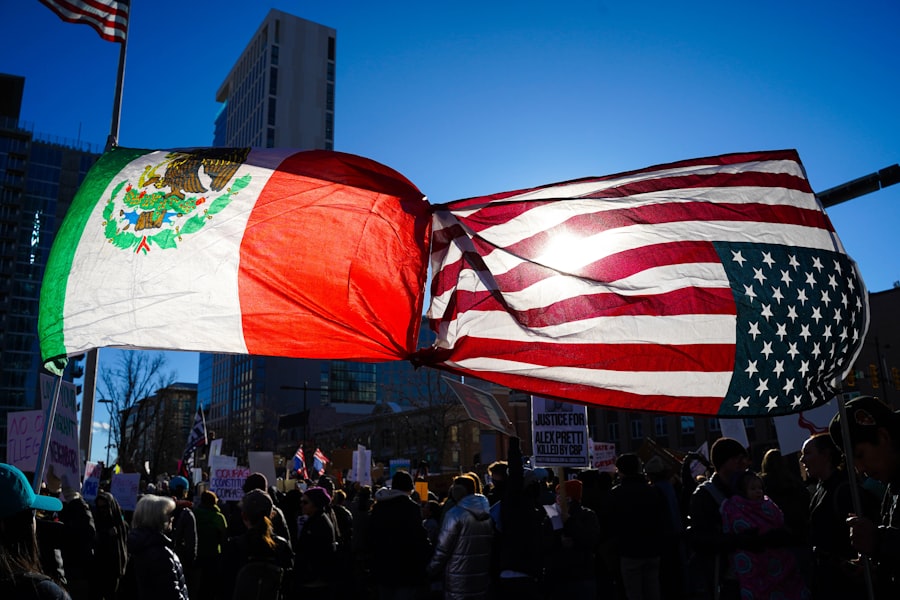
The journey for Mexican American children through the educational system has historically been fraught with systemic barriers, discrimination, and a profound lack of equitable opportunity. This educational injustice, like a slow-burning fire, has long prevented countless individuals from reaching their full potential and constrained the upward mobility of the entire community.
“Separate but Equal” in Practice
Despite the landmark Supreme Court ruling in Plessy v. Ferguson (1896) establishing “separate but equal,” and its later overturning in Brown v. Board of Education (1954), Mexican American children often faced de facto or de jure segregation in schools. Many school districts in the Southwest maintained segregated “Mexican schools” or “Mexican classrooms” within integrated schools. These facilities were invariably inferior, offering fewer resources, dilapidated buildings, and less qualified teachers. The rationale often cited was “language deficiency” or “cultural difference,” thinly veiled excuses for racial segregation. This created a two-tiered system, denying Mexican American children access to quality education and reinforcing their marginalized status within society. One can visualize this as a race where one group is given a clear, well-maintained track, while the other is forced to run through a muddy, obstacle-laden field.
Curricular Bias and Lack of Representation
Beyond segregation, the curriculum itself often contributed to an educational environment that devalued Mexican American identity. History lessons frequently ignored or minimized the contributions of Mexican Americans, focusing predominantly on Anglo-American narratives. This lack of representation in textbooks and teachings fostered a sense of alienation and invisibility among Mexican American students. Furthermore, counselors often steered Mexican American students towards vocational tracks, regardless of their academic aptitude, rather than encouraging higher education. This bias, though subtle, was a powerful force in limiting aspirations and perpetuating cycles of poverty. It was a message whispered implicitly: “This history, this culture, these aspirations, are not as important.”
Political Disenfranchisement and Civil Rights Struggles

The fight for political voice and civil rights for Mexican Americans has been a long and arduous battle, marked by systemic disenfranchisement and courageous activism. Even after the formal end of segregation, various mechanisms were employed to suppress the Mexican American vote and deny full participation in the democratic process.
Poll Taxes and Literacy Tests
For decades, many states in the Southwest utilized discriminatory practices such as poll taxes and literacy tests, specifically designed to prevent Mexican Americans and other minority groups from voting. Poll taxes, seemingly a neutral charge, disproportionately impacted low-income communities, effectively barring many Mexican American farmworkers and laborers from casting their ballots. Literacy tests, often administered subjectively and in English to Spanish speakers, were another potent tool of suppression, irrespective of educational background. These tactics were not about intellectual capacity or civic responsibility; they were deliberate barriers erected to maintain white political dominance. One might compare these as a series of gates, each one designed to be just high enough to prevent certain groups from passing through.
Gerrymandering and At-Large Elections
Even when Mexican Americans were able to vote, their political power was often diluted through strategic gerrymandering and the use of at-large electoral systems. Gerrymandering, the manipulation of electoral district boundaries to favor one party or group, often divided Mexican American communities across multiple districts, rendering their vote less impactful. At-large elections, where all representatives are elected by the entire voting population rather than from smaller districts, could also diminish the influence of minority groups by preventing them from forming a local majority. These strategies, while appearing procedurally neutral, effectively silenced the collective voice of Mexican American communities, making it exceedingly difficult to elect representatives who championed their interests.
The history of Mexican-American communities is marked by significant injustices that have shaped their experiences in the United States. A compelling article that delves into these historical injustices can be found at In the War Room, where it explores the impact of policies and societal attitudes on Mexican-Americans throughout history. Understanding these events is crucial for acknowledging the ongoing struggles faced by these communities and fostering a more equitable future.
Lingering Effects and Contemporary Challenges
| Historical Event | Time Period | Description | Impact on Mexican-American Community | Estimated Number Affected |
|---|---|---|---|---|
| Mexican-American War and Treaty of Guadalupe Hidalgo | 1846-1848 | War between the U.S. and Mexico resulting in Mexico ceding large territories to the U.S. | Loss of land and citizenship rights for many Mexican residents; discrimination and displacement | Over 80,000 Mexican residents in ceded territories |
| Repatriation and Deportation during the Great Depression | 1930s | Mass deportation and repatriation of Mexican and Mexican-American workers to Mexico | Forced removal of up to 1 million people, including many U.S. citizens | Approximately 1 million |
| Operation Wetback | 1954 | U.S. government program aimed at deporting undocumented Mexican immigrants | Harsh enforcement led to deportation of many Mexican-Americans and immigrants, often without due process | Over 1 million deported |
| School Segregation and Discrimination | Early to mid-20th century | Mexican-American children were segregated into separate schools or classrooms | Denied equal educational opportunities and resources | Hundreds of thousands of students affected |
| Bracero Program Exploitation | 1942-1964 | Guest worker program that brought Mexican laborers to the U.S. under poor working conditions | Exploitation, low wages, and poor living conditions for Mexican laborers | Approximately 4.5 million workers |
The historical injustices discussed above are not mere relics of the past; their shadows stretch long into the present, shaping the contemporary experiences and challenges faced by Mexican Americans. Understanding these historical roots is crucial for appreciating the calls for social justice, equity, and recognition that resonate today.
Socioeconomic Disparities
The legacy of land dispossession, labor exploitation, and educational disparities has contributed significantly to persistent socioeconomic gaps. Mexican Americans continue to face higher rates of poverty, lower educational attainment, and limited access to healthcare and economic opportunities compared to the general population. The historical denial of wealth accumulation through land ownership and fair wages has created a generational wealth gap that is difficult to bridge. This is not simply a matter of individual failure; it is a systemic outcome stemming from historical disadvantages that have accumulated over generations, much like an inherited debt that continues to compound.
Continued Discrimination and Xenophobia
Despite significant progress in civil rights, Mexican Americans still encounter various forms of discrimination, ranging from subtle biases in hiring and housing to overt acts of xenophobia. Anti-immigrant rhetoric, often conflating all Mexican Americans with undocumented immigrants, fuels prejudice and creates a hostile environment. The debate over immigration, while complex, frequently overlooks the historical context of Mexican American presence in the U.S. and the long-standing contributions of the community. This often leaves individuals feeling like perpetual outsiders in a land their ancestors helped build.
The Fight for Historical Recognition and Reconciliation
For many Mexican Americans, the fight for historical recognition and reconciliation remains paramount. This involves not only acknowledging the injustices perpetrated but also ensuring that Mexican American history is accurately and comprehensively taught in schools, that cultural contributions are celebrated, and that structural inequalities are addressed. It is a demand not for blame, but for truth, for the full story to be told, so that future generations can build a more just and equitable society. The wound of historical injustice, left unacknowledged, festers; only through acknowledging and understanding can genuine healing and progress begin. The ongoing struggle for civil rights, political representation, and socioeconomic equity for Mexican Americans is intricately linked to these historical injustices, making the uncovering of this past not just an academic exercise, but a vital step towards a more inclusive future for all.
FAQs
What are some key historical injustices faced by Mexican-Americans?
Mexican-Americans have faced various historical injustices including land dispossession following the Treaty of Guadalupe Hidalgo (1848), discrimination in education and employment, segregation, and violations of civil rights.
How did the Treaty of Guadalupe Hidalgo impact Mexican-Americans?
The Treaty of Guadalupe Hidalgo ended the Mexican-American War and resulted in Mexico ceding large territories to the U.S. Many Mexican landowners lost their property due to legal and political challenges, leading to economic and social marginalization.
What role did segregation play in the lives of Mexican-Americans?
Mexican-Americans were often subjected to segregation in schools, housing, and public facilities, which limited their access to quality education and resources, reinforcing social and economic inequalities.
Were Mexican-Americans involved in civil rights movements?
Yes, Mexican-Americans actively participated in civil rights movements, including the Chicano Movement of the 1960s and 1970s, which sought to address issues such as educational reform, labor rights, and political representation.
How have historical injustices affected Mexican-American communities today?
Historical injustices have contributed to ongoing challenges such as economic disparities, underrepresentation in politics, and social discrimination, but they have also fostered strong cultural identity and activism within Mexican-American communities.