In the annals of clandestine operations, few endeavors rival the audacity and technical sophistication of Project Azorian. This covert undertaking, initiated by the Central Intelligence Agency (CIA) during the Cold War, represented a monumental gamble – a moonshot not for celestial exploration, but for crucial intelligence and, implicitly, for minerals. Its objective was audacious: to recover a sunken Soviet submarine from the abyssal depths of the Pacific Ocean. The sheer scale of the engineering challenges, coupled with the geopolitical stakes, elevates Project Azorian beyond a mere salvage operation into a testament to human ingenuity and the relentless pursuit of strategic advantage.
The story of Project Azorian begins with a tragedy at sea. In March 1968, the Soviet Golf II-class ballistic missile submarine K-129, armed with three nuclear ballistic missiles, disappeared without a trace in the North Pacific. Its loss marked a significant blow to the Soviet fleet and a tantalizing opportunity for American intelligence.
A Disappearance Shrouded in Mystery
The exact circumstances of the K-129’s sinking remain, to this day, a subject of some conjecture. The most commonly accepted theory, based on declassified intelligence, suggests an internal explosion, possibly of a torpedo or missile, leading to a catastrophic loss of hull integrity. The resulting implosion sent the massive vessel plummeting to the ocean floor.
The Search for the Lost Submarine
The initial search efforts by both the Soviet Union and the United States were extensive, utilizing acoustic detection systems and naval reconnaissance. The Soviets, despite their best efforts, were unable to locate their lost submarine. However, the American SOSUS (Sound Surveillance System) array, a network of hydrophones designed to detect Soviet submarine activity, had picked up anomalous acoustic signatures in the vicinity of the K-129’s presumed patrol area. This auditory anomaly became the initial breadcrumb, leading intelligence analysts to a vast and unforgiving ocean.
Pinpointing the Debris Field
Through meticulous analysis of these acoustic signals, intelligence experts were able to triangulate the general area of the sinking. This was followed by a more precise photographic reconnaissance mission utilizing the specially modified USS Halibut (SSN-587), a nuclear-powered attack submarine. The Halibut, equipped with advanced deep-sea photographic equipment, embarked on a perilous mission, traversing the abyssal plains and capturing hundreds of thousands of photographs. From this immense dataset, the shattered remains of the K-129 were finally identified, resting at a depth of approximately 16,000 feet (4,900 meters).
Project Azorian, a groundbreaking initiative aimed at extracting valuable minerals from the ocean floor, has garnered significant attention in recent years. For those interested in exploring the implications and advancements related to this moonshot project, a related article can be found at this link. The article delves into the technological innovations and environmental considerations surrounding deep-sea mining, providing a comprehensive overview of how such projects could reshape the future of resource extraction.
Engineering a Leviathan: The Glomar Explorer
With the K-129 located, the next hurdle was the seemingly impossible task of recovering it. No existing technology possessed the capability to retrieve such a massive object from such extreme depths. This necessitated the creation of an entirely new class of vessel and an unprecedented deep-sea recovery system.
Howard Hughes and the Cover Story
To mask the true intent of the operation, the CIA concocted an elaborate cover story involving reclusive billionaire Howard Hughes. The official narrative was that a vast, specially designed vessel, the Hughes Glomar Explorer, was being constructed to mine manganese nodules from the ocean floor. These nodules, rich in precious minerals, were touted as a future resource, thus providing a plausible, if ambitious, explanation for the ship’s unusual design and remarkable capabilities. This cover story, while ultimately penetrated by astute journalists, served its purpose in the initial phases of the project.
The Genesis of the Glomar Explorer
The Hughes Glomar Explorer itself was a marvel of engineering. Designed as a floating platform of immense proportions, its most distinctive feature was a colossal internal moon pool – a massive opening in the center of the ship through which recovery operations could be conducted. This moon pool was designed to accommodate a colossal mechanical claw, affectionately dubbed “Clementine,” which would be lowered to the seabed to grasp the submarine.
The “Clementine” Claw and its Precision
The “Clementine” claw was not merely a large grappling hook. It was an intricately designed array of massive steel arms, each capable of independently articulating and exerting tremendous force. The precision required to position and close this monumental device on the shattered remains of the K-129, operating blind at nearly 5,000 meters below the surface, was a testament to the ingenuity of its designers. Imagine trying to pick up a delicate object with a pair of immense, remote-controlled oven mitts, while simultaneously navigating a dense fog. This provides a faint glimmer of the challenge.
The Long Haul: The Recovery Operation
With the Hughes Glomar Explorer operational and its specialized recovery system in place, the arduous task of retrieving the K-129 began. This was not a swift snatch-and-grab, but a protracted and nerve-wracking endeavor.
Navigating the Abyssal Environment
The ocean floor at such depths presents an incredibly hostile environment. Extreme pressure, perpetual darkness, near-freezing temperatures, and the constant threat of equipment malfunction complicated every stage of the recovery. The operational window for working at these depths was incredibly narrow, demanding meticulous planning and flawless execution. Any mistake could be catastrophic, both for the expensive equipment and for the personnel involved.
The Delicate Grip and its Consequences
In the summer of 1974, the Glomar Explorer positioned itself over the K-129. The “Clementine” claw was lowered, a descent that took several days. After painstaking maneuvering, the claw successfully engaged a significant portion of the submarine’s wreckage. The slow, agonizing process of raising the immense weight began.
The Partial Recovery and its Revelation
As the recovery operation progressed, a catastrophic failure occurred. Several of the claw’s tines fractured under the immense stress, causing a large section of the submarine to break away and plunge back into the abyss. This loss was a significant setback, but a substantial portion of the forward section of the K-129, containing vital intelligence, was successfully brought to the surface.
The Intelligence Bonanza: What Was Discovered

Even with the partial recovery, the intelligence yield from Project Azorian was considerable, representing a significant return on the mammoth investment. The recovered section of the submarine provided a treasure trove of information about Soviet naval technology and capabilities.
Technical Intelligence and Design Insights
The salvaged section allowed American intelligence analysts to meticulously study Soviet submarine design, construction techniques, and reactor technology. This provided invaluable insights into their strengths and weaknesses, informing U.S. naval strategies and countermeasure development. Observing the internal layout and componentry of the K-129 was like being granted a peek behind the enemy’s curtain, revealing vulnerabilities and strengths that could only be guessed at before.
Nuclear Weapons and Cryptographic Material
Perhaps the most significant finds were components of the K-129’s nuclear ballistic missiles, though the most sensitive parts of the warheads were not recovered in the salvaged section. More importantly, intelligence personnel also recovered cryptographic equipment and codebooks. These materials offered an unparalleled glimpse into Soviet communication protocols and encryption methods, potentially compromising their secure channels and providing a significant intelligence advantage.
Human Remains and Cultural Respect
During the recovery, the remains of several Soviet submariners were found within the salvaged section. A solemn and respectful burial at sea was conducted with full military honors, captured on film and later presented to Soviet officials. This gesture, while perhaps unexpected given the adversarial context, underscored a shared humanity even amidst the Cold War’s chill.
Project Azorian, a remarkable endeavor aimed at recovering valuable minerals from the ocean floor, has garnered significant attention in recent years. This ambitious initiative not only seeks to tap into the vast resources hidden beneath the waves but also highlights the importance of sustainable practices in mineral extraction. For those interested in exploring the broader implications of such projects, a related article can be found at In the War Room, which delves into the strategic and environmental considerations surrounding oceanic mineral exploration.
The Aftermath and Legacy: A Shadowy Triumph
| Metric | Value | Unit | Description |
|---|---|---|---|
| Project Name | Azorian Moonshot | – | Codename for deep-sea mineral extraction initiative |
| Target Mineral | Cobalt-rich Manganese Nodules | – | Primary mineral resource targeted for extraction |
| Estimated Resource Volume | 500,000 | Metric Tons | Estimated volume of extractable minerals |
| Extraction Depth | 4,500 | Meters | Depth at which minerals are located on the ocean floor |
| Project Duration | 10 | Years | Planned operational timeline for the project |
| Estimated Annual Output | 50,000 | Metric Tons per Year | Projected yearly mineral extraction volume |
| Technology Used | Autonomous Deep-Sea Mining Robots | – | Primary technology for mineral extraction |
| Environmental Impact Score | 3.5 | Scale 1-10 | Estimated environmental impact rating (lower is better) |
Project Azorian, despite its partial success and eventual public exposure, remains a crowning achievement in clandestine intelligence gathering and deep-sea engineering. Its legacy extends far beyond the immediate intelligence gained.
The Public Exposure and Media Frenzy
In 1975, details of Project Azorian began to leak to the press, most notably through investigative journalist Jack Anderson. The CIA initially attempted to deny or obfuscate the reports, but the sheer scale of the operation and the corroborating evidence eventually forced a partial admission. The revelation sparked a media sensation, captivating public imagination and highlighting the audacity of Cold War espionage. The Glomar Explorer itself became an accidental celebrity, a symbol of America’s technological prowess and its willingness to push boundaries in the pursuit of national security.
Technological Advancement and Deep-Sea Exploration
The technological innovations developed for Project Azorian found applications far beyond military intelligence. The deep-sea recovery techniques, the robust remotely operated vehicles (ROVs), and the high-precision navigation systems pioneered during the project have since been adapted and refined for various purposes, including marine archaeology, offshore oil and gas exploration, and scientific research. The Glomar Explorer herself was later repurposed for scientific and commercial deep-sea drilling, continuing her storied career.
The Unfinished Business and Enduring Mystery
Despite the partial recovery and the wealth of intelligence gleaned, the bulk of the K-129, including potentially more sensitive equipment and the remaining nuclear warheads, still lies scattered across the Pacific seabed. The sheer cost and risk associated with further recovery attempts have, to date, precluded any future endeavors on a similar scale. The K-129, as a result, remains a permanent fixture of the deep ocean, a silent sentinel to a bygone era of global tension and unparalleled ambition.
Project Azorian stands as a potent reminder of the lengths to which nations will go in the pursuit of strategic advantage. It was a mission born of necessity, fueled by technological innovation, and executed with a blend of daring and meticulous planning. For those involved, it was more than an operation; it was a testament to what humanity can achieve when faced with seemingly insurmountable challenges, a high-stakes poker game played on the ocean floor, where the chips were not just money, but the balance of global power.
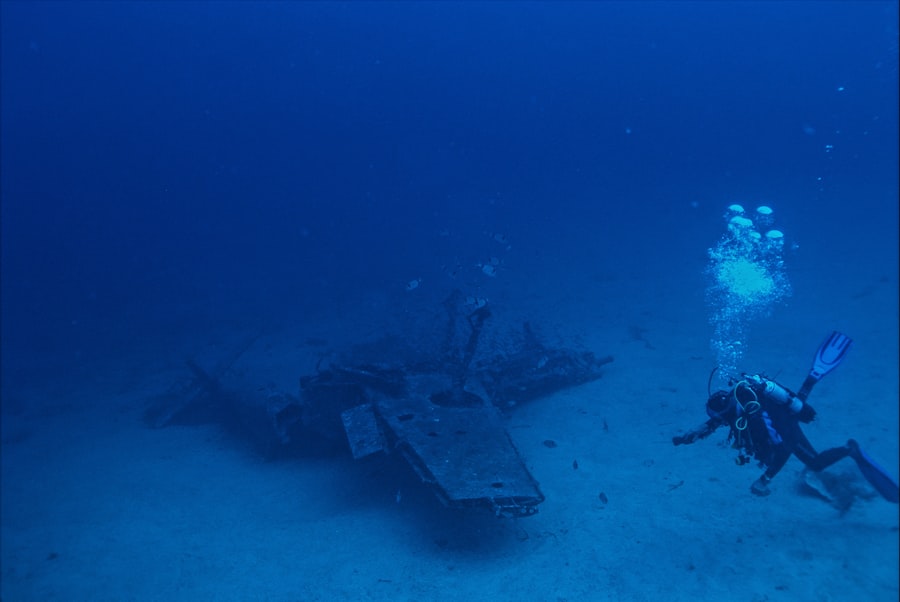
WATCH NOW ▶️ The CIA’s Impossible Mission To Steal A Nuclear Submarine
FAQs
What was Project Azorian?
Project Azorian was a secret Cold War-era mission undertaken by the United States to recover a sunken Soviet submarine from the ocean floor. The operation aimed to retrieve valuable intelligence and technology from the submarine.
Why is Project Azorian referred to as a “moonshot” for minerals?
Project Azorian is called a “moonshot” for minerals because it involved an ambitious and unprecedented effort to recover rare and valuable materials from a deep-sea environment, similar to how the moonshot represented a bold leap in space exploration.
What minerals were targeted in Project Azorian?
The primary focus was on recovering materials such as titanium and other strategic metals used in the construction of the Soviet submarine, which were considered valuable for both military and industrial purposes.
How was the submarine recovered during Project Azorian?
The recovery involved the use of a specially designed ship, the Hughes Glomar Explorer, equipped with advanced technology to lift the submarine from the ocean floor at great depths, a feat that was technologically challenging at the time.
What was the significance of Project Azorian in terms of mineral recovery?
Project Azorian demonstrated the potential for deep-sea mining and recovery of strategic minerals from underwater sources, paving the way for future exploration and exploitation of oceanic mineral resources.