The clandestine operations of the Cold War era represent a complex tapestry of geopolitical maneuvering and technological espionage. Among the myriad of covert programs, Project Azorian and Operation Ivy Bells stand out as particularly audacious examples of intelligence gathering, each pushing the boundaries of what was deemed possible in the pursuit of strategic advantage. These two initiatives, though distinct in their objectives and methodologies, collectively illustrate the intense, often perilous, and ultimately successful efforts undertaken by both the United States and the Soviet Union to penetrate each other’s secrets. This article will delve into the intricacies of these operations, examining their historical context, execution, and lasting implications.
The period following World War II, commonly known as the Cold War, was characterized by an ideological and geopolitical rivalry between the United States and its allies, and the Soviet Union and its satellite states. This was a conflict fought not with conventional armies clashing on battlefields, but through proxy wars, arms races, and, crucially, a pervasive and sophisticated system of espionage. Both superpowers understood that intelligence – the knowledge of an adversary’s capabilities, intentions, and vulnerabilities – was the ultimate strategic asset. The development of nuclear weapons further amplified this need, transforming intelligence gathering from a tactical advantage into a matter of existential survival.
The Arms Race and Intelligence Imperatives
The nuclear arms race, a defining feature of the Cold War, created an insatiable demand for information. Each side sought to understand the other’s ballistic missile programs, submarine fleets, and bomber capabilities. This led to a continuous innovation in reconnaissance technologies, from spy planes like the U-2 and SR-71 Blackbird to an array of signals intelligence (SIGINT) platforms. The ability to intercept communications, track movements, and photograph sensitive installations became paramount.
The Silent Depths: Submarine Warfare and Secrecy
Beneath the ocean’s surface, a parallel cold war was being waged. Submarines, particularly nuclear-powered ballistic missile submarines (SSBNs), became the ultimate deterrent, capable of launching devastating strikes from undetectable positions. For the United States, understanding Soviet submarine technology, deployment patterns, and communication methods was critical for both defensive and offensive planning. Conversely, the Soviets sought to protect these assets as their most potent second-strike capability. The vastness and opacity of the ocean provided a natural cloak for these underwater fleets, making intelligence gathering in this domain exceptionally challenging and highly valued.
Project Azorian and Operation Ivy Bells are two fascinating operations from the Cold War era that highlight the lengths to which the United States went to gather intelligence on Soviet submarine capabilities. For a deeper understanding of these operations and their implications on naval warfare and espionage, you can explore a related article that delves into the intricacies of these missions. Check it out here: IntheWarRoom.
Project Azorian: The Quest for the K-129
Project Azorian, a highly classified operation spearheaded by the Central Intelligence Agency (CIA), aimed to recover a sunken Soviet Golf-II class ballistic missile submarine, the K-129. This ambitious undertaking, cloaked in a cover story involving deep-sea manganese nodule mining, was a testament to the extremes to which intelligence agencies would go.
The Loss of the K-129
In March 1968, the Soviet submarine K-129, carrying three R-21 nuclear-tipped ballistic missiles, mysteriously sank in the Pacific Ocean, approximately 1,560 nautical miles northwest of Hawaii, at a depth of over three miles. For the United States, this was an unparalleled opportunity. The recovery of such a submarine could provide invaluable intelligence on Soviet missile technology, cryptographic systems, and propulsion mechanisms. The Soviet Union, after an extensive but ultimately unsuccessful search, declared the submarine lost.
The Cover Story and the Glomar Explorer
To mask the true nature of the operation, the CIA commissioned Howard Hughes, the eccentric billionaire, to build a colossal salvage vessel, the Hughes Glomar Explorer. This ship, ostensibly designed for deep-sea mining, featured an enormous internal moon pool and a unique mechanical claw, dubbed the “Clementine,” capable of reaching and lifting heavy objects from extreme depths. The sheer scale and technological sophistication of the Glomar Explorer were unprecedented, a marvel of Cold War engineering. The cover story, though elaborate, eventually attracted suspicion, but not before the operation commenced.
The Attempted Recovery and Its Aftermath
In the summer of 1974, the Glomar Explorer arrived at the coordinates of the K-129. The operation was fraught with immense technical challenges, including the immense pressures of the deep ocean and the delicate nature of handling a large, fractured submarine at such depths. During the recovery attempt, a critical section of the submarine, including parts of the sail and two nuclear torpedoes, were successfully raised. However, due to mechanical failure or the structural integrity of the K-129, a significant portion of the submarine broke away and fell back to the ocean floor. Despite this partial success, the recovered section yielded valuable intelligence, including the bodies of six Soviet submariners, who were given a respectful burial at sea with full military honors, captured on film by the CIA. The intelligence gleaned, particularly from the torpedoes and cryptographic material, provided insights into Soviet naval capabilities. The operation’s exposure in 1975, partly due to a break-in at Hughes’s offices, became a public sensation, showcasing the audacity of Cold War espionage.
Operation Ivy Bells: Tapping the Undersea Nerve

While Project Azorian was an overt display of technological might, Operation Ivy Bells was a masterclass in clandestine ingenuity, focusing on the interception of Soviet communications. This ambitious program involved tapping into an undersea fiber optic cable connecting Soviet naval bases on the Kamchatka Peninsula.
The Target: Okhotsk Sea Communications
In the early 1970s, U.S. intelligence agencies identified a significant vulnerability: a Soviet undersea communications cable laid in the Okhotsk Sea, connecting major Kamchatka naval bases to the Soviet mainland. This cable, believed to carry unencrypted or lightly encrypted communications between Soviet commanders, offered a potential goldmine of information about Soviet naval strategy, submarine movements, and missile tests. The waters of the Okhotsk Sea were heavily monitored by the Soviets, making any overt operation exceptionally risky.
The Specialized Submarines and the Wiretap
To achieve this feat, the U.S. Navy repurposed and specially equipped several attack submarines, primarily the USS Halibut (SSN-587), and later the USS Parche (SSN-683) and USS Richard B. Russell (SSN-647). These submarines were modified with custom-built remotely operated vehicles (ROVs) and specialized equipment designed to locate the cable, install a massive inductive tap, and record the intercepted communications. The tap, a sophisticated device, did not physically break the cable, thus avoiding power fluctuations that might alert the Soviets. Instead, it inductively “listened” to the electrical signals flowing through the cable, a silent siphon of information.
The Harvest of Secrets and the Betrayal
For over a decade, Operation Ivy Bells faithfully recorded thousands of hours of Soviet communications. The intelligence gathered was invaluable, providing a detailed understanding of Soviet naval operations, submarine technology, and the capabilities of their Pacific Fleet. This included insights into acoustic signatures of Soviet submarines, allowing for better tracking, and detailed information about missile test launches, significantly enhancing U.S. early warning systems. The operation was considered an unparalleled success, a silent lamp illuminating the shadows of Soviet naval doctrine.
However, this highly sensitive operation was tragically compromised in 1980 by Ronald Pelton, a former National Security Agency (NSA) analyst struggling with financial difficulties. Pelton, seeking monetary gain, sold details of Operation Ivy Bells and other intelligence operations to the Soviet Union. This betrayal led to the discovery of the tap by Soviet forces, who subsequently retrieved it. The loss of this critical intelligence source was a significant blow to U.S. intelligence capabilities and resulted in Pelton’s arrest and conviction for espionage.
Technological Marvels and Human Ingenuity

Both Project Azorian and Operation Ivy Bells stand as monuments to the technological ingenuity and human dedication displayed during the Cold War. These operations pushed the boundaries of engineering, materials science, and deep-sea exploration, all in the service of intelligence gathering.
Engineering Feats Under Pressure
The challenges inherent in both operations were immense. Project Azorian required the construction of a ship capable of manipulating multi-ton objects at incredible depths, an engineering feat comparable to sending a man to the moon. The precision required to find and grasp a fractured submarine in the abyssal plain was astronomical. Similarly, Operation Ivy Bells demanded submarines equipped with highly specialized robotic arms and recording devices capable of operating clandestinely in a hostile environment, effectively installing a sophisticated wiretap on an underwater cable without detection. These were not mere fishing expeditions; they were intricate ballets of technology and stealth.
The Role of Human Element
Beyond the machines, it was the human element – the engineers, scientists, sailors, and intelligence analysts – who designed, executed, and interpreted these operations. Their courage, persistence, and problem-solving abilities were paramount. The submariners who navigated their vessels into contested waters and the technicians who operated the complex machinery, often under extreme psychological and environmental pressures, played an indispensable role. These individuals operated in a world where failure could mean not only the loss of a multi-million-dollar asset but also a significant blow to national security or even their own lives.
Project Azorian and Operation Ivy Bells are two fascinating examples of Cold War espionage efforts that highlight the lengths to which nations will go to gather intelligence. For a deeper understanding of these operations and their implications, you can explore a related article that delves into the intricacies of underwater surveillance and the technological advancements of the time. This article provides valuable insights into how these missions shaped modern intelligence-gathering techniques. To read more about it, visit this insightful piece.
Ethical Concerns and International Law
| Aspect | Project Azorian | Operation Ivy Bells |
|---|---|---|
| Objective | Recover a sunken Soviet submarine (K-129) from the Pacific Ocean floor | Tap Soviet underwater communication cables in the Sea of Okhotsk |
| Time Period | 1974 | 1970s (early to mid) |
| Location | North Pacific Ocean, near Hawaii | Sea of Okhotsk, near Soviet Union |
| Method | Use of the specially designed ship “Glomar Explorer” to lift submarine | Underwater tapping devices installed by divers on Soviet cables |
| Success Level | Partial recovery of submarine; some parts lost during lift | Successful long-term tapping and intelligence gathering |
| Secrecy | Highly classified; cover story about deep-sea mining | Highly secret; involved covert diving operations |
| Technological Innovation | Advanced deep-sea recovery technology and ship design | Development of covert underwater tapping devices and diving techniques |
| Outcome Impact | Provided valuable intelligence on Soviet submarine technology | Provided ongoing intelligence on Soviet naval communications |
The audacious nature of these operations inevitably raises questions about their ethical implications and legality under international law. While intelligence gathering is a recognized aspect of statecraft, the methods employed in Project Azorian and Operation Ivy Bells pushed the boundaries of conventional norms.
Sovereignty and Espionage
Project Azorian, while technically in international waters, involved the recovery of a sovereign nation’s military asset, albeit a lost one. The act of attempting to recover foreign military technology without consent could be seen as a violation of international norms, even if not explicitly illegal in the context of salvage law in international waters. The public exposure of the operation, particularly the clandestine burial of Soviet sailors, ignited a limited international furore, though the Cold War context often meant such actions were silently tolerated by other players, understanding the ‘rules’ of the game.
The Nature of Covert Operations
Operation Ivy Bells, involving the wiretapping of a foreign power’s communications cable, was a clear act of espionage. Such activities are universally condemned by the targeted nation but routinely conducted by intelligence agencies worldwide. The covert nature of the operation meant that the United States would have denied its existence had it been discovered. The ethical dilemma rests in the balance between national security interests and the potentially destabilizing effect of such aggressive intelligence gathering, even if it is a necessary evil in the shadow play between superpowers.
Legacy and Lessons Learned
Project Azorian and Operation Ivy Bells, though belonging to a bygone era of Cold War rivalry, offer enduring lessons for contemporary intelligence operations and international relations. They serve as stark reminders of the lengths to which nations will go to obtain a strategic advantage.
Enduring Relevance of SIGINT
The success of Operation Ivy Bells, even with its eventual compromise, underscored the vital importance of signals intelligence (SIGINT). In an increasingly interconnected world, the interception and analysis of communications remain a cornerstone of national security for all major powers. The methods may have evolved from inductive taps to sophisticated cyber espionage, but the underlying principle of listening to an adversary’s communications remains fundamentally unchanged. The vulnerability exposed by Ivy Bells continues to influence how nations secure their communication infrastructure.
The Drive for Technological Superiority
Both operations exemplify the relentless drive for technological superiority that characterizes geopolitical competition. The investment in the Glomar Explorer and the specialized submarines for Ivy Bells demonstrates a commitment to pushing the boundaries of engineering to achieve intelligence objectives. This constant innovation continues today, manifest in advancements in satellite imagery, cyber warfare capabilities, and artificial intelligence-driven intelligence analysis. The Cold War was not just a conflict of ideologies, but also a crucible for technological innovation.
The Human Element: Invaluable and Vulnerable
Finally, the narratives of Project Azorian and Operation Ivy Bells highlight the dual nature of the human element in intelligence. On one hand, human ingenuity and courage are indispensable for the planning and execution of such complex operations. On the other hand, human fallibility, as tragically demonstrated by Ronald Pelton, can compromise years of painstakingly gathered intelligence and jeopardize national security. The security of intelligence operations remains a perpetual challenge, where the human factor, both its greatest asset and its greatest vulnerability, must be constantly managed. These two operations, peering into the darkest depths and the most secure communications, offer a profound glimpse into the hidden history of the Cold War and the enduring, silent struggle for knowledge.
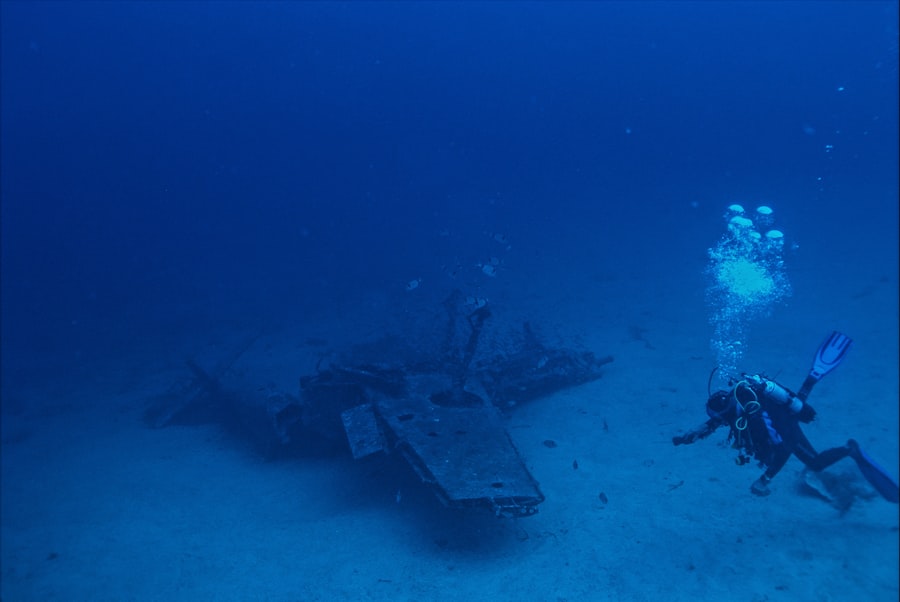
WATCH NOW ▶️ The CIA’s Impossible Mission To Steal A Nuclear Submarine
FAQs
What was the main objective of Project Azorian?
Project Azorian was a secret CIA mission during the Cold War aimed at recovering a sunken Soviet submarine, the K-129, from the Pacific Ocean floor to gather intelligence.
What was Operation Ivy Bells about?
Operation Ivy Bells was a covert U.S. Navy operation that involved tapping underwater Soviet communication cables in the Sea of Okhotsk to intercept military communications during the Cold War.
How did Project Azorian and Operation Ivy Bells differ in their methods?
Project Azorian focused on physically recovering a sunken submarine using a specially designed ship, while Operation Ivy Bells involved installing wiretaps on underwater communication cables to intercept data covertly.
Were both Project Azorian and Operation Ivy Bells successful?
Project Azorian partially succeeded in recovering parts of the K-129 submarine, though much of it was lost during the lift. Operation Ivy Bells successfully intercepted Soviet communications for several years before being compromised.
What was the significance of these operations during the Cold War?
Both operations provided the United States with valuable intelligence on Soviet naval capabilities and communications, enhancing U.S. strategic knowledge and contributing to national security during a tense period of geopolitical rivalry.