John Graham: Naval Architect Behind Glomar Explorer
John Graham, a name etched in the annals of maritime engineering, stands as the pivotal naval architect behind the Glomar Explorer, a vessel that transcended its utilitarian purpose to become an icon of audacious engineering and covert operations. Born into a world where the sea was a boundless frontier, Graham cultivated a profound understanding of naval architecture that would ultimately lead him to design a ship unlike any other – a clandestine behemoth capable of feats previously relegated to the realm of science fiction.
A Foundation in Engineering Principles
John Graham’s early life, though not extensively documented in public records, laid the groundwork for his future achievements. It is understood that his formative years instilled in him a meticulous approach to problem-solving and a deep appreciation for the practical application of scientific principles. This upbringing likely fostered an environment where curiosity was encouraged, and the complex mechanics of the world were viewed not as insurmountable obstacles, but as puzzles awaiting ingenious solutions. His subsequent formal education in naval architecture provided him with the rigorous theoretical framework and the specialized knowledge required to translate innovative ideas into tangible, seaworthy designs. This period was crucial, as it refined his innate talent and equipped him with the indispensable tools of his trade.
The Call of the Sea and the Drawing Board
While specific details of his early career are scarce, it is clear that Graham was drawn to the maritime world from an early age. The sheer scale and complexity of ships, the intricate dance of forces that kept them afloat and propelled them through vast oceans, must have held a magnetic pull. This fascination, combined with his burgeoning engineering intellect, set him on a path that would see him spend countless hours immersed in the minutiae of ship design. The drawing board, likely adorned with countless calculations, sketches, and precise lines, became his canvas. It was here that the abstract concepts of buoyancy, hydrodynamics, and structural integrity were painstakingly translated into the blueprints that would eventually define groundbreaking vessels.
John Graham, the renowned naval architect behind the Glomar Explorer, played a pivotal role in the design of this unique vessel, which was famously involved in the CIA’s covert operations during the Cold War. For those interested in exploring more about the intricate details of the Glomar Explorer’s mission and its historical significance, a related article can be found at this link. This article delves into the complexities of the project and the innovative engineering that made it possible.
The Genesis of Glomar Explorer
A Secret Project Takes Shape
The origins of the Glomar Explorer are shrouded in an atmosphere of profound secrecy, a testament to the clandestine nature of the project for which it was conceived. While the operational details remain largely classified, it is understood that the vessel was commissioned by the Central Intelligence Agency (CIA) in the late 1960s. The objective was ambitious, pushing the boundaries of what was considered technologically feasible at the time. Graham, with his proven expertise and innovative mindset, was identified as the ideal individual to conceptualize and design a ship that could fulfill these extraordinary demands. It was a project that required not just technical prowess, but also an unparalleled ability to think outside the conventional paradigms of shipbuilding.
Addressing Unprecedented Engineering Challenges
The primary challenge faced by Graham was the design of a colossal mining ship capable of retrieving a sunken Soviet submarine, the K-129, from the crushing depths of the Pacific Ocean. This was no ordinary salvage operation; it was a mission of immense strategic importance, requiring a vessel of unprecedented size, stability, and lifting capacity.
The Need for Extreme Stability
One of the most significant hurdles was ensuring the Glomar Explorer’s stability in the face of powerful oceanic currents and the immense forces involved in lifting a massive object from over three miles below the surface. Graham’s work on the vessel’s hull design and ballasting systems was paramount. He had to engineer a platform that could remain remarkably steady, a virtual island in a turbulent sea, even when subjected to the stresses of a prolonged and delicate operation. This requirement translated into a hull form that offered exceptional seakeeping characteristics, a testament to his deep understanding of fluid dynamics.
Innovating with the Hughes Glomar Mining System
Central to the Glomar Explorer’s design was the revolutionary Hughes Glomar Mining System. This intricate and sophisticated apparatus, a marvel of engineering in its own right, was tasked with the seemingly impossible: to carefully capture and lift the sunken submarine. Graham’s role involved integrating this system seamlessly with the ship’s structure.
Designing the Lift Mechanism
The details of the lifting mechanism are a testament to Graham’s ingenuity. He had to design a structure that could withstand immense tensile loads, allowing for the controlled descent and ascent of a massive gripper assembly. The sheer ingenuity required to fabricate a system that could operate reliably at such extreme depths, under unimaginable pressure, speaks volumes about the caliber of Graham’s engineering mind.
The Ship as a Mobile Platform
The Glomar Explorer was not merely a ship; it was conceived as a mobile, highly specialized platform. Graham’s design ensured that the vessel could act as a steady anchor in the vastness of the ocean, providing a stable base for the intricate operations of the mining system. This required a sophisticated interplay of hull design, propulsion, and dynamic positioning systems, all orchestrated to achieve the ultimate goal of precise and stable maneuvering.
Design Innovations and Technical Marvels
The Semi-Submersible Hull
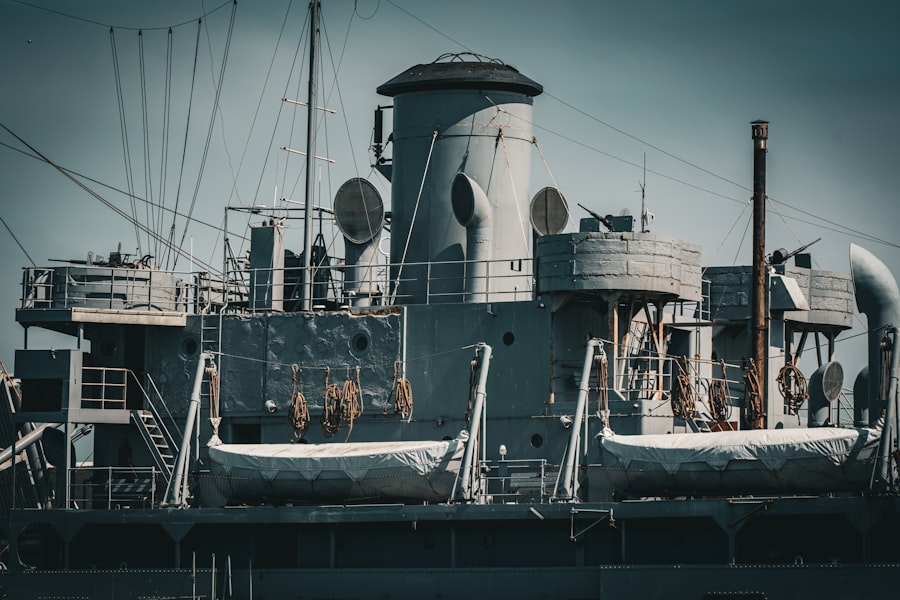
A key innovation in the Glomar Explorer’s design was its semi-submersible hull. This departure from conventional ship architecture was crucial for achieving the required stability. Unlike a traditional displacement hull that rides on the surface, the Glomar Explorer’s hull was designed to be partially submerged, with its main buoyancy provided by two submerged pontoons connected by two massive longitudinal beams.
Enhanced Stability in Rough Seas
This semi-submersible configuration dramatically reduced the vessel’s susceptibility to wave action. By submerging the primary buoyancy tanks, the Glomar Explorer rode above the most disruptive surface waves, providing a remarkably stable working deck. This was akin to a tranquil pond beneath a raging storm, offering a secure environment for the delicate operations that needed to be performed. Graham’s understanding of hydrostatics and hydrodynamics allowed him to harness these principles to create a platform that offered an unprecedented level of stability at sea, a critical factor for the success of its mission.
Large Working Deck Area
The structural arrangement of the semi-submersible hull also allowed for a significantly larger and more open working deck area. This was essential for accommodating the massive components of the mining system and providing ample space for the complex operations involved in the salvage attempt. The design fostered a sense of spaciousness and efficiency on an otherwise confined maritime environment, allowing for the intricate choreography of men and machinery.
The Dynamic Positioning System
The Glomar Explorer was equipped with an advanced dynamic positioning system, a critical component for maintaining its exact location above the submerged target. This system utilized thrusters and sophisticated computer control to counteract the forces of wind, waves, and currents, keeping the vessel precisely in place.
Maintaining Station in the Open Ocean
Maintaining precise station in the open ocean, particularly over such a deep and distant target, was a feat in itself. Graham’s integration of this dynamic positioning system ensured that the Glomar Explorer acted as a steadfast sentinel, an unmoving pillar in the dynamic embrace of the sea. The constant adjustments made by the system were like the silent, tireless efforts of a seasoned sailor adjusting their grip on the tiller, ensuring the ship remained true to its course.
Enabling Precise Operation of the Mining Gear
Without this precise station-keeping capability, the delicate and complex operations of the Hughes Glomar Mining System would have been impossible. The dynamic positioning system was the silent partner to the colossal lifting mechanism, ensuring that every movement was executed with pinpoint accuracy, allowing the submerged tools to engage their target without deviation.
Advanced Crane and Gantry Systems
Beyond the mining system, the Glomar Explorer featured a substantial crane and gantry system. This colossal structure was essential for deploying and retrieving the various components of the mining apparatus, including the massive gripper and the long lengths of drill pipe.
Lifting Immense Weights
The sheer capacity of these systems was staggering. They were designed to lift and maneuver components weighing many tons, requiring a robust structural design and powerful hydraulic and electrical systems. Graham’s architectural vision extended to the intricate interplay of these heavy-duty lifting mechanisms, ensuring they were integrated harmoniously with the ship’s overall structure.
Facilitating Deep-Sea Operations
These cranes and gantries were not merely for lifting; they were instrumental in facilitating the complex deployment and retrieval sequences required for deep-sea operations. The precision with which these powerful machines could be operated was a testament to the thoughtful integration of their design with the ship’s capabilities. It was a ballet of steel and hydraulics, conducted miles above the ocean floor.
The Project Azorian Endeavor
A Covert Mission of Unprecedented Scale
The Glomar Explorer’s most famous, albeit clandestine, undertaking was Project Azorian. This highly classified operation, carried out in the mid-1970s, aimed to salvage the wreck of the Soviet submarine K-129 from the bottom of the Pacific Ocean. The success of this mission, or its partial success, would have provided the United States with invaluable intelligence on Soviet naval capabilities and technology.
The Strategic Imperative
The strategic imperative behind Project Azorian cannot be overstated. The opportunity to recover advanced Soviet technology from a sunken submarine was a prize of immense value in the geopolitical landscape of the Cold War. Graham’s design of the Glomar Explorer was the tangible manifestation of this ambition, a vessel engineered to translate a bold intelligence objective into a physical reality.
The Intricate Salvage Operation
The salvage operation itself was a masterpiece of engineering and logistical coordination. The Glomar Explorer, a veritable floating factory, had to maintain its position with absolute precision while the massive mining system worked to capture and lift the submarine’s wreckage. Graham’s design provided the stable foundation upon which this audacious endeavor was executed.
The “Tugboat” Deception
As a part of the operational cover, the Glomar Explorer was ostensibly a deep-sea mining vessel owned by a company called Global Marine Development, Inc. This narrative was carefully constructed to mask the true nature of its mission. The vessel’s impressive size and capabilities were presented as being dedicated to exploring the potential of deep-sea mineral resources, a seemingly innocuous endeavor.
A Plausible Facade
The “tugboat” story, while a simplification, represented a plausible facade. The Glomar Explorer’s imposing structure and specialized equipment could be interpreted as belonging to a vessel engaged in advanced offshore resource extraction. Graham’s design, in its sheer robust and industrial appearance, lent itself to this narrative, making the deception more convincing.
Maintaining Secrecy
The success of the Glomar Explorer’s mission, and indeed the secrecy surrounding its true purpose, hinged on maintaining this plausible deniability. The narrative of deep-sea mining served as a smokescreen, allowing the operation to proceed under the radar of international observation and potential Soviet interference.
John Graham, a notable naval architect, played a pivotal role in the design of the Glomar Explorer, a vessel shrouded in intrigue due to its connection with covert operations during the Cold War. For those interested in exploring more about the fascinating history of naval engineering and its impact on military strategies, a related article can be found at In The War Room, which delves into the complexities of naval architecture and its significance in modern warfare.
Legacy and Impact
| Metric | Details |
|---|---|
| Name | John Graham |
| Profession | Naval Architect |
| Notable Project | Glomar Explorer |
| Project Purpose | Recovery of sunken Soviet submarine K-129 |
| Ship Length | 168 meters (551 feet) |
| Ship Beam | 23 meters (75 feet) |
| Displacement | 21,000 tons |
| Launch Year | 1974 |
| Unique Feature | Large moon pool for deep-sea recovery operations |
| Design Challenge | Stabilizing ship during deep ocean lifting operations |
A Symbol of Engineering Prowess
The Glomar Explorer, and by extension John Graham’s design, quickly became a symbol of American engineering prowess and audacious ambition. The vessel’s ability to undertake such a complex and technically challenging mission at the time of its construction was remarkable. It demonstrated the capacity for innovation and the willingness to invest in cutting-edge technology to achieve strategic objectives. Graham’s fingerprints are all over this achievement, evident in every line of the ship’s blueprints.
Pushing the Boundaries of Naval Architecture
Graham’s design for the Glomar Explorer pushed the boundaries of naval architecture in several key areas. The semi-submersible hull, the advanced dynamic positioning system, and the integration of the complex Hughes Glomar Mining System were all significant advancements. These innovations not only served the immediate purpose of Project Azorian but also laid the groundwork for future developments in offshore engineering and specialized maritime vessels.
A Monument to Human Ingenuity
The Glomar Explorer stands as a monument to human ingenuity and the relentless pursuit of the seemingly impossible. It proved that with the right vision, resources, and engineering expertise, even the most daunting challenges could be met. Graham’s contribution was instrumental in transforming an ambitious concept into a tangible reality, a vessel that could brave the deepest oceans in pursuit of its objective.
The Information Blackout and Lingering Questions
Despite the Glomar Explorer’s significant technological achievements, the full story of Project Azorian remains largely classified. Information regarding the extent of the submarine’s recovery and the intelligence gained is still subject to speculation and debate. This information blackout, a hallmark of the Cold War era, has cast a long shadow over the vessel’s legacy, leaving many questions unanswered.
The Partially Successful Recovery
While official accounts suggest that only a portion of the K-129 submarine was recovered, the true success of the mission is a subject of ongoing discussion. The inherent difficulties of operating at extreme depths, coupled with the unforeseen challenges of salvaging a massive object from the seabed, meant that a complete recovery was always a monumental undertaking. The partial success, however, still represented a significant feat of engineering and operational execution.
The Intelligence Dividend
The intelligence dividend derived from Project Azorian is believed to have been substantial, though the precise nature and scope remain veiled in secrecy. The ability to study Soviet naval technology firsthand would have provided invaluable insights into their capabilities, aiding in strategic planning and defense. Graham’s design, by enabling this operation, indirectly contributed to this significant intelligence coup.
Enduring Influence on Offshore Technology
The innovations pioneered by John Graham in the design of the Glomar Explorer have had an enduring influence on the development of offshore technology. The principles of stability, dynamically positioned platforms, and specialized heavy-lift capabilities that he incorporated into the vessel have found applications in a wide range of modern offshore operations.
Deepwater Drilling and Exploration
The advancements in dynamic positioning and hull design that Graham’s work exemplified have been crucial for the development of deepwater drilling rigs and exploration vessels. These modern platforms bear a conceptual lineage to the Glomar Explorer, benefiting from the technological leaps made in the pursuit of Project Azorian. They are the descendants of the titan that braved the abyss.
Specialized Maritime Engineering
Beyond oil and gas, the Glomar Explorer’s design has informed specialized maritime engineering for various applications, including cable laying, subsea construction, and even scientific research vessels. The ability to operate with precision and stability in challenging oceanic environments, a cornerstone of Graham’s design, remains a critical requirement in these diverse fields. John Graham, through his exceptional work on the Glomar Explorer, left an indelible mark on the world of naval architecture and offshore engineering, a legacy that continues to resonate in the vessels that ply our oceans today.
WATCH NOW ▶️ The CIA’s Impossible Mission To Steal A Nuclear Submarine
FAQs
Who was John Graham in relation to the Glomar Explorer?
John Graham was a naval architect involved in the design and development of the Glomar Explorer, a specialized ship built for deep-sea recovery operations.
What was the primary purpose of the Glomar Explorer?
The Glomar Explorer was originally constructed to recover a sunken Soviet submarine from the ocean floor as part of a secret Cold War mission known as Project Azorian.
What role did naval architecture play in the design of the Glomar Explorer?
Naval architecture was crucial in designing the Glomar Explorer to ensure it could operate in deep ocean environments, support heavy lifting equipment, and maintain stability during complex recovery operations.
When was the Glomar Explorer built and launched?
The Glomar Explorer was built in the early 1970s and launched in 1971 to carry out its secretive deep-sea recovery mission.
Is the Glomar Explorer still in use today?
The Glomar Explorer has since been repurposed and sold for commercial use, no longer serving its original classified mission.