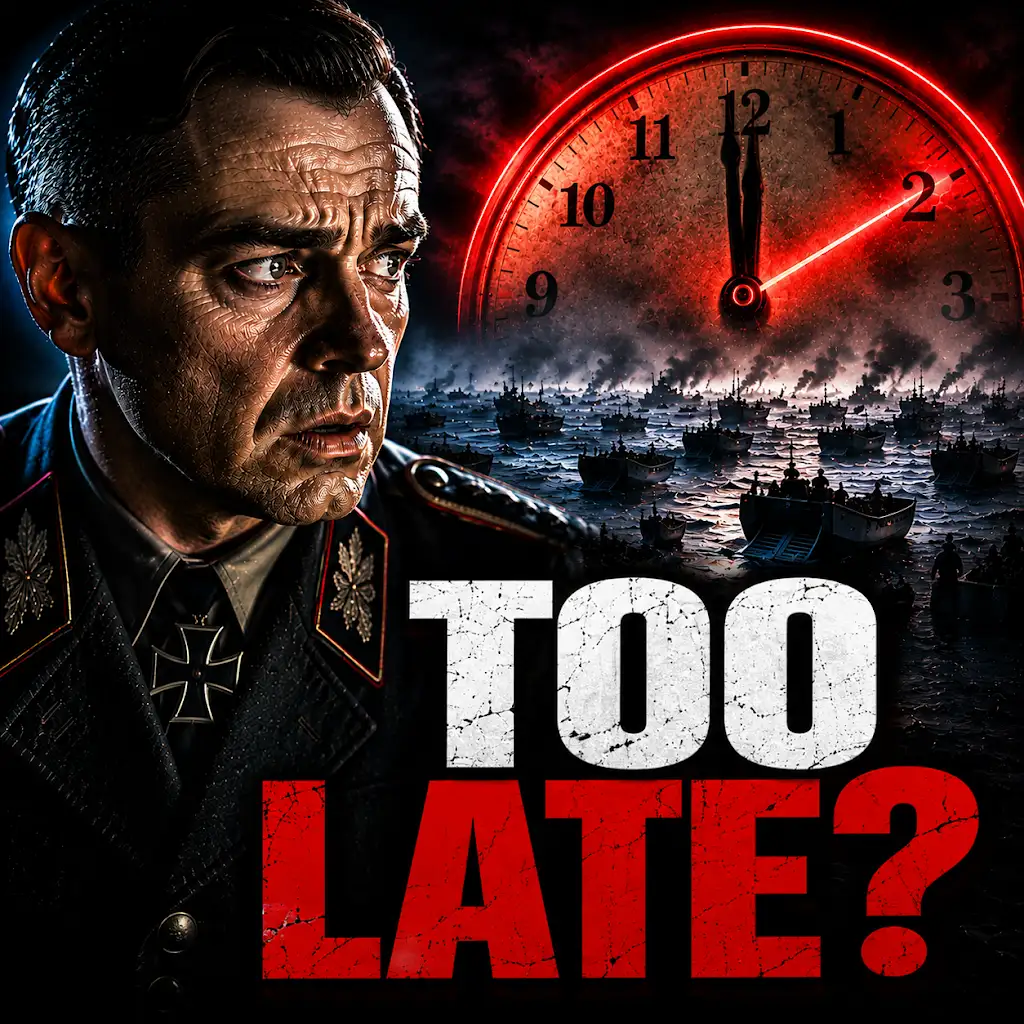
The 12th SS Panzer Division “Hitlerjugend” stands as one of the most controversial and debated formations of the Second World War. Formed primarily from members of the Hitler Youth, this unit rapidly evolved from an untested collection of teenagers into a formidable, fanatical fighting force that would play a crucial, and often brutal, role in the defense of Normandy. Their story is one of both astonishing bravery and horrific atrocities, a testament to the warped ideals of the Nazi regime and the complex nature of wartime conduct.
The creation of the 12th SS Panzer Division was a testament to the desperation of the Nazi regime as the war turned against Germany. With manpower becoming increasingly scarce, the regime turned to its most indoctrinated youth to fill the ranks of its elite formations. The “Hitlerjugend”, the official youth organization of the Nazi Party, was the fertile ground from which this division would spring.
The Ideological Foundation
From its inception, the Hitler Youth was designed to instill absolute loyalty to Adolf Hitler and the Nazi Party, along with a fervent belief in German racial superiority. Membership was compulsory for most German boys, and through rigorous indoctrination, paramilitary training, and ideological propaganda, they were molded into zealous adherents of Nazism. This was not merely a matter of patriotism; it was a pervasive ideology that permeated every aspect of their young lives. The boys were taught to despise perceived enemies of the Reich, particularly Jews and other minority groups, and to view military service as the ultimate expression of their devotion to the Führer and the Fatherland. This deep-seated ideological commitment, forged in peacetime, would prove to be a double-edged sword on the battlefield.
The Recruitment and Training of the Young Soldiers
The decision to form an SS Panzer Division from Hitler Youth members was a significant departure from previous recruitment practices. While older, experienced personnel would eventually be integrated to provide a cadre of leadership and combat experience, the initial core of the division comprised boys born in 1926. This meant that many of them were still in their mid-to-late teens when they were deployed to the front lines. Their training was notoriously rigorous, designed to push them to their physical and mental limits.
The SS Training Regimen
The SS, with its distinct ideology and often brutal methods, oversaw the training of these young recruits. Their instructors were drawn from seasoned SS units, often veterans of earlier campaigns. The training focused not only on military skills – marksmanship, tactics, vehicle operation, and close-quarters combat – but also on fostering the SS ethos of unquestioning obedience, ruthlessness, and a willingness to sacrifice everything for the cause. The recruits were exposed to constant propaganda, reinforcing their belief in the righteousness of their fight and the perfidy of their enemies. This intense indoctrination, coupled with the harshness of the training, aimed to create soldiers who were not only physically capable but also psychologically hardened and ideologically unshakeable.
The Role of Experienced Cadre
While the bulk of the division was composed of Hitler Youth recruits, the inclusion of experienced SS officers and NCOs was crucial for their effectiveness. These older soldiers provided the leadership, tactical knowledge, and combat experience that the teenagers lacked. They were responsible for instilling discipline, refining combat techniques, and, to some extent, tempering the raw zeal of the youth with a more pragmatic understanding of warfare. However, the presence of these seasoned SS men also meant that the division inherited the SS’s notorious reputation for brutality and ideological extremism.
The Crucible of Normandy: Operation Overlord
The 12th SS Panzer Division’s baptism of fire came in the brutal landscape of Normandy following the Allied D-Day landings on June 6, 1944. Thrown into the inferno of the Western Front, they would soon distinguish themselves both for their tenacious defense and for the horrific war crimes they committed.
Deployment and Initial Engagements
Following the Normandy landings, the 12th SS Panzer Division was rapidly redeployed from its training grounds in Belgium to the front lines. Their arrival was eagerly anticipated by the German high command, who saw them as a potent force capable of stemming the Allied tide. However, the initial engagements were chaotic, with the division facing overwhelming Allied air superiority and artillery bombardments.
The Battle for Caen
One of the most significant battles in which the 12th SS participated was the prolonged and bloody struggle for the city of Caen. The Allies recognized Caen as a crucial strategic objective, and its capture was seen as vital for the success of Operation Overlord. The 12th SS Panzer Division was tasked with defending the approaches to Caen, and they did so with a ferocity that surprised the Allied forces.
The Defense of Hill 112
Within the broader battle for Caen, specific engagements became legendary, such as the defense of Hill 112. This strategic elevation offered commanding views of the surrounding countryside, making it a highly contested piece of terrain. The young SS panzergrenadiers and their attached tank crews fought tenaciously, repelling multiple Allied assaults. Their bravery in the face of overwhelming odds was often noted by their adversaries, even as the brutal nature of their fighting became apparent.
The Fierce Resistance to the British and Canadian Offensive
Throughout the Normandy campaign, the 12th SS Panzer Division engaged primarily with British and Canadian forces. Their youthful energy, combined with fanatical indoctrination, made them exceptionally difficult to dislodge. They were known for their aggressive counter-attacks, often launched at dawn, catching Allied troops by surprise. The sheer determination and willingness to fight to the last man instilled a healthy fear in their opponents.
The Shadow of Atrocity: War Crimes in Normandy
While the 12th SS Panzer Division displayed remarkable combat prowess, their legacy is irrevocably stained by the horrific war crimes they committed during the Normandy campaign. The youthful zeal, combined with the SS ideology and the brutal realities of combat, led to acts of extreme violence against Allied prisoners of war and the civilian population.
The Ardenne Abbey Massacre
Perhaps the most infamous atrocity committed by the 12th SS was the Ardenne Abbey massacre. On June 7, 1944, in the aftermath of intense fighting, SS soldiers under the command of Kurt Meyer rounded up and murdered Canadian prisoners of war. The men were executed in groups, often with shots to the head. The scale and brutality of this massacre shocked even hardened Allied soldiers.
The Fate of the Canadian Prisoners
The victims of the Ardenne Abbey massacre were predominantly soldiers of the 2nd Canadian Armoured Brigade and the Royal Winnipeg Rifles. They were captured after fierce fighting and taken to the abbey, where they were systematically murdered. Only a handful of survivors managed to escape, their testimonies later forming crucial evidence in war crimes investigations.
Other Acts of Violence Against Civilians and POWs
The Ardenne Abbey massacre was not an isolated incident. There were numerous other documented instances of SS soldiers from the 12th SS Panzer Division committing atrocities, including the murder of wounded Allied soldiers on the battlefield and acts of violence and intimidation against the civilian population of Normandy. These actions contributed to the division’s reputation as a ruthless and brutal fighting unit. The collective punishment of villages perceived to be aiding the Resistance or harboring Allied soldiers was also a tactic employed.
Operational Characteristics and Combat Effectiveness
Despite the stain of their atrocities, the 12th SS Panzer Division was undeniably a highly effective fighting unit. Their youth, while a liability in terms of experience, also contributed to a remarkable degree of ferocity and stamina. Their operational characteristics were shaped by their SS heritage and their specific composition.
The “Hitlerjugend” Warrior Mentality
The core of the division’s combat effectiveness stemmed from the ingrained “Hitlerjugend” warrior mentality. These young men had been raised on a diet of Nazi propaganda, which glorified combat, self-sacrifice, and racial purity. They genuinely believed they were fighting a heroic struggle for the survival of their nation and their race.
Fanatical Devotion and Unwavering Loyalty
This fanatical devotion translated into an almost suicidal bravery on the battlefield. They were often willing to fight to the last man, refusing to surrender even when facing overwhelming odds. Their unwavering loyalty to Hitler and the SS meant they would carry out orders without question, regardless of the cost. This made them formidable opponents, capable of inflicting heavy casualties on their enemies.
Resilience and Stamina of Youth
The youthful nature of the division also contributed to their resilience and stamina. Teenagers possess a natural capacity for physical exertion and can endure hardships that might break older soldiers. This allowed them to operate for extended periods, often with limited rest and under constant duress. Their ability to withstand the psychological stresses of combat, while perhaps aided by their indoctrination, was also a factor in their sustained fighting capability.
Superior Equipment and Training
As an SS Panzer Division, the 12th SS was equipped with some of the best German armor and weaponry of the era. Their training, while brutal, was also comprehensive, preparing them for the rigors of mechanized warfare.
The Panzer and Panzergrenadier Components
The division comprised two main combat arms: Panzer (tank) units and Panzergrenadier (mechanized infantry) units. The Panzer regiments were equipped with a mix of Panther and Tiger tanks, formidable armored vehicles that outmatched many of their Allied counterparts in firepower and protection. The Panzergrenadiers, transported in half-tracks, provided the infantry support for the tanks, engaging in close combat and clearing enemy positions.
The Impact of Panther and Tiger Tanks
The presence of Panther and Tiger tanks on the battlefield instilled fear in Allied tank crews. These heavy tanks were difficult to destroy and possessed superior gunnery capabilities. The 12th SS Panzer Division skillfully employed these tanks, using them in combined arms operations with their Panzergrenadiers to achieve devastating battlefield results. However, the operational readiness and maintenance of these complex machines often proved to be a challenge.
The Role of Heavy Support Weapons
Beyond tanks and infantry, the division was also equipped with a range of heavy support weapons, including artillery, anti-tank guns, and self-propelled guns. These assets provided crucial firepower for offensive operations and defensive stands, allowing the 12th SS to effectively engage a variety of Allied threats. Their divisional artillery, while often mobile, was also a target for Allied air power.
The Decline and Eventual Dissolution
The relentless fighting in Normandy, coupled with mounting Allied pressure, took a heavy toll on the 12th SS Panzer Division. Despite their initial ferocity, their ranks were depleted, and their equipment was destroyed. The division would continue to fight in various capacities, but its original formidable strength was irrevocably diminished.
The Battle of the Falaise Pocket
The Battle of the Falaise Pocket in August 1944 marked a turning point in the Normandy campaign and a devastating blow to the 12th SS Panzer Division. Allied forces encircled large German formations, including remnants of the 12th SS, in a massive pocket.
The Escape from Encirclement
The surviving elements of the 12th SS, along with other German units, desperately fought to escape the Falaise Pocket. The fighting was desperate and chaotic, with many soldiers being killed or captured. Those who managed to break out were severely weakened and had lost a significant portion of their armor and heavy equipment.
The Cost of Escape
The escape from the Falaise Pocket came at a tremendous cost. The division suffered enormous casualties, and its operational capability was severely degraded. The few remaining tanks and vehicles were often lost or rendered inoperable due to lack of fuel and maintenance.
Subsequent Campaigns and Retreat
Following the Falaise Pocket, the 12th SS Panzer Division continued to participate in subsequent campaigns across Western Europe, fighting rearguard actions and attempting to stem the Allied advance. However, they were never again able to achieve the same level of offensive capability or defensive resilience they had displayed in Normandy.
Fighting on the Western Front
The division fought in various sectors of the Western Front, including during the Ardennes Offensive, where they were again part of the spearhead of a desperate German counter-attack. However, their strength was significantly depleted, and their effectiveness was limited by supply shortages and Allied air superiority.
The Battle of the Bulge
While some elements of the 12th SS were involved in the Battle of the Bulge, the division as a whole was no longer the cohesive and powerful force it had been in Normandy. Their contribution to this offensive was largely limited and did not significantly alter the outcome of the battle.
The Final Days and Post-War Reckoning
As the war drew to a close, the surviving remnants of the 12th SS Panzer Division were integrated into other units or surrendered to Allied forces. The post-war period saw efforts to hold individuals accountable for the war crimes committed by the division.
Surrender and Disbandment
The division was officially dissolved as Allied forces advanced into Germany. Surviving soldiers surrendered to various Allied armies, facing the prospect of imprisonment and potential prosecution for their actions.
War Crimes Trials and Convictions
The atrocities committed by the 12th SS Panzer Division, particularly the Ardenne Abbey massacre, led to numerous war crimes trials. Individuals, including SS officers and soldiers, were brought before military tribunals and faced charges for murder, torture, and other violations of the laws of war. While not all perpetrators were brought to justice, these trials served as a significant post-war reckoning for the division’s brutal conduct.
Legacy and Historical Interpretation
The 12th SS Panzer Division remains a subject of intense historical debate and analysis. Their story encapsulates the complex interplay of ideology, youth, combat effectiveness, and criminal behavior that characterized some of the most notorious units of the Waffen-SS.
The “Lost Generation” Myth vs. Reality
Some argue that the young soldiers of the 12th SS were simply products of a totalitarian regime, indoctrinated and manipulated into perpetrating atrocities. This perspective often portrays them as a “lost generation,” victims of circumstances beyond their control.
The Role of Individual Agency
However, historical evidence also points to the significant role of individual agency. The SS had a pervasive culture of brutality and ideological extremism that encouraged and rewarded such behavior. While indoctrination played a role, many soldiers willingly participated in and even initiated acts of violence, demonstrating a degree of personal culpability.
The Uniqueness of an SS Panzer Division from Hitler Youth
The 12th SS Panzer Division was unique in its formation and composition. It represented a deliberate attempt by the Nazi regime to forge an elite fighting force from its most ideologically committed youth. This experiment, while yielding a fearsome military unit, also produced a unit with a deeply troubling history of atrocities.
The Symbol of Waffen-SS Brutality
The division became a symbol of the Waffen-SS’s capacity for both exceptional combat performance and horrific war crimes. Their actions in Normandy served as a stark reminder of the dark side of Nazi ideology and its devastating consequences.
Enduring Questions and Lessons Learned
The story of the 12th SS Panzer Division continues to raise enduring questions about the nature of warfare, the psychological impact of propaganda, and the responsibility of individuals within totalitarian regimes.
The Ethical Dilemmas of Wartime Conduct
Their experiences highlight the ethical dilemmas inherent in warfare and the extreme measures to which ideologies can drive individuals. Understanding their story is crucial for comprehending the complexities of the Second World War and the importance of upholding international humanitarian law.
The Dangers of Ideological Indoctrination
Ultimately, the 12th SS Panzer Division serves as a grim case study in the devastating consequences of unchecked ideological indoctrination and the perversion of youth for military and political ends. Their legacy is a somber warning about the importance of critical thinking, ethical leadership, and the protection of human rights, even in times of conflict.