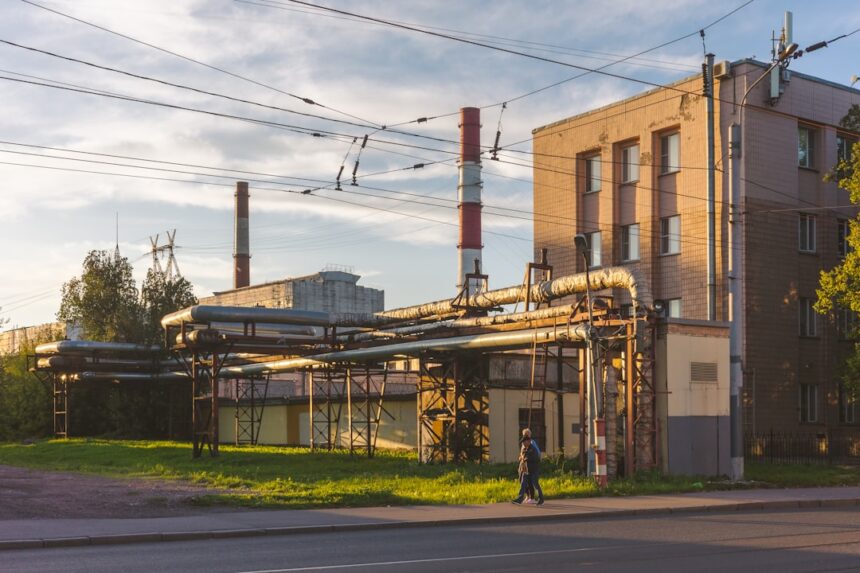
Soviet factories emerged as a cornerstone of the industrial landscape during the early 20th century, particularly following the Bolshevik Revolution of 1917. The establishment of a centrally planned economy led to the rapid industrialization of the Soviet Union, with factories being built to fulfill the ambitious goals set by the state. These factories were not merely places of production; they were symbols of the new socialist order, embodying the ideals of collective labor and state ownership.
The historical context of these factories is crucial to understanding their operational dynamics, as they were shaped by a unique blend of political ideology, economic necessity, and social aspirations. The Soviet Union’s industrial strategy was characterized by a focus on heavy industry, with an emphasis on producing machinery, steel, and military equipment. This focus was driven by the need to establish the USSR as a global superpower and to ensure self-sufficiency in the face of external threats.
However, this singular focus often came at the expense of consumer goods and innovation. The factories, while initially successful in meeting production quotas, soon became emblematic of a system that prioritized quantity over quality, leading to a myriad of challenges that would plague Soviet industrial production for decades.
Key Takeaways
- Soviet factories operated within a centralized economic system, with production targets set by the government.
- Lack of innovation in Soviet industrial production was a result of central planning and the stifling of creativity and initiative.
- Incentive structures in Soviet factories had a negative impact on worker productivity, as there was little motivation for workers to excel.
- The lack of competition in the Soviet system led to complacency and a lack of drive for improvement in factory performance.
- Bureaucracy, outdated technology, and disconnect between production targets and market demand hindered progress in Soviet factories.
Lack of innovation in Soviet industrial production
One of the most significant shortcomings of Soviet factories was their persistent lack of innovation. The centralized planning model stifled creativity and discouraged experimentation, as workers and managers were often more focused on meeting state-imposed quotas than on improving processes or developing new products. This environment created a culture where conformity was valued over ingenuity, leading to stagnation in technological advancement.
As a result, Soviet factories became increasingly reliant on outdated methods and practices, which ultimately hindered their ability to compete on a global scale. Moreover, the lack of innovation was exacerbated by the rigid structure of the Soviet economy. With little incentive to innovate or improve efficiency, many workers adopted a mindset of doing the bare minimum required to meet production targets.
This lack of motivation was further compounded by the absence of feedback mechanisms that could have encouraged improvement. In contrast to capitalist economies, where competition drives innovation, Soviet factories operated in a vacuum, leading to a cycle of mediocrity that persisted throughout much of the 20th century.
The role of central planning in stifling creativity and innovation

Central planning played a pivotal role in shaping the operational dynamics of Soviet factories. The state dictated production goals and resource allocation, leaving little room for individual initiative or creativity. This top-down approach often resulted in a disconnect between the needs of the workforce and the directives issued by central authorities.
Factory managers were compelled to adhere strictly to these plans, which often prioritized short-term output over long-term sustainability and innovation. The consequences of this rigid planning were profound. Workers found themselves trapped in monotonous routines, with little opportunity to contribute ideas or improvements.
The lack of autonomy stifled creativity and led to a culture where risk-taking was discouraged. As a result, many factories became stagnant, unable to adapt to changing market conditions or technological advancements. The central planning model ultimately created an environment where innovation was not just discouraged; it was systematically eradicated.
Incentive structures and their impact on worker productivity
| Incentive Structure | Impact on Worker Productivity |
|---|---|
| Salary-based incentives | Stable and consistent productivity levels |
| Commission-based incentives | Increased motivation for sales-related roles |
| Bonus-based incentives | Encourages goal-oriented productivity |
| Profit-sharing incentives | Fosters teamwork and collaboration |
The incentive structures within Soviet factories were designed to promote productivity but often had the opposite effect. Workers were typically rewarded based on their ability to meet or exceed production quotas, which led to a focus on quantity rather than quality. This system created an environment where shortcuts were common, and corners were cut in order to achieve targets.
As a result, the quality of goods produced often suffered, leading to widespread dissatisfaction among consumers. Additionally, the lack of meaningful incentives for innovation further compounded these issues. Workers had little motivation to suggest improvements or engage in creative problem-solving when their rewards were tied solely to output levels.
This created a culture of complacency, where employees were more concerned with maintaining their jobs than with striving for excellence. The rigid incentive structures ultimately contributed to a cycle of low morale and diminished productivity, further entrenching the challenges faced by Soviet factories.
The lack of competition and its effect on factory performance
The absence of competition within the Soviet industrial landscape had far-reaching implications for factory performance. In a capitalist economy, competition drives companies to innovate and improve efficiency in order to attract consumers. However, Soviet factories operated in a monopolistic environment where they were shielded from market forces.
This lack of competition meant that there was little incentive for factories to improve their products or processes, leading to stagnation and inefficiency. Without the pressure to compete, many factories became complacent, relying on outdated technologies and practices that failed to meet consumer needs. The result was a pervasive sense of mediocrity that permeated the industrial sector.
Consumers often found themselves with subpar products that did not meet their expectations, leading to widespread dissatisfaction with Soviet manufacturing. The lack of competition not only stifled innovation but also contributed to a culture of entitlement among factory workers and managers alike.
The impact of bureaucracy and red tape on factory operations

Bureaucracy played a significant role in shaping the operations of Soviet factories, often hindering efficiency and responsiveness. The complex layers of administrative oversight created an environment rife with red tape, making it difficult for factory managers to make timely decisions or implement changes. This bureaucratic inertia stifled innovation and adaptability, as managers were often bogged down by paperwork and procedural requirements.
The impact of bureaucracy extended beyond decision-making processes; it also affected day-to-day operations within factories. Workers frequently encountered delays in obtaining necessary materials or approvals for changes in production processes due to bureaucratic hurdles. This inefficiency not only slowed down production but also contributed to frustration among workers who felt powerless in the face of an unwieldy system.
Ultimately, the pervasive bureaucracy within Soviet factories served as a significant barrier to progress and improvement.
The role of outdated technology and infrastructure in hindering progress
Outdated technology and infrastructure were significant impediments to progress within Soviet factories. Many facilities relied on machinery that had been developed decades earlier, resulting in inefficiencies and limitations in production capabilities. The lack of investment in modern technology meant that Soviet factories struggled to keep pace with advancements occurring in other parts of the world.
This reliance on outdated technology not only hindered productivity but also contributed to safety concerns within factories. Workers often operated machinery that was not only inefficient but also potentially dangerous due to its age and lack of maintenance. The failure to modernize infrastructure further exacerbated these issues, as many factories operated in facilities that were ill-equipped to support contemporary manufacturing processes.
As a result, the combination of outdated technology and infrastructure created a perfect storm that stifled progress and innovation within Soviet industrial production.
The disconnect between production targets and actual market demand
A significant challenge faced by Soviet factories was the disconnect between state-imposed production targets and actual market demand. Central planners often set ambitious quotas without fully understanding consumer needs or preferences. This misalignment led to overproduction in some areas while leaving others under-resourced, resulting in inefficiencies across the board.
The consequences of this disconnect were profound. Factories produced goods that consumers did not want or need, leading to surpluses that could not be sold. Conversely, essential items were often in short supply due to misallocated resources and misguided production goals.
This mismatch not only frustrated consumers but also contributed to a sense of disillusionment among factory workers who felt their efforts were wasted on producing unwanted goods. Ultimately, this disconnect highlighted the limitations of central planning in effectively responding to market dynamics.
The impact of political ideology on factory management and decision-making
Political ideology played a crucial role in shaping factory management and decision-making within the Soviet Union. The emphasis on collectivism and state ownership influenced how factories operated, often prioritizing ideological conformity over practical considerations. Managers were expected to align their decisions with party directives rather than focusing solely on operational efficiency or worker welfare.
This ideological framework often led to decisions that prioritized political goals over economic realities. For instance, factory managers might be pressured to produce certain goods for ideological reasons rather than based on market demand or profitability. This approach not only hindered effective management but also contributed to inefficiencies that plagued Soviet industrial production for decades.
The intertwining of political ideology with factory operations ultimately created an environment where practical considerations were frequently overshadowed by ideological imperatives.
The legacy of Soviet factory failures and their impact on modern industrial practices
The legacy of Soviet factory failures continues to resonate within modern industrial practices, particularly in post-Soviet states grappling with the remnants of centralized planning. Many former Soviet factories struggled to adapt to market-oriented economies after the collapse of the USSR, facing challenges related to outdated technologies, inefficient practices, and bureaucratic inertia that persisted long after the fall of communism. These historical failures serve as cautionary tales for contemporary industrial practices worldwide.
They highlight the importance of fostering innovation, embracing competition, and creating flexible organizational structures that can respond effectively to changing market conditions. Modern industries can learn valuable lessons from the shortcomings of Soviet factories, emphasizing the need for adaptability and responsiveness in an increasingly dynamic global economy.
Lessons learned and potential solutions for overcoming the challenges faced by Soviet factories
The challenges faced by Soviet factories offer critical lessons for contemporary industrial practices seeking to avoid similar pitfalls. One key takeaway is the importance of fostering an environment conducive to innovation and creativity. Encouraging employee input and providing incentives for improvement can help cultivate a culture where workers feel empowered to contribute ideas that enhance productivity and quality.
Additionally, embracing competition can drive efficiency and innovation within industries. By creating an environment where businesses must compete for consumers’ attention, companies are more likely to prioritize quality and responsiveness over mere output levels. Furthermore, investing in modern technology and infrastructure is essential for ensuring that industries can keep pace with advancements and meet evolving consumer demands.
In conclusion, while the legacy of Soviet factories is marked by numerous challenges and failures, it also provides valuable insights into how modern industries can navigate similar obstacles. By learning from history and implementing strategies that prioritize innovation, competition, and adaptability, contemporary industrial practices can work towards overcoming the limitations that once plagued their predecessors in the Soviet Union.
The failure of Soviet factories can be attributed to a variety of systemic issues, including inefficiencies in production and a lack of innovation. For a deeper understanding of the broader implications of these failures on the Soviet economy, you can read the article on this topic at com/’>In the War Room.
This resource provides valuable insights into the economic challenges faced by the Soviet Union and how they contributed to the eventual collapse of its industrial sector.
WATCH THIS! The War That Secretly Bankrupted An Empire: How Afghanistan Destroyed the USSR
FAQs
What were some reasons for the failure of Soviet factories?
Some reasons for the failure of Soviet factories included inefficient production processes, lack of investment in modern technology, and a centralized planning system that did not allow for flexibility or innovation.
How did the lack of investment in modern technology contribute to the failure of Soviet factories?
The lack of investment in modern technology meant that Soviet factories were unable to keep up with advancements in production methods and efficiency, leading to lower productivity and quality of goods.
What role did the centralized planning system play in the failure of Soviet factories?
The centralized planning system in the Soviet Union did not allow for flexibility or innovation in production processes, leading to inefficiencies and a lack of responsiveness to market demands.
Were there any other factors that contributed to the failure of Soviet factories?
Other factors that contributed to the failure of Soviet factories included a lack of incentives for workers, poor management practices, and a focus on quantity over quality in production.