The White Sea, a marginal sea of the Arctic Ocean, has long served as a critical testing ground for submarine trials. This region, characterized by its unique underwater topography and varying environmental conditions, provides an ideal setting for evaluating the performance and capabilities of submarines. The trials conducted in this area are not merely routine exercises; they are essential for ensuring the operational readiness and effectiveness of naval vessels.
The strategic importance of these trials cannot be overstated, as they contribute significantly to national security and maritime defense. Submarine trials in the White Sea encompass a range of activities, from testing stealth capabilities to assessing maneuverability and endurance. These trials are meticulously planned and executed, often involving complex scenarios that simulate real-world operational conditions.
The data collected during these trials is invaluable, providing insights into the submarines’ performance and informing future design and operational decisions. As technology advances, the methods employed in these trials have evolved, with a particular emphasis on acoustic data analysis, which plays a pivotal role in understanding submarine behavior and performance.
Key Takeaways
- Acoustic data analysis is crucial for evaluating submarine performance during White Sea trials.
- Various methods are employed to collect acoustic data, each with unique challenges.
- Environmental factors significantly affect the accuracy and interpretation of acoustic data.
- Integrating acoustic data with other trial data enhances overall submarine assessment.
- Advances in acoustic analysis techniques promise improved future submarine trial outcomes.
Importance of Acoustic Data Analysis in Submarine Trials
Acoustic data analysis is a cornerstone of submarine trials, offering critical insights into the performance and stealth characteristics of these vessels. The underwater environment is inherently noisy, filled with sounds from marine life, geological activity, and human-made sources. Understanding how submarines interact with this acoustic landscape is vital for assessing their effectiveness in various operational scenarios.
Acoustic data not only helps in evaluating the submarines’ noise signatures but also aids in determining their detectability by enemy sonar systems. Moreover, the analysis of acoustic data allows for the identification of potential vulnerabilities in submarine design and operation. By examining how sound propagates through water and interacts with the submarine’s hull, engineers can make informed decisions about modifications that enhance stealth capabilities.
This analysis is crucial for maintaining a strategic advantage in naval warfare, where detection can mean the difference between success and failure. As such, acoustic data analysis is not just a technical requirement; it is a strategic imperative that shapes the future of submarine technology.
Overview of Acoustic Data Collection Methods
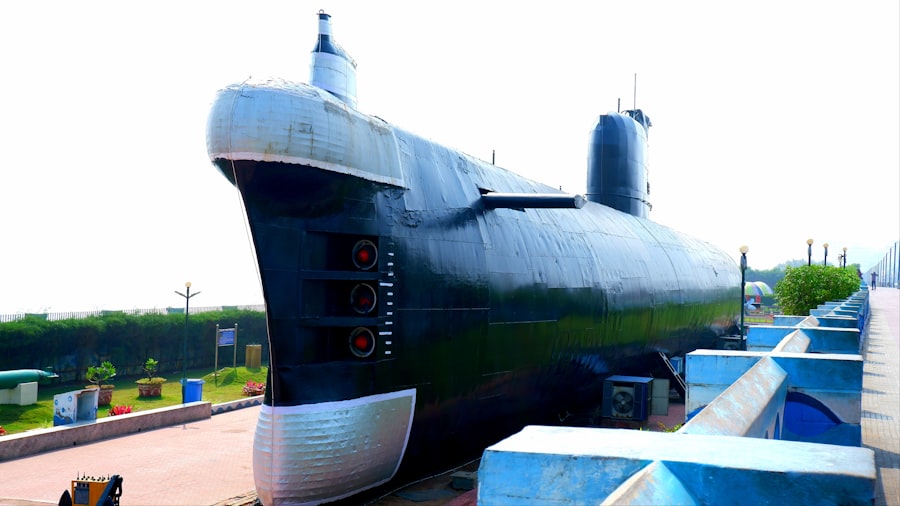
The collection of acoustic data during submarine trials involves a variety of sophisticated methods and technologies. One of the primary techniques used is passive sonar, which listens for sounds emitted by submarines without actively transmitting signals. This method allows for the assessment of a submarine’s noise signature in real-time, providing valuable information about its operational characteristics.
Additionally, active sonar systems can be employed to send out sound waves and analyze their reflections off the submarine, offering insights into its shape and surface features. Another important method for collecting acoustic data is through the use of hydrophones, which are underwater microphones designed to capture sound waves in the ocean. These devices can be deployed in various configurations, including fixed arrays on the seabed or mobile units attached to other vessels.
The data gathered from hydrophones can be analyzed to determine the frequency and intensity of sounds produced by submarines during different maneuvers. This comprehensive approach to data collection ensures that a wide range of acoustic signatures is captured, facilitating a thorough analysis of submarine performance.
Challenges in Acoustic Data Analysis
| Challenge | Description | Impact on Analysis | Common Solutions |
|---|---|---|---|
| Background Noise | Unwanted ambient sounds interfering with target signals | Reduces signal clarity and accuracy of detection | Noise filtering, spectral subtraction, adaptive noise cancellation |
| Signal Overlap | Multiple acoustic sources overlapping in time and frequency | Complicates source separation and identification | Blind source separation, beamforming, time-frequency masking |
| Variability in Acoustic Environments | Changes in reverberation, distance, and medium properties | Degrades model generalization and consistency | Data augmentation, environment adaptation, robust feature extraction |
| Low Signal-to-Noise Ratio (SNR) | Weak target signals compared to noise levels | Increases false negatives and reduces detection sensitivity | Signal enhancement, denoising algorithms, sensor array processing |
| Data Annotation | Difficulty in labeling large acoustic datasets accurately | Limits supervised learning and model training quality | Semi-supervised learning, crowdsourcing, automated labeling tools |
| Computational Complexity | High processing requirements for large-scale or real-time data | Limits scalability and real-time application feasibility | Efficient algorithms, hardware acceleration, dimensionality reduction |
Despite its importance, acoustic data analysis presents several challenges that must be addressed to ensure accurate results. One significant challenge is the inherent complexity of underwater acoustics. The ocean is a dynamic environment where sound propagation is influenced by factors such as temperature, salinity, and depth.
These variables can distort acoustic signals, making it difficult to isolate the sounds produced by submarines from background noise. As a result, analysts must employ advanced filtering techniques and algorithms to extract meaningful data from the cacophony of underwater sounds. Another challenge lies in the interpretation of acoustic data itself.
The vast amount of information collected during trials can be overwhelming, requiring sophisticated analytical tools and expertise to draw actionable conclusions. Analysts must be adept at recognizing patterns and anomalies within the data, which often necessitates a deep understanding of both acoustics and submarine technology.
Role of Acoustic Data Analysis in Submarine Performance Evaluation
Acoustic data analysis plays a crucial role in evaluating submarine performance across various dimensions. One of the primary areas of focus is stealth capability, which is essential for successful operations in hostile environments. By analyzing the noise generated by submarines during different maneuvers—such as cruising at various speeds or executing sharp turns—engineers can assess how well these vessels can evade detection by enemy sonar systems.
This information is vital for refining design features that enhance stealth.
By examining how sound interacts with the submarine’s hull during different operational scenarios, analysts can identify potential areas for improvement in design or operational protocols.
This comprehensive evaluation process ensures that submarines are not only capable of performing their intended missions but also do so with optimal efficiency and effectiveness.
Techniques Used in Acoustic Data Analysis
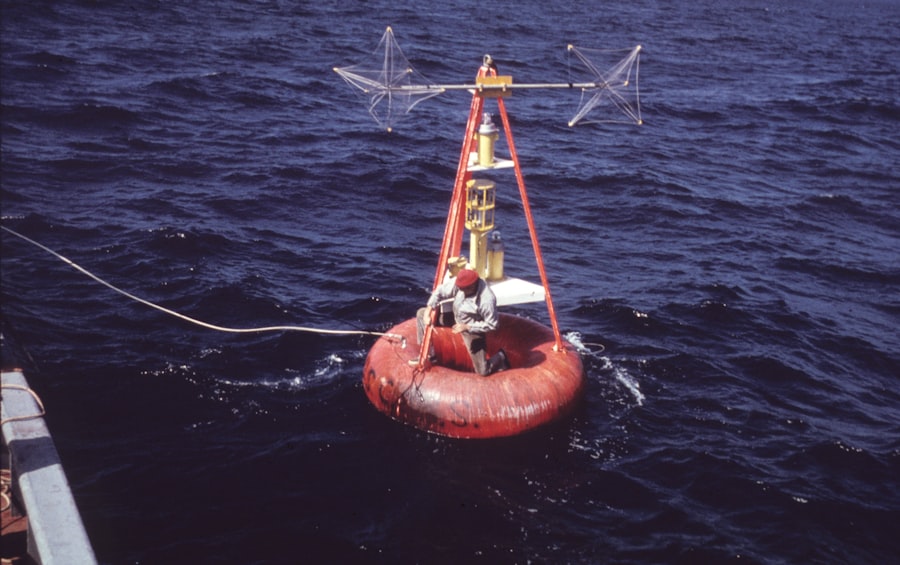
A variety of techniques are employed in acoustic data analysis to extract meaningful insights from the collected data. One common approach is spectral analysis, which involves breaking down complex sound signals into their constituent frequencies. This technique allows analysts to identify specific noise sources associated with different submarine operations, such as machinery noise or hydrodynamic noise generated by water flow over the hull.
Another important technique is time-frequency analysis, which provides a more nuanced view of how sound changes over time. This method enables analysts to track variations in noise levels during specific maneuvers or operational conditions, offering insights into how these changes may affect detectability. Additionally, machine learning algorithms are increasingly being utilized to automate aspects of acoustic data analysis, allowing for faster processing and more accurate identification of patterns within large datasets.
Impact of Environmental Factors on Acoustic Data
Environmental factors play a significant role in shaping acoustic data collected during submarine trials. The underwater environment is influenced by various elements such as temperature gradients, salinity levels, and ocean currents, all of which can affect sound propagation. For instance, warmer water tends to carry sound more effectively than colder water, potentially altering how submarine noises are detected at different depths.
Moreover, background noise from marine life or human activities—such as shipping traffic—can complicate the analysis process. Analysts must account for these environmental variables when interpreting acoustic data to ensure that their conclusions accurately reflect the submarine’s performance rather than external influences. Understanding these factors is essential for developing robust models that predict how submarines will perform under varying conditions.
Integration of Acoustic Data Analysis with Other Submarine Trial Data
The integration of acoustic data analysis with other forms of trial data enhances the overall evaluation process for submarines. By combining acoustic insights with data from other sensors—such as radar or visual imaging systems—analysts can develop a more comprehensive understanding of a submarine’s capabilities and limitations. This holistic approach allows for cross-validation of findings and helps identify discrepancies that may arise from relying solely on one type of data.
Furthermore, integrating acoustic data with operational performance metrics—such as speed, depth, and maneuverability—enables engineers to correlate specific behaviors with their acoustic signatures. This correlation can lead to more informed design decisions and operational strategies that optimize submarine performance across various scenarios.
Case Studies of Successful Acoustic Data Analysis in Submarine Trials
Several case studies illustrate the successful application of acoustic data analysis in submarine trials, showcasing its impact on design improvements and operational effectiveness. One notable example involved a class of submarines undergoing trials in the White Sea where analysts identified specific frequencies associated with machinery noise that could compromise stealth capabilities. By modifying certain components based on these findings, engineers were able to significantly reduce the submarines’ noise signatures, enhancing their survivability in contested environments.
Another case study focused on a series of maneuvers conducted by a new class of submarines designed for shallow-water operations. Acoustic data collected during these trials revealed unexpected patterns in noise generation during high-speed turns. By analyzing this data alongside other performance metrics, engineers were able to refine the hull design to minimize hydrodynamic noise while maintaining maneuverability—a critical factor for operations in confined waters.
Future Developments in Acoustic Data Analysis for Submarine Trials
As technology continues to advance, the future of acoustic data analysis in submarine trials looks promising. Emerging technologies such as artificial intelligence and machine learning are poised to revolutionize how acoustic data is processed and analyzed. These tools can automate many aspects of data interpretation, allowing analysts to focus on higher-level insights rather than getting bogged down in raw data processing.
Additionally, advancements in sensor technology will likely enhance the quality and quantity of acoustic data collected during trials. New hydrophone designs may offer improved sensitivity and frequency response, enabling more detailed assessments of submarine noise signatures. As these technologies evolve, they will provide naval engineers with even greater capabilities to refine submarine designs and ensure their effectiveness in an increasingly complex maritime landscape.
The Significance of Acoustic Data Analysis in Submarine Trials
In conclusion, acoustic data analysis stands as a vital component of submarine trials conducted in the White Sea and beyond. Its importance extends beyond mere technical evaluation; it plays a crucial role in shaping naval strategy and ensuring national security. By providing insights into stealth capabilities, maneuverability, and overall performance, acoustic data analysis informs critical design decisions that enhance the effectiveness of submarines in real-world operations.
As technology continues to evolve, so too will the methods employed in acoustic data analysis. The integration of advanced analytical techniques and emerging technologies promises to further enhance our understanding of submarine performance while addressing the challenges posed by complex underwater environments. Ultimately, the ongoing commitment to refining acoustic data analysis will ensure that submarines remain effective tools for maritime defense well into the future.
Recent trials of submarines in the White Sea have generated significant acoustic data, shedding light on the effectiveness of various stealth technologies. For a deeper understanding of the implications of these trials, you can read a related article on the topic at In The War Room. This resource provides valuable insights into the strategic importance of submarine capabilities in modern naval warfare.
WATCH THIS! The Billion-Dollar Whisper: How One KGB Mole Made Every Soviet Submarine Visible
FAQs
What is the White Sea submarine trials acoustic data?
The White Sea submarine trials acoustic data refers to the collection of sound recordings and measurements obtained during submarine testing exercises conducted in the White Sea. These data capture the acoustic signatures and noise levels of submarines under various operational conditions.
Why are acoustic data collected during submarine trials?
Acoustic data are collected to analyze the noise emissions of submarines, which is critical for assessing their stealth capabilities, detecting potential mechanical issues, and improving design to reduce detectability by sonar systems.
Where is the White Sea located?
The White Sea is a southern inlet of the Barents Sea located on the northwest coast of Russia. It is commonly used for naval exercises and submarine trials due to its strategic location and suitable environmental conditions.
Who conducts submarine trials in the White Sea?
Submarine trials in the White Sea are primarily conducted by the Russian Navy and associated defense research organizations. These trials are part of the development and testing of new submarine technologies and capabilities.
What types of submarines are tested in the White Sea?
Both nuclear-powered and diesel-electric submarines may be tested in the White Sea. The trials can include various classes of submarines, ranging from attack submarines to ballistic missile submarines.
How is acoustic data from submarine trials used?
The acoustic data are analyzed to understand the sound signatures of submarines, which helps in improving stealth technology, enhancing sonar detection methods, and informing naval tactics and countermeasures.
Are the White Sea submarine trials acoustic data publicly available?
Typically, detailed acoustic data from submarine trials are classified due to national security concerns. However, some generalized information or declassified data may be available through official military or scientific publications.
What environmental factors affect acoustic data in the White Sea?
Environmental factors such as water temperature, salinity, depth, sea floor composition, and ambient noise levels can influence the propagation of sound and thus affect the acoustic data collected during submarine trials.
How do submarine acoustic signatures impact naval warfare?
Submarine acoustic signatures determine how easily a submarine can be detected by enemy sonar systems. Lower acoustic signatures enhance stealth, giving a tactical advantage in naval warfare by reducing the likelihood of detection.
What technologies are used to collect acoustic data during submarine trials?
Technologies used include hydrophones, towed array sonar systems, fixed underwater microphones, and other specialized acoustic sensors deployed in the water to capture sound emissions from submarines during trials.