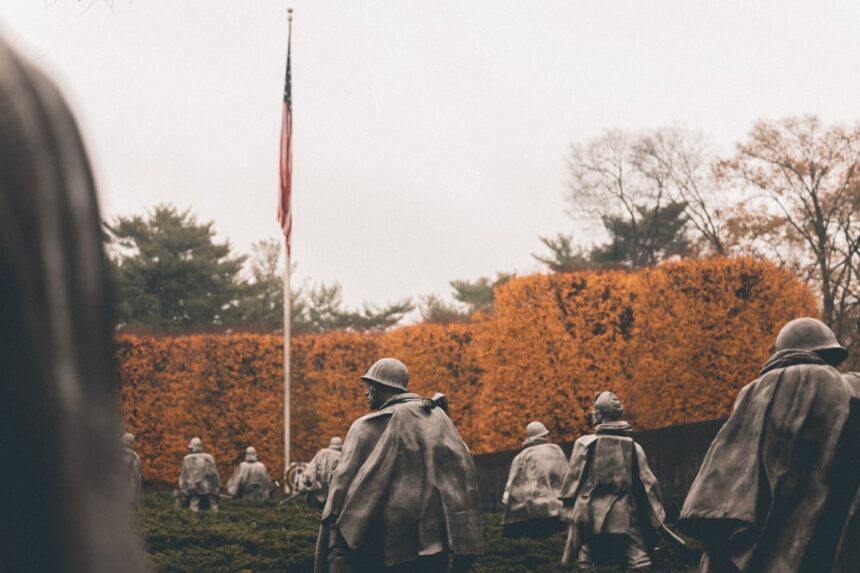
“Warriors of the Cold War” is a documentary that examines the period from the end of World War II to the early 1990s. The film utilizes archival footage, interviews with experts, and personal accounts to document the political, military, and ideological conflicts that characterized this era. The documentary focuses on the development of military strategies during a time when nuclear weapons and competing ideologies created global tensions.
The Cold War involved complex interactions between superpowers that extended beyond direct military confrontation. The period was marked by diplomatic negotiations, intelligence operations, and military positioning that influenced international relations for several decades. The documentary analyzes various conflicts and strategic approaches from this time period, demonstrating the connections between military developments and broader social and cultural changes.
The film contributes to historical understanding by documenting how these factors shaped global politics during the Cold War era.
Key Takeaways
- The Cold War shaped modern military history through nuclear deterrence, proxy wars, and technological innovation.
- Nuclear weapons and the arms race were central to Cold War military strategy and global power balance.
- Proxy conflicts like the Korean and Vietnam Wars exemplified Cold War tensions without direct superpower confrontation.
- The Space Race had significant military implications, influencing surveillance, missile technology, and strategic advantage.
- The Cold War’s end left a legacy of military lessons on diplomacy, deterrence, and the risks of global conflict escalation.
The Origins of the Cold War and its Impact on Military History
The origins of the Cold War can be traced back to the ideological rift that emerged between the United States and the Soviet Union following World War
As these two superpowers emerged from the ashes of global conflict, their differing political ideologies—capitalism versus communism—set the stage for a prolonged period of tension. The Yalta Conference in 1945, where leaders from both nations attempted to negotiate post-war arrangements, highlighted their conflicting visions for Europe’s future. This discord laid the groundwork for a military standoff that would influence global affairs for decades.
The impact of this ideological divide on military history was profound. The Cold War prompted nations to reassess their military strategies and alliances, leading to the formation of NATO and the Warsaw Pact. These alliances not only solidified military cooperation among member states but also created an environment ripe for conflict.
The arms race that ensued was characterized by an unprecedented buildup of conventional and nuclear forces, fundamentally altering military doctrines worldwide. The Cold War era thus marked a significant shift in how nations approached warfare, emphasizing deterrence and strategic positioning over traditional battlefield engagements.
The Role of Nuclear Weapons in the Cold War
Nuclear weapons emerged as a central element in the Cold War narrative, fundamentally altering military strategy and international relations. The development and stockpiling of these weapons created a precarious balance of power known as Mutually Assured Destruction (MAD). This doctrine posited that neither superpower would initiate a nuclear conflict, as it would lead to catastrophic consequences for both sides.
Consequently, nuclear arsenals became symbols of national strength and deterrence, shaping military policies and diplomatic negotiations throughout the Cold War. The presence of nuclear weapons also influenced various conflicts during this period. For instance, during the Korean War, both superpowers were acutely aware of the potential for escalation into a nuclear confrontation.
This awareness often restrained military actions and led to a more cautious approach in engagements. Additionally, the Cuban Missile Crisis in 1962 exemplified how close the world came to nuclear war, underscoring the volatile nature of international relations during this time. The role of nuclear weapons thus transcended mere military capability; they became pivotal in shaping diplomatic strategies and influencing global power dynamics.
The Space Race and its Military Implications
| Documentary Title | Release Year | Duration (minutes) | Main Focus | Key Military Events Covered | Production Country | Viewer Rating (out of 10) |
|---|---|---|---|---|---|---|
| The Cold War: A New History | 2019 | 90 | Global political and military tensions | Berlin Airlift, Cuban Missile Crisis, Vietnam War | USA | 8.5 |
| Cold War Warriors | 2017 | 120 | Military technology and espionage | Spy planes, Nuclear arms race, KGB operations | UK | 8.0 |
| Iron Curtain: The Military Divide | 2021 | 75 | Military strategies and alliances | NATO formation, Warsaw Pact, Proxy wars | Germany | 7.8 |
| Cold War Conflicts | 2018 | 110 | Major Cold War battles and conflicts | Korean War, Afghanistan invasion, Berlin Wall | Canada | 8.2 |
| Silent Warriors: Cold War Espionage | 2020 | 85 | Espionage and intelligence operations | CIA vs KGB, U-2 Incident, Double agents | USA | 8.7 |
The Space Race was another significant aspect of the Cold War that had profound military implications. Initiated by the launch of Sputnik by the Soviet Union in 1957, this competition for supremacy in space was not merely about scientific achievement; it was deeply intertwined with national security concerns. Both superpowers recognized that advancements in space technology could translate into military advantages on Earth.
Satellites could provide critical intelligence, while missile technology developed for space exploration could be adapted for military use. As a result, investments in space programs surged, leading to rapid technological advancements that had far-reaching consequences. The United States’ Apollo program aimed not only to land a man on the moon but also to demonstrate its technological superiority over the Soviet Union.
This competition fostered innovation in various fields, including telecommunications and missile guidance systems, which would later have significant implications for military operations. The Space Race thus exemplified how scientific endeavors were often driven by military objectives, highlighting the interconnectedness of technology and warfare during the Cold War.
The Korean War and its Significance in Cold War Military History
The Korean War (1950-1953) stands as a critical event in Cold War military history, marking one of the first direct confrontations between communist and capitalist forces. Following Korea’s division into North and South at the end of World War II, tensions escalated into armed conflict when North Korea invaded South Korea in June 1950. The United States quickly intervened under the auspices of the United Nations, viewing this aggression as a test of its commitment to containing communism.
The significance of the Korean War extends beyond its immediate military outcomes; it set a precedent for future conflicts during the Cold War. The war demonstrated that proxy wars could serve as battlegrounds for superpower rivalry without escalating into direct confrontation between nuclear-armed states. Additionally, it highlighted the importance of international coalitions in addressing aggression, as multiple nations contributed troops and resources to support South Korea.
The lessons learned from this conflict would inform U.S. military strategy in subsequent engagements throughout the Cold War.
The Vietnam War: A Cold War Conflict
The Vietnam War represents one of the most controversial and complex conflicts within the context of the Cold War. Beginning in earnest in the late 1950s and escalating throughout the 1960s, this war was characterized by U.S. efforts to prevent the spread of communism in Southeast Asia.
The United States’ involvement was driven by fears that a communist victory in Vietnam would trigger a domino effect across neighboring countries—a belief rooted in Cold War ideology. The Vietnam War had profound implications for U.S. military strategy and public perception of government actions.
Unlike previous conflicts, Vietnam presented unique challenges due to its guerrilla warfare tactics and difficult terrain. The protracted nature of the war led to significant casualties and growing anti-war sentiment within the United States, ultimately influencing public opinion on military intervention abroad. Furthermore, Vietnam underscored the limitations of conventional military power against unconventional tactics, prompting a reevaluation of U.S.
military doctrine that would resonate in future conflicts.
The Cuban Missile Crisis and its Impact on Global Military Strategy
The Cuban Missile Crisis in October 1962 marked a pivotal moment in Cold War history, bringing the world closer to nuclear war than ever before. When U.S. reconnaissance flights revealed Soviet missile installations in Cuba, President John F.
Kennedy faced an unprecedented crisis that required careful navigation between military action and diplomatic resolution. The standoff lasted for thirteen tense days, during which both superpowers grappled with their nuclear arsenals’ implications. The resolution of this crisis had lasting effects on global military strategy.
It highlighted the necessity for effective communication channels between superpowers to prevent misunderstandings that could lead to catastrophic outcomes.
Additionally, it prompted discussions about arms control agreements aimed at reducing nuclear arsenals and preventing future crises from escalating into open conflict.
Proxy Wars and Covert Operations during the Cold War
Throughout the Cold War, proxy wars became a hallmark of superpower rivalry as both sides sought to extend their influence without engaging directly in combat. These conflicts often played out in regions such as Africa, Latin America, and Asia, where local factions received support from either the United States or the Soviet Union. This strategy allowed superpowers to pursue their geopolitical interests while minimizing risks associated with direct confrontation.
Covert operations also played a crucial role during this period, with intelligence agencies like the CIA and KGB engaging in espionage, sabotage, and regime change efforts across various nations. Notable examples include U.S.-backed coups in Iran (1953) and Chile (1973), which aimed to install governments aligned with American interests while undermining perceived communist threats. These covert actions not only shaped local political landscapes but also contributed to long-term instability in many regions, illustrating how Cold War dynamics extended far beyond Europe.
The Arms Race: Military Technology and Innovation
The arms race between the United States and Soviet Union was characterized by rapid advancements in military technology that transformed warfare during the Cold War era. Both superpowers invested heavily in research and development to create more sophisticated weapons systems capable of delivering devastating strikes with greater precision. This competition spurred innovations such as intercontinental ballistic missiles (ICBMs), submarine-launched ballistic missiles (SLBMs), and advanced fighter aircraft.
The implications of this arms race extended beyond mere stockpiling; it fundamentally altered military strategies worldwide. Nations began to prioritize technological superiority as a means of deterrence, leading to an emphasis on developing advanced defense systems capable of countering potential threats. Additionally, this race for technological dominance fostered collaboration between governments and private industries, resulting in breakthroughs that would later benefit civilian applications as well.
The End of the Cold War: Military Implications and Legacy
The end of the Cold War in 1991 marked a significant turning point in global military dynamics. As tensions eased between superpowers, many nations began reevaluating their military strategies and defense postures.
However, while some aspects of military engagement transformed post-Cold War, remnants of this era continue to influence contemporary conflicts. The legacy of proxy wars and covert operations has left lasting scars on nations affected by these interventions, often resulting in ongoing instability and violence. Furthermore, new security challenges have emerged—such as terrorism and cyber warfare—requiring nations to adapt their military strategies once again.
Lessons from Cold War Military History
The study of Cold War military history offers invaluable lessons for contemporary policymakers and military strategists alike. It underscores the importance of understanding ideological motivations behind conflicts while recognizing that military power alone cannot guarantee success or stability. The era’s reliance on nuclear deterrence highlights both its effectiveness and inherent dangers; thus, fostering dialogue remains crucial in preventing future escalations.
Moreover, examining proxy wars reveals how local dynamics can shape global conflicts—emphasizing that interventions must consider cultural contexts rather than imposing external ideologies blindly. Ultimately, “Warriors of the Cold War” serves as a reminder that history is not merely a series of events but rather an intricate tapestry woven from human experiences—one that continues to inform our understanding of warfare today.
For those interested in exploring the intricate dynamics of Cold War military history, the documentary “The Cold War: A Military Perspective” offers a comprehensive analysis of the strategies and conflicts that defined this tense period. To further enhance your understanding, you can read a related article that delves into the geopolitical implications of military decisions during the Cold War era. Check it out here: Cold War Military Strategies.
FAQs
What is the Cold War military history documentary about?
A Cold War military history documentary explores the military strategies, conflicts, and events that occurred during the Cold War period, roughly from 1947 to 1991. It covers the rivalry between the United States and the Soviet Union, including arms races, proxy wars, espionage, and key military incidents.
Why is the Cold War significant in military history?
The Cold War is significant because it shaped global military policies and alliances for nearly half a century. It involved the development of nuclear weapons, the formation of NATO and the Warsaw Pact, and numerous proxy wars that influenced international relations and military tactics.
What types of military events are typically covered in Cold War documentaries?
Cold War documentaries often cover events such as the Korean War, the Vietnam War, the Cuban Missile Crisis, the Berlin Airlift, espionage activities, nuclear arms development, and the space race, highlighting their military and political implications.
Who are some key figures featured in Cold War military history documentaries?
Key figures include political and military leaders such as U.S. Presidents Harry Truman, John F. Kennedy, and Ronald Reagan; Soviet leaders Joseph Stalin, Nikita Khrushchev, and Mikhail Gorbachev; as well as military commanders and intelligence operatives from both sides.
What sources do Cold War military history documentaries use?
These documentaries typically use declassified government documents, archival footage, interviews with veterans and historians, official military records, and expert analysis to provide an accurate and comprehensive view of the Cold War military history.
How do Cold War military documentaries contribute to our understanding of the period?
They provide detailed insights into the military strategies, political tensions, and global impact of the Cold War, helping viewers understand the complexities of the era and the lasting effects on modern international relations and military policies.
Are Cold War military history documentaries suitable for educational purposes?
Yes, they are widely used in educational settings to teach students about Cold War history, military strategy, international relations, and the geopolitical dynamics of the 20th century, often supplemented with primary sources and expert commentary.
Where can I watch Cold War military history documentaries?
These documentaries are available on various platforms, including streaming services like Netflix, Amazon Prime, and YouTube, as well as on television channels specializing in history and military content, such as the History Channel and National Geographic.