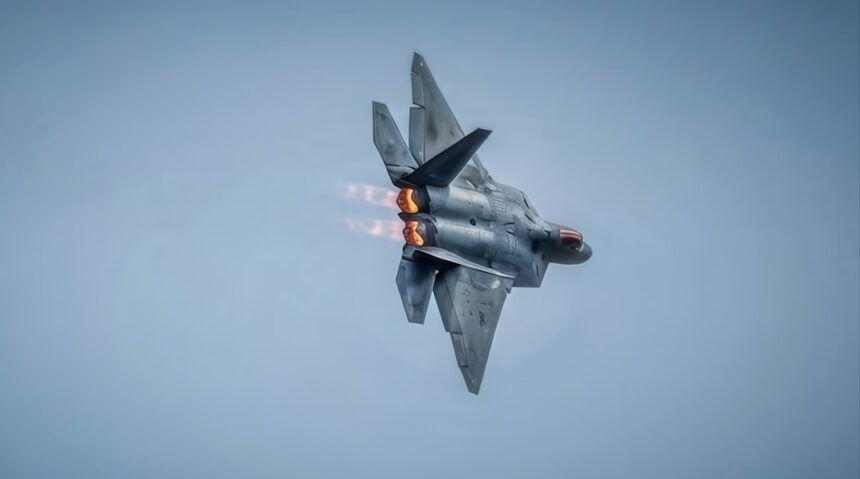
The Soviet Union, a superpower in its own right, found itself in a seemingly intractable technological arms race with the United States throughout the Cold War. As the latter unveiled revolutionary advancements in military aviation, particularly the nascent field of stealth technology, the Soviets were compelled to respond. This article explores the USSR’s multifaceted and often clandestine efforts to understand, replicate, and ultimately counter American stealth aircraft.
The concept of stealth, as developed by the United States, was not an instantaneous epiphany but a gradual evolution of physics and engineering. From the U-2 spy plane, which operated at altitudes beyond conventional interception, to the SR-71 Blackbird, which utilized radar-absorbent materials and a reduced radar cross-section (RCS) through its unique design, American aeronautical engineers were progressively peeling back the layers of traditional aircraft visibility.
Early American Developments and Soviet Surveillance
The first hints of what would become stealth technology emerged in the 1960s. The Lockheed A-12 Oxcart and its successor, the SR-71 Blackbird, were pioneers in reducing their radar signatures. These aircraft, designed for high-altitude reconnaissance, incorporated design elements that deflected radar waves rather than reflecting them directly back to the source. The Soviets, through their vast intelligence network and persistent surveillance, were acutely aware of these developments. They observed the unique shapes and performance characteristics of these aircraft, even if the underlying principles of their reduced detectability remained shrouded in secrecy.
The Appearance of the F-117 Nighthawk
The true paradigm shift occurred in the early 1980s with the public unveiling of the Lockheed F-117 Nighthawk. This aircraft was not just incrementally stealthier; it was a radical departure from conventional aircraft design, a jagged, angular mosaic often referred to as a “hopping pyramid” or “flying Dorito.” This stark visual difference alone signaled that something fundamentally new was at play. Intelligence reports, coupled with visual observations, indicated that the F-117 possessed an exceptionally low radar cross-section, rendering it almost invisible to contemporary radar systems. For the Soviet Union, this was a clear and present danger, a direct threat to their air superiority and air defense doctrines. It was a wake-up call, shaking the foundations of their military planners’ assumptions.
During the Cold War, the USSR made significant efforts to replicate stealth technology, aiming to counter the advancements made by the United States in this area. An insightful article that delves into the intricacies of these attempts is available at In the War Room. This piece explores the various strategies employed by Soviet engineers and scientists to develop aircraft that could evade radar detection, highlighting the technological challenges they faced and the eventual outcomes of their endeavors.
Soviet Espionage and Technology Acquisition
Faced with a technological gap that threatened to redefine air warfare, the Soviet Union employed its formidable intelligence apparatus to bridge this chasm. Espionage became a crucial tool in understanding the intricacies of stealth technology.
The Role of Intelligence Agencies
The KGB and GRU, the Soviet Union’s primary intelligence agencies, were tasked with obtaining information about American stealth programs. This involved a multi-pronged approach, including human intelligence (HUMINT) and signals intelligence (SIGINT). Agents were dispatched to collect documents, photographs, and even scraps of material that might offer clues about radar-absorbent coatings or structural designs. The intelligence hunt was relentless, a cat-and-mouse game played out across the globe.
Infiltration and Data Acquisition
The difficulty of this task cannot be overstated. Stealth programs were among the most highly classified projects in the United States. However, the Soviets did achieve some successes. While the full extent of their acquisitions remains classified, there are documented instances of Soviet agents attempting to acquire sensitive information. This sometimes involved recruiting disaffected engineers or exploiting vulnerabilities in security protocols. You, the reader, can imagine the immense pressure on these operatives, working under deep cover for potentially years to gain even a sliver of critical data.
The Radar Cross-Section (RCS) Dilemma
A key piece of the stealth puzzle was the radar cross-section (RCS). This metric quantifies how detectable an object is by radar. The Soviets understood that low RCS was the holy grail of stealth. They sought to obtain data on the RCS of American stealth aircraft, not only to replicate the technology but also to develop countermeasures. Without this fundamental understanding, their efforts would be akin to building a house without knowing the dimensions of the bricks.
Soviet Reverse Engineering and Material Science
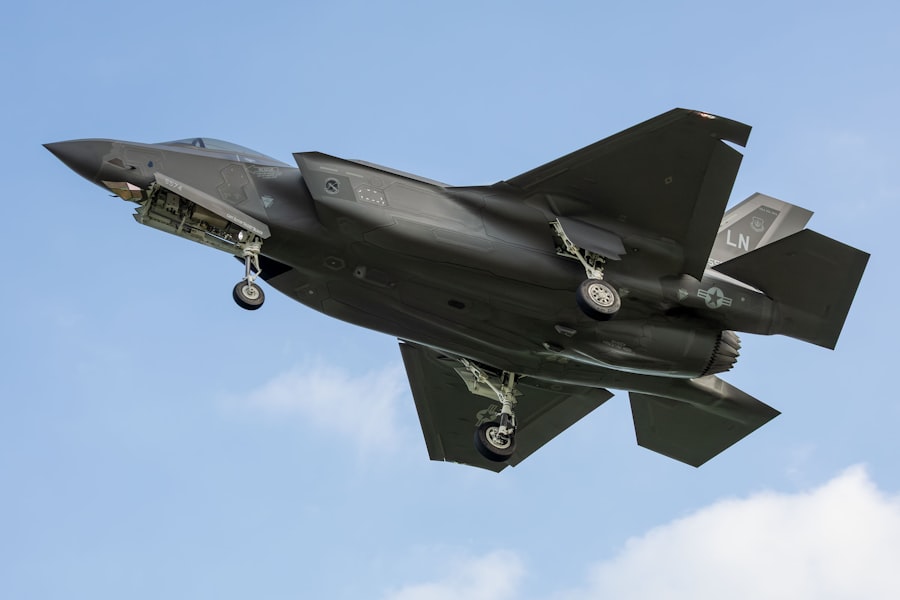
With whatever information they could gather, openly or covertly, the Soviet Union embarked on a concerted effort to reverse engineer stealth technologies. This was a monumental undertaking, as it often meant working backward from observed effects to fundamental principles.
The Search for Radar-Absorbent Materials (RAM)
One of the most critical components of stealth technology is Radar-Absorbent Material (RAM). These materials are designed to absorb radar energy rather than reflect it, thereby significantly reducing the aircraft’s RCS. The Soviets understood this principle and initiated extensive research into developing their own RAM. Early efforts reportedly focused on ferrite-based composites and certain polymer mixtures. However, developing RAM that was also durable, lightweight, and capable of withstanding the rigors of flight proved to be a formidable challenge. The perfect RAM was a chimera, always just beyond their grasp, a blend of seemingly contradictory properties.
Computational Fluid Dynamics and Design Optimization
Modern stealth aircraft are not simply coated in RAM; their very shapes are meticulously designed to deflect radar waves away from the source. This involves complex calculations and the use of computational fluid dynamics (CFD) to optimize airframe geometry for low observability. The Soviets, while possessing advanced capabilities in aerodynamics, faced a steeper learning curve in integrating these principles with stealth design. Their initial attempts often resulted in aircraft with less emphasis on angular facets and more on flowing curves, a design philosophy that, while aesthetically pleasing, was less effective for stealth in the radar frequencies of the time.
The “Faceted” Approach and Limitations
The distinctive angular design of the F-117, often referred to as a “faceted” approach, was a revelation. It minimized the number of surfaces oriented directly back towards a radar emitter. The Soviets explored similar concepts, recognizing the efficacy of this design. However, replicating this concept effectively required not only an understanding of the geometry but also the sophisticated manufacturing processes and precision tooling necessary to produce these complex shapes consistently. Their industrial base, while robust, often struggled with the same level of precision and material science refinement as their American counterparts.
Soviet Stealth Prototypes and Projects

The culmination of Soviet efforts to understand and replicate stealth technology manifested in various research programs and prototype aircraft. These projects, while often not reaching full-scale production, demonstrated the seriousness of their commitment.
The Mikoyan 1.44 (Project MiG-MFI)
Perhaps the most well-known Soviet stealth-related project was the Mikoyan 1.44, sometimes referred to as the MiG-MFI (Multifunctional Frontline Fighter). While not a pure stealth aircraft in the F-117 mold, it incorporated several stealthy features. Its design aimed for a reduced RCS through internal weapons bays, careful shaping, and potentially some application of RAM. The 1.44 was envisioned as a fifth-generation fighter intended to compete with American F-22 and F-35 projects. Its development was protracted, and its eventual cancellation was attributed to the collapse of the Soviet Union and subsequent funding cutbacks, rather than inherent design flaws. It was a phoenix attempting to rise from the ashes of dwindling resources.
Sukhoi Su-47 Berkut (Golden Eagle)
Another notable experimental aircraft was the Sukhoi Su-47 Berkut. While its primary distinguishing feature was its forward-swept wings, a design chosen for enhanced maneuverability at high angles of attack, the Su-47 also incorporated elements indirectly related to stealth. The internal weapons bays, for instance, were a common feature in stealth designs to avoid external stores that significantly increase RCS. While not explicitly designed as a stealth fighter, the Su-47 demonstrated the Soviet Union’s continued exploration of advanced aerospace concepts that might eventually contribute to lower-observable aircraft. It was a fascinating tangent on the path to stealth.
Unveiling the “Flatfish” Concept
Beyond these public prototypes, there were also more clandestine projects. One such concept, emerging from intelligence reports, was known as the “Flatfish.” This reportedly referred to a Soviet design that bore striking conceptual similarities to early American stealth aircraft, suggesting a direct attempt to replicate the faceted, low-RCS approach. Details about the “Flatfish” remain scarce, shrouded in the historical fog of Cold War secrecy. However, its existence points to the depth of the Soviet Union’s commitment to understanding and recreating this revolutionary technology.
During the Cold War, the USSR made significant efforts to replicate stealth technology, aiming to counter the advancements made by the United States in military aviation. This pursuit led to various experimental aircraft designs that sought to minimize radar visibility, reflecting the intense rivalry between the two superpowers. For a deeper understanding of these developments and their implications, you can read more in this insightful article on the subject. The complexities of stealth technology and its impact on aerial warfare are thoroughly explored, providing a comprehensive overview of the era’s technological arms race. To learn more, visit this article.
Soviet Countermeasures and the Future of Stealth
| Aspect | USSR Approach | Details | Outcome |
|---|---|---|---|
| Research Focus | Radar Absorbent Materials (RAM) | Developed coatings to reduce radar cross-section similar to US stealth coatings | Partial success; materials were less effective than US counterparts |
| Aircraft Design | Shaped Airframes | Attempted faceted designs inspired by F-117 Nighthawk | MiG-1.44 and Su-47 incorporated some stealth features but not fully stealth |
| Radar Cross Section (RCS) Reduction | Use of Composite Materials | Experimented with composites to reduce RCS | Limited application due to material technology constraints |
| Electronic Countermeasures | Active Jamming and Decoys | Developed ECM suites to complement stealth efforts | Enhanced survivability but did not replace stealth technology |
| Test Platforms | Experimental Aircraft | Projects like MiG-1.44 and Su-57 incorporated stealth elements | Su-57 represents modern Russian stealth efforts with mixed results |
| Technological Challenges | Material Science and Aerodynamics | Lagged behind US in advanced composites and stealth shaping | Stealth capabilities remained inferior to US designs during USSR era |
While directly replicating American stealth technology proved immensely challenging for the Soviets, they also pursued a parallel strategy: developing countermeasures to existing stealth aircraft. This approach recognized that even the most stealthy aircraft were not entirely invisible.
Developing Counter-Stealth Radars
The primary countermeasure to stealth aircraft is improved radar technology. The Soviets invested heavily in developing new radar systems designed to detect low-observable targets. This included advancements in:
- Low-frequency radars: These radars, operating at longer wavelengths, are less affected by stealth shaping and RAM, as they can interact with the aircraft’s larger structural components. However, they typically offer lower resolution.
- Multistatic radar systems: These systems employ multiple transmitters and receivers, making it harder for stealth aircraft to predict and evade detection.
- Passive radars: These radars detect changes in ambient electromagnetic radiation caused by an aircraft’s presence, rather than actively transmitting their own signals.
- Infrared search and track (IRST) systems: These passive sensors detect the heat signature of aircraft, a vulnerability even for stealth designs, particularly their engines.
The “Non-Cooperative Target Recognition”
Soviet radar scientists also explored “non-cooperative target recognition” (NCTR) techniques. This involved analyzing the unique characteristics of a radar return, even a very weak one, to identify the type of aircraft. By studying the subtle variations in radar reflections, they hoped to build a “fingerprint” database for stealth aircraft, enabling identification even if a complete “lock” was impossible. It was like trying to identify a person by the faint scent they leave behind in a crowded room.
The End of the Cold War and Legacy
The collapse of the Soviet Union in 1991 dramatically altered the landscape of the arms race. Many of these ambitious stealth and counter-stealth programs were either significantly scaled back or outright canceled due to severe financial constraints. However, the foundational research and expertise gained during this period laid the groundwork for future Russian aerospace developments. Modern Russian aircraft, such as the Su-57, incorporate elements of stealth technology, demonstrating that the lessons learned during the Cold War pursuit of low observability continue to influence their design philosophy. The Soviet Union’s attempt to replicate stealth technology, though never fully realized in the same vein as the F-117, was a testament to its technological prowess and its unwavering determination to maintain parity in the global arms race. It was a complex, multi-faceted endeavor that, while incomplete, undoubtedly shaped the trajectory of military aviation for decades to come.

SHOCKING: How Stealth Technology Bankrupted An Empire
FAQs
What was the main goal of the USSR in trying to copy stealth technology?
The main goal of the USSR was to develop aircraft with reduced radar visibility to counter the advanced stealth capabilities of U.S. military aircraft, thereby maintaining strategic and tactical advantages during the Cold War.
Which U.S. stealth aircraft did the USSR attempt to replicate?
The USSR primarily focused on replicating the technology behind the U.S. F-117 Nighthawk stealth fighter, which was one of the first operational stealth aircraft and demonstrated significant radar evasion capabilities.
What challenges did the USSR face in copying U.S. stealth technology?
The USSR faced several challenges, including limited access to advanced materials, lack of detailed technical data, difficulties in radar-absorbent material production, and less sophisticated computer modeling and design tools compared to the U.S.
Did the USSR successfully develop operational stealth aircraft?
While the USSR developed experimental aircraft with some stealth features, such as the MiG-1.44 and the Sukhoi Su-57, they did not produce stealth aircraft that matched the full capabilities of U.S. stealth fighters during the Cold War era.
How did the attempt to copy stealth technology impact Soviet military aviation?
The attempt pushed Soviet engineers to innovate and improve their aircraft designs, leading to advancements in aerodynamics and materials. However, the technological gap in stealth capabilities remained significant until after the Cold War.