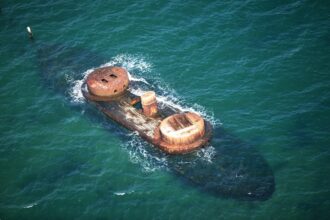
The USS Pueblo Incident: A Diplomatic Tightrope Walk for Crew Release
The capture of the USS Pueblo (AGER-2) by North Korean forces on January 23, 1968, plunged the United States into a severe international crisis. What began as a seemingly routine intelligence-gathering mission in international waters quickly devolved into a high-stakes hostage situation, igniting a diplomatic firestorm that would smolder for nearly a year. The survival of the 82 American sailors and marines aboard the Pueblo became the singular focus of the U.S. government, forcing it to navigate a treacherous path between appeasement and national pride. The eventual release of the crew was not a sudden windfall but the culmination of painstaking, often agonizing, negotiations, a testament to the power of sustained diplomatic pressure, and a stark reminder of the complex realities of international relations in the Cold War era.
A Mission in Murky Waters
The USS Pueblo, a modified Army technical research vessel, was tasked with electronic intelligence gathering off the coast of North Korea. Its mission was to monitor North Korean shore batteries and naval movements, a standard, albeit sensitive, operation given the region’s volatile geopolitical climate. The ship, officially commissioned into the U.S. Navy in 1967, was equipped with sophisticated listening devices designed to intercept communications. However, its armament was minimal, reflecting its intelligence-gathering role rather than combat readiness. The crew, comprising both naval personnel and civilian technicians from the National Security Agency, understood the inherent risks associated with operating so close to a hostile nation. Yet, the intelligence gathered was deemed vital to understanding North Korea’s military posture and intentions.
The North Korean Interception
On January 23, 1968, while operating in what the United States maintained were international waters, the Pueblo was approached by North Korean patrol boats. Despite attempts to evade the pursuers, the Pueblo, a slow-moving vessel, was eventually overtaken. Further complicating matters, an element of surprise and numerical superiority allowed the North Koreans to assert control. Accounts from the Pueblo’s crew detail a harrowing confrontation characterized by gunfire and the eventual boarding of the vessel. The North Koreans claimed the Pueblo had violated their territorial waters, a charge vehemently denied by the United States. This discrepancy in asserted territorial limits would become a key sticking point throughout the subsequent negotiations. The capture itself was an audacious act, a bold challenge to American maritime claims and a significant propaganda coup for North Korea.
Immediate American Reaction and Public Outcry
News of the Pueblo’s capture sent shockwaves across the United States. The images of the captured vessel and its crew, presented by North Korean propaganda, ignited a firestorm of public outrage and demanded swift action. Families of the Pueblo crew were plunged into a state of agonizing uncertainty, their lives on hold as they awaited news of their loved ones. The U.S. government found itself under immense pressure to secure the release of the sailors. This pressure manifested in congressional hearings, media speculation, and public demonstrations. The military was placed on high alert, and there were immediate discussions about potential retaliatory actions. However, the specter of escalating the conflict and jeopardizing the lives of the captured crew weighed heavily on decision-makers, casting a long shadow over any immediate military options.
The release of the USS Pueblo crew in 1968 marked a significant moment in U.S. naval history, highlighting the complexities of international diplomacy during the Cold War. For a deeper understanding of the negotiations that led to their release, you can read a related article that explores the intricate details and implications of this event. Check it out here: USS Pueblo Crew Release Deal.
The Ordeal of the Pueblo Crew
Captivity and Interrogation
Once aboard the Pueblo, the crew endured a period of intense interrogation and psychological pressure. North Korean authorities sought to extract confessions of espionage and to use the captured Americans for propaganda purposes. The sailors and marines were held in various locations, often in harsh conditions, and subjected to questioning designed to break their resistance. The psychological toll of captivity was immense, with crew members facing isolation, sleep deprivation, and the constant threat of further punishment. Despite the immense pressure, many of the crew members demonstrated remarkable resilience, a testament to their training and their unwavering sense of duty.
Coerced Confessions and Propaganda Value
A significant aspect of the Pueblo crew’s ordeal was the production of confessions. Under duress, many crew members were compelled to admit to spying in North Korean waters, a narrative that served the North Korean regime’s agenda. These confessions were broadcast internationally, aimed at discrediting the United States and portraying North Korea as a victim of American aggression. The crew members were also forced to participate in staged interviews and photo opportunities, further amplifying the propaganda efforts. The ethical dilemma for the crew was profound: cooperate and contribute to a falsehood, or resist and face potentially severe repercussions. The agonizing decision to participate in these acts, often under extreme duress, would cast a long shadow over the crew for years to come.
The Slow Burn of Diplomacy: Initial U.S. Responses
In the immediate aftermath of the capture, the United States adopted a multi-pronged approach. Publicly, the U.S. demanded the unconditional release of the Pueblo and its crew, asserting that the vessel had been operating in international waters. Diplomatic channels were activated, with the U.S. State Department engaging in direct communication with North Korean representatives through various intermediaries. However, North Korea remained intransigent, using the captured vessel and crew as leverage in its broader diplomatic objectives. The initial responses were characterized by a cautious blend of firmness and restraint, a tightrope walk designed to avoid escalation while signaling a clear intent to secure the crew’s safe return.
The Negotiation Labyrinth: A Year of Diplomatic Maneuvers

The Austrian Channel: A Secret Conduit
With direct diplomatic relations between the United States and North Korea non-existent, communications became a complex puzzle. The negotiations thus found an unlikely but crucial outlet through the Austrian legation in Pyongyang, which acted as a conduit for American interests. This created an indirect but vital communication line, allowing for the subtle exchange of proposals and counter-proposals. The Austrian diplomats, acting as neutral intermediaries, played a pivotal role in facilitating these sensitive discussions, often navigating deeply entrenched positions with quiet determination. Their neutrality was a precious commodity, allowing for a degree of trust that direct U.S.-North Korean dialogue might have lacked.
Demands and Counter-Demands: A Diplomatic Stalemate
North Korea presented a consistent set of demands, primarily centered on an apology from the United States for the alleged espionage. They sought a public acknowledgment that the Pueblo had violated their territorial waters and a commitment to cease such activities. The U.S., on the other hand, steadfastly refused to apologize for an action it maintained was legal and conducted in international waters. This created a core impasse, a fundamental divergence of perception that seemed unbridgeable. The negotiations were a protracted chess match, with each side carefully considering every move and anticipating the other’s strategy. The crew of the Pueblo, meanwhile, remained the ultimate prize, their fate hanging in the balance of these complex diplomatic exchanges.
The Weight of Public Opinion and the Need for a Resolution
As months ticked by, the pressure on the U.S. administration to secure the crew’s release intensified. Families of the captive sailors became increasingly vocal, their pleas resonating with the American public. The media continued to highlight the plight of the Pueblo crew, keeping the crisis at the forefront of national consciousness. This sustained public and media attention put a significant onus on President Lyndon B. Johnson’s administration to find a resolution. The longer the crew remained in captivity, the greater the risk of their well-being deteriorating further and the greater the political cost to the administration. The need for a swift and successful outcome was palpable, shaping the urgency of the diplomatic efforts.
The Breakthrough: The Demarche and the Unwritten Apology
A Shift in Tactics: The Demarche
The breakthrough in the negotiations arrived not through a sudden capitulation but through a carefully orchestrated shift in diplomatic strategy. The U.S. government, after months of deadlock, opted for a demarche, a formal diplomatic representation or protest. This involved a structured presentation of the U.S. position and a subtle indication of willingness to explore alternative pathways to resolution. Crucially, the U.S. delegation, led by Ambassador Charles Adair, would express regret for the incident and its consequences, a nuanced wording that stopped short of an explicit apology for espionage but acknowledged the human toll. This was not a capitulation but a calculated recalibration designed to unfreeze the diplomatic stalemate.
The “Signed Statement”: A Compromise of Words
Central to the eventual agreement was a document known as the “signed statement.” The U.S. delegation, while maintaining its official stance on territorial waters, agreed to sign a statement drafted by the North Koreans, which declared that the Pueblo had committed “acts of espionage” and apologized for these alleged acts. However, the U.S. simultaneously issued a statement of its own, clarifying that it had signed the document under duress and did not believe the Pueblo had violated North Korean territorial waters. This was a carefully constructed piece of diplomatic theater, a semantic tightrope walk where both sides could claim a degree of victory, however qualified. It was a compromise born of necessity, a meticulously crafted agreement where the meaning of words was dissected and reassembled to satisfy the demands of both parties.
The Role of the United Nations and International Pressure
While the primary negotiations were conducted through less visible channels, the broader international climate also played a role. The United Nations served as a forum where the crisis could be discussed, and the U.S. leveraged international opinion to exert pressure on North Korea. Diplomatic pressure from allies and even some neutral nations, coupled with public condemnation of North Korea’s actions, contributed to the growing desire for a resolution. The isolation of North Korea on the international stage, when faced with widespread denunciation of its seizure of the Pueblo, was a subtle but potent force.
The release of the USS Pueblo crew in 1968 marked a significant moment in U.S. military history, highlighting the complexities of international diplomacy during the Cold War. This event is further explored in a related article that delves into the negotiations and tensions surrounding the incident, providing valuable insights into the broader implications for U.S.-North Korea relations. For more information on this topic, you can read the article here.
The Release: A Fragile Peace and Lingering Questions
| Metric | Details |
|---|---|
| Date of Incident | January 23, 1968 |
| Location | Sea of Japan (East Sea) |
| Number of Crew Members | 83 |
| Duration of Captivity | 11 months |
| Date of Release | December 23, 1968 |
| Terms of Release | Admission of spying and apology by the crew |
| USS Pueblo Status | Still held by North Korea |
| Impact on US-North Korea Relations | Increased tensions during Cold War |
The Transfer at Panmunjom
The culmination of nearly a year of intense negotiations arrived on December 22, 1968. In a highly publicized ceremony at the Joint Security Area of Panmunjom, the demarcation line between North and South Korea, the 82 surviving crew members of the USS Pueblo were released. The transfer was a somber affair, marked by a palpable sense of relief, but also by the lingering trauma of their captivity. The sight of the haggard but returning sailors was a powerful image for the American public, signaling the end of a protracted and deeply human crisis.
The Return Home: A Nation’s Relief and the Crew’s Reckoning
The return of the Pueblo crew was met with widespread jubilation and a collective sigh of relief across the United States. However, for the crew members themselves, life would never be the same. They returned to a nation that celebrated their freedom but also grappled with the complex questions surrounding their ordeal. The coerced confessions and their participation in propaganda efforts weighed heavily on the returning sailors, leading to a period of introspection and, for some, difficulty reintegrating into civilian life. The experience had indelibly marked them, a scar that would remain long after the headlines faded.
The Lingering Legacy: Lessons Learned and Diplomatic Precedents
The USS Pueblo incident left an indelible mark on American foreign policy and military planning. It highlighted the vulnerabilities of intelligence-gathering vessels operating in contested waters and the profound challenges of negotiating with totalitarian regimes. The incident served as a stark reminder that the pursuit of intelligence can carry immense human costs and that the resolution of such crises often requires difficult compromises and a delicate balance between principle and pragmatism. The negotiations demonstrated the effectiveness of sustained, back-channel diplomacy, even in the face of seemingly insurmountable obstacles. The “signed statement” became a case study in nuanced diplomatic language, a testament to the idea that sometimes, avoiding direct confrontation through carefully chosen words can pave the way for resolution. The USS Pueblo incident remains a crucial touchstone in understanding the complexities of naval diplomacy, hostage negotiations, and the enduring human cost of international conflict.
FAQs
What was the USS Pueblo incident?
The USS Pueblo incident occurred on January 23, 1968, when the USS Pueblo, a U.S. Navy intelligence vessel, was captured by North Korean forces while conducting surveillance in international waters near North Korea.
Who were the crew members of the USS Pueblo?
The crew consisted of 83 U.S. Navy personnel, including officers and enlisted sailors, who were aboard the USS Pueblo during its capture by North Korea.
What happened to the USS Pueblo crew after their capture?
The crew was taken prisoner by North Korea and held captive for 11 months under harsh conditions before being released following negotiations between the United States and North Korea.
What was the USS Pueblo crew release deal?
The release deal involved the U.S. government issuing a formal apology and admitting to spying activities, which North Korea demanded as a condition for releasing the crew. The U.S. later clarified that the apology was a “regret” rather than an admission of guilt.
What was the significance of the USS Pueblo crew’s release?
The release ended a tense international standoff during the Cold War and highlighted the complexities of U.S.-North Korea relations. The incident remains a notable example of Cold War espionage and diplomatic negotiations.