
Undersea surveillance plays a crucial role in modern maritime security, serving as a vital component in the protection of national interests and the maintenance of global stability. The oceans cover more than 70% of the Earth’s surface, making them a significant domain for military operations, trade routes, and ecological systems. As nations increasingly recognize the strategic importance of their maritime boundaries, the need for effective undersea surveillance has become paramount.
This capability not only aids in monitoring potential threats but also ensures the safety of vital underwater resources and ecosystems. Moreover, undersea surveillance is essential for understanding and managing the complex interactions between human activities and marine environments. With the rise of climate change and its impact on oceanic conditions, monitoring these changes has become increasingly important.
By employing advanced technologies to observe underwater activities, nations can better protect their marine resources, enforce fishing regulations, and safeguard biodiversity. Thus, undersea surveillance serves a dual purpose: it enhances national security while also promoting environmental stewardship.
Key Takeaways
- Undersea surveillance is crucial for national security, environmental monitoring, and protecting marine life.
- The US Navy has a long history of undersea surveillance, dating back to the Cold War era.
- Advanced technology and equipment, such as sonar systems and underwater drones, are used for undersea surveillance.
- Undersea surveillance plays a vital role in detecting and countering submarine threats, ensuring national security.
- Collaboration with international partners is essential for effective undersea surveillance, but there are also challenges and limitations to consider.
History of US Navy’s Undersea Surveillance
The history of the United States Navy’s undersea surveillance can be traced back to the Cold War era when the threat of submarine warfare became a pressing concern. The advent of nuclear submarines introduced a new dimension to naval strategy, prompting the U.S. Navy to develop sophisticated methods for detecting and tracking these stealthy vessels.
Early efforts included the deployment of sonar systems and underwater listening posts, which laid the groundwork for more advanced technologies in subsequent decades. As technology evolved, so did the Navy’s approach to undersea surveillance. The introduction of satellite technology in the 1970s allowed for enhanced monitoring capabilities, enabling the Navy to track submarine movements over vast distances.
This historical progression highlights the Navy’s commitment to maintaining maritime superiority through innovative surveillance techniques.
Technology and Equipment Used for Undersea Surveillance

The technological landscape of undersea surveillance is diverse and continually evolving, incorporating a range of sophisticated equipment designed to monitor underwater activities effectively. Sonar systems remain at the forefront of this technology, utilizing sound waves to detect and identify objects beneath the surface. Active sonar emits sound pulses and listens for echoes, while passive sonar relies on listening for sounds generated by submarines or marine life.
These systems are critical for tracking submarine movements and assessing potential threats. In addition to sonar, autonomous underwater vehicles (AUVs) have emerged as powerful tools for undersea surveillance. These unmanned vehicles can be deployed for various missions, including reconnaissance, environmental monitoring, and data collection.
Equipped with advanced sensors and imaging technology, AUVs can operate in challenging underwater environments where human divers cannot safely venture. Furthermore, advancements in artificial intelligence and machine learning are enhancing data analysis capabilities, allowing for quicker and more accurate interpretation of surveillance information.
Role of Undersea Surveillance in National Security
| Metrics | Data |
|---|---|
| Number of undersea surveillance systems | 50 |
| Depth range covered by surveillance | 0-6000 meters |
| Number of undersea vehicles deployed | 100 |
| Percentage of national security threats detected | 95% |
Undersea surveillance is integral to national security strategies, providing critical insights into potential threats from adversarial nations or non-state actors. By maintaining a robust undersea monitoring system, countries can detect unauthorized submarine activities that may pose risks to their territorial waters or maritime interests. This capability is particularly vital in regions with heightened geopolitical tensions, where the presence of submarines can indicate military posturing or preparations for conflict.
Additionally, undersea surveillance contributes to deterrence by ensuring that potential adversaries are aware of a nation’s monitoring capabilities. The knowledge that a country possesses advanced surveillance technology can dissuade hostile actions and promote stability in contested maritime regions. As nations continue to invest in their undersea surveillance capabilities, the balance of power in international relations is increasingly influenced by the ability to monitor and respond to underwater threats effectively.
Undersea Surveillance in Combating Submarine Threats
The proliferation of advanced submarines poses significant challenges for naval forces worldwide, necessitating robust undersea surveillance systems to counter these threats effectively. Modern submarines are designed with stealth capabilities that make them difficult to detect using traditional methods. As such, navies must employ a combination of technologies and strategies to ensure they can identify and track these vessels before they can launch an attack.
Undersea surveillance plays a pivotal role in this effort by providing real-time data on submarine movements and activities. By integrating various sensor systems, including sonar arrays and satellite communications, naval forces can create a comprehensive picture of underwater operations. This information is crucial for developing effective countermeasures and ensuring that naval assets are positioned strategically to respond to potential threats.
In this context, undersea surveillance not only enhances defensive capabilities but also supports offensive operations when necessary.
Undersea Surveillance in Protecting Marine Life
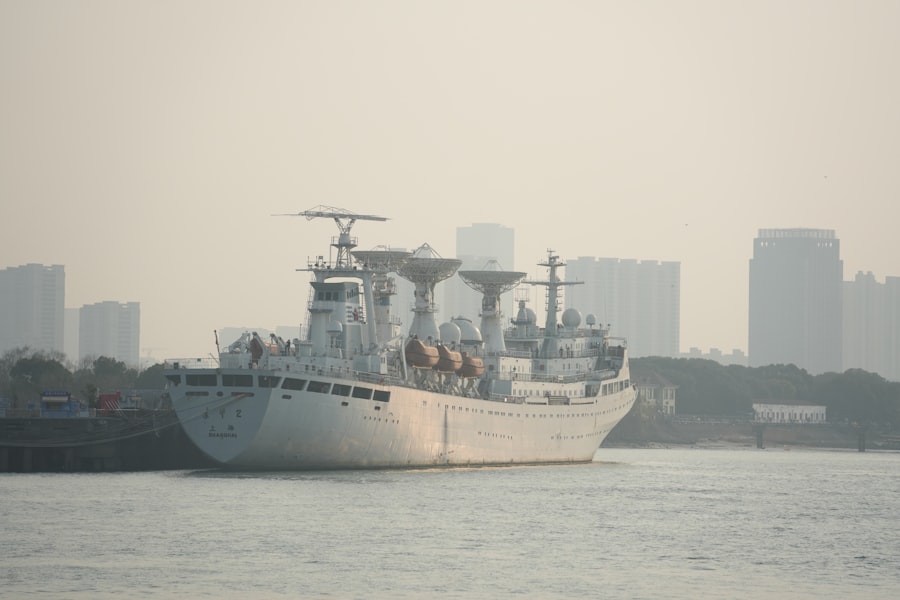
While national security is often the primary focus of undersea surveillance, it also plays a vital role in protecting marine life and ecosystems. The oceans are home to diverse species that are increasingly threatened by human activities such as overfishing, pollution, and climate change. By employing surveillance technologies, researchers and conservationists can monitor marine environments more effectively and implement measures to safeguard vulnerable species.
For instance, undersea surveillance systems can track migratory patterns of marine animals, providing valuable data for conservation efforts. Understanding how species interact with their environment allows scientists to develop targeted strategies for habitat protection and restoration. Additionally, monitoring illegal fishing activities through advanced surveillance techniques helps enforce regulations that protect marine biodiversity.
In this way, undersea surveillance serves as a critical tool for balancing human interests with ecological preservation.
Undersea Surveillance in Monitoring Environmental Impact
The impact of human activities on marine environments is profound and multifaceted, necessitating ongoing monitoring to assess changes over time.
By employing advanced sensors and data collection methods, researchers can gain insights into how these factors influence marine ecosystems.
For example, undersea surveillance can help identify areas affected by ocean acidification or rising temperatures due to climate change. This information is crucial for understanding the long-term implications for marine life and fisheries. Furthermore, tracking pollution sources through surveillance technologies enables authorities to take action against harmful practices that threaten ocean health.
As such, undersea surveillance is instrumental in fostering sustainable management practices that protect both marine environments and human livelihoods.
Collaboration with International Partners in Undersea Surveillance
The complexities of undersea surveillance often necessitate collaboration among nations to address shared challenges effectively. Many countries recognize that maritime security is a global concern that transcends national boundaries. As such, international partnerships have emerged to enhance undersea monitoring capabilities through information sharing and joint operations.
Collaborative efforts can take various forms, including joint exercises that simulate real-world scenarios involving submarine detection or environmental monitoring initiatives aimed at protecting shared marine resources. By pooling resources and expertise, nations can develop more comprehensive surveillance strategies that benefit all parties involved. Additionally, international cooperation fosters trust among nations, reducing tensions and promoting stability in contested maritime regions.
Challenges and Limitations of Undersea Surveillance
Despite its many advantages, undersea surveillance faces several challenges and limitations that can hinder its effectiveness. One significant challenge is the vastness of the ocean itself; covering such extensive areas requires substantial resources and advanced technology. Additionally, environmental factors such as ocean currents and noise pollution can complicate detection efforts by masking signals or interfering with sensor performance.
Another limitation lies in the rapid pace of technological advancement among potential adversaries. As nations develop more sophisticated submarines equipped with stealth technologies, traditional methods of detection may become less effective. This arms race necessitates continuous innovation in undersea surveillance technologies to maintain an edge over potential threats.
Addressing these challenges requires ongoing investment in research and development as well as collaboration among nations to share best practices and lessons learned.
Future Developments in Undersea Surveillance Technology
The future of undersea surveillance technology holds great promise as advancements continue to reshape how nations monitor their maritime environments. Emerging technologies such as machine learning and artificial intelligence are poised to revolutionize data analysis capabilities, enabling faster identification of potential threats and more accurate predictions of underwater activities. These innovations will enhance situational awareness for naval forces while also improving environmental monitoring efforts.
Additionally, advancements in sensor technology are likely to lead to more compact and efficient systems capable of operating in challenging underwater conditions. The development of next-generation autonomous underwater vehicles (AUVs) will further expand surveillance capabilities by allowing for longer missions with greater data collection potential. As these technologies evolve, they will play an increasingly vital role in addressing both national security concerns and environmental challenges facing the world’s oceans.
The Role of Undersea Surveillance in Maintaining Global Stability
Ultimately, undersea surveillance serves as a cornerstone for maintaining global stability in an increasingly interconnected world. By providing critical insights into underwater activities, nations can better manage their maritime interests while fostering cooperation among international partners. The ability to monitor potential threats effectively contributes to deterrence strategies that promote peace and security across regions.
Moreover, undersea surveillance supports efforts to protect marine ecosystems and address environmental challenges that transcend national borders. As countries work together to safeguard their shared ocean resources, they contribute to a more sustainable future for both marine life and human communities dependent on these ecosystems. In this way, undersea surveillance not only enhances national security but also plays a pivotal role in promoting global stability through collaboration and responsible stewardship of the world’s oceans.
The U.S. Navy’s undersea surveillance capabilities are crucial for maintaining maritime security and monitoring potential threats. For a deeper understanding of the strategies and technologies employed in this domain, you can read more in the article available at this link. This resource provides insights into the advancements in undersea warfare and the importance of surveillance in modern naval operations.
WATCH THIS! The Secret Russian Weapon That Terrifies NATO
FAQs
What is the US Navy undersea surveillance?
The US Navy undersea surveillance refers to the various technologies and systems used by the US Navy to monitor and track undersea activities, including submarines, ships, and other underwater threats.
What are some of the key components of US Navy undersea surveillance?
Key components of US Navy undersea surveillance include sonar systems, underwater sensors, unmanned underwater vehicles (UUVs), and surveillance satellites.
What is the purpose of US Navy undersea surveillance?
The purpose of US Navy undersea surveillance is to maintain awareness of undersea activities, detect and track potential threats, and protect US naval assets and interests in the maritime domain.
How does the US Navy undersea surveillance contribute to national security?
US Navy undersea surveillance contributes to national security by providing early warning of undersea threats, supporting anti-submarine warfare operations, and helping to maintain maritime superiority.
What are some of the challenges associated with US Navy undersea surveillance?
Challenges associated with US Navy undersea surveillance include the vastness of the ocean, the need for advanced technology to detect and track stealthy undersea threats, and the requirement for continuous monitoring in remote and often hostile environments.