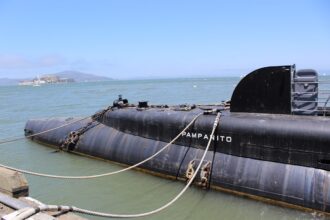
The US Navy’s Radio Silence Doctrine: Maintaining Operational Security
In the intricate ballet of naval warfare, where the stakes are as high as the ocean is deep, the ability to remain undetected is a paramount advantage. The United States Navy, like many modern militaries, employs a strict and rigorously enforced doctrine of radio silence to achieve this critical objective. This isn’t merely a suggestion or a preference; it is a foundational pillar of operational security (OPSEC), a silent guardian that protects naval assets and enables mission success in a world bristling with electronic eavesdropping capabilities. To understand the significance of radio silence is to grasp a fundamental principle of asymmetric warfare: invisibility can be a more potent weapon than any projectile, and noise, in the electronic spectrum, can be a fatal admission.
The modern battlespace is a complex tapestry woven from electromagnetic signals. Every electronic device, from a soldier’s radio to a satellite’s sensor, emits a signature, a whisper in the ether that can be intercepted, analyzed, and exploited. For the US Navy, operating in a domain that is inherently fluid and contested, understanding this electromagnetic spectrum is not an option; it is a strategic imperative.
The Electronic Battlefield: A Constant Threat Landscape
The ocean, once a vast expanse of natural obscurity, has been transformed into a vibrant and often hostile electromagnetic environment. Satellites patrol the skies, ground-based radar stations scan the horizon, and sophisticated adversaries actively seek out any emanation, however faint. For naval vessels, especially those engaged in sensitive operations, the emission of radio signals is akin to a ship broadcasting its position, course, and capabilities to any listening post within range. This is the essence of the electronic battlefield – a domain where information itself is a strategic commodity, and silence is often the most valuable currency. The Navy’s approach to this landscape is one of calculated discretion, treating every electronic emission as a potential vulnerability.
The Doctrine of Emission Control (EMCON): More Than Just Turning Off Radios
The US Navy’s commitment to radio silence is best encapsulated by its comprehensive Emission Control (EMCON) policy. EMCON is not simply about refraining from transmitting; it is a multifaceted doctrine that governs the deliberate and controlled use of all electronic emissions. This includes radar, sonar, communications systems, electronic warfare (EW) equipment, and even incidental emissions from systems like navigation equipment. The overarching goal of EMCON is to minimize the predictability and detectability of naval forces, thereby denying the adversary the critical intelligence they need to plan and execute attacks. Think of it as a carefully orchestrated symphony of silence, where each instrument knows precisely when and if it should play, and when it must remain utterly still.
Intelligence, Surveillance, and Reconnaissance (ISR) Capabilities of Adversaries
Modern adversaries have invested heavily in their Intelligence, Surveillance, and Reconnaissance (ISR) capabilities. They possess advanced technologies capable of detecting and analyzing even the faintest radio signals. These include signal intelligence (SIGINT) platforms, passive radar systems, and highly sensitive listening arrays. The Navy operates under the assumption that there is always an enemy listening. Therefore, any deliberate transmission must be weighed against the potential intelligence gain for the adversary. The doctrine of radio silence is a direct countermeasure to these pervasive ISR threats, forcing adversaries to expend significant resources in a less-than-fruitful search, or worse, to operate blind.
The US Navy’s radio silence doctrine plays a crucial role in maintaining operational security and ensuring effective communication during sensitive missions. For a deeper understanding of this doctrine and its implications in modern naval warfare, you can explore the article titled “Navigating the Waves of Silence: The Importance of Radio Silence in Naval Operations” available at In the War Room. This article delves into the historical context and strategic significance of radio silence, providing valuable insights for both military professionals and enthusiasts alike.
The Strategic Imperatives Behind Radio Silence
The imperative for radio silence extends far beyond simple stealth. It is deeply interwoven with the Navy’s strategic objectives, influencing its ability to project power, conduct sensitive operations, and maintain a decisive edge in conflict.
Projecting Power with Unseen Force
The ability to project power globally is a cornerstone of US foreign policy. Naval forces are often the tip of this spear, capable of rapid deployment and decisive action. However, projecting power effectively requires maintaining an element of surprise. If an adversary knows exactly where a naval group is, its composition, and its intentions, their ability to counter or evade that projection of power is significantly enhanced. Radio silence allows naval forces to maneuver into position undetected, creating a psychological and tactical advantage. It’s the unseen hand guiding the pieces on the chessboard, capable of making decisive moves before the opponent even realizes the game has begun.
Enabling Sensitive and Covert Operations
Certain naval operations, by their very nature, demand extreme discretion. These can include intelligence gathering, special operations insertion and extraction, or the pre-positioning of forces for an eventual conflict. In these scenarios, any electronic emission could compromise the mission, endanger personnel, and alert the adversary to a threat they might otherwise not have perceived. Radio silence is the bedrock upon which these sensitive operations are built, providing the necessary concealment to achieve their objectives without alerting the enemy to the Navy’s presence or intentions.
Maintaining Freedom of Maneuver
In a contested environment, the ability to move freely without being tracked or targeted is crucial. Adversaries actively seek to locate and track naval assets to gain a tactical advantage, whether it be for neutralization, deterrence, or simply to redirect their own forces. Radio silence makes this tracking considerably more difficult. By limiting their electronic footprint, naval vessels can operate with greater freedom, maneuvering to exploit opportunities or evade threats without the constant specter of being electronically painted and targeted. This freedom of maneuver is like a phantom ship gliding through fog – difficult to pin down, impossible to predict.
Preventing Deception and Misinformation
In modern warfare, the battle for information is as critical as the battle for territory. Adversaries may attempt to use intercepted communications to sow confusion, spread misinformation, or lure naval forces into ambushes. By observing radio silence, the Navy denies adversaries this avenue of deception. The absence of transmissions means there is no information for them to manipulate, no communications to twist, and no perceived intentions to exploit. This makes the operational environment more predictable for the Navy and inherently more unpredictable for the adversary.
The Practical Implementation and Execution of Radio Silence

The doctrine of radio silence is not an abstract concept; it is a set of practical protocols and procedures that are meticulously followed by every sailor and every system on board a naval vessel.
The Strict Adherence to EMCON Levels
To manage the inherent need for communication with the imperative of silence, the Navy employs a tiered system of EMCON levels. These levels dictate what types of electronic emissions are permitted, under what circumstances, and for how long.
EMCON Level A: Absolute Silence
At the highest level of EMCON, Level A, virtually all electronic emissions are prohibited, with extremely limited exceptions for dire emergencies. This level is typically implemented during critical phases of operations where absolute stealth is paramount. It represents the Navy’s most stringent application of radio silence, transforming vessels into digital ghosts.
EMCON Level B: Controlled Emissions
Level B allows for a greater degree of controlled emissions, often for specific mission-related communications or tactical maneuvering. These transmissions are still carefully managed and authorized, ensuring they are necessary and do not compromise the overall security posture. This level is akin to a whispered conversation in a crowded room – only those intended to hear can, and the volume is kept to an absolute minimum.
EMCON Level C and D: Operational Necessities
Lower EMCON levels, such as C and D, permit more routine operational communications, such as navigation broadcasts or essential command and control links. However, even in these lower levels, emissions are still monitored and controlled to minimize their detectability and predictability. These are the necessary murmurings of a functioning fleet, carefully modulated to avoid drawing undue attention.
The Role of Electronic Support Measures (ESM)
While the doctrine emphasizes silence, it doesn’t mean naval vessels are entirely deaf to the world around them. Electronic Support Measures (ESM) are critical passive sensors that allow ships to detect and analyze enemy electronic emissions without radiating any signals themselves. This is the Navy’s equivalent of having highly sensitive ears.
Passive Detection and Threat Identification
ESM systems act as the Navy’s electronic sentinels, constantly scanning the electromagnetic spectrum for any signs of enemy activity. They can identify the type of radar being used, the direction of the signal, and even the specific platform emitting it. This intelligence is crucial for threat assessment and for making informed decisions about communication needs and potential evasive maneuvers.
Intelligence Gathering Without Self-Revelation
By using ESM, naval forces can gather vital intelligence about adversary positions, capabilities, and intentions without revealing their own presence. This indirect approach to intelligence gathering is a cornerstone of effective OPSEC in a silent environment. It’s akin to a predator listening intently in the darkness, gathering information without making a sound, ensuring it knows its prey’s every move before revealing its own.
The Use of Directional and Encrypted Communications
When communication is absolutely necessary, the Navy employs sophisticated techniques to minimize the risk of interception and exploitation.
Narrow-Beam Transmissions
Instead of broadcasting signals in all directions, naval vessels often utilize narrow-beam transmissions. These focused beams of radio waves are directed specifically at the intended recipient, greatly reducing the chance of accidental interception by unintended parties. It’s like using a laser pointer to communicate, rather than a floodlight.
Secure and Encrypted Channels
All authorized naval communications are routed through highly secure and encrypted channels. This ensures that even if a signal is intercepted, it will be unintelligible to any unauthorized parties. The encryption acts as a digital lock, rendering the message unreadable without the correct key.
Burst Communications
For highly sensitive data transfers, short, high-speed bursts of communication are often employed. These transmissions last for only milliseconds, minimizing the window of opportunity for detection and interception. This is like sending a precisely timed whisper between two people in a noisy room, a fleeting exchange that is gone before anyone else can truly register it.
Challenges and Adaptations to the Doctrine
Maintaining a strict doctrine of radio silence is not without its challenges. The dynamic nature of naval operations and the constant evolution of enemy capabilities necessitate ongoing adaptation and innovation.
The Dilemma of Real-Time Command and Control
One of the most significant challenges in maintaining radio silence is the inherent need for real-time command and control. In rapidly evolving tactical situations, commanders need timely and accurate information to make critical decisions. Balancing the need for immediate communication with the imperative of silence is a constant operational tension. This is like trying to conduct an orchestra with only visual cues – possible, but incredibly difficult and prone to error without audible feedback.
The Impact of Network-Centric Warfare
The advent of network-centric warfare, which relies heavily on the seamless flow of information, presents a unique challenge to traditional radio silence. While the Navy is increasingly leveraging secure, low-probability-of-intercept (LPI) and low-probability-of-detection (LPD) communication technologies, the fundamental need for data exchange can sometimes conflict with the ideal of absolute silence. The Navy is continuously researching and deploying advanced networking solutions that minimize electronic signatures while maximizing operational effectiveness.
Countering Advanced Electronic Warfare Capabilities
Adversaries are also developing increasingly sophisticated electronic warfare (EW) capabilities, designed to detect, jam, and even spoof naval communications. This necessitates a constant evolution of the Navy’s own EW and counter-EW strategies. The doctrine of radio silence is a vital component in this ongoing arms race, denying adversaries the signals they can exploit for their electronic warfare efforts. It’s a continuous game of cat and mouse, where the mouse’s best defense is often to not show its whiskers.
Training and Personnel Readiness
The effective implementation of radio silence relies heavily on the discipline and training of naval personnel. Every officer and enlisted member must understand the doctrine’s importance, the specific EMCON levels, and their individual responsibilities in maintaining operational security. Regular training exercises and simulations are crucial to ensure that adherence to radio silence becomes second nature. This is not a task for a few specialists; it is a collective responsibility, ingrained in the DNA of every sailor on board.
The US Navy’s radio silence doctrine plays a crucial role in maintaining operational security and tactical advantage during naval operations. For a deeper understanding of how this doctrine has evolved and its implications for modern warfare, you can explore a related article that discusses the strategic importance of communication protocols in military engagements. This insightful piece can be found here, offering a comprehensive overview of the challenges and benefits associated with radio silence in the context of naval strategy.
The Future of Radio Silence in Naval Operations
| Metric | Description | Typical Values/Notes |
|---|---|---|
| Radio Silence Duration | Length of time radio silence is maintained during operations | Varies from minutes to hours depending on mission |
| Communication Methods During Silence | Alternative communication techniques used when radio silence is enforced | Signal flags, flashing light (Morse code), pre-arranged signals |
| Purpose | Reason for enforcing radio silence | Prevent enemy detection, maintain operational security |
| Enforcement Level | Strictness of radio silence adherence | Absolute (no transmissions) to conditional (emergency only) |
| Exceptions | Situations where radio silence may be broken | Emergency communications, command override, distress signals |
| Detection Risk | Risk of enemy detecting ship or fleet due to radio transmissions | High if radio silence is broken; low when maintained |
| Doctrine Reference | Official US Navy document or manual referencing radio silence | Naval Warfare Publication (NWP) 3-56, Communications |
As technology continues to advance, the US Navy’s approach to radio silence will undoubtedly evolve. However, the fundamental principles of minimizing electronic signatures and denying adversaries intelligence will remain central to naval OPSEC.
The Role of Quantum Communication and Other Emerging Technologies
The exploration of emerging technologies like quantum communication holds the potential to revolutionize naval communications, offering unprecedented levels of security and stealth. Quantum entanglement, for instance, could enable instantaneous and inherently secure communication that is virtually undetectable. The Navy is actively investing in research and development in these areas to ensure it maintains a technological edge.
The Continued Emphasis on Passive Sensing and Data Fusion
The reliance on passive sensing technologies, such as advanced ESM and acoustic intelligence, will likely increase. The ability to gather comprehensive situational awareness through non-emissive means will become even more critical in future conflicts. Furthermore, the effective fusion of data from these diverse passive sources will be key to building a complete operational picture without broadcasting one’s own intentions.
The Evolution of OPSEC in a Saturated Electromagnetic Spectrum
The electromagnetic spectrum is becoming increasingly saturated with signals from both military and civilian sources. This density creates a complex environment where distinguishing between friendly and hostile emissions, or even identifying a target’s signal, becomes more challenging. The Navy’s OPSEC strategies will need to adapt to this evolving landscape, ensuring that its own signals remain hidden within the noise, or that its silence is absolute when required.
A Constant Vigilance: The Enduring Significance of Silence
In conclusion, the US Navy’s radio silence doctrine is not a relic of a bygone era; it is a vital, dynamic, and enduring pillar of operational security. In an age where information is power and electronic detection is pervasive, the ability to remain silent is a strategic advantage that can determine the success or failure of critical missions. It is a testament to the Navy’s commitment to maintaining a decisive edge, ensuring that its forces can operate with unmatched stealth, project power with unseen might, and protect the lives of its personnel by disappearing into the electronic ether when necessary. The silent hum of a well-oiled machine, in this context, is the most potent signal of all.
FAQs
What is the US Navy radio silence doctrine?
The US Navy radio silence doctrine is a set of operational guidelines that require naval vessels and units to minimize or cease radio transmissions to avoid detection by enemy forces. This practice helps maintain tactical surprise and operational security during missions.
Why does the US Navy implement radio silence?
Radio silence is implemented to prevent adversaries from intercepting communications, locating naval units through signal detection, and gaining intelligence on fleet movements or intentions. It enhances stealth and reduces the risk of electronic warfare attacks.
When is radio silence typically enforced in the US Navy?
Radio silence is usually enforced during covert operations, combat situations, or when operating in contested or hostile environments. It may also be applied during training exercises to simulate real-world conditions.
How does the US Navy communicate while maintaining radio silence?
While maintaining radio silence, the Navy may use alternative communication methods such as pre-arranged signals, encrypted messages sent during designated communication windows, or secure line-of-sight systems like flag signals or light-based communications.
What are the risks of breaking radio silence in the US Navy?
Breaking radio silence can expose naval units to enemy detection, compromise mission security, and potentially lead to targeted attacks. Unauthorized transmissions can reveal position, movement, and operational plans, undermining the effectiveness of naval operations.